Loading...
Oscar I vs Quang Trung
Quang Trung leads by 13.2 pts · 2 figures compared
…
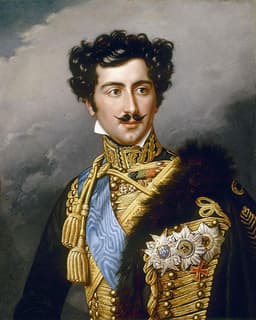
Oscar I
Emperor · Modern
49.7Total

Quang Trung
Emperor · Modern
62.9Total
Basic Information
Born
1799
1753
Died
1859
1792
Era
Modern
Modern
Nationality
Sweden
Vietnam
Occupation
Emperor
Emperor
Civilization
Western
Eastern
Score Comparison
Military (10%)
21.2
82.0
Political (20%)
72.0
45.0
Influence (20%)
51.8
62.0
Legacy (20%)
40.0
58.0
Leadership (15%)
72.0
74.0
Strategy (15%)
30.3
68.0
TOTAL
49.7
62.9
Oscar I — Complete Timeline
1840 AD
Liberal reforms of the penal codeReform◆ Major
Oscar I oversaw a major reform of the Swedish penal code, abolishing the death penalty for most crimes and reducing the use of corporal punishment. This was part of a broader liberalization of Swedish law, influenced by Enlightenment principles and aimed at modernizing the justice system.
SwedenLawReformPenal Code
Impact: nationalprogressive
Introduction of freedom of the pressReform◆ Major
Oscar I introduced a new press law that significantly expanded freedom of the press in Sweden. This allowed for greater public debate and criticism of the government, marking a shift towards a more open and liberal society, though it was still subject to some restrictions.
SwedenPress FreedomLiberalismReform
Impact: nationalprogressive
1854 AD
First Swedish railway concessionOther◆ Major
Oscar I granted the first concession for the construction of a railway in Sweden, connecting Stockholm to Gothenburg. This initiated the development of Sweden's railway network, which was crucial for economic integration and industrial growth in the following decades.
SwedenRailwayInfrastructureIndustrialization
Impact: nationalconstructive
1858 AD
Repeal of the Conventicle ActReform◆ Major
Oscar I repealed the Conventicle Act, which had prohibited religious gatherings outside the state church. This allowed for greater religious freedom and the establishment of free churches, a significant step towards religious toleration in Sweden.
SwedenReligionFreedomReform
Impact: nationalprogressive
Quang Trung — Complete Timeline
1785 AD
Battle of Rach Gam-Xoai MutWar◆ Major
Nguyen Hue defeated a Siamese naval force at Rach Gam-Xoai Mut in the Mekong Delta. This victory eliminated the Siamese threat to the Nguyen lords in the south and consolidated his power.
Siamese WarNaval BattleNguyen Lords
Impact: regional
1788 AD
Coronation as Emperor Quang TrungPolitical Action◆ Major
Nguyen Hue proclaimed himself Emperor Quang Trung, establishing the Tay Son dynasty's rule over all of Dai Viet. He implemented land reforms, promoted education, and strengthened the military.
Tay Son DynastyCoronationReforms
Impact: nationalconstructive
1789 AD
Battle of Ngoc Hoi-Dong DaWar
Nguyen Hue (Quang Trung) led a surprise attack on Qing Chinese forces occupying Thang Long (Hanoi) during the Tet holiday. His army defeated the Qing forces, forcing them to retreat and ending the Chinese invasion.
Qing InvasionTet OffensiveVietnamese Independence
Impact: regional
Land Reform and Tax ReductionReform
Emperor Quang Trung implemented land reforms that redistributed land to peasants and reduced taxes. These policies aimed to alleviate rural poverty and rebuild the economy after years of war.
Land ReformEconomic PolicyPeasant Welfare
Impact: nationalconstructive
Expert Analysis
Origins
Oscar I was born on July 4, 1799, in Paris to King Charles XIV John of Sweden and Désirée Clary. His father, a former French Marshal under Napoleon, became king in 1818. Oscar grew up in the Swedish court, received a broad education, and developed an interest in liberal ideas. He served as Governor of Norway from 1824 to 1844. Quang Trung, born Nguyễn Huệ in 1753 in Bình Định, Vietnam, was the son of a wealthy landowner. He and his brothers founded the Tây Sơn rebellion in 1771, aiming to overthrow the ruling Nguyễn lords in the south and the Trịnh lords in the north. His early military training came from guerrilla fighting against local forces.
Rise to Power
Oscar I became king of Sweden and Norway upon his father's death in 1844. He had already been involved in government as crown prince, advocating for Scandinavian unity and liberal reforms. His rise was peaceful, through constitutional succession. Quang Trung's rise was marked by rapid military campaigns. In 1777, he captured Saigon, defeating the Nguyễn lords. By 1785, he crushed a Siamese invasion at the Battle of Rạch Gầm-Xoài Mút (score 82.0 in military). In 1788, he proclaimed himself Emperor Quang Trung after unifying Vietnam. His most famous victory came in early 1789 when he led a surprise attack on Qing Chinese forces occupying Hanoi, using the Tet holiday to achieve complete surprise (turning point).
Leadership & Governance
Oscar I's leadership was reformist and constitutional. He championed liberal policies: in 1845, he reformed the penal code, abolishing the death penalty for most crimes and reducing corporal punishment. He introduced freedom of the press via a new press law in 1845, allowing public debate. He repealed the Conventicle Act in 1858, granting religious freedom. He also granted the first railway concession in 1853, connecting Stockholm to Gothenburg, initiating Sweden's railway network. His political score is 72.0, reflecting his effective governance within a constitutional framework. Quang Trung's leadership was autocratic and military-driven. As emperor, he implemented land reforms redistributing land to peasants and reduced taxes to alleviate rural poverty. He promoted trade and encouraged Chinese immigrants to develop commerce. He also reformed education, promoting the use of Nôm script. However, his rule was brief (1788-1792) and his methods were top-down. His political score is 45.0, lower due to the instability of his dynasty.
Triumph & Tragedy
Oscar I's greatest success was modernizing Sweden's legal system and increasing civil liberties. His press freedom law and penal code reforms were landmarks. He also maintained neutrality during the Crimean War, strengthening Sweden's international standing. His failures include his inability to achieve Scandinavian union, as his plans for a united kingdom with Denmark and Norway failed. He also faced economic stagnation in the 1850s. His leadership score is 72.0. Quang Trung's triumph was the stunning defeat of the Qing invasion in 1789, a military masterpiece. He also successfully defended against Siamese incursions. His tragedy was his sudden death in 1792 at age 39, likely from illness. His Tây Sơn dynasty collapsed soon after, and his reforms were reversed. His military score is 82.0, but his legacy score is 58.0, reflecting the short-lived impact.
Character & Destiny
Oscar I was pragmatic, reform-minded, and cautious. He sought gradual change within the system, earning him the reputation as a 'liberal king.' His character allowed him to navigate the tensions between absolutism and democracy. Quang Trung was bold, decisive, and charismatic. His willingness to take risks, such as the Tet offensive, defined his success. However, his autocratic style and reliance on military force left his regime fragile. Historians note that his early death prevented consolidation of his achievements.
Legacy
Oscar I's legacy is embedded in Swedish institutions: his penal code reforms influenced later Swedish law, and his press freedom set a precedent for democratic development. The railway he started became the backbone of Sweden's infrastructure. He is remembered as a modernizer. Quang Trung is a national hero in Vietnam, celebrated for his military genius and anti-colonial resistance. His tactics are studied in Vietnamese military history. However, his dynasty's collapse meant his political reforms did not endure. In terms of total score, Quang Trung (62.9) edges Oscar I (49.7). But impact depends on measure: Oscar I's reforms had lasting institutional effects, while Quang Trung's victories were decisive but short-term.
Conclusion
Quang Trung had greater immediate impact through his military victories, but Oscar I's long-term influence on Swedish society is more enduring. In a comparison of overall historical significance, Oscar I's score in political and leadership categories (72.0 each) reflects systemic change that outlasted his reign. Quang Trung's military brilliance (82.0) is undeniable, but his legacy (58.0) is limited by the brevity of his rule. Therefore, Oscar I's impact is greater in terms of sustained institutional reform, while Quang Trung's impact is greater in the realm of national defense and military history. The data supports Oscar I as having a more profound and lasting effect on governance and civil liberties.
Rankings
🥇
Quang TrungLeader
Mil: 82.0Pol: 45.0Inf: 62.0
62.9
🥈
Oscar I
Mil: 21.2Pol: 72.0Inf: 51.8
49.7
+13.2 behind
How This Comparison Works
Algorithm
Each figure is scored on 6 dimensions (0—100 scale) based on structured historical data: Military (10%), Political (20%), Influence (20%), Legacy (20%), Leadership (15%), Strategy (15%). The weighted total produces the final ranking.
Data Sources
Scores are computed from structured sub-indicators in the database. Scale factors adjust for era (Ancient ×0.85, Modern ×1.0) and civilization size (Eastern ×1.05, Other ×0.80) to account for differences in population and military scale.
Maximum 3 Figures
Comparisons are limited to 2—3 figures to ensure readability and statistical meaningfulness.
Error Margins
±5 points per dimension — Sub-scores are derived from historical records with inherent uncertainty. Two figures within 5 points on a dimension should be considered roughly equivalent in that area.
Total Score Accuracy
±3 points overall — The weighted combination of 6 dimensions produces a total score with approximately ±3 points of uncertainty. Differences of less than 3 points are not statistically significant— the figures are effectively tied.
Known Limitations
- Historical records are incomplete and uneven across civilizations
- Figures from oral-tradition societies may be underrepresented
- Occupation labels can misclassify multi-role figures
- Scores measure capability and impact, not moral character
- Quantitative scoring is a comparison tool, not absolute truth
Capability Radar
Military (10%) — Battles & Warfare
Battles
10
75
Win Rate
10
85
Expansion
10
65
Political (20%) — Governance & Reform
Reform
70
60
Diplomacy
60
55
Economy
60
50
Influence (20%) — Cultural & Global Reach
Cultural
30
60
Global
20
40
Legacy (20%) — Historical Impact
Historical
30
70
Longevity
20
55
Leadership (15%) — Power & Stability
Tenure
60
40
Stability
65
45
Strategy (15%) — Tactics & Innovation
Strategy
10
80
Tactics
10
90
Reform
20
70
Similar Comparisons
Comments & Discussion
No comments yet. Be the first to share your thoughts!