Loading...
Frederick III vs Marwan II
Marwan II leads by 7.0 pts · 2 figures compared
…
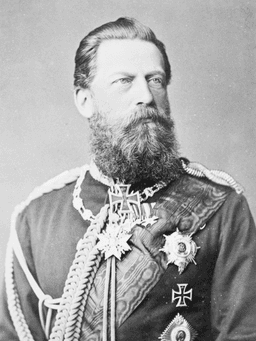
Frederick III
Emperor · Medieval
43.3Total
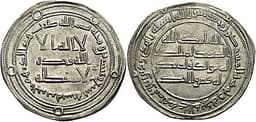
Marwan II
Emperor · Medieval
50.3Total
Basic Information
Born
1415
688
Died
1493
750
Era
Medieval
Medieval
Nationality
Holy Roman Empire
Umayyad Caliphate
Occupation
Emperor
Emperor
Civilization
Western
Middle Eastern
Score Comparison
Military (10%)
21.2
70.0
Political (20%)
37.9
40.8
Influence (20%)
50.2
53.3
Legacy (20%)
45.0
44.2
Leadership (15%)
53.2
48.4
Strategy (15%)
36.8
55.0
TOTAL
43.3
50.3
Frederick III — Complete Timeline
1450 AD
AEIOU MottoCultural
Frederick III adopted the motto AEIOU, which he used extensively on buildings and documents. The meaning of the acronym is uncertain, but it is often interpreted as 'Austriae est imperare orbi universo' (It is Austria's destiny to rule the world). This motto reflected Frederick's long-term vision for Habsburg dominance.
MottoHabsburg PropagandaSymbolism
Impact: regional
1452 AD
Coronation as Holy Roman EmperorPolitical Action◆ Major
Frederick III was crowned Holy Roman Emperor by Pope Nicholas V in Rome, the last emperor to be crowned in the city. His coronation reaffirmed the traditional alliance between the Empire and the Papacy. Frederick's long reign (53 years) was the longest of any Holy Roman Emperor.
CoronationImperial AuthorityPapacy
Impact: globalconstructive
1463 AD
Treaty of Wiener NeustadtPolitical Action
Frederick III signed the Treaty of Wiener Neustadt with his brother Albert VI, ending a conflict over the Habsburg inheritance. The treaty divided the Habsburg lands, with Frederick retaining control of Austria and Albert receiving parts of Further Austria. This agreement temporarily stabilized the internal Habsburg situation.
Habsburg DynastyTreatyTerritorial Division
constructive
1477 AD
Marriage of Maximilian IPolitical Action
Frederick III arranged the marriage of his son Maximilian I to Mary of Burgundy, heiress of the Burgundian state. This marriage brought the wealthy Burgundian territories, including the Netherlands, into the Habsburg orbit. It was a cornerstone of Habsburg power and led to centuries of conflict with France.
Marriage AllianceBurgundian InheritanceHabsburg Power
Impact: globalconstructive
1485 AD
Siege of Vienna (1485)War◆ Major
Frederick III was besieged in Vienna by the forces of Matthias Corvinus, King of Hungary. After a prolonged siege, Frederick was forced to flee the city, which fell to Corvinus. Frederick spent the next years in exile in Graz, unable to reclaim his capital until Corvinus's death in 1490.
SiegeHungarian InvasionExile
Impact: regionaltragic
Marwan II — Complete Timeline
744 AD
Accession as CaliphPolitical Action◆ Major
Marwan II became the last Umayyad caliph after a period of civil war and succession disputes. He was a military commander who seized power amid the weakening of the dynasty.
SuccessionCaliphateCivil War
Impact: global
750 AD
Battle of the ZabWar
Marwan II's army was decisively defeated by the Abbasid forces at the Battle of the Zab in Iraq. This battle ended Umayyad rule and led to the establishment of the Abbasid Caliphate.
BattleDefeatAbbasid Revolution
Impact: global
Death in EgyptWar◆ Major
After the Battle of the Zab, Marwan II fled to Egypt where he was captured and killed by Abbasid forces. His death marked the end of the Umayyad Caliphate, though a surviving prince founded a dynasty in Spain.
DeathUmayyadEnd of Dynasty
Impact: globaltragic
Expert Analysis
Origins
Frederick III was born in 1415 in Innsbruck, part of the Habsburg hereditary lands. He was the eldest son of Ernest the Iron, Duke of Austria, and Cymburgis of Masovia. His upbringing was steeped in the traditions of the Holy Roman Empire, and he received a solid education in Latin, law, and governance. The Habsburgs were a rising dynasty, but their holdings were fragmented and often contested. Frederick’s early life was marked by the death of his father in 1424, leaving him under the guardianship of his uncle. He learned to navigate the complex web of imperial politics from a young age.
Marwan II was born in 688 AD in the Umayyad Caliphate, likely in Syria. He was a grandson of Marwan I, a caliph who had restored Umayyad rule after a civil war. Marwan II grew up in a time of internal strife and external threats. He was trained as a military commander from an early age, serving under his uncle, Caliph Hisham. His background was purely Arab and military, with little exposure to the broader administrative traditions of the caliphate. He was known for his harshness and determination, traits that would define his rule.
Rise to Power
Frederick III’s rise was gradual and diplomatic. He became Duke of Inner Austria in 1424 and was elected King of the Romans in 1440. His coronation as Holy Roman Emperor in 1452 by Pope Nicholas V was a major turning point, as it reaffirmed the traditional alliance between the Empire and the Papacy. Frederick’s power was based on careful alliances and marriages. His most significant move was arranging the marriage of his son Maximilian to Mary of Burgundy in 1477, which brought the wealthy Burgundian lands into the Habsburg orbit. This turned the Habsburgs into a major European power.
Marwan II rose through military prowess. He became governor of Armenia and Azerbaijan, where he fought against the Khazars and Byzantines. In 744, during the Third Fitna (civil war), he marched on Damascus and forced Caliph Yazid III to recognize him as heir. After Yazid’s death, Marwan seized power, becoming caliph in 744. His rule was immediately contested by rival factions, including the Sufyanid dynasty and the Abbasids. He spent most of his reign suppressing rebellions, but his military focus alienated many.
Leadership & Governance
Frederick III’s leadership style was cautious and legalistic. He ruled for 53 years, the longest reign of any Holy Roman Emperor, but his power was limited by the princes. He focused on consolidating Habsburg lands through marriage and inheritance, rather than conquest. His motto AEIOU (often interpreted as "Austria Est Imperare Orbi Universo" – Austria is destined to rule the world) reflected his long-term vision. He was a patron of the arts and founded the University of Vienna. However, he was often indecisive and allowed his empire to fragment, as seen when he lost Vienna to Matthias Corvinus in 1485.
Marwan II was a military leader first. He moved the capital from Damascus to Harran in northern Mesopotamia, closer to the Byzantine frontier. He reformed the army, but his harsh methods and favoritism towards Syrian troops alienated other regions. He attempted to centralize power, but his reign was plagued by revolts. His governance score of 40.8 reflects his inability to build a stable administration. He focused on suppressing the Abbasid rebellion, but his heavy-handed tactics only fueled the fire.
Triumph & Tragedy
Frederick III’s greatest triumph was securing the Burgundian inheritance for his son, which laid the foundation for the Habsburg Empire. He also successfully navigated the complex politics of the Empire, surviving numerous threats. His greatest failure was the loss of Vienna to Matthias Corvinus in 1485, a humiliating blow that forced him to flee. His total score of 43.3 reflects a mixed legacy: he was a consolidator, not a conqueror.
Marwan II’s military score of 70.0 reflects his skill as a commander. He won several battles against internal rebels and external enemies. However, his tragedy was his defeat at the Battle of the Zab in 750, which ended the Umayyad Caliphate. His death in Egypt marked the end of an era. His legacy score of 44.2 is low because the Abbasids systematically destroyed Umayyad memory.
Character & Destiny
Frederick III was patient, pragmatic, and often passive. He believed in the power of dynastic luck and was known for his motto AEIOU. His character shaped his destiny: his caution allowed him to survive but also limited his achievements. Historians note that he was more interested in the symbols of power than its exercise.
Marwan II was ruthless, energetic, and militaristic. His character led him to rely on force, which ultimately failed. He was unable to adapt to the political and religious currents that the Abbasids exploited. His destiny was sealed by his inflexibility.
Legacy
Frederick III’s legacy is the Habsburg Empire. His marriage policies set the stage for the vast Habsburg domains under Charles V. He is remembered as the last emperor crowned in Rome and the founder of the Habsburg dynasty’s imperial tradition. His motto AEIOU became a symbol of Austrian ambition.
Marwan II’s legacy is that of a failed last ruler. The Umayyad Caliphate was replaced by the Abbasid Caliphate, which moved the capital to Baghdad. However, the Umayyad dynasty survived in Spain, where a prince founded the Emirate of Cordoba. Marwan II’s defeat allowed the Abbasids to reshape the Islamic world.
Conclusion
While Marwan II scores higher overall (50.3 vs 43.3), Frederick III’s long-term impact is greater. Marwan II’s military skill could not prevent the collapse of his dynasty, while Frederick III’s patient diplomacy built a family empire that dominated Europe for centuries. Frederick III’s influence score of 50.2 and legacy of 45.0 reflect his enduring impact, whereas Marwan II’s legacy is largely negative as the last of his line. Therefore, Frederick III had a more profound and lasting impact on history.
Rankings
🥇
Marwan IILeader
Mil: 70.0Pol: 40.8Inf: 53.3
50.3
🥈
Frederick III
Mil: 21.2Pol: 37.9Inf: 50.2
43.3
+7.0 behind
How This Comparison Works
Algorithm
Each figure is scored on 6 dimensions (0—100 scale) based on structured historical data: Military (10%), Political (20%), Influence (20%), Legacy (20%), Leadership (15%), Strategy (15%). The weighted total produces the final ranking.
Data Sources
Scores are computed from structured sub-indicators in the database. Scale factors adjust for era (Ancient ×0.85, Modern ×1.0) and civilization size (Eastern ×1.05, Other ×0.80) to account for differences in population and military scale.
Maximum 3 Figures
Comparisons are limited to 2—3 figures to ensure readability and statistical meaningfulness.
Error Margins
±5 points per dimension — Sub-scores are derived from historical records with inherent uncertainty. Two figures within 5 points on a dimension should be considered roughly equivalent in that area.
Total Score Accuracy
±3 points overall — The weighted combination of 6 dimensions produces a total score with approximately ±3 points of uncertainty. Differences of less than 3 points are not statistically significant— the figures are effectively tied.
Known Limitations
- Historical records are incomplete and uneven across civilizations
- Figures from oral-tradition societies may be underrepresented
- Occupation labels can misclassify multi-role figures
- Scores measure capability and impact, not moral character
- Quantitative scoring is a comparison tool, not absolute truth
Capability Radar
Military (10%) — Battles & Warfare
Battles
10
75
Win Rate
10
60
Expansion
10
50
Political (20%) — Governance & Reform
Reform
30
45
Diplomacy
40
35
Economy
30
30
Influence (20%) — Cultural & Global Reach
Cultural
20
30
Global
20
30
Legacy (20%) — Historical Impact
Historical
40
40
Longevity
30
25
Leadership (15%) — Power & Stability
Tenure
80
40
Stability
40
20
Strategy (15%) — Tactics & Innovation
Strategy
10
65
Tactics
10
70
Reform
10
55
Similar Comparisons
Comments & Discussion
No comments yet. Be the first to share your thoughts!