Loading...
Frederick III vs Julius Caesar
Julius Caesar leads by 39.5 pts · 2 figures compared
…
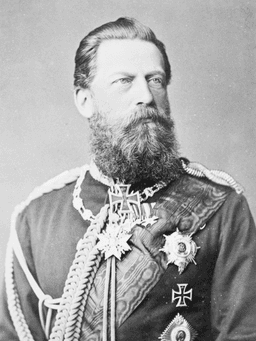
Frederick III
Emperor · Medieval
43.3Total

Julius Caesar
General · Ancient
82.8Total
Basic Information
Born
1415
-100
Died
1493
-44
Era
Medieval
Ancient
Nationality
Holy Roman Empire
Roman Republic
Occupation
Emperor
General
Civilization
Western
Western
Score Comparison
Military (10%)
21.2
88.0
Political (20%)
37.9
78.0
Influence (20%)
50.2
85.0
Legacy (20%)
45.0
82.0
Leadership (15%)
53.2
80.0
Strategy (15%)
36.8
85.0
TOTAL
43.3
82.8
Frederick III — Complete Timeline
1450 AD
AEIOU MottoCultural
Frederick III adopted the motto AEIOU, which he used extensively on buildings and documents. The meaning of the acronym is uncertain, but it is often interpreted as 'Austriae est imperare orbi universo' (It is Austria's destiny to rule the world). This motto reflected Frederick's long-term vision for Habsburg dominance.
MottoHabsburg PropagandaSymbolism
Impact: regional
1452 AD
Coronation as Holy Roman EmperorPolitical Action◆ Major
Frederick III was crowned Holy Roman Emperor by Pope Nicholas V in Rome, the last emperor to be crowned in the city. His coronation reaffirmed the traditional alliance between the Empire and the Papacy. Frederick's long reign (53 years) was the longest of any Holy Roman Emperor.
CoronationImperial AuthorityPapacy
Impact: globalconstructive
1463 AD
Treaty of Wiener NeustadtPolitical Action
Frederick III signed the Treaty of Wiener Neustadt with his brother Albert VI, ending a conflict over the Habsburg inheritance. The treaty divided the Habsburg lands, with Frederick retaining control of Austria and Albert receiving parts of Further Austria. This agreement temporarily stabilized the internal Habsburg situation.
Habsburg DynastyTreatyTerritorial Division
constructive
1477 AD
Marriage of Maximilian IPolitical Action
Frederick III arranged the marriage of his son Maximilian I to Mary of Burgundy, heiress of the Burgundian state. This marriage brought the wealthy Burgundian territories, including the Netherlands, into the Habsburg orbit. It was a cornerstone of Habsburg power and led to centuries of conflict with France.
Marriage AllianceBurgundian InheritanceHabsburg Power
Impact: globalconstructive
1485 AD
Siege of Vienna (1485)War◆ Major
Frederick III was besieged in Vienna by the forces of Matthias Corvinus, King of Hungary. After a prolonged siege, Frederick was forced to flee the city, which fell to Corvinus. Frederick spent the next years in exile in Graz, unable to reclaim his capital until Corvinus's death in 1490.
SiegeHungarian InvasionExile
Impact: regionaltragic
Julius Caesar — Complete Timeline
58 BC
Gallic WarsWar◆ Major
Caesar, as proconsul of Gaul, launched a series of campaigns that conquered all of Gaul (modern France, Belgium, and parts of Switzerland). He fought numerous battles, including against the Helvetii, the Belgae, and the Gallic chieftain Vercingetorix. The wars brought immense wealth and a loyal army to Caesar.
Gallic WarsConquestRoman Expansion
Impact: regional
49 BC
Crossing the RubiconPolitical Action◆ Major
Caesar led Legio XIII across the Rubicon River into Italy, defying the Roman Senate's order to disband his army. This act triggered a civil war against Pompey and the Optimates, ultimately leading to Caesar's dictatorship and the end of the Roman Republic.
Roman Civil WarEnd of RepublicPower Struggle
Impact: global
48 BC
Battle of PharsalusWar◆ Major
Caesar's outnumbered army defeated the larger forces of Pompey the Great at Pharsalus in Greece. Caesar's tactical use of a reserve line to counter Pompey's cavalry charge proved decisive. Pompey fled to Egypt, where he was assassinated, leaving Caesar as the undisputed master of the Roman world.
Roman Civil WarBattleDecisive Victory
Impact: regional
44 BC
Appointment as Dictator for LifePolitical Action◆ Major
The Roman Senate appointed Caesar dictator perpetuo (dictator for life), granting him unprecedented personal power. This move concentrated military, legislative, and judicial authority in one person, effectively ending the Roman Republic's traditional system of checks and balances and alarming many senators.
DictatorshipEnd of RepublicPower Consolidation
Impact: regionaldestructive
Assassination on the Ides of MarchPolitical Action◆ Major
A group of Roman senators, led by Marcus Junius Brutus and Gaius Cassius Longinus, stabbed Caesar to death at a meeting of the Senate in the Theatre of Pompey. The assassination was intended to restore the Republic, but instead triggered another civil war that led to the rise of the Roman Empire.
AssassinationRoman PoliticsEnd of Republic
Impact: globaldestructive
Expert Analysis
frederick-iii-vs-julius-caesar
# The Emperor Who Did Nothing, and the General Who Did Everything
On a cold March morning in 44 BCE, Julius Caesar fell beneath sixty dagger strokes at the foot of Pompey’s statue, his blood pooling on the Senate floor. Fourteen hundred years later, another ruler—Frederick III of the Habsburgs—died peacefully in his bed at age seventy-seven, having spent nearly half a century on the throne without ever fighting a major battle. One man conquered the known world and was murdered for it; the other barely moved and built an empire that would last half a millennium. The contrast between these two figures is not merely one of temperament. It is a story of what happens when ambition meets opportunity, and when caution meets its own strange genius.
Origins
Julius Caesar was born into a patrician family whose glory days had long passed. The Roman Republic in 100 BCE was a cauldron of ambition: senatorial oligarchs, populist tribunes, and military commanders all jostled for power in a system that was already creaking under the weight of its own conquests. Caesar’s aunt had married Gaius Marius, the great reformer, and his own father died when he was sixteen—leaving him to navigate Roman politics as a young man with a famous name but little money. He learned early that in Rome, debt and daring went hand in hand.
Frederick III, born in 1415 in Innsbruck, inherited a different world entirely. The Holy Roman Empire was a patchwork of princely states, free cities, and ecclesiastical territories, held together by little more than tradition. The Habsburgs were one among many noble families, and Frederick was not even the eldest son. He grew up in the shadow of the Alps, a cautious, pious boy who would later be described by contemporaries as “the imperial sluggard.” Where Caesar was forged in the fires of civil war, Frederick was shaped by the slow, patient logic of inheritance law.
Rise to Power
Caesar’s path was a sprint. At thirty-seven, he secured the governorship of Gaul and launched a decade of conquest that brought modern France, Belgium, and parts of Germany under Roman control. His Commentaries on the Gallic Wars were propaganda as much as history—written to make a distant general seem indispensable to a restless capital. When the Senate ordered him to disband his army, he crossed the Rubicon River in 49 BCE, an act of war against the Republic itself. Within four years, he had defeated his rivals, been named dictator for life, and begun remaking Rome in his own image.
Frederick’s rise was a crawl. Elected King of the Romans in 1440, he waited twelve years before being crowned Holy Roman Emperor in Rome—the last emperor to receive that honor in the ancient capital. His coronation in 1452 was less a triumph than a negotiation: he had to promise the Pope he would lead a crusade, a pledge he never kept. His defining political act came in 1477, when he arranged the marriage of his son Maximilian to Mary of Burgundy, heiress to the richest duchy in Europe. It was a masterstroke of dynastic strategy, but Frederick himself did not fight for it. He simply waited, and the opportunity came.
Leadership & Governance
Caesar governed through action and spectacle. He reformed the calendar, granted citizenship to Gauls, initiated massive building projects, and packed the Senate with his supporters. His military genius—scored at 88, the highest in his profile—was matched by a political instinct that understood how to win loyalty. He pardoned former enemies, distributed land to veterans, and knew that a legion that loved its general more than the Senate was a legion that would follow him anywhere.
Frederick governed through patience and symbolism. His motto AEIOU—which he scrawled on buildings, documents, and even his personal seal—has been variously interpreted as *Austriae est imperare orbi universo* (“It is Austria’s destiny to rule the world”) or *Alles Erdreich ist Österreich untertan* (“All the earth is subject to Austria”). But Frederick did not conquer the world; he married into it. His leadership score of 79.6 reflects a man who understood that in the Holy Roman Empire, the emperor who moved slowly and made no enemies was the emperor who lasted. While Caesar rewrote the rules, Frederick followed them—and let the rules slowly bend in his favor.
Triumph & Tragedy
Caesar’s greatest triumph was Gaul: eight hundred cities captured, a million Gauls enslaved, and a province that would become the backbone of the Roman Empire. His greatest tragedy was the Ides of March—the moment when his own success made him a tyrant in the eyes of the men who had once called him friend. He died with twenty-three wounds, and his last words—if Plutarch is to be believed—were a shocked recognition of betrayal.
Frederick’s greatest triumph was the marriage of 1477, which brought the Burgundian Netherlands into Habsburg hands and set the stage for his grandson Charles V to rule an empire on which the sun never set. His greatest tragedy was the Siege of Vienna in 1485, when King Matthias Corvinus of Hungary trapped him in his own capital. Frederick fled the city in humiliation, and for years he was a laughingstock across Europe. But he outlived Matthias, and the Habsburgs recovered Vienna. In the end, patience defeated aggression.
Character & Destiny
Caesar was a man who believed in his own star. He took risks that would have destroyed lesser men—crossing the Rubicon, fighting in Britain, pardoning his assassins’ co-conspirators. His strategic score of 88 reflects a mind that could see ten moves ahead on a battlefield, but his political score of 78 suggests a blind spot for the resentments he left in his wake. He was brilliant, charismatic, and ultimately doomed by his own success.
Frederick was a man who believed in time. He was called “the Peaceful” by some, “the Sluggard” by others. His military score of 30 is the lowest in his profile, and his strategy score of 41.7 suggests a man who avoided war not out of principle but out of weakness. Yet his political score of 72 and leadership score of 79.6 reveal a different truth: he understood that in a fractured empire, survival was the highest form of victory. While Caesar forced history’s hand, Frederick let history play out.
Legacy
Caesar’s legacy is the Roman Empire. His adopted heir Octavian became Augustus, and the Republic he destroyed was reborn as a monarchy that would last another fifteen centuries. His name became a title—*Kaiser*, *Tsar*—and his calendar is still used today. He is remembered as a conqueror, a reformer, and a warning.
Frederick’s legacy is the Habsburg dynasty. His son Maximilian, his grandson Charles V, and his great-grandson Philip II all inherited a realm that Frederick had assembled not through war but through marriage contracts and patient diplomacy. His total score of 60.8, the lowest in this comparison, belies the fact that his dynasty dominated Europe for four hundred years. He is remembered as a symbol of Habsburg caution—the emperor who did nothing, and did it perfectly.
Conclusion
Standing in the Roman Forum, you can still see the spot where Caesar’s body was burned. Standing in Vienna’s St. Stephen’s Cathedral, you can still see Frederick’s tomb, marked with his AEIOU motto. One man died in a paroxysm of violence, his blood staining the marble of the Senate. The other died in old age, surrounded by the family he had built into an empire. Caesar changed the world in a decade; Frederick changed it over a lifetime. The question is not which one was greater—it is which one we need more. In an age that worships speed and disruption, perhaps the lesson of Frederick III is that the slowest path sometimes leads farthest. And the lesson of Caesar is that even the fastest runner can be stopped by a single, well-placed blade.
Rankings
🥇
Julius CaesarLeader
Mil: 88.0Pol: 78.0Inf: 85.0
82.8
🥈
Frederick III
Mil: 21.2Pol: 37.9Inf: 50.2
43.3
+39.5 behind
How This Comparison Works
Algorithm
Each figure is scored on 6 dimensions (0—100 scale) based on structured historical data: Military (10%), Political (20%), Influence (20%), Legacy (20%), Leadership (15%), Strategy (15%). The weighted total produces the final ranking.
Data Sources
Scores are computed from structured sub-indicators in the database. Scale factors adjust for era (Ancient ×0.85, Modern ×1.0) and civilization size (Eastern ×1.05, Other ×0.80) to account for differences in population and military scale.
Maximum 3 Figures
Comparisons are limited to 2—3 figures to ensure readability and statistical meaningfulness.
Error Margins
±5 points per dimension — Sub-scores are derived from historical records with inherent uncertainty. Two figures within 5 points on a dimension should be considered roughly equivalent in that area.
Total Score Accuracy
±3 points overall — The weighted combination of 6 dimensions produces a total score with approximately ±3 points of uncertainty. Differences of less than 3 points are not statistically significant— the figures are effectively tied.
Known Limitations
- Historical records are incomplete and uneven across civilizations
- Figures from oral-tradition societies may be underrepresented
- Occupation labels can misclassify multi-role figures
- Scores measure capability and impact, not moral character
- Quantitative scoring is a comparison tool, not absolute truth
Capability Radar
Military (10%) — Battles & Warfare
Battles
10
95
Win Rate
10
92
Expansion
10
97
Political (20%) — Governance & Reform
Reform
30
90
Diplomacy
40
85
Economy
30
82
Influence (20%) — Cultural & Global Reach
Cultural
20
88
Global
20
94
Legacy (20%) — Historical Impact
Historical
40
95
Longevity
30
96
Leadership (15%) — Power & Stability
Tenure
80
75
Stability
40
60
Strategy (15%) — Tactics & Innovation
Strategy
10
94
Tactics
10
96
Reform
10
88
Similar Comparisons
Comments & Discussion
No comments yet. Be the first to share your thoughts!