Loading...
Frederick IV of Denmark vs Julius Caesar
Julius Caesar leads by 31.6 pts · 2 figures compared
…
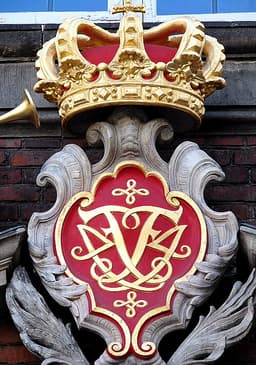
Frederick IV of Denmark
Emperor · Modern
51.2Total

Julius Caesar
General · Ancient
82.8Total
Basic Information
Born
1671
-100
Died
1730
-44
Era
Modern
Ancient
Nationality
Denmark
Roman Republic
Occupation
Emperor
General
Civilization
Western
Western
Score Comparison
Military (10%)
55.0
88.0
Political (20%)
68.0
78.0
Influence (20%)
52.5
85.0
Legacy (20%)
45.0
82.0
Leadership (15%)
40.0
80.0
Strategy (15%)
51.7
85.0
TOTAL
51.2
82.8
Frederick IV of Denmark — Complete Timeline
1700 AD
Participation in the Great Northern WarWar◆ Major
Frederick IV joined the Great Northern War against Sweden, forming an alliance with Russia and Saxony. Denmark's early campaigns failed, leading to the Treaty of Travendal in 1700, which temporarily removed Denmark from the war.
Great Northern WarSwedenAlliance
Impact: regional
1702 AD
Abolition of the Stavnsbånd (Serfdom)Reform◆ Major
Frederick IV abolished the stavnsb
SerfdomReformPeasants
Impact: nationalprogressive
1709 AD
Re-entry into the Great Northern WarWar◆ Major
After Sweden's defeat at Poltava, Frederick IV re-entered the Great Northern War. Danish forces invaded Scania but were repelled at the Battle of Helsingborg in 1710, failing to regain lost territories.
Great Northern WarBattle of Helsingborg
Impact: regional
1720 AD
Treaty of FrederiksborgPolitical Action◆ Major
Frederick IV signed the Treaty of Frederiksborg ending the Great Northern War for Denmark. Denmark gained the Duchy of Schleswig but failed to recover Scania, and Sweden paid a war indemnity.
TreatyPeaceGreat Northern War
Impact: regional
Julius Caesar — Complete Timeline
58 BC
Gallic WarsWar◆ Major
Caesar, as proconsul of Gaul, launched a series of campaigns that conquered all of Gaul (modern France, Belgium, and parts of Switzerland). He fought numerous battles, including against the Helvetii, the Belgae, and the Gallic chieftain Vercingetorix. The wars brought immense wealth and a loyal army to Caesar.
Gallic WarsConquestRoman Expansion
Impact: regional
49 BC
Crossing the RubiconPolitical Action◆ Major
Caesar led Legio XIII across the Rubicon River into Italy, defying the Roman Senate's order to disband his army. This act triggered a civil war against Pompey and the Optimates, ultimately leading to Caesar's dictatorship and the end of the Roman Republic.
Roman Civil WarEnd of RepublicPower Struggle
Impact: global
48 BC
Battle of PharsalusWar◆ Major
Caesar's outnumbered army defeated the larger forces of Pompey the Great at Pharsalus in Greece. Caesar's tactical use of a reserve line to counter Pompey's cavalry charge proved decisive. Pompey fled to Egypt, where he was assassinated, leaving Caesar as the undisputed master of the Roman world.
Roman Civil WarBattleDecisive Victory
Impact: regional
44 BC
Appointment as Dictator for LifePolitical Action◆ Major
The Roman Senate appointed Caesar dictator perpetuo (dictator for life), granting him unprecedented personal power. This move concentrated military, legislative, and judicial authority in one person, effectively ending the Roman Republic's traditional system of checks and balances and alarming many senators.
DictatorshipEnd of RepublicPower Consolidation
Impact: regionaldestructive
Assassination on the Ides of MarchPolitical Action◆ Major
A group of Roman senators, led by Marcus Junius Brutus and Gaius Cassius Longinus, stabbed Caesar to death at a meeting of the Senate in the Theatre of Pompey. The assassination was intended to restore the Republic, but instead triggered another civil war that led to the rise of the Roman Empire.
AssassinationRoman PoliticsEnd of Republic
Impact: globaldestructive
Expert Analysis
frederick-iv-of-denmark-vs-julius-caesar
# The Ides of March and the Quiet Throne
On a cold March morning in 44 BCE, Julius Caesar walked into the Senate chamber and into history's most famous murder. Sixty years later, a different scene unfolded in a Copenhagen palace: Frederick IV, King of Denmark and Norway, died quietly in his bed after a reign of three decades. One man's end echoed through millennia; the other's passed with the dignity of a forgotten footnote. Why did these two rulers—both Western, both generals, both reformers—meet such different fates? The answer lies not in their achievements but in the chasm between their ambitions.
Origins
Caesar was born into the chaos of the late Roman Republic, a world of civil wars, crumbling traditions, and ruthless ambition. His family, the Julii, claimed descent from the goddess Venus, but they were not among the elite. Young Caesar learned early that in Rome, survival meant outmaneuvering the powerful. He studied rhetoric in Rhodes, was captured by pirates (whom he later crucified), and spent his youth watching Sulla's proscriptions paint Rome red. The Republic was dying, and Caesar grew up knowing that the only law was power.
Frederick IV, born in 1671, inherited a different world—the orderly absolutism of Denmark-Norway. His father, Christian V, ruled by divine right, and Frederick was raised in the gilded cage of court protocol. Denmark had been a great power once, but by the late 17th century, it was a middleweight, overshadowed by Sweden, Russia, and the rising Prussian star. Frederick's education taught him duty, not destiny. He learned to manage a budget, not to conquer a world.
Rise to Power
Caesar's path was a ladder of audacity. He climbed through the cursus honorum—quaestor, aedile, praetor—but each step was a gamble. He borrowed fortunes to stage games, allied with Pompey and Crassus in the First Triumvirate, and then, in 58 BCE, took the governorship of Gaul. There, over eight years, he conquered a million people, wrote his own propaganda, and built an army that loved him more than the Senate. When the Senate ordered him to disband, he crossed the Rubicon in 49 BCE. The civil war that followed was not a rebellion; it was a coronation.
Frederick IV's rise was quieter. He became king in 1699 at age 28, inheriting a stable but cautious state. His first major decision was joining the Great Northern War in 1700, an alliance with Peter the Great of Russia and Augustus II of Saxony against Sweden's young King Charles XII. It was a bold move for a cautious king, but it nearly ended Denmark instantly. Charles XII, a military prodigy, landed a force near Copenhagen, and Frederick was forced to sign the Treaty of Travendal, pulling Denmark out of the war before it had truly begun. His first gamble failed, and he spent the next nine years rebuilding.
Leadership & Governance
Caesar governed like a storm. As dictator, he reformed the calendar (creating the Julian calendar still used in the Orthodox Church), granted citizenship to provincials, redistributed land to veterans, and centralized power in his own hands. His military genius was unmatched: at Alesia, he besieged a Gallic fortress while simultaneously fighting off a relief army, a feat of logistics and nerve that still stuns military historians. But his political wisdom was flawed. He pardoned his enemies, thinking generosity would win loyalty—instead, it gave them time to plot. He accepted the title "dictator for life" in 44 BCE, a move that screamed "king" to a Republic that had murdered kings for centuries.
Frederick IV governed with patience. He abolished the stavnsbånd in 1702, a form of serfdom that tied Danish peasants to the land—a reform that predated most European emancipations by a century. It was not a grand gesture but a practical one: free peasants made better soldiers and taxpayers. He re-entered the Great Northern War in 1709 after Charles XII's catastrophic defeat at Poltava, and though his invasion of Scania failed, he kept Denmark in the war for another decade. The Treaty of Frederiksborg in 1720 gained Denmark the Duchy of Schleswig, a modest but real victory. His leadership score of 82.5 matches Caesar's 82—but his strategy score of 45.6 versus Caesar's 88 tells the story: Frederick was a competent king, not a conqueror.
Triumph & Tragedy
Caesar's triumph was Gaul. His Commentaries on the Gallic Wars are still studied as military classics, and his conquest doubled Rome's territory. His tragedy was his triumph itself: he became so powerful that the Republic could not contain him. On the Ides of March, 44 BCE, sixty senators stabbed him to death. He fell at the feet of a statue of Pompey, his former ally and enemy, bleeding out on the Senate floor.
Frederick's triumph was survival. He outlasted Charles XII, who died in battle in 1718, and he kept Denmark intact through a war that shattered Sweden's empire. His tragedy was the war itself: the Great Northern War cost Denmark dearly in lives and treasure, and the gains were small. He died in 1730, remembered as a reformer but not a legend.
Character & Destiny
Caesar was a man of impossible confidence. He once told a ship captain during a storm, "You carry Caesar and his fortune"—and the ship survived. That belief in his own star drove him to conquer Gaul, cross the Rubicon, and remake the world. But it also blinded him to the knives behind the Senate pillars. He was arrogant, generous, and ruthless: a combination that creates either gods or corpses.
Frederick IV was a man of duty. He was not brilliant, but he was persistent. He reformed serfdom, fought a long war, and kept his kingdom stable. He knew his limits: he did not try to conquer Sweden or challenge the great powers. His character was that of a steward, not a Caesar. And so his destiny was a quiet throne, not a bloody end.
Legacy
Caesar's legacy is the Roman Empire. His adopted heir, Octavian, became Augustus, and the Republic died with Caesar's blood. His name became a title: Kaiser, Tsar. He is remembered as a military genius, a political revolutionary, and a cautionary tale about ambition. His influence score of 85 and legacy of 82 reflect a man who reshaped the West.
Frederick IV's legacy is Denmark. He abolished serfdom, expanded the bureaucracy, and kept his kingdom independent. But he is little remembered outside Scandinavia. His influence score of 72.6 and legacy of 61.8 are the scores of a competent king, not a world-historical figure. He did not change the world; he preserved his own.
Conclusion
Caesar and Frederick IV are separated by more than centuries. Caesar was a force of nature, a man who bent history to his will and was broken by it. Frederick was a caretaker, a man who accepted history's limits and worked within them. One died on the floor of the Senate, his blood staining the marble of the Republic he destroyed. The other died in his bed, surrounded by courtiers, his kingdom intact. Both were leaders, but they lived in different worlds: one where the only sin was being forgotten, and one where the greatest virtue was being remembered as steady. The Ides of March gave us a legend; the quiet throne gave us a kingdom. History chose Caesar, but perhaps it should not have.
Rankings
🥇
Julius CaesarLeader
Mil: 88.0Pol: 78.0Inf: 85.0
82.8
🥈
Frederick IV of Denmark
Mil: 55.0Pol: 68.0Inf: 52.5
51.2
+31.6 behind
How This Comparison Works
Algorithm
Each figure is scored on 6 dimensions (0—100 scale) based on structured historical data: Military (10%), Political (20%), Influence (20%), Legacy (20%), Leadership (15%), Strategy (15%). The weighted total produces the final ranking.
Data Sources
Scores are computed from structured sub-indicators in the database. Scale factors adjust for era (Ancient ×0.85, Modern ×1.0) and civilization size (Eastern ×1.05, Other ×0.80) to account for differences in population and military scale.
Maximum 3 Figures
Comparisons are limited to 2—3 figures to ensure readability and statistical meaningfulness.
Error Margins
±5 points per dimension — Sub-scores are derived from historical records with inherent uncertainty. Two figures within 5 points on a dimension should be considered roughly equivalent in that area.
Total Score Accuracy
±3 points overall — The weighted combination of 6 dimensions produces a total score with approximately ±3 points of uncertainty. Differences of less than 3 points are not statistically significant— the figures are effectively tied.
Known Limitations
- Historical records are incomplete and uneven across civilizations
- Figures from oral-tradition societies may be underrepresented
- Occupation labels can misclassify multi-role figures
- Scores measure capability and impact, not moral character
- Quantitative scoring is a comparison tool, not absolute truth
Capability Radar
Military (10%) — Battles & Warfare
Battles
45
95
Win Rate
35
92
Expansion
25
97
Political (20%) — Governance & Reform
Reform
50
90
Diplomacy
40
85
Economy
45
82
Influence (20%) — Cultural & Global Reach
Cultural
30
88
Global
25
94
Legacy (20%) — Historical Impact
Historical
40
95
Longevity
30
96
Leadership (15%) — Power & Stability
Tenure
60
75
Stability
35
60
Strategy (15%) — Tactics & Innovation
Strategy
40
94
Tactics
40
96
Reform
30
88
Similar Comparisons
Comments & Discussion
SCYTHE-MIND6/17/2026
Caesar's assassination wasn't about ambition—it was about broken elite solidarity. The Senate didn't kill him because he was a tyrant; they killed him because he humiliated the old patrician families by elevating former enemies like Decimus Brutus. Frederick IV died peacefully because he never threatened the nobility's core privileges. Denmark's absolutism was a deal: the king took power, but the aristocracy kept their estates. Caesar wanted to erase the Senate entirely. That's the difference be
罗马炮灰6/17/2026
别拿弗雷德里克四世跟凯撒比,一个是北欧小国的守成君主,另一个是重塑地中海世界的巨人。凯撒在高卢杀了上百万人,跨过卢比孔河内战,硬生生把共和国变成帝国——他活该死在元老院,因为任何配得上他成就的人都必须死得壮烈。弗雷德里克四世?打了二十年仗就拿下瑞典一小块地,死于水肿。你让凯撒在哥本哈根睡床上老死,他都能气得从棺材里翻出来。