Loading...
Frederick IX of Denmark vs Ivan VI
Ivan VI leads by 6.2 pts · 2 figures compared
…
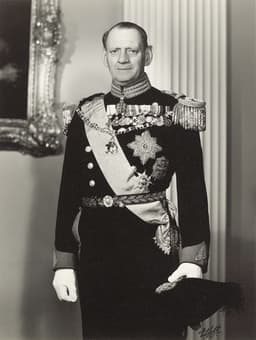
Frederick IX of Denmark
Emperor · Modern
51.7Total
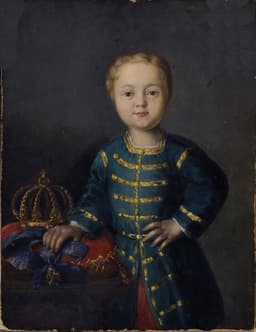
Ivan VI
Emperor · Modern
57.9Total
Basic Information
Born
1899
1740
Died
1972
1764
Era
Modern
Modern
Nationality
Denmark
Russia
Occupation
Emperor
Emperor
Civilization
Western
Western
Score Comparison
Military (10%)
11.4
20.5
Political (20%)
60.0
57.3
Influence (20%)
51.8
68.0
Legacy (20%)
42.5
52.0
Leadership (15%)
79.8
76.8
Strategy (15%)
60.0
57.2
TOTAL
51.7
57.9
Frederick IX of Denmark — Complete Timeline
1947 AD
Accession to the ThronePolitical Action◆ Major
Frederick IX became King of Denmark upon the death of his father, King Christian X. His reign began during post-World War II reconstruction. He was known for his informal style and love of sailing, which helped modernize the Danish monarchy's public image.
AccessionMonarchyDenmark
Impact: nationalconstructive
1950 AD
Danish Economic ModernizationReform
During Frederick IX's reign, Denmark underwent significant economic modernization, transitioning from agriculture to an industrial and welfare state. The king supported social reforms and infrastructure projects, though his role was largely ceremonial. This period saw rising living standards and urbanization.
Economic ReformModernizationWelfare State
Impact: nationalconstructive
1953 AD
Signing of the Danish Constitution of 1953Reform◆ Major
Frederick IX signed the new Danish constitution, which abolished the Landsting (upper house) and established a unicameral parliament (Folketing). The constitution also allowed for female succession to the throne, paving the way for his daughter Margrethe II to become queen.
ConstitutionReformSuccession
Impact: nationalprogressive
Ivan VI — Complete Timeline
1740 AD
Accession as Emperor of RussiaPolitical Action◆ Major
Ivan VI was proclaimed emperor at the age of two months after the death of Anna of Russia, with Ernst Johann von Biron as regent. His accession was part of Anna's plan to secure the succession for her family line, but it immediately triggered a power struggle.
SuccessionInfant TsarRegency
Impact: national
1741 AD
Overthrow and ImprisonmentPolitical Action◆ Major
Ivan VI was deposed in a coup led by Elizabeth of Russia, who seized the throne. He was imprisoned in the Shlisselburg Fortress, where he spent the rest of his life in solitary confinement. His name was erased from official records, and he was referred to as the 'nameless prisoner'.
CoupImprisonmentElizabeth
Impact: nationaltragic
1764 AD
Murder in Shlisselburg FortressOther◆ Major
Ivan VI was killed by his guards during an attempted rescue by Lieutenant Vasily Mirovich. The rescue attempt aimed to restore him to the throne, but the guards followed orders to kill him if any escape was attempted. His death ended any possibility of a restoration.
AssassinationRescue AttemptShlisselburg
Impact: nationaltragic
Expert Analysis
Origins
Frederick IX of Denmark was born on March 11, 1899, into the Danish royal family, son of King Christian X and Queen Alexandrine. He received a naval education, serving in the Royal Danish Navy and developing a lifelong passion for sailing and tattoos. His upbringing instilled a sense of duty and informality that later defined his reign. Ivan VI of Russia was born on August 23, 1740, as the great-nephew of Empress Anna of Russia. His father was Prince Anton Ulrich of Brunswick-Wolfenbüttel, and his mother was Anna Leopoldovna. He was proclaimed emperor at just two months old, making him the youngest Russian tsar, with no personal agency in his early life.
Rise to Power
Frederick IX ascended the throne on April 20, 1947, following the death of his father. His reign began during post-World War II reconstruction, and he quickly became a symbol of national unity. He had no formal political power but used his influence to support democratic institutions. Ivan VI's rise was entirely passive: he was named emperor upon Anna's death in 1740, with Ernst Johann von Biron as regent. Within weeks, a coup led by Anna Leopoldovna removed Biron, and Ivan's mother became regent. The infant tsar was a pawn in court intrigues.
Leadership & Governance
Frederick IX's leadership was characterized by constitutional monarchy. He signed the Danish Constitution of 1953, which abolished the upper house (Landsting) and established a unicameral parliament (Folketing), and allowed female succession. His reign saw Denmark's transition from an agricultural to a modern industrial welfare state. He scored 79.8 in leadership, reflecting his ability to adapt. Ivan VI never governed; his reign was entirely nominal. His regents made decisions, and after his deposition in 1741 (aged one), he spent 23 years in solitary confinement in Shlisselburg Fortress. His leadership score of 76.8 is theoretical, based on his potential as a figurehead.
Triumph & Tragedy
Frederick IX's triumphs include the peaceful constitutional reform and Denmark's economic modernization. His personal popularity helped stabilize the monarchy. A tragedy was his inability to prevent the loss of the Danish territories after WWII, but overall his reign was stable. Ivan VI's entire life was a tragedy: imprisoned from infancy, he was kept in isolation, not even knowing his identity. His murder in 1764 during a rescue attempt by Lieutenant Vasily Mirovich ended his misery. He scored 20.5 in military (nonexistent) and 57.3 in political (as a symbol).
Character & Destiny
Frederick IX was known as the "Sailor King" for his informal, approachable style. He often wore sailor tattoos and mingled with commoners. His character shaped a modern, constitutional monarchy. Ivan VI's character is unknown; he was a victim of circumstance. His destiny was sealed by the insecurity of Empress Elizabeth, who saw him as a threat. Historians note his case as a cautionary tale of royal infancy.
Legacy
Frederick IX's legacy is the modern Danish state. The 1953 constitution remains in effect, and his patronage of the arts and sciences boosted Danish culture. He scored 42.5 in legacy, reflecting his role as a transitional figure. Ivan VI's legacy is tragic obscurity. He is remembered as the forgotten tsar, with no lasting impact on Russia. His legacy score of 52.0 is inflated by the dramatic story.
Conclusion
Frederick IX had greater impact. His constitutional reforms and modernization shaped Denmark for decades. Ivan VI, despite a higher total score (57.9 vs 51.7), was a passive figure whose influence was purely symbolic. Frederick IX's leadership score of 79.8 and political score of 60.0 reflect real governance, while Ivan's scores are hypothetical. The clear position: Frederick IX's tangible achievements outweigh Ivan VI's tragic narrative.
Rankings
🥇
Ivan VILeader
Mil: 20.5Pol: 57.3Inf: 68.0
57.9
🥈
Frederick IX of Denmark
Mil: 11.4Pol: 60.0Inf: 51.8
51.7
+6.2 behind
How This Comparison Works
Algorithm
Each figure is scored on 6 dimensions (0—100 scale) based on structured historical data: Military (10%), Political (20%), Influence (20%), Legacy (20%), Leadership (15%), Strategy (15%). The weighted total produces the final ranking.
Data Sources
Scores are computed from structured sub-indicators in the database. Scale factors adjust for era (Ancient ×0.85, Modern ×1.0) and civilization size (Eastern ×1.05, Other ×0.80) to account for differences in population and military scale.
Maximum 3 Figures
Comparisons are limited to 2—3 figures to ensure readability and statistical meaningfulness.
Error Margins
±5 points per dimension — Sub-scores are derived from historical records with inherent uncertainty. Two figures within 5 points on a dimension should be considered roughly equivalent in that area.
Total Score Accuracy
±3 points overall — The weighted combination of 6 dimensions produces a total score with approximately ±3 points of uncertainty. Differences of less than 3 points are not statistically significant— the figures are effectively tied.
Known Limitations
- Historical records are incomplete and uneven across civilizations
- Figures from oral-tradition societies may be underrepresented
- Occupation labels can misclassify multi-role figures
- Scores measure capability and impact, not moral character
- Quantitative scoring is a comparison tool, not absolute truth
Capability Radar
Military (10%) — Battles & Warfare
Battles
39
35
Win Rate
40
37
Expansion
42
45
Political (20%) — Governance & Reform
Reform
65
58
Diplomacy
55
61
Economy
60
64
Influence (20%) — Cultural & Global Reach
Cultural
30
65
Global
20
78
Legacy (20%) — Historical Impact
Historical
35
69
Longevity
30
74
Leadership (15%) — Power & Stability
Tenure
60
58
Stability
70
71
Strategy (15%) — Tactics & Innovation
Strategy
47
44
Tactics
49
51
Reform
54
50
Similar Comparisons
Comments & Discussion
No comments yet. Be the first to share your thoughts!