Loading...
Frederick V of the Palatinate vs Guru Arjan Dev
Guru Arjan Dev leads by 15.5 pts · 2 figures compared
…

Frederick V of the Palatinate
Emperor · Modern
38.1Total
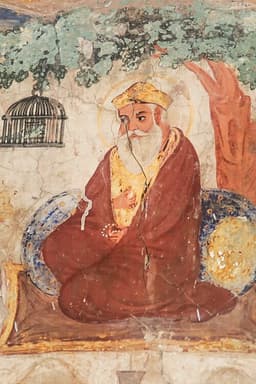
Guru Arjan Dev
Emperor · Modern
53.6Total
Basic Information
Born
1596
1563
Died
1632
1606
Era
Modern
Modern
Nationality
Bohemia
India
Occupation
Emperor
Emperor
Civilization
Western
Indian
Score Comparison
Military (10%)
14.9
35.7
Political (20%)
27.9
53.8
Influence (20%)
49.4
72.0
Legacy (20%)
38.3
40.0
Leadership (15%)
33.6
58.8
Strategy (15%)
54.8
51.3
TOTAL
38.1
53.6
Frederick V of the Palatinate — Complete Timeline
1619 AD
Election as King of BohemiaPolitical Action
Frederick V was elected King of Bohemia by the Protestant estates after the Defenestration of Prague. This challenged the Habsburg rule and triggered the Thirty Years' War.
Thirty Years' WarBohemian Revolt
Impact: regional
1620 AD
Battle of White MountainWar◆ Major
Frederick V's forces were decisively defeated by the Catholic League army under Johann Tserclaes von Tilly near Prague. This ended his reign as Winter King and forced him into exile.
Thirty Years' WarBattleExile
Impact: regionaltragic
1621 AD
Exile in The HaguePolitical Action
After losing Bohemia, Frederick V fled to the Dutch Republic and established a court in The Hague. He spent the rest of his life attempting to regain his territories through diplomacy and military alliances.
ExileThirty Years' War
Impact: regionaltragic
Guru Arjan Dev — Complete Timeline
1581 AD
Appointed Fifth Sikh GuruPolitical Action
Guru Ram Das appointed Arjan Dev as his successor, making him the fifth Sikh Guru. This continued the tradition of guru succession and marked a period of consolidation for Sikhism.
SikhismGuru SuccessionLeadership
Impact: globalconstructive
1590 AD
Established the City of Tarn TaranCultural
Guru Arjan Dev founded the city of Tarn Taran and built a large sarovar (pool) there. It became a center for Sikh pilgrimage and community activities.
City FoundationPilgrimageSikhism
Impact: regionalconstructive
1604 AD
Compiled the Adi GranthCultural◆ Major
Guru Arjan Dev compiled the Adi Granth, the primary Sikh scripture, containing hymns of Sikh Gurus and other saints. He installed it at the Harmandir Sahib, establishing it as the central religious text of Sikhism.
ScriptureAdi GranthSikhism
Impact: globalconstructive
Completed the Harmandir Sahib (Golden Temple)Cultural◆ Major
Guru Arjan Dev completed the construction of the Harmandir Sahib in Amritsar, with a central location and doors on all four sides symbolizing openness. It became the holiest Sikh shrine and a symbol of Sikh identity.
TempleAmritsarSikhism
Impact: globalconstructive
1606 AD
Martyred by Mughal Emperor JahangirPolitical Action
Guru Arjan Dev was arrested and executed by order of Emperor Jahangir, accused of supporting a rebel prince. He was tortured for five days and died in the Ravi River. This event became a turning point, militarizing the Sikh community.
MartyrdomMughal PersecutionSikhism
Impact: globaltragic
Expert Analysis
Origins
Frederick V was born in 1596 in the Palatinate, a key Protestant state in the Holy Roman Empire. His father, Frederick IV, was a leading Calvinist prince. Educated in Heidelberg, he inherited the Electorate of the Palatinate in 1610 at age 14, ruling under a regency until 1614. His marriage to Elizabeth Stuart, daughter of King James I of England, connected him to European Protestant networks.
Guru Arjan Dev was born in 1563 in Goindwal, Punjab, into the Sodhi clan. His father, Guru Ram Das, was the fourth Sikh Guru. He was trained in religious scriptures and administration, succeeding his father as Guru in 1581. He oversaw the construction of the Harmandir Sahib (Golden Temple) and compiled the Adi Granth, the central Sikh scripture.
Rise to Power
Frederick V's rise came through the Bohemian Revolt. In 1618, Protestant nobles in Bohemia defenestrated Habsburg officials and offered the crown to Frederick. Accepting in 1619, he was crowned King of Bohemia, challenging Emperor Ferdinand II. This act triggered the Thirty Years' War. Frederick's power base was fragile, relying on Protestant allies who provided limited support.
Guru Arjan Dev's rise was smooth, appointed by his father Guru Ram Das in 1581. He expanded Sikh institutions, completing the Harmandir Sahib in 1604 and compiling the Adi Granth in 1604. He established the city of Tarn Taran and a network of masands (deputies) to collect offerings. His leadership consolidated Sikhism as a distinct faith.
Leadership & Governance
Frederick V's governance was ineffective. As Winter King, he ruled Bohemia for only one winter (1619-1620). He failed to secure broad support, alienating both moderate Catholics and radical Protestants. His military strategy was poor; he awaited Spanish and Bavarian forces at White Mountain on November 8, 1620, where his army of 30,000 was routed by 27,000 Imperial troops. He fled to The Hague, spending his remaining years in exile, scoring 14.9 in military and 27.9 in political.
Guru Arjan Dev's leadership was administrative and spiritual. He structured Sikh communities, standardized rituals, and built a central shrine. His governance emphasized openness: the Harmandir Sahib had four doors welcoming all castes and religions. He faced political pressure from the Mughal Empire, but his martyrdom in 1606 under Emperor Jahangir galvanized Sikh resistance. He scored 58.8 in leadership and 53.8 in political.
Triumph & Tragedy
Frederick's triumph was becoming King of Bohemia, a symbolic victory for Protestantism. His tragedy was the swift loss of his kingdom and his reputation as Winter King. The Battle of White Mountain ended his reign and led to the confiscation of his Palatinate lands. He died in 1632 in exile, never regaining his territories.
Guru Arjan Dev's triumph was the compilation of the Adi Granth and completion of the Golden Temple, which became the spiritual center of Sikhism. His tragedy was his martyrdom: arrested on charges of supporting a rebel prince, he was tortured for five days and died in the Ravi River. His death transformed Sikhism, militarizing the community under subsequent Gurus.
Character & Destiny
Frederick V was idealistic but indecisive. He believed in divine right but lacked pragmatism. His character led to his downfall; he ignored advice to negotiate and committed to war without resources. Historians view him as a well-meaning but weak ruler.
Guru Arjan Dev was steadfast and principled. He chose martyrdom over conversion to Islam, setting a precedent for Sikh resistance. His character shaped Sikh identity as a distinct faith willing to sacrifice for beliefs. He is remembered as the first Sikh martyr.
Legacy
Frederick V's legacy is minimal. He is remembered as the Winter King, a cautionary tale of overreach. His defeat contributed to the devastation of the Palatinate and the Thirty Years' War. He scored 38.3 in legacy.
Guru Arjan Dev's legacy is profound. The Adi Granth remains the eternal Guru for Sikhs, and the Golden Temple is a major pilgrimage site. His martyrdom inspired Sikh militarization under Guru Hargobind, leading to the Khalsa. His influence scores 72.0.
Conclusion
Guru Arjan Dev had greater impact. While Frederick V's brief reign triggered a continent-wide war, his personal influence was negligible. Guru Arjan Dev shaped a religion that now has 25 million followers, with his scriptures and shrine enduring for centuries. The score gap of 15.5 points reflects this: Guru Arjan Dev's total of 53.6 vs Frederick's 38.1. Frederick's failure was personal; Guru Arjan's success was institutional and spiritual.
Rankings
🥇
Guru Arjan DevLeader
Mil: 35.7Pol: 53.8Inf: 72.0
53.6
🥈
Frederick V of the Palatinate
Mil: 14.9Pol: 27.9Inf: 49.4
38.1
+15.5 behind
How This Comparison Works
Algorithm
Each figure is scored on 6 dimensions (0—100 scale) based on structured historical data: Military (10%), Political (20%), Influence (20%), Legacy (20%), Leadership (15%), Strategy (15%). The weighted total produces the final ranking.
Data Sources
Scores are computed from structured sub-indicators in the database. Scale factors adjust for era (Ancient ×0.85, Modern ×1.0) and civilization size (Eastern ×1.05, Other ×0.80) to account for differences in population and military scale.
Maximum 3 Figures
Comparisons are limited to 2—3 figures to ensure readability and statistical meaningfulness.
Error Margins
±5 points per dimension — Sub-scores are derived from historical records with inherent uncertainty. Two figures within 5 points on a dimension should be considered roughly equivalent in that area.
Total Score Accuracy
±3 points overall — The weighted combination of 6 dimensions produces a total score with approximately ±3 points of uncertainty. Differences of less than 3 points are not statistically significant— the figures are effectively tied.
Known Limitations
- Historical records are incomplete and uneven across civilizations
- Figures from oral-tradition societies may be underrepresented
- Occupation labels can misclassify multi-role figures
- Scores measure capability and impact, not moral character
- Quantitative scoring is a comparison tool, not absolute truth
Capability Radar
Military (10%) — Battles & Warfare
Battles
10
31
Win Rate
5
32
Expansion
5
38
Political (20%) — Governance & Reform
Reform
10
70
Diplomacy
15
40
Economy
10
50
Influence (20%) — Cultural & Global Reach
Cultural
20
75
Global
15
60
Legacy (20%) — Historical Impact
Historical
25
80
Longevity
15
85
Leadership (15%) — Power & Stability
Tenure
5
25
Stability
5
30
Strategy (15%) — Tactics & Innovation
Strategy
10
39
Tactics
10
43
Reform
5
43
Similar Comparisons
Comments & Discussion
No comments yet. Be the first to share your thoughts!