Loading...
Guru Arjan Dev vs Qin Shi Huang
Qin Shi Huang leads by 31.6 pts · 2 figures compared
…
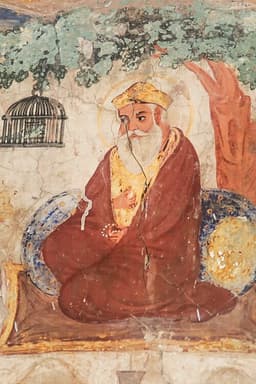
Guru Arjan Dev
Emperor · Modern
53.6Total
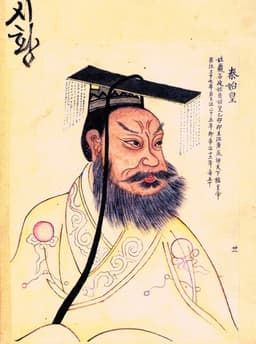
Qin Shi Huang
Emperor · Ancient
85.2Total
Basic Information
Born
1563
-259
Died
1606
-210
Era
Modern
Ancient
Nationality
India
China
Occupation
Emperor
Emperor
Civilization
Indian
Eastern
Score Comparison
Military (10%)
35.7
80.0
Political (20%)
53.8
90.0
Influence (20%)
72.0
85.0
Legacy (20%)
40.0
90.0
Leadership (15%)
58.8
78.0
Strategy (15%)
51.3
82.0
TOTAL
53.6
85.2
Guru Arjan Dev — Complete Timeline
1581 AD
Appointed Fifth Sikh GuruPolitical Action
Guru Ram Das appointed Arjan Dev as his successor, making him the fifth Sikh Guru. This continued the tradition of guru succession and marked a period of consolidation for Sikhism.
SikhismGuru SuccessionLeadership
Impact: globalconstructive
1590 AD
Established the City of Tarn TaranCultural
Guru Arjan Dev founded the city of Tarn Taran and built a large sarovar (pool) there. It became a center for Sikh pilgrimage and community activities.
City FoundationPilgrimageSikhism
Impact: regionalconstructive
1604 AD
Compiled the Adi GranthCultural◆ Major
Guru Arjan Dev compiled the Adi Granth, the primary Sikh scripture, containing hymns of Sikh Gurus and other saints. He installed it at the Harmandir Sahib, establishing it as the central religious text of Sikhism.
ScriptureAdi GranthSikhism
Impact: globalconstructive
Completed the Harmandir Sahib (Golden Temple)Cultural◆ Major
Guru Arjan Dev completed the construction of the Harmandir Sahib in Amritsar, with a central location and doors on all four sides symbolizing openness. It became the holiest Sikh shrine and a symbol of Sikh identity.
TempleAmritsarSikhism
Impact: globalconstructive
1606 AD
Martyred by Mughal Emperor JahangirPolitical Action
Guru Arjan Dev was arrested and executed by order of Emperor Jahangir, accused of supporting a rebel prince. He was tortured for five days and died in the Ravi River. This event became a turning point, militarizing the Sikh community.
MartyrdomMughal PersecutionSikhism
Impact: globaltragic
Qin Shi Huang — Complete Timeline
246 BC
Construction of the Mausoleum and Terracotta ArmyOther◆ Major
Qin Shi Huang commissioned a vast mausoleum complex near Xi'an, guarded by thousands of life-sized terracotta soldiers, horses, and chariots. The project employed hundreds of thousands of workers and reflected his obsession with immortality and imperial power.
Impact: global
230 BC
Conquest of the Six Warring StatesWar
From 230 to 221 BCE, Ying Zheng led the Qin state in a series of campaigns that conquered the Han, Zhao, Wei, Chu, Yan, and Qi states. This unified China under a single ruler for the first time, ending the Warring States period.
Impact: global
221 BC
Standardization of Writing, Currency, and MeasurementsReform◆ Major
Qin Shi Huang ordered the standardization of Chinese script, currency, and weights and measures across the unified empire. This facilitated administration, trade, and cultural integration, laying a foundation for future dynasties.
Impact: globalconstructive
Proclamation of the Qin DynastyPolitical Action
After conquering the last independent state, Ying Zheng declared himself Shi Huangdi (First Emperor), founding the Qin Dynasty. He adopted a new title to signify his supreme authority and initiated centralized imperial rule.
Impact: global
214 BC
Initiation of the Great Wall ConstructionOther◆ Major
Qin Shi Huang ordered the connection and extension of existing northern fortifications to create a unified defensive wall against nomadic Xiongnu raids. This project involved massive conscripted labor and became the precursor to the later Great Wall.
Impact: regional
213 BC
Burning of Books and Burying of ScholarsPolitical Action◆ Major
On the advice of Li Si, Qin Shi Huang ordered the burning of historical records and philosophical texts not aligned with Legalist doctrine. He also had 460 Confucian scholars buried alive to suppress dissent and consolidate ideological control.
Impact: nationaldestructive
Expert Analysis
guru-arjan-dev-vs-qin-shi-huang
# The Unifier and the Saint: Two Visions of Power in Ancient Worlds
In the winter of 213 BCE, Qin Shi Huang’s officials fanned across his newly unified empire, gathering every book that did not glorify his rule—philosophical treatises, historical chronicles, poetry—and burned them in public squares. Scholars who protested were buried alive. Half a world away and eighteen centuries later, in 1604, Guru Arjan Dev lowered the foundation stone of the Harmandir Sahib in Amritsar, a temple open to all castes and creeds, its four doors welcoming every direction. He then compiled the Adi Granth, a scripture that preserved the voices of Hindu bhaktas, Muslim Sufis, and Sikh Gurus side by side. One man sought to control the past; the other sought to liberate the future. Both paid a terrible price.
Origins
Ying Zheng was born in 259 BCE, during the blood-soaked Warring States period, when seven Chinese kingdoms clawed at each other for supremacy. His father was a hostage in the Zhao court; his mother, a former concubine. The boy grew up surrounded by intrigue, poison plots, and the constant threat of assassination. By thirteen, he was king of Qin, a state that worshipped law, order, and military efficiency. The world he inherited taught him that power was the only truth.
Guru Arjan Dev was born in 1563 in Goindwal, Punjab, into a lineage of spiritual masters. His grandfather, Guru Amar Das, had organized the Sikh community into a network of preaching centers. His father, Guru Ram Das, had begun digging the sacred pool at Amritsar. Arjan was raised in an atmosphere of devotion, poetry, and service. The world he inherited taught him that truth was the only power.
Rise to Power
Qin Shi Huang’s ascent was a military conquest. From 230 to 221 BCE, his armies rolled across China like a bronze tide, annexing Han, Zhao, Wei, Chu, Yan, and Qi. He fought personally in campaigns, studied siegecraft, and promoted ruthless generals. When the last king surrendered, Ying Zheng did not simply claim a new title—he invented one: *Shi Huangdi*, the First Emperor, a name that erased his mortal origins and declared himself the bridge between heaven and earth.
Guru Arjan Dev’s rise was quiet and spiritual. In 1581, his father Guru Ram Das appointed him successor, passing over his older brother Prithi Chand, who seethed with jealousy. Arjan did not seize power; he received it as a trust. His authority came not from armies but from the growing Sikh *sangat*—the congregation—whose faith he nurtured through hymns and pilgrimages. Where the First Emperor built walls, the fifth Guru built communities.
Leadership & Governance
Qin Shi Huang ruled through standardization. He imposed a single script across China, a single currency, a single axle length for carts so they would fit the same ruts. He divided the empire into commanderies governed by appointed officials, not hereditary lords, creating the bureaucratic model that would define China for two millennia. He connected defensive walls into what would become the Great Wall. His methods were efficient, brilliant—and brutal. The Legalist philosophy he followed held that law existed to control human nature, not to liberate it. Punishment was swift, dissent was treason, and history itself had to be rewritten to suit his glory.
Guru Arjan Dev ruled through synthesis. The Harmandir Sahib he completed in 1604 sat lower than the surrounding city—visitors had to step down to enter, symbolizing humility. Its four doors welcomed Brahmins and outcasts, Hindus and Muslims. The Adi Granth he compiled wove together the hymns of Sikh Gurus with verses from Kabir, Farid, Ravidas, and Namdev—saints from different traditions. He organized the Sikh community with a system of *masands* (local leaders) who collected offerings and spread teachings, creating a decentralized network of faith. His governance was not about control but about connection.
Triumph & Tragedy
Qin Shi Huang’s greatest triumph was also his greatest tragedy. He unified China, but at a staggering human cost. His mausoleum, begun in 246 BCE, consumed the labor of hundreds of thousands of workers, many of whom were buried with it to protect its secrets. The Terracotta Army—thousands of life-sized warriors, each with a unique face—stands as a monument to his obsession with immortality. He consumed mercury elixirs, sent expeditions for the islands of the immortals, and died in 210 BCE at age forty-nine, poisoned by his own search for eternal life. Within three years, his dynasty collapsed.
Guru Arjan Dev’s triumph was his scripture. The Adi Granth became the living Guru of Sikhism, a permanent source of guidance that no tyrant could burn. His tragedy came from Mughal Emperor Jahangir, who in 1606 accused the Guru of supporting a rebel prince. The Guru was arrested, tortured by being made to sit on a hot iron plate while boiling sand was poured over him, and then drowned in the Ravi River. He did not resist. His final words, according to tradition, were a hymn of surrender: “Your will is sweet to me.”
Character & Destiny
Qin Shi Huang was a man of immense will and profound paranoia. He slept in different rooms each night to avoid assassination. He built hidden roads and secret passages. He believed that the universe could be bent to his design—that writing, measurements, and even time itself could be standardized and controlled. His destiny was to create an empire so powerful that its name—*China*—would outlast his dynasty by two thousand years. But his personality also sowed the seeds of collapse: his cruelty exhausted the people, his centralization left no room for dissent, and his obsession with immortality blinded him to the fragility of his own creation.
Guru Arjan Dev was a man of deep humility and unshakable conviction. When his brother Prithi Chand tried to usurp him, the Guru responded not with violence but with hymns. When Jahangir demanded he convert to Islam, he refused. His destiny was to create not an empire but a faith—a community that would survive persecution, partition, and centuries of change. His personality shaped Sikhism’s character: open, inclusive, and willing to suffer for truth.
Legacy
Qin Shi Huang’s legacy is the Chinese imperial system itself. Every subsequent dynasty—Han, Tang, Ming, Qing—borrowed his administrative framework. The Great Wall, the standardized script, the very idea of a unified China: these are his gifts and his shadows. He is remembered as both a founder and a tyrant, the man who made China and the man who burned its books.
Guru Arjan Dev’s legacy is Sikhism as a world religion. The Adi Granth remains the eternal Guru for millions. The Harmandir Sahib, rebuilt after multiple destructions, is the holiest site in Sikhism. His martyrdom transformed Sikhism from a peaceful movement into one that would later take up arms in self-defense—but his core message of inclusion, humility, and devotion endures.
Conclusion
One built with iron and fire, the other with ink and faith. One conquered six kingdoms, the other conquered hatred. Both were killed by the world they tried to shape—one by his own elixirs, the other by an emperor’s sword. Yet both succeeded beyond their lifetimes. Qin Shi Huang’s China still stands. Guru Arjan Dev’s scripture is still sung. The difference between them is not in outcome but in method: whether power flows from the top down, controlling everything it touches, or from the bottom up, liberating everything it inspires. History, it seems, has room for both—but only one of them built a temple with four doors.
Rankings
🥇
Qin Shi HuangLeader
Mil: 80.0Pol: 90.0Inf: 85.0
85.2
🥈
Guru Arjan Dev
Mil: 35.7Pol: 53.8Inf: 72.0
53.6
+31.6 behind
How This Comparison Works
Algorithm
Each figure is scored on 6 dimensions (0—100 scale) based on structured historical data: Military (10%), Political (20%), Influence (20%), Legacy (20%), Leadership (15%), Strategy (15%). The weighted total produces the final ranking.
Data Sources
Scores are computed from structured sub-indicators in the database. Scale factors adjust for era (Ancient ×0.85, Modern ×1.0) and civilization size (Eastern ×1.05, Other ×0.80) to account for differences in population and military scale.
Maximum 3 Figures
Comparisons are limited to 2—3 figures to ensure readability and statistical meaningfulness.
Error Margins
±5 points per dimension — Sub-scores are derived from historical records with inherent uncertainty. Two figures within 5 points on a dimension should be considered roughly equivalent in that area.
Total Score Accuracy
±3 points overall — The weighted combination of 6 dimensions produces a total score with approximately ±3 points of uncertainty. Differences of less than 3 points are not statistically significant— the figures are effectively tied.
Known Limitations
- Historical records are incomplete and uneven across civilizations
- Figures from oral-tradition societies may be underrepresented
- Occupation labels can misclassify multi-role figures
- Scores measure capability and impact, not moral character
- Quantitative scoring is a comparison tool, not absolute truth
Capability Radar
Military (10%) — Battles & Warfare
Battles
31
85
Win Rate
32
90
Expansion
38
90
Political (20%) — Governance & Reform
Reform
70
95
Diplomacy
40
75
Economy
50
90
Influence (20%) — Cultural & Global Reach
Cultural
75
95
Global
60
85
Legacy (20%) — Historical Impact
Historical
80
95
Longevity
85
95
Leadership (15%) — Power & Stability
Tenure
25
70
Stability
30
65
Strategy (15%) — Tactics & Innovation
Strategy
39
85
Tactics
43
80
Reform
43
95
Similar Comparisons
Comments & Discussion
QIN-BURNER6/17/2026
Qin Shi Huang wasn't just burning books - he was torching entire schools of thought. The guy literally buried 460 Confucian scholars alive because they disagreed with him. That's not "unification," that's intellectual genocide. Meanwhile, Guru Arjan was building a temple with doors on all four sides to welcome everyone. One created a library of diverse voices that still inspires millions. The other created a library of ashes. History isn't subtle about which legacy matters more.
圣书守护者6/17/2026
拿始皇帝和阿尔琼大师比?开什么玩笑。一个用焚书坑儒来巩固权力,另一个用《阿迪格兰特》保存了不同信仰的声音。更别提始皇帝还修长城死了几百万人,而大师建金庙时是让众人共同参与。一个把帝国建在尸骨上,一个把信仰建在包容里。这根本就不是同一级别的领袖,始皇帝顶多算个暴君,大师才是真正的统一者。
VOID-MAKER6/17/2026
Let's be real here - Qin Shi Huang's censorship was wildly successful. He destroyed so many texts that we still don't know what the original Hundred Schools of Thought fully contained. That's not just burning paper; that's erasing entire philosophical universes. Guru Arjan's compilation preserved everything from Kabir to Namdev. One man created a void we can't fill; the other filled a void we didn't know we had. History's winners write the books, but the losers get their books burned. Who's real
实践派6/17/2026
数据不会说谎:始皇帝在位37年,修了5000多公里的长城,死了近百万劳工。阿尔琼大师监督建造金庙,还编纂了包含36位圣人的经典,没有一个因他而死。所谓"统一"的代价就是人命,而"包容"的收益却是永恒的智慧。账算得明白:一个用铁腕统治,一个用心感化。我选后者,毕竟没人想在长城脚下当白骨。
CHAIN-AND-KEY6/17/2026
Here's what gets me: both men were "unifiers" in their own way. Qin Shi Huang unified China through terror, standardized everything from writing to cart axles, and still his empire fell within years of his death. Guru Arjan unified a fractured spiritual landscape through love, collected hymns from Hindus and Muslims alike, and his legacy is a living religion 400 years later. Which unification do you think actually worked? Read the room, historians.