Loading...
Frederick V of the Palatinate vs William Ernest of Saxe-Weimar
William Ernest of Saxe-Weimar leads by 0.8 pts · 2 figures compared
…

Frederick V of the Palatinate
Emperor · Modern
38.1Total
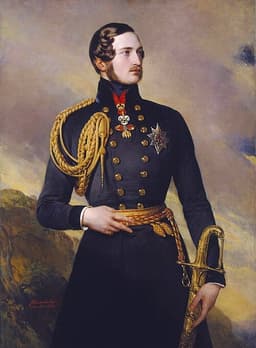
William Ernest of Saxe-Weimar
Emperor · Modern
38.9Total
Basic Information
Born
1596
1876
Died
1632
1923
Era
Modern
Modern
Nationality
Bohemia
Saxe-Weimar
Occupation
Emperor
Emperor
Civilization
Western
Western
Score Comparison
Military (10%)
14.9
45.6
Political (20%)
27.9
26.4
Influence (20%)
49.4
45.5
Legacy (20%)
38.3
33.3
Leadership (15%)
33.6
41.5
Strategy (15%)
54.8
45.0
TOTAL
38.1
38.9
Frederick V of the Palatinate — Complete Timeline
1619 AD
Election as King of BohemiaPolitical Action
Frederick V was elected King of Bohemia by the Protestant estates after the Defenestration of Prague. This challenged the Habsburg rule and triggered the Thirty Years' War.
Thirty Years' WarBohemian Revolt
Impact: regional
1620 AD
Battle of White MountainWar◆ Major
Frederick V's forces were decisively defeated by the Catholic League army under Johann Tserclaes von Tilly near Prague. This ended his reign as Winter King and forced him into exile.
Thirty Years' WarBattleExile
Impact: regionaltragic
1621 AD
Exile in The HaguePolitical Action
After losing Bohemia, Frederick V fled to the Dutch Republic and established a court in The Hague. He spent the rest of his life attempting to regain his territories through diplomacy and military alliances.
ExileThirty Years' War
Impact: regionaltragic
William Ernest of Saxe-Weimar — Complete Timeline
1901 AD
Succeeded as Grand Duke of Saxe-Weimar-EisenachPolitical Action
William Ernest inherited the grand duchy upon his grandfather Charles Alexander's death. He ruled during the late German Empire, a period of increasing political tension and the lead-up to World War I.
SuccessionGerman Empire
Impact: national
1908 AD
Construction of the Weimar Court TheatreCultural
William Ernest oversaw the construction of a new court theatre building in Weimar, designed by architect Max Littmann. The theatre became a major cultural venue, continuing Weimar's tradition of performing arts.
TheatreWeimarArchitecture
constructive
1918 AD
Abdicated the ThronePolitical Action◆ Major
William Ernest abdicated following the German Revolution of 1918, which overthrew the monarchies of the German Empire. Saxe-Weimar-Eisenach became part of the Free State of Thuringia in the Weimar Republic, ending the dynasty's rule.
AbdicationGerman RevolutionEnd of Monarchy
Impact: nationaltragic
Expert Analysis
Origins
Frederick V of the Palatinate was born on August 26, 1596, in Deinschwang, into the House of Wittelsbach. His father, Frederick IV, was the Elector Palatine, a leading Calvinist prince in the Holy Roman Empire. Frederick V received a thorough education in theology, law, and languages, influenced by his Calvinist upbringing. He became Elector Palatine at age 14 upon his father's death in 1610, with regents governing until 1614.
William Ernest of Saxe-Weimar was born on June 10, 1876, in Weimar, into the House of Wettin. His grandfather, Charles Alexander, was the Grand Duke of Saxe-Weimar-Eisenach. William Ernest was educated privately and attended the University of Bonn, studying law and history. He inherited the grand duchy at age 24 after his grandfather's death in 1901, ruling during the late German Empire.
Rise to Power
Frederick V's rise was tied to the escalating religious tensions in the Holy Roman Empire. In 1618, the Protestant estates of Bohemia rebelled against Habsburg rule in the Defenestration of Prague. They deposed the Catholic King Ferdinand II and offered the crown to Frederick V, a prominent Calvinist leader. Frederick accepted the crown on September 26, 1619, despite warnings from his advisors about the risks. This act directly challenged the Habsburgs and triggered the Thirty Years' War.
William Ernest's rise was hereditary. He became Grand Duke of Saxe-Weimar-Eisenach on January 5, 1901, upon the death of his grandfather. His rule was part of the German Empire under Kaiser Wilhelm II. He focused on cultural patronage and modernization, but his political power was limited within the federal structure.
Leadership & Governance
Frederick V's leadership was marked by inexperience and indecision. As King of Bohemia, he failed to secure broad support. He alienated potential allies by insisting on Calvinist ceremonies in a predominantly Lutheran country. His government was plagued by financial shortages and a lack of military preparedness. He scored 33.6 in leadership and 27.9 in political skills. His strategy score of 54.8 suggests some tactical awareness, but he did not effectively mobilize resources.
William Ernest governed as a constitutional monarch within the German Empire. He oversaw administrative reforms and supported the arts, notably the construction of the Weimar Court Theatre in 1908, designed by Max Littmann. However, his political influence was minimal, scoring 26.4. He faced rising social democratic movements and the pressures of World War I. His leadership score of 41.5 reflects competent but unremarkable rule.
Triumph & Tragedy
Frederick V's greatest triumph was his election as King of Bohemia, a bold assertion of Protestant rights. However, his reign was a tragedy: after only one winter, his forces were crushed at the Battle of White Mountain on November 8, 1620. The Catholic League army under Johann Tserclaes von Tilly decisively defeated his troops. Frederick fled to The Hague, earning the derisive nickname "Winter King." He spent the rest of his life in exile, attempting to regain his lands, but died in 1632 at age 36. His military score of 14.9 reflects this catastrophic defeat.
William Ernest's triumph was his cultural patronage, making Weimar a center of arts and literature. The new theatre hosted premieres of works by Richard Strauss and others. His tragedy was the loss of his throne: on November 9, 1918, during the German Revolution, he abdicated as the monarchy collapsed. Saxe-Weimar-Eisenach became the Free State of Saxe-Weimar-Eisenach. He died in 1923 in retirement. His military score of 45.6 reflects no active combat role, but he ruled during a war that ended his dynasty.
Character & Destiny
Frederick V was idealistic but impractical. He believed in his divine right to rule Bohemia but lacked the political acumen to secure alliances. His character—stubborn and overly optimistic—led him to accept a crown that he could not defend. Historical assessments note his failure to compromise; his Calvinist fervor alienated moderate Lutherans. His destiny was sealed by the Battle of White Mountain, a turning point that solidified Habsburg dominance.
William Ernest was reserved and focused on cultural matters. He was not a dynamic leader; his reign was overshadowed by the Kaiser and the Reichstag. He accepted the end of monarchy without resistance, abdicating quietly. His character—conservative and cautious—shaped a destiny of irrelevance. He is remembered as the last grand duke, a figure of a bygone era.
Legacy
Frederick V's legacy is as a symbol of failed Protestant resistance. His brief reign contributed to the Thirty Years' War, which devastated Central Europe. However, his exile court in The Hague fostered cultural exchange and his son, Prince Rupert, became a notable Royalist commander in the English Civil War. Frederick's influence score of 49.4 reflects his role as a catalyst for conflict. His legacy score of 38.3 is tempered by the brevity of his reign.
William Ernest's legacy is tied to Weimar's cultural golden age. The court theatre he built remains a landmark. However, his abdication marked the end of the Saxon-Weimar dynasty. He is largely forgotten outside of local history. His influence score of 45.5 is comparable, but his legacy score of 33.3 is lower because his achievements were overshadowed by the war and revolution.
Conclusion
Comparing Frederick V and William Ernest, the total scores are close: 38.1 vs 38.9. However, impact must be measured by historical significance. Frederick V, despite his failure, triggered the Thirty Years' War, a conflict that reshaped Europe. His actions had continent-wide consequences. William Ernest, while a patron of the arts, was a minor figure in a declining empire. Frederick V's influence on the course of history is greater. Thus, Frederick V of the Palatinate, the Winter King, had a more profound impact, even if his reign was a disaster. William Ernest's legacy is cultural but limited. Therefore, Frederick V edges ahead in historical importance.
Rankings
🥇
William Ernest of Saxe-WeimarLeader
Mil: 45.6Pol: 26.4Inf: 45.5
38.9
🥈
Frederick V of the Palatinate
Mil: 14.9Pol: 27.9Inf: 49.4
38.1
+0.8 behind
How This Comparison Works
Algorithm
Each figure is scored on 6 dimensions (0—100 scale) based on structured historical data: Military (10%), Political (20%), Influence (20%), Legacy (20%), Leadership (15%), Strategy (15%). The weighted total produces the final ranking.
Data Sources
Scores are computed from structured sub-indicators in the database. Scale factors adjust for era (Ancient ×0.85, Modern ×1.0) and civilization size (Eastern ×1.05, Other ×0.80) to account for differences in population and military scale.
Maximum 3 Figures
Comparisons are limited to 2—3 figures to ensure readability and statistical meaningfulness.
Error Margins
±5 points per dimension — Sub-scores are derived from historical records with inherent uncertainty. Two figures within 5 points on a dimension should be considered roughly equivalent in that area.
Total Score Accuracy
±3 points overall — The weighted combination of 6 dimensions produces a total score with approximately ±3 points of uncertainty. Differences of less than 3 points are not statistically significant— the figures are effectively tied.
Known Limitations
- Historical records are incomplete and uneven across civilizations
- Figures from oral-tradition societies may be underrepresented
- Occupation labels can misclassify multi-role figures
- Scores measure capability and impact, not moral character
- Quantitative scoring is a comparison tool, not absolute truth
Capability Radar
Military (10%) — Battles & Warfare
Battles
10
23
Win Rate
5
28
Expansion
5
33
Political (20%) — Governance & Reform
Reform
10
10
Diplomacy
15
15
Economy
10
10
Influence (20%) — Cultural & Global Reach
Cultural
20
5
Global
15
5
Legacy (20%) — Historical Impact
Historical
25
5
Longevity
15
5
Leadership (15%) — Power & Stability
Tenure
5
20
Stability
5
10
Strategy (15%) — Tactics & Innovation
Strategy
10
32
Tactics
10
35
Reform
5
37
Similar Comparisons
Comments & Discussion
No comments yet. Be the first to share your thoughts!