Loading...
Frederick William II of Prussia vs George Tupou I
George Tupou I leads by 13.6 pts · 2 figures compared
…
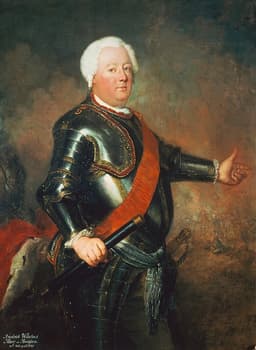
Frederick William II of Prussia
Emperor · Modern
47.2Total
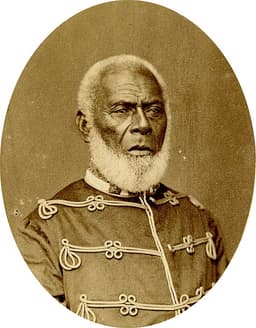
George Tupou I
Emperor · Modern
60.8Total
Basic Information
Born
1744
1797
Died
1797
1893
Era
Modern
Modern
Nationality
Prussia
Tonga
Occupation
Emperor
Emperor
Civilization
Western
Other
Score Comparison
Military (10%)
50.0
55.0
Political (20%)
39.4
75.0
Influence (20%)
51.0
55.0
Legacy (20%)
39.2
52.0
Leadership (15%)
65.0
85.0
Strategy (15%)
39.6
45.0
TOTAL
47.2
60.8
Frederick William II of Prussia — Complete Timeline
1790 AD
Patronage of Mozart and BeethovenCultural
Frederick William II was a noted patron of music. He was a cellist and commissioned works from Wolfgang Amadeus Mozart, including the 'Prussian Quartets', and from Ludwig van Beethoven, who dedicated his Cello Sonatas Op. 5 to him. His court in Berlin became a center for classical music.
PrussiaMusicMozartBeethovenPatronage
Impact: nationalconstructive
1792 AD
War of the First CoalitionWar◆ Major
Frederick William II led Prussia into the War of the First Coalition against Revolutionary France. The Prussian army was defeated at the Battle of Valmy in 1792, a major symbolic victory for the French Revolution. Prussia withdrew from the coalition in 1795 with the Treaty of Basel, recognizing French gains.
PrussiaFrench RevolutionWarValmy
Impact: globaldestructive
1793 AD
Partition of PolandWar◆ Major
Frederick William II participated in the Second Partition of Poland, acquiring the cities of Danzig and Thorn and the region of South Prussia. This expanded Prussian territory significantly but also brought a large Polish population under Prussian rule, creating long-term ethnic and political tensions.
PrussiaPolandPartitionTerritory
Impact: regionaldestructive
1794 AD
Promulgation of the Prussian General State LawsReform◆ Major
Frederick William II oversaw the completion and promulgation of the Allgemeines Landrecht (General State Laws) for the Prussian States. This comprehensive legal code, begun under Frederick the Great, codified civil, criminal, and constitutional law, unifying the legal system across Prussia's diverse territories.
PrussiaLawCodeReform
Impact: nationalconstructive
George Tupou I — Complete Timeline
1831 AD
Converted to Christianity and made it the state religionCultural◆ Major
George Tupou I converted to Christianity under the influence of Methodist missionaries. He later made Christianity the official religion of Tonga, which shaped the nation's laws and social structure, including the abolition of traditional pagan practices.
TongaReligionChristianity
Impact: regionalconstructive
1845 AD
Unified Tonga under one ruleWar
George Tupou I, then known as Taufa'ahau, completed the unification of Tonga after a series of wars and alliances. He defeated rival chiefs and consolidated the islands under his rule, ending centuries of civil conflict.
TongaUnificationKingdom
Impact: regionalconstructive
1862 AD
Abolished serfdom and established land rightsReform◆ Major
George Tupou I abolished the traditional system of serfdom and granted land rights to commoners. He decreed that every adult male Tongan was entitled to a plot of land for farming, a policy that continues to shape Tongan society.
TongaLand ReformSocial Change
Impact: regionalprogressive
1875 AD
Promulgated the Constitution of 1875Reform
George Tupou I issued Tonga's first written constitution, establishing a constitutional monarchy with a parliament, judiciary, and protection of civil rights. This constitution remains in force today, making Tonga the only Pacific island nation to never lose its indigenous governance.
TongaConstitutionReform
Impact: regionalprogressive
Expert Analysis
Origins
Frederick William II of Prussia was born on September 25, 1744, in Berlin, the nephew of Frederick the Great. He received a limited education, focusing more on music and the arts than military or statecraft. His upbringing in the shadow of his uncle's military genius shaped his later preferences for cultural patronage over governance.
George Tupou I was born around 1797 in Tonga as Taufa'ahau. He was the son of a high chief and was raised in a society of rival chieftains. His early life was marked by warfare and conversion to Christianity under Methodist missionaries, which provided him with a new ideological framework.
Rise to Power
Frederick William II ascended to the throne in 1786 after the death of Frederick the Great. He inherited a powerful state but lacked the discipline and vision of his predecessor. His reign saw Prussia's involvement in the French Revolutionary Wars, where he led the War of the First Coalition (1792-1797). However, the Prussian army was defeated at Valmy (1792), leading to a separate peace treaty in 1795.
George Tupou I rose to power by unifying the islands of Tonga through a series of wars and alliances. By 1845, he had consolidated control and was recognized as King George Tupou I. His conversion to Christianity in 1831 helped him gain support from missionaries and some chiefs, further solidifying his rule.
Leadership & Governance
Frederick William II's governance was marked by a lack of focus. He oversaw the completion of the Prussian General State Laws (Allgemeines Landrecht) in 1794, a comprehensive legal code that standardized laws across Prussia. However, his foreign policy was disastrous. He participated in the Second Partition of Poland (1793), gaining Danzig and Thorn, but his military failures led to the loss of Prussian influence in Europe. His score in Political is 39.4, reflecting his ineffective leadership.
George Tupou I was a transformative leader. He promulgated the Constitution of 1875, establishing a constitutional monarchy, a parliament, and civil rights. He abolished serfdom and granted land rights to every adult male Tongan, ensuring widespread land ownership. His Political score of 75.0 highlights his successful governance. He also made Christianity the state religion, unifying his people under a common faith.
Triumph & Tragedy
Frederick William II's greatest success was the completion of the General State Laws, which influenced Prussian legal development. He also patronized Mozart and Beethoven, commissioning works like the 'Prussian Quartets' (Mozart, K. 575, 589, 590). However, his military failures (score 50.0) and political blunders led to Prussia's isolation. The Treaty of Basel (1795) removed Prussia from the coalition against France, but at the cost of leaving its allies vulnerable.
George Tupou I's triumphs include unifying Tonga and enacting reforms that lasted. His constitution of 1875 remains the basis of Tongan government today. However, his conversion to Christianity and suppression of traditional practices caused cultural disruption. His military score of 55.0 reflects his success in unification wars, but he relied heavily on alliances and diplomacy.
Character & Destiny
Frederick William II was a pleasure-seeking ruler who preferred music and mysticism over state affairs. He was influenced by his mistress, Wilhelmine von Lichtenau, and esoteric groups like the Rosicrucians. His character led to a decline in Prussian power, as he failed to maintain Frederick the Great's legacy.
George Tupou I was a pragmatic and visionary leader. He combined traditional chieftain authority with Christian ideology and Western legal concepts. His character allowed him to adapt and create lasting institutions. He died in 1893, having established Tonga as a unified, constitutional monarchy.
Legacy
Frederick William II's legacy is mixed. His legal code influenced later German law, but his reign is seen as a period of stagnation. His patronage of music is remembered, but his political incompetence weakened Prussia. His total score is 47.2.
George Tupou I's legacy is profound in Tonga. He is revered as the founder of modern Tonga, with his constitution and land reforms enduring to this day. His total score of 60.8 reflects his greater overall impact.
Conclusion
George Tupou I had greater impact than Frederick William II. While Frederick William II's patronage of music is notable, his political and military failures diminished Prussia's standing. George Tupou I's unification of Tonga, constitutional reforms, and abolition of serfdom created a stable, lasting state. His scores in Political (75.0 vs 39.4) and Leadership (85.0 vs 65.0) demonstrate his superior effectiveness. The 13.6-point score gap underscores that George Tupou I's achievements had a more enduring and transformative effect on his nation.
Rankings
🥇
George Tupou ILeader
Mil: 55.0Pol: 75.0Inf: 55.0
60.8
🥈
Frederick William II of Prussia
Mil: 50.0Pol: 39.4Inf: 51.0
47.2
+13.6 behind
How This Comparison Works
Algorithm
Each figure is scored on 6 dimensions (0—100 scale) based on structured historical data: Military (10%), Political (20%), Influence (20%), Legacy (20%), Leadership (15%), Strategy (15%). The weighted total produces the final ranking.
Data Sources
Scores are computed from structured sub-indicators in the database. Scale factors adjust for era (Ancient ×0.85, Modern ×1.0) and civilization size (Eastern ×1.05, Other ×0.80) to account for differences in population and military scale.
Maximum 3 Figures
Comparisons are limited to 2—3 figures to ensure readability and statistical meaningfulness.
Error Margins
±5 points per dimension — Sub-scores are derived from historical records with inherent uncertainty. Two figures within 5 points on a dimension should be considered roughly equivalent in that area.
Total Score Accuracy
±3 points overall — The weighted combination of 6 dimensions produces a total score with approximately ±3 points of uncertainty. Differences of less than 3 points are not statistically significant— the figures are effectively tied.
Known Limitations
- Historical records are incomplete and uneven across civilizations
- Figures from oral-tradition societies may be underrepresented
- Occupation labels can misclassify multi-role figures
- Scores measure capability and impact, not moral character
- Quantitative scoring is a comparison tool, not absolute truth
Capability Radar
Military (10%) — Battles & Warfare
Battles
20
20
Win Rate
15
25
Expansion
10
45
Political (20%) — Governance & Reform
Reform
20
80
Diplomacy
30
75
Economy
25
70
Influence (20%) — Cultural & Global Reach
Cultural
30
60
Global
15
55
Legacy (20%) — Historical Impact
Historical
25
65
Longevity
20
70
Leadership (15%) — Power & Stability
Tenure
60
85
Stability
20
80
Strategy (15%) — Tactics & Innovation
Strategy
10
35
Tactics
10
30
Reform
5
40
Similar Comparisons
Comments & Discussion
No comments yet. Be the first to share your thoughts!