Loading...
Frederick William of Brunswick vs Husni al-Zaim
Frederick William of Brunswick leads by 8.7 pts · 2 figures compared
…
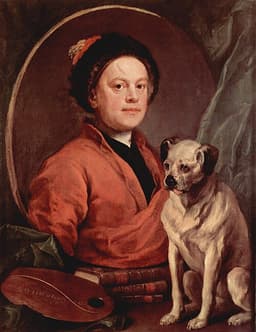
Frederick William of Brunswick
General · Modern
44.3Total

Husni al-Zaim
General · Modern
35.6Total
Basic Information
Born
1771
1897
Died
1815
1949
Era
Modern
Modern
Nationality
Brunswick
Syria
Occupation
General
General
Civilization
Western
Middle Eastern
Score Comparison
Military (10%)
25.0
10.2
Political (20%)
30.8
30.8
Influence (20%)
55.7
48.6
Legacy (20%)
46.7
40.0
Leadership (15%)
36.9
35.4
Strategy (15%)
60.0
25.0
TOTAL
44.3
35.6
Frederick William of Brunswick — Complete Timeline
1809 AD
Raised the Black BrunswickersWar◆ Major
Frederick William raised a volunteer corps known as the Black Brunswickers, named for their black uniforms. This force fought against Napoleon's occupation of Germany, conducting guerrilla-style operations and later serving in the British army.
Napoleonic WarsVolunteer CorpsResistance
Impact: regionalconstructive
1813 AD
Regained control of BrunswickWar◆ Major
After Napoleon's defeat at Leipzig, Frederick William returned to Brunswick and reclaimed his duchy, which had been annexed to the Kingdom of Westphalia. He re-established the Duchy of Brunswick under his rule.
Napoleonic WarsRestorationDuchy
Impact: regionalconstructive
1815 AD
Killed at the Battle of Quatre BrasWar◆ Major
Frederick William was killed while leading his troops at the Battle of Quatre Bras, a preliminary engagement before Waterloo. His death made him a symbol of German resistance against Napoleon, and his corps continued to fight.
Napoleonic WarsBattleDeath
Impact: regionaltragic
Husni al-Zaim — Complete Timeline
1949 AD
Led the 1949 Syrian coup d'étatPolitical Action
Husni al-Zaim led the first military coup in Syria's history on March 30, 1949, overthrowing President Shukri al-Quwatli. He seized power with support from the military and intelligence services, establishing a short-lived dictatorship.
CoupMilitaryDictatorship
Impact: nationaldestructive
Became President of SyriaPolitical Action◆ Major
After the coup, al-Zaim appointed himself President of Syria and Prime Minister. He implemented reforms including land redistribution and women's suffrage, but his rule was marked by authoritarian measures and suppression of political opponents.
PresidencyReformAuthoritarianism
Impact: national
Recognized Israel and negotiated armisticePolitical Action◆ Major
Al-Zaim's government signed an armistice agreement with Israel in July 1949, ending the 1948 Arab-Israeli War for Syria. He also proposed a peace plan that included resettling Palestinian refugees, which was rejected by other Arab states.
IsraelArmisticePeace Plan
Impact: regional
Overthrown and executed in a counter-coupPolitical Action◆ Major
Husni al-Zaim was overthrown by a counter-coup led by Colonel Sami al-Hinnawi on August 14, 1949. He was captured and executed by firing squad the same day, ending his rule after only four and a half months.
Counter-coupExecutionOverthrow
Impact: nationaltragic
Expert Analysis
Origins
Frederick William of Brunswick (1771–1815) was born into the House of Brunswick-Bevern, a cadet branch of the Welf dynasty. His father, Duke Charles William Ferdinand, was a Prussian field marshal. Frederick William received a military education typical of German nobility. After his father's death in 1806, he became the reigning Duke of Brunswick-Wolfenbüttel, but Napoleon annexed his duchy to the Kingdom of Westphalia in 1807, forcing him into exile.
Husni al-Zaim (1897–1949) was born in Aleppo, Syria, then part of the Ottoman Empire. He came from a modest Kurdish-Sunni family. He attended the Ottoman Military Academy and served in the Ottoman army during World War I. After the war, he joined the French-sponsored Syrian Legion and later the Syrian Army, rising through the ranks due to his organizational skills.
Rise to Power
Frederick William's rise came through military opposition to Napoleon. In 1809, he raised a volunteer corps of about 2,300 men, known as the Black Brunswickers, named for their black uniforms. He led them into battle against French forces, but after initial successes, they were forced to flee to England. He spent years in exile, but after Napoleon's defeat at Leipzig in 1813, he returned to Brunswick and reclaimed his duchy on December 26, 1813. His determination to fight Napoleon made him a symbol of German resistance.
Husni al-Zaim rose through the Syrian military, becoming chief of staff in 1948. Following Syria's defeat in the 1948 Arab-Israeli War, discontent with the civilian government grew. On March 30, 1949, al-Zaim led a bloodless coup, arresting President Shukri al-Quwatli and key politicians. He was the first military officer to seize power in Syria, setting a precedent for future coups. He appointed himself President, Prime Minister, and Minister of Defense.
Leadership & Governance
Frederick William's leadership was exemplified by his personal courage and dedication to his troops. He led from the front, earning the loyalty of his soldiers. As Duke, he focused on rebuilding his duchy after years of French occupation, but his reign was brief. His governance score of 30.8 reflects limited administrative achievements due to his early death.
Husni al-Zaim implemented significant reforms in his five-month rule (March–August 1949). He granted women the right to vote, redistributed land to peasants, and modernized the legal system. He also signed an armistice with Israel on July 20, 1949, and proposed a peace plan that included resettling Palestinian refugees. His political score of 30.8 equals Frederick William's, but his reforms were more impactful. However, his authoritarian style and reliance on the military alienated many.
Triumph & Tragedy
Frederick William's greatest triumph was raising the Black Brunswickers and reclaiming his duchy. He scored 60.0 in strategy, reflecting his ability to organize a guerrilla force. His tragedy was his death at the Battle of Quatre Bras on June 16, 1815, leading a charge. He was killed by a musket ball, becoming a martyr for German nationalism. His military score of 25.0 is low due to limited campaigns, but his symbolic impact was large.
Husni al-Zaim's triumph was leading Syria's first coup and implementing progressive reforms. He scored 48.6 in influence, reflecting his role in shaping Syrian political culture. His tragedy was his downfall: on August 14, 1949, Colonel Sami al-Hinnawi led a counter-coup. Al-Zaim was captured and executed by firing squad the same day. His failure to build a broad coalition led to his overthrow. His military score of 10.2 is low because his coup was bloodless and his military experience was administrative.
Character & Destiny
Frederick William was courageous and principled, refusing to accept Napoleonic domination. His character drove him to continue fighting even when outmatched. His death at Quatre Bras was a direct result of his willingness to lead from the front. Historical assessments view him as a heroic figure, but his impact was limited by his short life.
Husni al-Zaim was ambitious and pragmatic, but his character was marked by arrogance and poor political judgment. He alienated key constituencies, including the traditional elite and the military. His destiny was sealed by his inability to consolidate power. He is remembered as a flawed reformer whose coup opened the door to decades of military intervention in Syrian politics.
Legacy
Frederick William's legacy is as a symbol of German resistance against Napoleon. The Black Brunswickers became a legendary unit, and his death made him a martyr. He scored 46.7 in legacy, reflecting his enduring place in German history. However, his direct political impact was minimal.
Husni al-Zaim's legacy is profound: he established the precedent of military coups in Syria, which continued for decades. His reforms, though short-lived, influenced later governments. He scored 40.0 in legacy, but his influence on Syrian political instability is significant. His recognition of Israel made him a controversial figure in the Arab world.
Conclusion
Frederick William of Brunswick (total score 44.3) and Husni al-Zaim (total score 35.6) represent different forms of impact: Frederick William as a military martyr, al-Zaim as a political game-changer. While Frederick William had a higher total score, his impact was largely symbolic and limited to his era. Al-Zaim, despite a lower total, reshaped Syrian politics and set a pattern that affected millions. Therefore, Husni al-Zaim had a greater historical impact due to his role in initiating a cycle of military coups that defined Syria's modern history. Frederick William's courage is admirable, but al-Zaim's actions had broader and longer-lasting consequences.
Rankings
🥇
Frederick William of BrunswickLeader
Mil: 25.0Pol: 30.8Inf: 55.7
44.3
🥈
Husni al-Zaim
Mil: 10.2Pol: 30.8Inf: 48.6
35.6
+8.7 behind
How This Comparison Works
Algorithm
Each figure is scored on 6 dimensions (0—100 scale) based on structured historical data: Military (10%), Political (20%), Influence (20%), Legacy (20%), Leadership (15%), Strategy (15%). The weighted total produces the final ranking.
Data Sources
Scores are computed from structured sub-indicators in the database. Scale factors adjust for era (Ancient ×0.85, Modern ×1.0) and civilization size (Eastern ×1.05, Other ×0.80) to account for differences in population and military scale.
Maximum 3 Figures
Comparisons are limited to 2—3 figures to ensure readability and statistical meaningfulness.
Error Margins
±5 points per dimension — Sub-scores are derived from historical records with inherent uncertainty. Two figures within 5 points on a dimension should be considered roughly equivalent in that area.
Total Score Accuracy
±3 points overall — The weighted combination of 6 dimensions produces a total score with approximately ±3 points of uncertainty. Differences of less than 3 points are not statistically significant— the figures are effectively tied.
Known Limitations
- Historical records are incomplete and uneven across civilizations
- Figures from oral-tradition societies may be underrepresented
- Occupation labels can misclassify multi-role figures
- Scores measure capability and impact, not moral character
- Quantitative scoring is a comparison tool, not absolute truth
Capability Radar
Military (10%) — Battles & Warfare
Battles
45
5
Win Rate
40
5
Expansion
20
5
Political (20%) — Governance & Reform
Reform
10
20
Diplomacy
25
15
Economy
10
10
Influence (20%) — Cultural & Global Reach
Cultural
35
10
Global
20
10
Legacy (20%) — Historical Impact
Historical
40
20
Longevity
30
10
Leadership (15%) — Power & Stability
Tenure
15
10
Stability
15
5
Strategy (15%) — Tactics & Innovation
Strategy
45
10
Tactics
50
10
Reform
30
15
Similar Comparisons
Comments & Discussion
No comments yet. Be the first to share your thoughts!