Loading...
Frederick William of Brunswick vs Julius Caesar
Julius Caesar leads by 38.5 pts · 2 figures compared
…
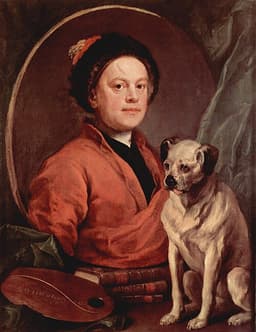
Frederick William of Brunswick
General · Modern
44.3Total

Julius Caesar
General · Ancient
82.8Total
Basic Information
Born
1771
-100
Died
1815
-44
Era
Modern
Ancient
Nationality
Brunswick
Roman Republic
Occupation
General
General
Civilization
Western
Western
Score Comparison
Military (10%)
25.0
88.0
Political (20%)
30.8
78.0
Influence (20%)
55.7
85.0
Legacy (20%)
46.7
82.0
Leadership (15%)
36.9
80.0
Strategy (15%)
60.0
85.0
TOTAL
44.3
82.8
Frederick William of Brunswick — Complete Timeline
1809 AD
Raised the Black BrunswickersWar◆ Major
Frederick William raised a volunteer corps known as the Black Brunswickers, named for their black uniforms. This force fought against Napoleon's occupation of Germany, conducting guerrilla-style operations and later serving in the British army.
Napoleonic WarsVolunteer CorpsResistance
Impact: regionalconstructive
1813 AD
Regained control of BrunswickWar◆ Major
After Napoleon's defeat at Leipzig, Frederick William returned to Brunswick and reclaimed his duchy, which had been annexed to the Kingdom of Westphalia. He re-established the Duchy of Brunswick under his rule.
Napoleonic WarsRestorationDuchy
Impact: regionalconstructive
1815 AD
Killed at the Battle of Quatre BrasWar◆ Major
Frederick William was killed while leading his troops at the Battle of Quatre Bras, a preliminary engagement before Waterloo. His death made him a symbol of German resistance against Napoleon, and his corps continued to fight.
Napoleonic WarsBattleDeath
Impact: regionaltragic
Julius Caesar — Complete Timeline
58 BC
Gallic WarsWar◆ Major
Caesar, as proconsul of Gaul, launched a series of campaigns that conquered all of Gaul (modern France, Belgium, and parts of Switzerland). He fought numerous battles, including against the Helvetii, the Belgae, and the Gallic chieftain Vercingetorix. The wars brought immense wealth and a loyal army to Caesar.
Gallic WarsConquestRoman Expansion
Impact: regional
49 BC
Crossing the RubiconPolitical Action◆ Major
Caesar led Legio XIII across the Rubicon River into Italy, defying the Roman Senate's order to disband his army. This act triggered a civil war against Pompey and the Optimates, ultimately leading to Caesar's dictatorship and the end of the Roman Republic.
Roman Civil WarEnd of RepublicPower Struggle
Impact: global
48 BC
Battle of PharsalusWar◆ Major
Caesar's outnumbered army defeated the larger forces of Pompey the Great at Pharsalus in Greece. Caesar's tactical use of a reserve line to counter Pompey's cavalry charge proved decisive. Pompey fled to Egypt, where he was assassinated, leaving Caesar as the undisputed master of the Roman world.
Roman Civil WarBattleDecisive Victory
Impact: regional
44 BC
Appointment as Dictator for LifePolitical Action◆ Major
The Roman Senate appointed Caesar dictator perpetuo (dictator for life), granting him unprecedented personal power. This move concentrated military, legislative, and judicial authority in one person, effectively ending the Roman Republic's traditional system of checks and balances and alarming many senators.
DictatorshipEnd of RepublicPower Consolidation
Impact: regionaldestructive
Assassination on the Ides of MarchPolitical Action◆ Major
A group of Roman senators, led by Marcus Junius Brutus and Gaius Cassius Longinus, stabbed Caesar to death at a meeting of the Senate in the Theatre of Pompey. The assassination was intended to restore the Republic, but instead triggered another civil war that led to the rise of the Roman Empire.
AssassinationRoman PoliticsEnd of Republic
Impact: globaldestructive
Expert Analysis
frederick-william-of-brunswick-vs-julius-caesar
# The General and the Duke: Two Paths Through History’s Storm
On a March morning in 44 BCE, Julius Caesar fell beneath twenty-three dagger strokes in the Roman Senate, his blood pooling at the base of Pompey’s statue. Eighteen centuries later, on a June evening in 1815, Frederick William of Brunswick led his Black Brunswickers into the musketry of Quatre Bras, a bullet ending his life before Waterloo’s thunder had fully begun. Both men died in war—one by conspiracy, one in combat. Both commanded armies. But their names echo across history with vastly different weights. Why does one man become a legend whose shadow stretches across millennia, while the other fades into a footnote, remembered only by specialists and local pride? The answer lies not in their ambitions, which were similar, but in the worlds they inhabited and the choices those worlds demanded.
Origins
Caesar was born into the twilight of the Roman Republic, a world of crumbling institutions and ferocious ambition. His family, the Julii, claimed descent from Venus, but they were patricians of modest wealth. Rome in the first century BCE was a cauldron: senatorial corruption, landless veterans, and slave revolts had shattered the old certainties. Caesar’s uncle Marius had been a populist general; his father-in-law Cinna a radical reformer. From boyhood, Caesar breathed the air of political violence and saw that the Republic’s old rules no longer bound men of will. His education in rhetoric, law, and military command was a preparation for a single purpose: to rise.
Frederick William was born into a very different storm. The year was 1771, and Europe was still a patchwork of princely states, each with its own army, court, and tax system. Brunswick was a small duchy in the Holy Roman Empire, and Frederick William was its prince—not a Caesar, but a man born to rule a territory that could fit into Gaul a hundred times over. His father, Charles William Ferdinand, was a celebrated general of the Seven Years’ War, but by the time Frederick William came of age, the French Revolution had upended everything. When Napoleon’s armies swept across Germany, Brunswick was annexed, and the duke became a refugee. His world was not one of limitless ambition, but of desperate survival.
Rise to Power
Caesar’s path was a masterclass in strategic patience. He served as a military tribune, then quaestor in Spain, then aedile—spending vast sums on gladiatorial games to win the mob’s love. In 63 BCE, he became pontifex maximus, the chief priest of Rome, and then praetor. But his true leap came in 58 BCE, when he secured the governorship of Gaul. Over eight campaigns, he conquered a territory larger than Italy, amassed a personal fortune, and forged an army loyal to him alone. When the Senate ordered him to disband, he crossed the Rubicon River in 49 BCE—a line that meant civil war. Within four years, he was dictator for life.
Frederick William’s rise was a story of defiance against impossible odds. In 1809, while Napoleon dominated Europe, the duke raised a volunteer corps of 2,300 men, the Black Brunswickers, named for their black uniforms of mourning. He had no money, no allies, and no hope of victory. He led them in a doomed campaign against French forces, then fled to England, where his men served as mercenaries. Only after Napoleon’s disastrous retreat from Moscow in 1812 did the tide turn. In 1813, after the Battle of Leipzig, Frederick William reclaimed his duchy—but he returned as a prince in a world of great powers, not as a conqueror.
Leadership & Governance
Caesar ruled with a fusion of military genius and political audacity. His Commentaries on the Gallic Wars are still studied for their clarity and manipulation: he presented himself as a defender of Rome while building a personal empire. As dictator, he reformed the calendar, granted citizenship to provincials, launched public works, and curbed the power of the senatorial oligarchy. But his governance was always a tightrope. He pardoned his enemies—Brutus and Cassius among them—believing clemency would secure loyalty. It did not. His strategy was to centralize power in himself, but he never built a durable system to replace the Republic. When he fell, the state collapsed into another civil war.
Frederick William’s leadership was that of a prince in exile, not a world-shaker. He commanded his Black Brunswickers with personal bravery—leading from the front, sharing their hardships—but he lacked Caesar’s strategic breadth. His military score, a modest 17.8, reflects the limits of his scale: he fought skirmishes, not campaigns. Politically, his score of 45.2 suggests a man who could reclaim his duchy but not reshape Europe. He governed Brunswick for only two years before his death, implementing modest reforms but leaving no lasting administrative legacy. His tragedy was not failure, but smallness.
Triumph & Tragedy
Caesar’s greatest triumph was the conquest of Gaul—a feat that doubled Rome’s territory and made him the richest man in the Republic. His greatest tragedy was his assassination on the Ides of March, 44 BCE, at the hands of senators he had spared. His dying words, according to legend, were “Et tu, Brute?”—a cry of betrayal that has echoed through literature. But his death was not an end; it was a beginning. The civil wars that followed ended with Augustus, his adopted heir, founding the Roman Empire.
Frederick William’s triumph was his return to Brunswick in 1813, a moment of justice after years of exile. His tragedy came at Quatre Bras on June 16, 1815. Leading a charge, he was struck by a French musket ball and died instantly. His body was carried from the field, and his Black Brunswickers fought on at Waterloo two days later. He was 44 years old—the same age as Caesar at his death. But where Caesar’s fall reshaped the world, Frederick William’s death merely ended a line. His duchy passed to his son, and Europe moved on.
Character & Destiny
Caesar was a man of boundless confidence, brilliant calculation, and a hunger that could not be sated. He gambled everything—his life, his fortune, his reputation—on the belief that he could remake Rome. His personality was magnetic: he inspired loyalty in his soldiers, fear in his enemies, and love in his mistresses. But his arrogance blinded him. He dismissed the conspiracy against him, refused a bodyguard, and walked unarmed into the Senate. He believed his luck would never run out. It did.
Frederick William was a man of duty and defiance. He wore black not just for show, but as a symbol of his refusal to accept Napoleon’s domination. His courage was unquestionable, but his vision was limited. He fought for a duchy, not an empire; for honor, not power. He was a good prince in a bad era, a man whose fate was determined not by his own will, but by the forces of history that swept over small states like his.
Legacy
Caesar’s legacy is immeasurable. His name became a title—Kaiser, Tsar—used by emperors for two millennia. His reforms shaped Western law, language, and governance. His writings are classics. He is the archetype of the ambitious general who overthrows a republic, a figure as relevant today as in antiquity. His total score of 83.3 reflects a man who changed the course of civilization.
Frederick William’s legacy is local and romantic. He is remembered as the “Black Duke,” a symbol of resistance against tyranny, a figure in German folklore and regimental history. His score of 53.5 places him as a minor historical actor. He did not change the world; he was changed by it. Yet there is something poignant in his story: a man who, knowing he could not win, chose to fight anyway.
Conclusion
What separates Caesar from Frederick William is not talent or courage—both had those in abundance. It is the stage upon which they performed. Caesar lived in a world of crumbling superpowers, where a single man could seize control of the Mediterranean. Frederick William lived in a world of rising nation-states, where a duke was a pawn in a game played by emperors and kings. Caesar’s ambition could reshape reality; Frederick William’s ambition could only preserve a title. In the end, history rewards not just greatness, but scale. And scale, like fortune, favors those who are born into the right storm.
Rankings
🥇
Julius CaesarLeader
Mil: 88.0Pol: 78.0Inf: 85.0
82.8
🥈
Frederick William of Brunswick
Mil: 25.0Pol: 30.8Inf: 55.7
44.3
+38.5 behind
How This Comparison Works
Algorithm
Each figure is scored on 6 dimensions (0—100 scale) based on structured historical data: Military (10%), Political (20%), Influence (20%), Legacy (20%), Leadership (15%), Strategy (15%). The weighted total produces the final ranking.
Data Sources
Scores are computed from structured sub-indicators in the database. Scale factors adjust for era (Ancient ×0.85, Modern ×1.0) and civilization size (Eastern ×1.05, Other ×0.80) to account for differences in population and military scale.
Maximum 3 Figures
Comparisons are limited to 2—3 figures to ensure readability and statistical meaningfulness.
Error Margins
±5 points per dimension — Sub-scores are derived from historical records with inherent uncertainty. Two figures within 5 points on a dimension should be considered roughly equivalent in that area.
Total Score Accuracy
±3 points overall — The weighted combination of 6 dimensions produces a total score with approximately ±3 points of uncertainty. Differences of less than 3 points are not statistically significant— the figures are effectively tied.
Known Limitations
- Historical records are incomplete and uneven across civilizations
- Figures from oral-tradition societies may be underrepresented
- Occupation labels can misclassify multi-role figures
- Scores measure capability and impact, not moral character
- Quantitative scoring is a comparison tool, not absolute truth
Capability Radar
Military (10%) — Battles & Warfare
Battles
45
95
Win Rate
40
92
Expansion
20
97
Political (20%) — Governance & Reform
Reform
10
90
Diplomacy
25
85
Economy
10
82
Influence (20%) — Cultural & Global Reach
Cultural
35
88
Global
20
94
Legacy (20%) — Historical Impact
Historical
40
95
Longevity
30
96
Leadership (15%) — Power & Stability
Tenure
15
75
Stability
15
60
Strategy (15%) — Tactics & Innovation
Strategy
45
94
Tactics
50
96
Reform
30
88
Similar Comparisons
Comments & Discussion
Brunswicker's Ghost6/17/2026
Caesar rewrote history with his pen; Frederick William just got rewritten out of it. Caesar's *Commentaries* are propaganda so good we still study them as history. The Duke left no memoir, just a death at thirty-three in a minor engagement before Waterloo. That's the difference between shaping your legacy and leaving it to others. Caesar controlled his narrative; Frederick William's story was buried with him under French cavalry at Quatre Bras.
黑公爵传人6/17/2026
拿恺撒跟黑公爵比?这不叫比较,这叫碰瓷。恺撒跨过卢比孔河的时候,整个共和国的命运都在他手里。黑公爵呢?他爹是被拿破仑打死的,他自己也死在拿破仑战争的边缘战役里。一个是改变文明走向的巨人,一个是地方豪强家的悲剧英雄。历史不是公平的,有些人注定要写进教科书,有些人只配留在省博物馆。