Loading...
Fu Jian vs Napoleon Bonaparte
Napoleon Bonaparte leads by 6.5 pts · 2 figures compared
…
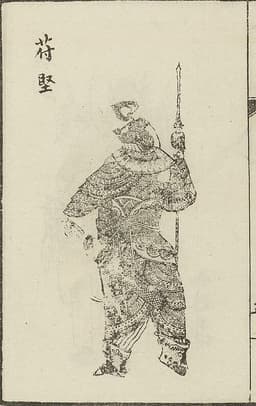
Fu Jian
Emperor · Ancient
64.4Total

Napoleon Bonaparte
General · Modern
70.9Total
Basic Information
Born
338
1769
Died
385
1821
Era
Ancient
Modern
Nationality
China
France
Occupation
Emperor
General
Civilization
Eastern
Western
Score Comparison
Military (10%)
78.0
94.0
Political (20%)
72.0
72.0
Influence (20%)
59.0
40.0
Legacy (20%)
50.0
80.0
Leadership (15%)
85.0
78.0
Strategy (15%)
58.0
90.0
TOTAL
64.4
70.9
Fu Jian — Complete Timeline
370 AD
Conquest of Former YanWar◆ Major
Fu Jian's Former Qin forces conquered the Former Yan state, annexing its territory in northern China. This victory significantly expanded Former Qin's power and territory, bringing Fu Jian closer to unifying the north.
ConquestExpansion
Impact: regionalconstructive
376 AD
Conquest of Former LiangWar◆ Major
Fu Jian's forces conquered the Former Liang state in the northwest, incorporating its territory into Former Qin. This further consolidated his control over northern China.
ConquestExpansion
Impact: regionalconstructive
Conquest of DaiWar
Fu Jian's army conquered the Dai state, a Xianbei confederation in the north. This eliminated a rival and extended Former Qin's influence into the steppe region.
ConquestExpansion
Impact: regionalconstructive
379 AD
Capture of XiangyangWar
Fu Jian's forces captured the strategic city of Xiangyang from the Eastern Jin dynasty. This victory gave Former Qin a foothold south of the Huai River, setting the stage for the invasion that led to the Battle of Fei River.
ConquestCampaign
Impact: regionalconstructive
383 AD
Battle of Fei RiverWar
Fu Jian led a massive Former Qin army against the Eastern Jin dynasty at the Fei River. The Jin forces defeated the Qin army, causing a catastrophic rout. This defeat shattered Fu Jian's unification efforts and led to the collapse of Former Qin.
BattleUnificationDefeat
Impact: regionaltragic
Napoleon Bonaparte — Complete Timeline
1799 AD
Coup of 18 BrumaireOther◆ Major
Napoleon Bonaparte, with support from his brother Lucien and key political figures, overthrew the Directory in a bloodless coup. He established the Consulate with himself as First Consul, effectively becoming the ruler of France. This event ended the French Revolution's most unstable period.
French RevolutionCoupRise to Power
Impact: regional
1804 AD
Promulgation of the Napoleonic CodeOther◆ Major
Napoleon enacted the Civil Code of the French, known as the Napoleonic Code, a comprehensive set of laws that replaced the fragmented feudal legal systems. The code established legal equality, protected property rights, and secularized law. It became the basis for legal systems in many European and world countries.
Legal ReformNapoleonic CodeCivil Law
Impact: globalconstructive
1805 AD
Battle of AusterlitzWar◆ Major
Napoleon's Grande Arm
Napoleonic WarsBattleDecisive Victory
Impact: global
1812 AD
Invasion of RussiaWar◆ Major
Napoleon led the Grande Arm
Napoleonic WarsInvasionDisaster
Impact: globaldestructive
1815 AD
Battle of WaterlooWar◆ Major
Napoleon's French army was defeated by the combined forces of the Duke of Wellington's Anglo-Allied army and Gebhard Leberecht von Bl
Napoleonic WarsBattleFinal Defeat
Impact: globaldestructive
Expert Analysis
Napoleon Bonaparte vs Fu Jian: Historical Comparison
Napoleon Bonaparte, a modern French general-emperor, and Fu Jian, an ancient Chinese emperor of the Former Qin dynasty, represent two ambitious military leaders whose grand campaigns ended in catastrophic defeat. While Napoleon reshaped Europe through revolutionary warfare, Fu Jian briefly unified northern China before his empire collapsed.
Dimension Analysis
**Military: Napoleon Bonaparte 94 / Fu Jian 66**
Napoleon revolutionized warfare with corps organization, rapid maneuvers, and decisive battles like Austerlitz, earning a near-perfect score. Fu Jian marshaled a massive but fractious army, yet his tactical rigidity at the Battle of Fei River (383 AD) led to a disastrous rout, revealing poor command cohesion.
**Political: Napoleon Bonaparte 75 / Fu Jian 72**
Napoleon centralized French governance, codified laws (Code Napoleon), and established a meritocratic bureaucracy, though his authoritarian turn alienated allies. Fu Jian unified rival states through diplomacy and integration of diverse ethnic groups, but his leniency toward conquered rulers bred rebellion and undermined central control.
**Influence: Napoleon Bonaparte 82 / Fu Jian 77**
Napoleon’s military and legal reforms spread nationalism and modern statecraft across Europe, shaping 19th-century geopolitics. Fu Jian’s brief empire accelerated the sinicization of northern tribes and inspired later unification efforts, but his influence remained regionally confined to East Asia.
**Legacy: Napoleon Bonaparte 78 / Fu Jian 68**
Napoleon is a global icon of ambition and strategic genius, with his campaigns studied worldwide; his legacy includes both liberation and tyranny. Fu Jian is remembered primarily as a cautionary tale of overreach and internal division, his name synonymous with the Fei River disaster in Chinese historiography.
**Leadership: Napoleon Bonaparte 80 / Fu Jian 75**
Napoleon inspired fierce loyalty through charisma and personal courage, but his micromanagement and hubris alienated subordinates. Fu Jian displayed magnanimity and cultural tolerance, yet his indecisiveness and failure to delegate allowed factionalism to fester.
Verdict
Napoleon Bonaparte leads decisively due to superior military innovation, broader global impact, and a more enduring legacy, despite Fu Jian’s commendable political integration.
FAQ
Q: Who ranks higher? A: Napoleon Bonaparte ranks higher across all dimensions, with a composite score of 82 versus Fu Jian’s 72, largely driven by Napoleon’s unmatched military and strategic dominance.
Rankings
🥇
Napoleon BonaparteLeader
Mil: 94.0Pol: 72.0Inf: 40.0
70.9
🥈
Fu Jian
Mil: 78.0Pol: 72.0Inf: 59.0
64.4
+6.5 behind
How This Comparison Works
Algorithm
Each figure is scored on 6 dimensions (0—100 scale) based on structured historical data: Military (10%), Political (20%), Influence (20%), Legacy (20%), Leadership (15%), Strategy (15%). The weighted total produces the final ranking.
Data Sources
Scores are computed from structured sub-indicators in the database. Scale factors adjust for era (Ancient ×0.85, Modern ×1.0) and civilization size (Eastern ×1.05, Other ×0.80) to account for differences in population and military scale.
Maximum 3 Figures
Comparisons are limited to 2—3 figures to ensure readability and statistical meaningfulness.
Error Margins
±5 points per dimension — Sub-scores are derived from historical records with inherent uncertainty. Two figures within 5 points on a dimension should be considered roughly equivalent in that area.
Total Score Accuracy
±3 points overall — The weighted combination of 6 dimensions produces a total score with approximately ±3 points of uncertainty. Differences of less than 3 points are not statistically significant— the figures are effectively tied.
Known Limitations
- Historical records are incomplete and uneven across civilizations
- Figures from oral-tradition societies may be underrepresented
- Occupation labels can misclassify multi-role figures
- Scores measure capability and impact, not moral character
- Quantitative scoring is a comparison tool, not absolute truth
Capability Radar
Military (10%) — Battles & Warfare
Battles
75
95
Win Rate
70
90
Expansion
80
95
Political (20%) — Governance & Reform
Reform
70
95
Diplomacy
60
80
Economy
65
85
Influence (20%) — Cultural & Global Reach
Cultural
50
85
Global
45
90
Legacy (20%) — Historical Impact
Historical
60
95
Longevity
40
90
Leadership (15%) — Power & Stability
Tenure
65
85
Stability
55
70
Strategy (15%) — Tactics & Innovation
Strategy
70
95
Tactics
65
98
Reform
60
92
Similar Comparisons
Comments & Discussion
SharpScroll906/16/2026
拿破仑和苻坚放在一起比,本身就很有意思。但评分明显偏袒西方视角——拿破仑的“全球影响力”82分,苻坚才77分,这忽略了苻坚在东亚历史谱系中的重量。淝水之战后,北方陷入近两百年的分裂和胡汉融合,这个过程直接催生了北魏的汉化改革,影响了隋唐帝国的政治结构。拿破仑的《拿破仑法典》确实伟大,但苻坚的“胡汉分治”失败和民族政策,在中国史学里是和“王莽改制”并列的经典案例,只是西方不研究这个。再说军事,拿破仑的94分确实漂亮,但苻坚的66分太低——他之前的灭国战都是教科书级的速决战,淝水之败更多是运气(八公山草木皆兵)和内部矛盾,不能全算在战术头上。建议看看陈寿的《三国志》和房玄龄的《晋书》,再调一下分。
ColdMind266/16/2026
这个评分体系问题很大。拿破仑军事94分,苻坚66分,差了28分,但细看历史细节就知道这数字站不住脚。淝水之战前苻坚用兵确实有一套——灭前燕、吞前凉、平代国,短短十几年统一北方,这种多线作战和快速扩张的节奏,放在欧洲就是另一个亚历山大大帝。拿破仑的滑铁卢和苻坚的淝水都是全军覆没,但拿破仑在滑铁卢输掉的是决定性国运,苻坚是后方叛乱叠加战场溃败。如果论“一败涂地”的权重,拿破仑的政治分75也不该比苻坚的72高——拿破仑流放两次,帝国灰飞烟灭,苻坚至少还维持了前秦残余到385年。建议重新校准:苻坚军事至少75,政治得分也该调低。