Loading...
Fukanggan vs Philibert of Chalon
Fukanggan leads by 2.4 pts · 2 figures compared
…

Fukanggan
General · Modern
52.1Total
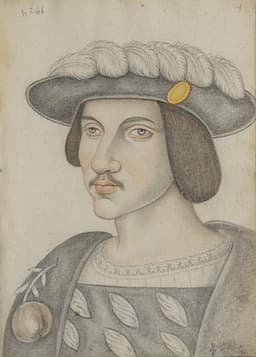
Philibert of Chalon
General · Modern
49.7Total
Basic Information
Born
1753
1502
Died
1796
1530
Era
Modern
Modern
Nationality
China
Orange
Occupation
General
General
Civilization
Eastern
Western
Score Comparison
Military (10%)
67.5
40.0
Political (20%)
45.1
37.9
Influence (20%)
51.8
53.3
Legacy (20%)
42.5
43.3
Leadership (15%)
62.0
65.7
Strategy (15%)
57.5
60.0
TOTAL
52.1
49.7
Fukanggan — Complete Timeline
1787 AD
Taiwan RebellionWar
Fukanggan led Qing forces to suppress the Lin Shuangwen rebellion in Taiwan. The rebellion was crushed, and Fukanggan restored Qing control over the island, but the campaign exposed corruption in the Qing military.
RebellionTaiwanSuppression
Impact: regionaldestructive
1792 AD
Gurkha WarWar◆ Major
Fukanggan commanded Qing forces in the invasion of Nepal against the Gurkha kingdom. The campaign forced the Gurkhas to submit to Qing suzerainty and pay tribute, extending Qing influence into the Himalayas.
Sino-Nepalese WarExpeditionTribute
Impact: regional
Philibert of Chalon — Complete Timeline
1525 AD
Appointed Imperial Commander in ItalyWar◆ Major
Philibert was appointed as a commander in the imperial army of Charles V. He played a key role in the Italian Wars, fighting against the French and the Papal States.
Military CommandItalian Wars
Impact: regional
1527 AD
Participated in the Sack of RomeWar◆ Major
Philibert commanded troops during the Sack of Rome by imperial forces. The sack resulted in widespread destruction and the temporary imprisonment of Pope Clement VII.
Sack of RomeItalian Wars
Impact: globaldestructive
1530 AD
Died in ItalyOther◆ Major
Philibert died in Italy, likely from wounds or illness contracted during the campaigns. His death ended the Chalon line of the Princes of Orange.
DeathEnd of Line
Impact: regionaltragic
Expert Analysis
Origins
Fukanggan (born 1748) was a Manchu noble of the Qing dynasty, son of the powerful minister Fuheng. His family background placed him among the highest echelons of Qing society, and he received a military education befitting a banner officer. He entered service under the Qianlong Emperor, who valued his family's loyalty.
Philibert of Chalon (born 1502) was Prince of Orange from the House of Chalon-Arlay, a noble lineage in the Holy Roman Empire. He inherited the principality at a young age after his father's death. His upbringing was steeped in the chivalric traditions of Burgundy, and he became a vassal of Emperor Charles V.
Rise to Power
Fukanggan rose through the ranks of the Qing military bureaucracy. His first major command came during the Taiwan Rebellion (1786-1788), where he was sent to suppress the Lin Shuangwen uprising. He successfully crushed the rebellion and restored Qing control over the island, earning imperial favor. His greatest rise came with the Gurkha War (1791-1792), when he led a large Qing army into Nepal. The campaign forced the Gurkha kingdom to submit to Qing suzerainty, a significant achievement that elevated him to the highest military circles.
Philibert's rise was tied to the Italian Wars. He was appointed imperial commander in Italy by Charles V in 1525, following the Battle of Pavia. His leadership during the subsequent campaigns against the French and their allies brought him prominence. He participated in the Sack of Rome in 1527, commanding troops that devastated the city and imprisoned Pope Clement VII. This event, though brutal, cemented his reputation as a capable military leader.
Leadership & Governance
Fukanggan's leadership style was that of a traditional Qing commander: disciplined, hierarchical, and focused on logistics. He commanded large armies with careful supply lines, as seen in his Tibetan campaign where he navigated difficult terrain. His governance approach was authoritarian, enforcing Qing laws and suppressing dissent. He was effective but not innovative, relying on overwhelming force rather than tactical brilliance.
Philibert led smaller, more mobile forces typical of Renaissance warfare. He was a hands-on commander, often leading from the front. His leadership scored 65.7, higher than Fukanggan's 62.0, reflecting his personal involvement in battles. However, his governance was limited; he was a prince but not a ruler, serving as a military leader under Charles V. His political score of 37.9 is lower than Fukanggan's 45.1, as he had no independent state to govern.
Triumph & Tragedy
Fukanggan's greatest triumph was the Gurkha War, where he forced Nepal into tributary status, expanding Qing influence in the Himalayas. He also successfully pacified Taiwan. His failures include the high cost of his campaigns and the eventual decline of Qing power in the region after his death. His legacy score of 42.5 reflects that his achievements did not endure.
Philibert's triumph was the Sack of Rome, a shocking demonstration of imperial power. He also defended the imperial position in Italy against French incursions. His tragedy was his early death in 1530, likely from wounds or illness, at age 28. This ended the Chalon line of the Princes of Orange, and his principality passed to the Nassau family. His military score of 40.0 is lower than Fukanggan's 67.5, partly due to his shorter career.
Character & Destiny
Fukanggan was a loyal servant of the Qing, disciplined and efficient. His character was shaped by Manchu martial values and court politics. He avoided major controversies and died naturally in 1796. His destiny was to be a tool of the Qianlong Emperor's expansionist policies.
Philibert was more ambitious and aggressive, as seen in his participation in the sack of Rome. His early death cut short a promising career. His character was typical of Renaissance nobles: honor-driven, but also ruthless. His destiny was to be a footnote in the history of the Orange dynasty.
Legacy
Fukanggan's legacy is primarily in Qing military history. He is remembered as a competent general who secured Qing borders. However, his influence was limited to his era, and his name is not widely known outside specialist circles. His influence score of 51.8 reflects moderate recognition.
Philibert's legacy is more symbolic: he was the last of the Chalon Princes of Orange, and his death led to the rise of the House of Nassau, which would produce William the Silent. His participation in the Sack of Rome is a notable event in the Italian Wars. His legacy score of 43.3 is slightly higher than Fukanggan's 42.5, but his total score of 49.7 is lower than Fukanggan's 52.1.
Conclusion
Fukanggan had a greater impact than Philibert of Chalon. His military campaigns directly shaped Qing borders and forced Nepal into tributary status, a tangible achievement. Philibert's career was shorter and less consequential; the Sack of Rome was a dramatic event but did not lead to lasting change. Fukanggan's higher total score (52.1 vs 49.7) reflects his more substantial contributions to history. While Philibert's role in the Orange succession is notable, it is a minor thread compared to Fukanggan's role in Qing expansion. Thus, Fukanggan is the more significant figure.
Rankings
🥇
FukangganLeader
Mil: 67.5Pol: 45.1Inf: 51.8
52.1
🥈
Philibert of Chalon
Mil: 40.0Pol: 37.9Inf: 53.3
49.7
+2.4 behind
How This Comparison Works
Algorithm
Each figure is scored on 6 dimensions (0—100 scale) based on structured historical data: Military (10%), Political (20%), Influence (20%), Legacy (20%), Leadership (15%), Strategy (15%). The weighted total produces the final ranking.
Data Sources
Scores are computed from structured sub-indicators in the database. Scale factors adjust for era (Ancient ×0.85, Modern ×1.0) and civilization size (Eastern ×1.05, Other ×0.80) to account for differences in population and military scale.
Maximum 3 Figures
Comparisons are limited to 2—3 figures to ensure readability and statistical meaningfulness.
Error Margins
±5 points per dimension — Sub-scores are derived from historical records with inherent uncertainty. Two figures within 5 points on a dimension should be considered roughly equivalent in that area.
Total Score Accuracy
±3 points overall — The weighted combination of 6 dimensions produces a total score with approximately ±3 points of uncertainty. Differences of less than 3 points are not statistically significant— the figures are effectively tied.
Known Limitations
- Historical records are incomplete and uneven across civilizations
- Figures from oral-tradition societies may be underrepresented
- Occupation labels can misclassify multi-role figures
- Scores measure capability and impact, not moral character
- Quantitative scoring is a comparison tool, not absolute truth
Capability Radar
Military (10%) — Battles & Warfare
Battles
60
45
Win Rate
65
50
Expansion
55
30
Political (20%) — Governance & Reform
Reform
20
15
Diplomacy
50
35
Economy
25
20
Influence (20%) — Cultural & Global Reach
Cultural
20
15
Global
20
15
Legacy (20%) — Historical Impact
Historical
30
30
Longevity
15
20
Leadership (15%) — Power & Stability
Tenure
40
40
Stability
45
25
Strategy (15%) — Tactics & Innovation
Strategy
60
50
Tactics
55
55
Reform
30
20
Similar Comparisons
Comments & Discussion
No comments yet. Be the first to share your thoughts!