Loading...
Konishi Yukinaga vs Philibert of Chalon
Konishi Yukinaga leads by 2.9 pts · 2 figures compared
…

Konishi Yukinaga
General · Modern
52.6Total
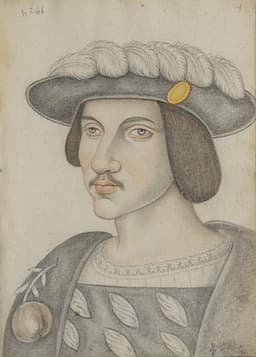
Philibert of Chalon
General · Modern
49.7Total
Basic Information
Born
1555
1502
Died
1600
1530
Era
Modern
Modern
Nationality
Japan
Orange
Occupation
General
General
Civilization
Eastern
Western
Score Comparison
Military (10%)
47.5
40.0
Political (20%)
45.1
37.9
Influence (20%)
56.4
53.3
Legacy (20%)
43.3
43.3
Leadership (15%)
68.0
65.7
Strategy (15%)
60.0
60.0
TOTAL
52.6
49.7
Konishi Yukinaga — Complete Timeline
1583 AD
Conversion to ChristianityCultural
Konishi Yukinaga converted to Roman Catholicism under the influence of Jesuit missionaries. He became a Christian daimyo, supporting missionary work and building churches in his domain.
ChristianityDaimyoReligion
constructive
1592 AD
First Invasion of Korea (Imjin War)War◆ Major
Konishi Yukinaga led the Japanese vanguard in the invasion of Korea, capturing Busan and advancing to Seoul and Pyongyang. His forces faced resistance from Korean and Ming Chinese armies, leading to a stalemate.
Imjin WarJapanese InvasionKorea
Impact: regionaldestructive
1593 AD
Battle of ByeokjegwanWar◆ Major
Konishi Yukinaga's forces were defeated by a combined Korean and Ming Chinese army at Byeokjegwan near Seoul. This battle forced the Japanese to retreat from Pyongyang and negotiate a truce.
Imjin WarBattleDefeat
Impact: regionaltragic
1600 AD
Battle of SekigaharaWar
Konishi Yukinaga fought on the Western Army side under Ishida Mitsunari at Sekigahara. His forces were defeated by Tokugawa Ieyasu's Eastern Army, leading to his capture and execution.
SekigaharaBattleExecution
Impact: nationaltragic
Philibert of Chalon — Complete Timeline
1525 AD
Appointed Imperial Commander in ItalyWar◆ Major
Philibert was appointed as a commander in the imperial army of Charles V. He played a key role in the Italian Wars, fighting against the French and the Papal States.
Military CommandItalian Wars
Impact: regional
1527 AD
Participated in the Sack of RomeWar◆ Major
Philibert commanded troops during the Sack of Rome by imperial forces. The sack resulted in widespread destruction and the temporary imprisonment of Pope Clement VII.
Sack of RomeItalian Wars
Impact: globaldestructive
1530 AD
Died in ItalyOther◆ Major
Philibert died in Italy, likely from wounds or illness contracted during the campaigns. His death ended the Chalon line of the Princes of Orange.
DeathEnd of Line
Impact: regionaltragic
Expert Analysis
Origins
Konishi Yukinaga (1555-1600) was born into a merchant family in Sakai, Japan, and rose through service to the daimyo Toyotomi Hideyoshi. His father, Konishi Ryūsa, was a wealthy merchant. Yukinaga converted to Roman Catholicism in 1583 under Jesuit influence, taking the baptismal name Agustinus (Augustine). This conversion shaped his identity as a Christian daimyo in a largely Buddhist and Shinto society.
Philibert of Chalon (1502-1530) was born into the House of Chalon-Arlay, a noble family in the County of Burgundy. He inherited the title Prince of Orange at age eight after his father's death. His education was overseen by his uncle, Philibert of Luxembourg, and he was groomed for military command in the service of the Habsburg emperor Charles V.
Rise to Power
Konishi Yukinaga rose rapidly under Hideyoshi's unification campaigns. He distinguished himself in the 1587 Kyushu campaign, leading forces against the Shimazu clan. His maritime expertise led to his appointment as commander of the vanguard for the invasion of Korea in 1592. He captured Busan on May 24, 1592, and advanced to Seoul within 20 days, then took Pyongyang by July. His success earned him a domain of 200,000 koku.
Philibert of Chalon became Prince of Orange in 1510 and entered imperial service. He was appointed governor of the Franche-Comté in 1520 and later commanded troops in the Italian Wars. His key turning point came in 1527 when Charles V appointed him commander of imperial forces in Italy, tasked with opposing the League of Cognac.
Leadership & Governance
Konishi Yukinaga's leadership style was aggressive and mobile. He led from the front, personally commanding amphibious assaults. He maintained discipline among his troops but was known for his diplomatic skills, negotiating with Korean officials and Ming Chinese envoys. His governance of his fief in Japan was marked by tolerance for Christianity, sponsoring churches and protecting missionaries.
Philibert of Chalon led with a focus on cavalry tactics and siege warfare. He was a loyal imperial commander, executing orders from Charles V with efficiency. He governed the Franche-Comté as a regent, maintaining order and collecting taxes for the Habsburg treasury. Unlike Konishi, he did not hold a territorial lordship with independent authority.
Triumph & Tragedy
Konishi Yukinaga's greatest success was the rapid conquest of Korea's northern provinces in 1592. He captured Pyongyang and advanced to the Yalu River, nearly reaching Ming China. However, his forces were defeated at the Battle of Byeokjegwan in 1593 by a combined Korean-Ming army, leading to a retreat south. His tragedy culminated at the Battle of Sekigahara (October 21, 1600), where he fought for the Western Army. After defeat, he was captured and beheaded. His Christian faith may have influenced his decision to join the losing side, as Tokugawa Ieyasu was hostile to Christianity.
Philibert of Chalon's triumph was his role in the Sack of Rome on May 6, 1527. His troops breached the walls and captured Pope Clement VII, a stunning military success for Charles V. However, the sack resulted in widespread looting and violence, tarnishing his reputation. His tragedy was his death at age 28 during the Siege of Florence in 1530, likely from plague or wounds, ending the Chalon line of the Princes of Orange.
Character & Destiny
Konishi Yukinaga was pragmatic and adaptable, leveraging his merchant background for logistics and negotiation. His Christian faith gave him a distinct identity but also isolated him. His decision to join Ishida Mitsunari's coalition at Sekigahara was partly based on shared opposition to Tokugawa Ieyasu. Historians note his strategic acumen scored 60.0, but his political score of 45.1 reflects poor alliance choices.
Philibert of Chalon was a loyal and capable commander, but his early death limited his impact. He lacked independent ambition, serving as a tool of Habsburg policy. His leadership score of 65.7 indicates effectiveness in execution, but his military score of 40.0 reflects a short career with few independent victories.
Legacy
Konishi Yukinaga's legacy is mixed. In Japan, he is remembered as a Christian daimyo and a key figure in the Imjin War. His defeat at Sekigahara marked the decline of Christian influence in Japan under Tokugawa. His total score of 52.6 reflects a significant but ultimately failed career.
Philibert of Chalon's legacy is tied to the Sack of Rome and the extinction of his house. His title passed to the Nassau family, leading to the Dutch stadtholders. He is a minor figure in Habsburg history, with a total score of 49.7.
Conclusion
Konishi Yukinaga had greater impact due to his role in the Imjin War, one of East Asia's largest conflicts, and his representation of Christian daimyo during Japan's unification. Philibert of Chalon's influence was limited by his early death and lack of independent command. Despite a narrow score gap of 2.9 points, Konishi's historical significance in shaping Korean-Japanese relations and Japan's Christian era outweighs Philibert's contribution to the Italian Wars.
Rankings
🥇
Konishi YukinagaLeader
Mil: 47.5Pol: 45.1Inf: 56.4
52.6
🥈
Philibert of Chalon
Mil: 40.0Pol: 37.9Inf: 53.3
49.7
+2.9 behind
How This Comparison Works
Algorithm
Each figure is scored on 6 dimensions (0—100 scale) based on structured historical data: Military (10%), Political (20%), Influence (20%), Legacy (20%), Leadership (15%), Strategy (15%). The weighted total produces the final ranking.
Data Sources
Scores are computed from structured sub-indicators in the database. Scale factors adjust for era (Ancient ×0.85, Modern ×1.0) and civilization size (Eastern ×1.05, Other ×0.80) to account for differences in population and military scale.
Maximum 3 Figures
Comparisons are limited to 2—3 figures to ensure readability and statistical meaningfulness.
Error Margins
±5 points per dimension — Sub-scores are derived from historical records with inherent uncertainty. Two figures within 5 points on a dimension should be considered roughly equivalent in that area.
Total Score Accuracy
±3 points overall — The weighted combination of 6 dimensions produces a total score with approximately ±3 points of uncertainty. Differences of less than 3 points are not statistically significant— the figures are effectively tied.
Known Limitations
- Historical records are incomplete and uneven across civilizations
- Figures from oral-tradition societies may be underrepresented
- Occupation labels can misclassify multi-role figures
- Scores measure capability and impact, not moral character
- Quantitative scoring is a comparison tool, not absolute truth
Capability Radar
Military (10%) — Battles & Warfare
Battles
55
45
Win Rate
40
50
Expansion
50
30
Political (20%) — Governance & Reform
Reform
20
15
Diplomacy
45
35
Economy
30
20
Influence (20%) — Cultural & Global Reach
Cultural
25
15
Global
25
15
Legacy (20%) — Historical Impact
Historical
30
30
Longevity
20
20
Leadership (15%) — Power & Stability
Tenure
40
40
Stability
35
25
Strategy (15%) — Tactics & Innovation
Strategy
45
50
Tactics
50
55
Reform
20
20
Similar Comparisons
Comments & Discussion
No comments yet. Be the first to share your thoughts!