Loading...
Fukushima Masanori vs Julius Caesar
Julius Caesar leads by 25.4 pts · 2 figures compared
…
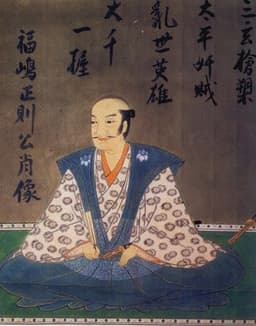
Fukushima Masanori
General · Modern
57.4Total

Julius Caesar
General · Ancient
82.8Total
Basic Information
Born
1561
-100
Died
1624
-44
Era
Modern
Ancient
Nationality
Japan
Roman Republic
Occupation
General
General
Civilization
Eastern
Western
Score Comparison
Military (10%)
60.0
88.0
Political (20%)
68.0
78.0
Influence (20%)
53.3
85.0
Legacy (20%)
45.0
82.0
Leadership (15%)
71.0
80.0
Strategy (15%)
60.0
85.0
TOTAL
57.4
82.8
Fukushima Masanori — Complete Timeline
1590 AD
Siege of OdawaraWar◆ Major
Fukushima Masanori participated in Toyotomi Hideyoshi's siege of Odawara Castle against the Hojo clan. The siege ended with Hojo surrender, consolidating Hideyoshi's control over Japan.
OdawaraSiegeHideyoshi
Impact: national
1600 AD
Battle of SekigaharaWar
Fukushima Masanori commanded a division on the Eastern Army side under Tokugawa Ieyasu at Sekigahara. His forces played a key role in the victory, leading to his appointment as daimyo of Hiroshima Domain.
SekigaharaBattleTokugawa
Impact: nationalconstructive
1619 AD
Loss of Hiroshima DomainPolitical Action◆ Major
Fukushima Masanori was stripped of his Hiroshima Domain by the Tokugawa shogunate for alleged misrule and unauthorized castle repairs. He was exiled to a smaller domain, ending his political influence.
ExileTokugawaDomain Loss
Impact: nationaltragic
Julius Caesar — Complete Timeline
58 BC
Gallic WarsWar◆ Major
Caesar, as proconsul of Gaul, launched a series of campaigns that conquered all of Gaul (modern France, Belgium, and parts of Switzerland). He fought numerous battles, including against the Helvetii, the Belgae, and the Gallic chieftain Vercingetorix. The wars brought immense wealth and a loyal army to Caesar.
Gallic WarsConquestRoman Expansion
Impact: regional
49 BC
Crossing the RubiconPolitical Action◆ Major
Caesar led Legio XIII across the Rubicon River into Italy, defying the Roman Senate's order to disband his army. This act triggered a civil war against Pompey and the Optimates, ultimately leading to Caesar's dictatorship and the end of the Roman Republic.
Roman Civil WarEnd of RepublicPower Struggle
Impact: global
48 BC
Battle of PharsalusWar◆ Major
Caesar's outnumbered army defeated the larger forces of Pompey the Great at Pharsalus in Greece. Caesar's tactical use of a reserve line to counter Pompey's cavalry charge proved decisive. Pompey fled to Egypt, where he was assassinated, leaving Caesar as the undisputed master of the Roman world.
Roman Civil WarBattleDecisive Victory
Impact: regional
44 BC
Appointment as Dictator for LifePolitical Action◆ Major
The Roman Senate appointed Caesar dictator perpetuo (dictator for life), granting him unprecedented personal power. This move concentrated military, legislative, and judicial authority in one person, effectively ending the Roman Republic's traditional system of checks and balances and alarming many senators.
DictatorshipEnd of RepublicPower Consolidation
Impact: regionaldestructive
Assassination on the Ides of MarchPolitical Action◆ Major
A group of Roman senators, led by Marcus Junius Brutus and Gaius Cassius Longinus, stabbed Caesar to death at a meeting of the Senate in the Theatre of Pompey. The assassination was intended to restore the Republic, but instead triggered another civil war that led to the rise of the Roman Empire.
AssassinationRoman PoliticsEnd of Republic
Impact: globaldestructive
Expert Analysis
fukushima-masanori-vs-julius-caesar
# The Crossing and the Fall
On a January morning in 49 BCE, a Roman general stood at the banks of a small river in northern Italy. The Rubicon was little more than a stream, but crossing it with an army meant civil war—an act of treason against the Republic. Julius Caesar hesitated, then spoke: “The die is cast.” He crossed, and the world changed.
Two thousand years later, on a battlefield in central Japan, another general watched his moment arrive. Fukushima Masanori, a daimyo who had fought under the great unifier Toyotomi Hideyoshi, now stood with Tokugawa Ieyasu at Sekigahara in 1600. Mist and rain shrouded the valley as 160,000 men prepared to decide Japan’s future. Masanori’s division would help win the day—but his reward would be brief, and his end bitter.
Both men were warriors. Both rose from turbulent times. But their paths diverged in ways that reveal the deepest currents of their civilizations—and the cruel arithmetic of power.
Origins
Caesar was born into the patrician Julian clan, a family with ancient lineage but modest wealth in a Rome dominated by military strongmen and senatorial intrigue. His uncle was Gaius Marius, the populist general who had reformed the army and defied the aristocracy. From boyhood, Caesar breathed the air of ambition, patronage, and the ever-present threat of proscription. The Roman Republic was already dying—corrupt, violent, and stretched across an empire. A man of talent could climb, but he had to be ruthless.
Fukushima Masanori was born in 1561, in the chaos of Japan’s Sengoku period—the Age of Warring States. His father was a minor samurai, and young Masanori entered the service of Toyotomi Hideyoshi, a peasant-turned-warlord who would unify Japan. Unlike Caesar, Masanori rose not through birth but through loyalty and raw courage in battle. He was a man of the sword, not the senate. His Japan was a world of shifting alliances, where a daimyo’s domain could be won in a morning and lost by evening.
Rise to Power
Caesar’s rise was a masterclass in political calculation. He borrowed fortunes to fund public games, built alliances with the wealthy Crassus and the legendary Pompey, and conquered Gaul in a decade-long campaign that made him a military idol. His Commentaries on the Gallic Wars were propaganda disguised as history—every victory burnished his legend. By 49 BCE, he commanded a veteran army loyal to him, not Rome. The Senate’s attempt to strip his command was the spark. The Rubicon was the fuse.
Masanori’s rise was simpler. He fought. At the Siege of Odawara in 1590, he served under Hideyoshi against the Hojo clan, proving his mettle in one of the great sieges of the era. When Hideyoshi died in 1598, Japan fractured between the regents protecting his young heir and the ambitious Tokugawa Ieyasu. Masanori chose Ieyasu’s side. At Sekigahara, he commanded a division in the Eastern Army, and his forces helped break the Western Army’s lines. The battle was over in hours. Masanori was rewarded with the vast Hiroshima Domain—one of the richest fiefs in Japan.
Leadership & Governance
Caesar governed as he conquered—with speed, clarity, and a vision that transcended the old Republic. As dictator, he reformed the calendar (the Julian calendar we still use), granted citizenship to provincials, launched public works, and centralized power in his own hands. He was clement to defeated enemies—pardoning Brutus and Cassius, who would later kill him. But his military genius was his foundation: he fought in Germany, Britain, Egypt, and Asia Minor, winning battles against impossible odds through speed, discipline, and personal courage.
Masanori’s leadership was that of a loyal vassal in a rigid feudal hierarchy. He governed Hiroshima with the energy of a soldier, but the Tokugawa shogunate demanded obedience above all. The system was designed to prevent the rise of another Hideyoshi. Daimyos were watched, moved, and stripped of land for the slightest infraction. Masanori’s military strategy at Sekigahara was competent but not brilliant—he followed orders, he did not rewrite the rules of war.
Triumph & Tragedy
Caesar’s greatest triumph was his conquest of Gaul—a feat that added a vast territory to the Roman world and made him the most powerful man in the Republic. His most devastating failure was his own assassination on the Ides of March, 44 BCE. He had centralized power but failed to build institutions to outlast him. The conspirators struck not because he was a tyrant, but because he destroyed the Senate’s authority. His tragedy was that he won everything, only to prove that the Republic could not survive his success.
Masanori’s triumph was Sekigahara—the battle that ended the Sengoku period and ushered in 250 years of Tokugawa peace. His tragedy came later. In 1619, the shogunate accused him of misrule and unauthorized castle repairs—minor charges that masked a deeper truth: the Tokugawa no longer needed him. He was stripped of Hiroshima Domain and exiled to a small fief. A man who had helped found the new order was discarded like a broken blade.
Character & Destiny
Caesar was audacious, calculating, and insatiable. He believed in his own star—and was right, until he wasn’t. His clemency was genuine but also strategic; his ambition was boundless but also fatal. He died because he could not imagine a world where his enemies would rather destroy Rome than see him rule it.
Masanori was brave, loyal, and blunt—a soldier’s soldier in a time that increasingly valued bureaucrats. He lacked Caesar’s political genius and his willingness to break the rules. In Japan’s rigid system, such loyalty was a virtue—until the system turned on him. His tragedy was not that he reached too high, but that he stopped climbing when the ladder was pulled away.
Legacy
Caesar’s legacy is the Roman Empire itself. His name became a title—Kaiser, Tsar—and his reforms shaped Western law, language, and governance for two millennia. He is remembered as a founder, a tyrant, and a warning.
Masanori’s legacy is smaller but poignant. He is remembered as a loyal retainer who helped secure peace, then was cast aside. In Japan, he represents the samurai ideal of service—and its cost. His story is a footnote to Sekigahara, not the epic of a civilization.
Conclusion
Caesar and Masanori never met, but their lives ask the same question: What does it mean to seize history? Caesar crossed the Rubicon and remade the world. Masanori crossed a battlefield and helped seal a peace. One became a god; the other became a ghost. The difference was not talent or courage—it was the structure of their worlds. Rome allowed a man to become a monarch; Japan allowed a man to become a servant of a system that would outlast him. In the end, both were killed by the very powers they helped build. Caesar by senators who feared his ambition; Masanori by a shogunate that feared his loyalty. The die is always cast. The question is who holds the dice.
Rankings
🥇
Julius CaesarLeader
Mil: 88.0Pol: 78.0Inf: 85.0
82.8
🥈
Fukushima Masanori
Mil: 60.0Pol: 68.0Inf: 53.3
57.4
+25.4 behind
How This Comparison Works
Algorithm
Each figure is scored on 6 dimensions (0—100 scale) based on structured historical data: Military (10%), Political (20%), Influence (20%), Legacy (20%), Leadership (15%), Strategy (15%). The weighted total produces the final ranking.
Data Sources
Scores are computed from structured sub-indicators in the database. Scale factors adjust for era (Ancient ×0.85, Modern ×1.0) and civilization size (Eastern ×1.05, Other ×0.80) to account for differences in population and military scale.
Maximum 3 Figures
Comparisons are limited to 2—3 figures to ensure readability and statistical meaningfulness.
Error Margins
±5 points per dimension — Sub-scores are derived from historical records with inherent uncertainty. Two figures within 5 points on a dimension should be considered roughly equivalent in that area.
Total Score Accuracy
±3 points overall — The weighted combination of 6 dimensions produces a total score with approximately ±3 points of uncertainty. Differences of less than 3 points are not statistically significant— the figures are effectively tied.
Known Limitations
- Historical records are incomplete and uneven across civilizations
- Figures from oral-tradition societies may be underrepresented
- Occupation labels can misclassify multi-role figures
- Scores measure capability and impact, not moral character
- Quantitative scoring is a comparison tool, not absolute truth
Capability Radar
Military (10%) — Battles & Warfare
Battles
55
95
Win Rate
60
92
Expansion
45
97
Political (20%) — Governance & Reform
Reform
30
90
Diplomacy
50
85
Economy
40
82
Influence (20%) — Cultural & Global Reach
Cultural
30
88
Global
20
94
Legacy (20%) — Historical Impact
Historical
35
95
Longevity
25
96
Leadership (15%) — Power & Stability
Tenure
45
75
Stability
45
60
Strategy (15%) — Tactics & Innovation
Strategy
55
94
Tactics
50
96
Reform
30
88
Similar Comparisons
Comments & Discussion
短刀辩士6/17/2026
非得把福岛正则跟凯撒比?人家凯撒出身尤利乌斯氏族,骨子里刻着篡位基因。福岛正则呢?一介匹夫,靠打仗上位。凯撒跨过卢比孔河时可是在跟整个元老院叫板,福岛正则不过是在关原之战站对了队。一个是改写世界史的猛人,一个是给德川家康打工的打工人。这也能比?历史小白才信这套。
RUBICON-DENIER6/17/2026
Look, calling Caesar a "crosser of the Rubicon" is like calling the sun "a bit warm." He didn't just cross a river – he staged a political coup that ended 500 years of republican rule. Fukushima Masanori was playing for a different team entirely – he switched sides at Sekigahara, sure, but he was just reshuffling the feudal deck. Caesar was burning down the house. Apples and oranges, my friends.
GALLIC-WARRIOR6/17/2026
Fact check: Caesar conquered Gaul (modern France) with an army of 50,000 legionaries, secured Britain, and wrote a memoir that's still studied in military academies. Fukushima Masanori's big moment? He led a division at Sekigahara. Impressive, sure, but that's one battle in one civil war. Caesar fought in dozens of campaigns, from the Rhine to the Nile to the streets of Rome itself. This is like comparing a sumo wrestler to an Olympic decathlete. Not even close.
反凯撒派6/17/2026
别被凯撒的光环骗了。他算哪门子伟人?屠杀了上百万人,把高卢变成罗马的殖民地,还搞独裁统治。福岛正则至少是个忠臣——虽然后来被德川家康整了,但人家没背叛主君。凯撒呢?背叛庞培、背叛元老院、背叛整个罗马传统。要我说,福岛正则的人品甩凯撒十条街。历史不是只看谁赢得多,还要看赢得正不正。
STAT-FREAK6/17/2026
Let's talk numbers, people. Caesar's crossing was January 10-11, 49 BCE – a single moment in time. Fukushima Masanori was fighting at Sekigahara on October 21, 1600 – also a single day. But here's the kicker: Caesar's move triggered a civil war that killed 100,000+ Romans and ended the Republic. Sekigahara's casualties were about 30,000, and it just reshuffled the samurai elite. Scale matters. Caesar's impact: empire-wide, civilization-level. Fukushima's: regional, feudal. Not the same league.
关原伪专家6/17/2026
说福岛正则像凯撒?想多了吧。凯撒的时代,罗马