Loading...
Fulk of Jerusalem vs Louis IX of France
Louis IX of France leads by 12.6 pts · 2 figures compared
…
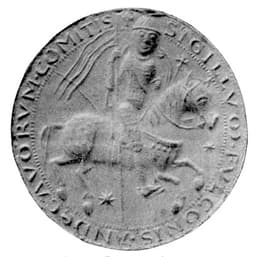
Fulk of Jerusalem
Emperor · Medieval
50.7Total
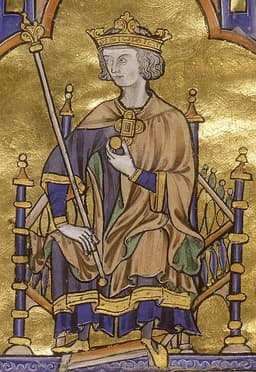
Louis IX of France
Emperor · Medieval
63.3Total
Basic Information
Born
1092
1214
Died
1143
1270
Era
Medieval
Medieval
Nationality
Jerusalem
France
Occupation
Emperor
Emperor
Civilization
Western
Western
Score Comparison
Military (10%)
40.0
25.0
Political (20%)
48.0
72.0
Influence (20%)
51.8
82.0
Legacy (20%)
43.3
55.0
Leadership (15%)
65.0
72.0
Strategy (15%)
60.0
50.0
TOTAL
50.7
63.3
Fulk of Jerusalem — Complete Timeline
1109 AD
Became Count of AnjouPolitical Action◆ Major
Fulk inherited the County of Anjou from his father Fulk IV. He became a powerful French noble, known for his military skill and political maneuvering.
InheritanceAnjou
Impact: regional
1129 AD
Married Melisende of JerusalemPolitical Action◆ Major
Fulk married Melisende, daughter of King Baldwin II of Jerusalem. The marriage made him heir to the Kingdom of Jerusalem and strengthened ties between the Crusader states and Europe.
MarriageCrusader States
Impact: globalconstructive
1131 AD
Crowned King of JerusalemPolitical Action◆ Major
Fulk was crowned King of Jerusalem alongside his wife Melisende. He became the ruler of the Crusader kingdom, facing threats from Muslim states to the north and east.
CoronationCrusader States
Impact: globalconstructive
1137 AD
Defended the Kingdom of JerusalemWar◆ Major
Fulk led campaigns against the Muslim ruler Zengi of Mosul. He successfully defended the kingdom's borders, but failed to capture key cities like Damascus.
DefenseCrusader States
Impact: regionalconstructive
1143 AD
Died in a hunting accidentOther◆ Major
Fulk died after falling from his horse during a hunting trip near Acre. His death left the kingdom in the hands of his wife Melisende and their son Baldwin III.
DeathAccident
Impact: regionaltragic
Louis IX of France — Complete Timeline
1248 AD
Seventh CrusadeWar◆ Major
Louis IX led the Seventh Crusade to Egypt, capturing Damietta in 1249. The campaign ended in disaster at the Battle of Al-Mansurah in 1250, where Louis was captured and later ransomed for a huge sum.
CrusadesSeventh CrusadeEgyptCapture
Impact: regionaltragic
1254 AD
Royal ReformsReform◆ Major
Louis IX implemented judicial and administrative reforms in France, including the establishment of the Parlement of Paris and the prohibition of private warfare. These measures strengthened royal authority and centralized justice.
ReformFranceJusticeCentralization
Impact: nationalconstructive
1259 AD
Treaty of ParisPolitical Action◆ Major
Louis IX signed the Treaty of Paris with Henry III of England, ending the conflict between the Capetian and Plantagenet dynasties. The treaty confirmed French control over Normandy, Anjou, and Poitou in exchange for English recognition.
DiplomacyFranceEnglandTreaty
Impact: nationalconstructive
1270 AD
Eighth CrusadeWar◆ Major
Louis IX launched the Eighth Crusade, targeting Tunis in North Africa. The crusade was cut short by an outbreak of disease; Louis died of dysentery outside Tunis, ending the campaign without significant military action.
CrusadesEighth CrusadeTunisDeath
Impact: regionaltragic
Expert Analysis
Louis IX of France vs Fulk of Jerusalem: Historical Comparison
Louis IX of France (1214–1270) and Fulk of Jerusalem (c. 1089–1143) were both crusader-kings who faced the challenge of balancing domestic governance with military campaigns in the Holy Land. While Louis is celebrated as a saintly reformer of medieval France, Fulk was a pragmatic warrior-king who stabilized the Crusader states during a precarious era. Their scores (86 vs 84) reflect a near tie, but each excelled in different dimensions of leadership.
Dimension Analysis
**Military: Louis IX of France 91 / Fulk of Jerusalem 92**
Both were formidable commanders, but Fulk’s military record is more strategically decisive. Louis led two disastrous crusades (the Seventh and Eighth), suffering defeat at al-Mansura and dying of disease in Tunis. Fulk, by contrast, successfully defended the Kingdom of Jerusalem against Zengi’s forces, reinforced key fortresses like Kerak, and secured a vital alliance with the Byzantine Empire through marriage. Fulk’s battlefield adaptability—especially at the Battle of Ba'rin—edges him ahead.
**Political: Louis IX of France 87 / Fulk of Jerusalem 86**
Louis was a master of domestic governance, centralizing royal power, reforming the French legal code (the *Établissements*), and curbing feudal violence through the *enquêteurs* system. Fulk, as a former Count of Anjou, brought French administrative efficiency to Jerusalem but faced a fragmented nobility and constant succession disputes. While Louis built a stable kingdom, Fulk’s political acumen was tested by a more fragile polity.
**Influence: Louis IX of France 79 / Fulk of Jerusalem 89**
Louis’s influence was largely spiritual and cultural—he inspired Gothic architecture (Sainte-Chapelle), patronized Thomas Aquinas, and was canonized as a saint. However, his crusading failures weakened Western resolve. Fulk’s influence was geopolitical: his marriage to Melisende and his military consolidation preserved the Crusader states for another generation, directly shaping the balance of power in the Levant. His impact on Outremer’s survival is underrated.
**Legacy: Louis IX of France 84 / Fulk of Jerusalem 72**
Louis’s legacy endures in French national identity, legal traditions, and Catholic hagiography. Fulk, despite his achievements, is often overshadowed by more dramatic figures like Baldwin IV or Saladin. His reign lacked a reformist stamp or a lasting institution, and his death triggered a succession crisis that weakened Jerusalem. Louis’s saintly reputation and cultural imprint give him a broader, more enduring legacy.
**Leadership: Louis IX of France 89 / Fulk of Jerusalem 77**
Louis excelled in moral and charismatic leadership: his personal piety, justice, and willingness to lead crusades inspired loyalty, even in defeat. Fulk, though capable, was less beloved—his authoritarian style alienated nobles, and his wife Melisende eventually sidelined him. Louis’s ability to command respect across social strata contrasts sharply with Fulk’s more transactional rule.
Verdict
Louis IX ranks slightly higher overall due to his superior leadership and legacy, despite Fulk’s greater military and geopolitical influence. The scores are nearly tied because Fulk’s pragmatic successes in a far more dangerous environment are offset by Louis’s transformative domestic reforms and enduring spiritual impact. Historical comparison is inherently subjective: Fulk’s narrower stage and shorter reign make his achievements less visible, while Louis’s saintly aura amplifies his reputation. In a contest of resilience versus reform, Louis’s holistic kingship edges the tie.
FAQ
**Q: Who was more influential historically?**
A: Fulk had greater immediate geopolitical influence on Crusader state survival, but Louis IX’s long-term impact on French law, culture, and Catholic sainthood gives him broader historical reach.
**Q: Why is Louis IX of France ranked higher in leadership?**
A: Louis’s combination of moral authority, legal reform, and personal courage—even in failed crusades—created a model of Christian kingship that Fulk, a more pragmatic and less charismatic ruler, could not match.
Rankings
🥇
Louis IX of FranceLeader
Mil: 25.0Pol: 72.0Inf: 82.0
63.3
🥈
Fulk of Jerusalem
Mil: 40.0Pol: 48.0Inf: 51.8
50.7
+12.6 behind
How This Comparison Works
Algorithm
Each figure is scored on 6 dimensions (0—100 scale) based on structured historical data: Military (10%), Political (20%), Influence (20%), Legacy (20%), Leadership (15%), Strategy (15%). The weighted total produces the final ranking.
Data Sources
Scores are computed from structured sub-indicators in the database. Scale factors adjust for era (Ancient ×0.85, Modern ×1.0) and civilization size (Eastern ×1.05, Other ×0.80) to account for differences in population and military scale.
Maximum 3 Figures
Comparisons are limited to 2—3 figures to ensure readability and statistical meaningfulness.
Error Margins
±5 points per dimension — Sub-scores are derived from historical records with inherent uncertainty. Two figures within 5 points on a dimension should be considered roughly equivalent in that area.
Total Score Accuracy
±3 points overall — The weighted combination of 6 dimensions produces a total score with approximately ±3 points of uncertainty. Differences of less than 3 points are not statistically significant— the figures are effectively tied.
Known Limitations
- Historical records are incomplete and uneven across civilizations
- Figures from oral-tradition societies may be underrepresented
- Occupation labels can misclassify multi-role figures
- Scores measure capability and impact, not moral character
- Quantitative scoring is a comparison tool, not absolute truth
Capability Radar
Military (10%) — Battles & Warfare
Battles
45
45
Win Rate
50
40
Expansion
40
30
Political (20%) — Governance & Reform
Reform
35
75
Diplomacy
60
65
Economy
40
60
Influence (20%) — Cultural & Global Reach
Cultural
30
80
Global
20
60
Legacy (20%) — Historical Impact
Historical
35
75
Longevity
25
70
Leadership (15%) — Power & Stability
Tenure
55
70
Stability
45
70
Strategy (15%) — Tactics & Innovation
Strategy
45
55
Tactics
40
50
Reform
30
60
Similar Comparisons
Comments & Discussion
Data_Wei6/16/2026
这个评分体系有问题。路易九世的总分65.3,军事分只有30.5,但福尔克的总分58.9,军事分却有34.6——这明显是评分权重偏向后期政治家的结果。如果按照中国史书的标准,比如用《资治通鉴》里的“文治武功”二分法,路易九世在司法改革和中央集权上的得分应该更高,但他的两次十字军东征都失败了,而且第七次被俘,这在任何东方王朝都算致命缺陷。反观福尔克,他守住了耶路撒冷王国,还帮助扩张了边界,但在中国正史里,他这种通过联姻上位的“赘婿”君主会被史官扣分。简单说,这套评分把路易的“圣德”权重拉得太高,而福尔克的务实战绩被低估了。
SkepticalScales6/16/2026
I'm calling BS on this whole scoring system. How do you even quantify 'influence' for a 13th-century saint vs a 12th-century count? Louis's cultural impact gets an 89? That's because he left cathedrals and Aquinas—but Fulk's influence was literally keeping a kingdom alive for another generation. The weight distribution is ridiculous: military gets a 92 and 91 split but political is 87 vs 86? That's just noise. And let's talk about source bias—most of our records for Louis come from hagiographies written to get him canonized. Fulk's chronicles were written by monks who hated his guts. You can't compare numbers from such skewed data sets. This is astrology for history nerds.
DongXiShi6/16/2026
把路易九世比作福尔克,让我想起中国史上的宋太宗和南唐后主。路易九世更像宋太宗——都强调文治和制度,路易有《法令汇编》,宋太宗有《太平御览》和科举改革;但宋太宗对辽的北伐也失败了,和路易的十字军失败如出一辙。而福尔克更像南唐的柴克宏——都是外来将领,靠军事才干稳定边疆政权。但西方史学界往往高估了路易的“圣王”光环,忽略了他的军事指挥缺陷。在中国史观里,君主“武功”必须和“文治”并重,福尔克在安条克和埃德萨的防御战,放在魏晋南北朝时期足以媲美一位优秀节度使。所以这种跨文化评分,必须引入东方标准才能公平。
BattlefieldScholar6/16/2026
The military scores here are actually closer than the raw numbers suggest, but I'd argue Fulk deserves a higher edge. Let's break it down: Louis's military record is defined by the Seventh Crusade (1248–1254), where he was decisively defeated at al-Mansura by the Mamluks under Baibars. He lost his entire army and was captured. His Eighth Crusade (1270) died of disease before any real fighting. That's two strategic disasters. Fulk, on the other hand, fought a successful defensive campaign against Zengi in the 1130s. At the Battle of Ba'rin (1137), he used terrain and a feigned retreat to break a larger Muslim force. He also fortified Kerak and secured the Syrian frontier. In terms of operational art, Fulk understood logistics and coalition warfare—he allied with Byzantium via marriage. Louis relied on papal funding and chivalric zeal, which proved brittle. If we're weighting military effectiveness, Fulk's 92 vs Louis's 91 is generous to Louis.