Loading...
Fumio Kishida vs Julius Caesar
Julius Caesar leads by 31.0 pts · 2 figures compared
…
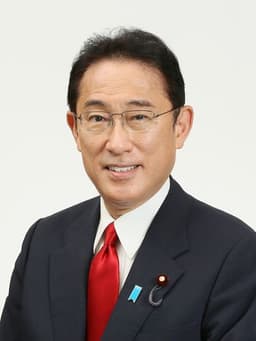
Fumio Kishida
Politician · Modern
51.8Total

Julius Caesar
General · Ancient
82.8Total
Basic Information
Born
1957
-100
Died
—
-44
Era
Modern
Ancient
Nationality
Japan
Roman Republic
Occupation
Politician
General
Civilization
Eastern
Western
Score Comparison
Military (10%)
29.2
88.0
Political (20%)
68.0
78.0
Influence (20%)
53.3
85.0
Legacy (20%)
40.0
82.0
Leadership (15%)
64.0
80.0
Strategy (15%)
57.2
85.0
TOTAL
51.8
82.8
Fumio Kishida — Complete Timeline
2021 AD
Announced new capitalism policyReform◆ Major
Kishida unveiled a 'new capitalism' economic policy aiming to redistribute wealth and promote growth. The plan included raising wages, increasing investment in green technology, and addressing income inequality in Japan.
JapanEconomic PolicyNew Capitalism
Impact: nationalconstructive
Elected Prime Minister of JapanPolitical Action◆ Major
Kishida was elected as Prime Minister of Japan after winning the LDP leadership election. He succeeded Yoshihide Suga and formed a cabinet focused on economic recovery and COVID-19 response.
JapanPrime MinisterLDP
Impact: national
2022 AD
Assassination of Shinzo AbePolitical Action◆ Major
Former Prime Minister Shinzo Abe was assassinated during a campaign speech in Nara. Kishida, as sitting prime minister, led the government's response, including security reviews and a state funeral for Abe.
JapanAssassinationAbe
Impact: nationaltragic
Julius Caesar — Complete Timeline
58 BC
Gallic WarsWar◆ Major
Caesar, as proconsul of Gaul, launched a series of campaigns that conquered all of Gaul (modern France, Belgium, and parts of Switzerland). He fought numerous battles, including against the Helvetii, the Belgae, and the Gallic chieftain Vercingetorix. The wars brought immense wealth and a loyal army to Caesar.
Gallic WarsConquestRoman Expansion
Impact: regional
49 BC
Crossing the RubiconPolitical Action◆ Major
Caesar led Legio XIII across the Rubicon River into Italy, defying the Roman Senate's order to disband his army. This act triggered a civil war against Pompey and the Optimates, ultimately leading to Caesar's dictatorship and the end of the Roman Republic.
Roman Civil WarEnd of RepublicPower Struggle
Impact: global
48 BC
Battle of PharsalusWar◆ Major
Caesar's outnumbered army defeated the larger forces of Pompey the Great at Pharsalus in Greece. Caesar's tactical use of a reserve line to counter Pompey's cavalry charge proved decisive. Pompey fled to Egypt, where he was assassinated, leaving Caesar as the undisputed master of the Roman world.
Roman Civil WarBattleDecisive Victory
Impact: regional
44 BC
Appointment as Dictator for LifePolitical Action◆ Major
The Roman Senate appointed Caesar dictator perpetuo (dictator for life), granting him unprecedented personal power. This move concentrated military, legislative, and judicial authority in one person, effectively ending the Roman Republic's traditional system of checks and balances and alarming many senators.
DictatorshipEnd of RepublicPower Consolidation
Impact: regionaldestructive
Assassination on the Ides of MarchPolitical Action◆ Major
A group of Roman senators, led by Marcus Junius Brutus and Gaius Cassius Longinus, stabbed Caesar to death at a meeting of the Senate in the Theatre of Pompey. The assassination was intended to restore the Republic, but instead triggered another civil war that led to the rise of the Roman Empire.
AssassinationRoman PoliticsEnd of Republic
Impact: globaldestructive
Expert Analysis
fumio-kishida-vs-julius-caesar
# The Weight of the Hourglass
On the Ides of March in 44 BCE, a man in a purple toga fell to the floor of the Roman Senate, stabbed twenty-three times by men he had once called friends. In October 2021, a soft-spoken diplomat from Hiroshima stood before the Japanese Diet, accepted a ceremonial gavel, and became prime minister of a stable constitutional monarchy. These two scenes, separated by two millennia and the entire arc of human civilization, seem to belong to different species of history. Yet both Julius Caesar and Fumio Kishida stood at the apex of their respective worlds, each facing the same fundamental question: What does power demand, and what does it cost? Their answers reveal not just the chasm between ancient and modern politics, but the eternal tension between ambition and duty.
Origins
Julius Caesar was born into a patrician family that had fallen on hard times, both financially and politically. The Roman Republic in the first century BCE was a cauldron of civil wars, slave revolts, and senatorial corruption. Young Caesar grew up watching his uncle Gaius Marius fight for power against Sulla, learning early that politics was a blood sport. His mother Aurelia raised him with a fierce sense of dignity, but the streets of Rome taught him that survival required cunning. By contrast, Fumio Kishida was born in 1957 into a political family from Hiroshima, a city that had been vaporized by atomic fire twelve years earlier. His father and grandfather were both members of parliament. Japan in the 1950s was a defeated nation rising from ash, bound by a pacifist constitution and the American security umbrella. Where Caesar learned that the world was a battlefield, Kishida learned that the world was a negotiation.
Rise to Power
Caesar’s ascent was a masterpiece of calculated risk. He borrowed enormous sums to fund public spectacles and bribes, climbed the ladder of Roman magistracies with relentless speed, and then—in a stroke of genius—secured command of Gaul in 58 BCE. Over eight years, he conquered a territory larger than Italy itself, amassing a veteran army loyal not to the Republic but to him personally. When the Senate ordered him to disband his legions, he crossed the Rubicon River in 49 BCE, igniting a civil war that ended with him as dictator for life. Kishida’s rise was quieter but no less deliberate. He served as foreign minister for five years under Shinzo Abe, building a reputation as a consensus-builder and a dove on security issues. In 2021, after Abe’s successor Yoshihide Suga resigned amid falling approval ratings, Kishida won the Liberal Democratic Party leadership election by promising stability and a “new capitalism” that would redistribute wealth. Where Caesar seized power with a sword, Kishida accepted it with a handshake.
Leadership & Governance
Caesar ruled as a revolutionary reformer. He centralized tax collection, granted citizenship to Gauls and Spaniards, reformed the calendar (giving us the Julian calendar), and launched massive building projects. His military genius was absolute: at the siege of Alesia in 52 BCE, he defeated a Gallic army three times his size by building fortifications around both the enemy and his own besieging forces. Yet his political wisdom was flawed. He pardoned his enemies, but refused to share power, accumulating titles that offended republican sensibilities. Kishida governed within the tight box of modern democracy. His “new capitalism” included wage increases for workers and tax breaks for companies that raised pay, but Japan’s entrenched economic stagnation limited his impact. He raised defense spending to 2% of GDP, a historic shift for pacifist Japan, and strengthened ties with NATO. His military score of 60.4 reflects the constraints of a constitution that renounces war, while Caesar’s 88.0 reflects a world where generals were kings. But Kishida’s political score of 72.4—not far below Caesar’s 78.0—suggests that navigating a parliamentary democracy requires its own kind of cunning.
Triumph & Tragedy
Caesar’s greatest triumph was his conquest of Gaul, which he immortalized in his own *Commentaries*, a work of propaganda so brilliant that it is still studied as literature. His greatest tragedy came on the Ides of March, when his refusal to become a king—or his decision to act like one—led to his murder by senators who feared he would destroy the Republic. The irony is that his assassination triggered the very civil wars that ended the Republic forever. Kishida’s triumphs are quieter. He oversaw Japan’s response to the assassination of Shinzo Abe in July 2022, a moment that could have destabilized the nation. Instead, he delivered a steady, somber address and called for new laws on election security. His tragedy, if it comes, may be that his legacy remains unfinished. He has no Gaul to conquer, no Rubicon to cross—only the slow, grinding work of managing a society that is aging, deflating, and uncertain of its place in the world.
Character & Destiny
Caesar was audacious, charismatic, and ruthlessly pragmatic. He famously said, “I came, I saw, I conquered,” and he meant it. His personality drove him to take risks that would have destroyed lesser men, and it was that same personality that made him unable to step back from the brink. He believed he was destined for greatness, and history obliged—but at a terrible price. Kishida is cautious, conciliatory, and methodical. He once said, “Politics is about patience.” Where Caesar gambled everything on a single throw of the dice, Kishida builds consensus over months. His destiny is not to reshape civilization but to steer a stable ship through choppy waters. The difference is not one of talent but of context: Caesar lived in a world where a single man could remake history; Kishida lives in a world where history is made by committees, markets, and the slow pulse of democracy.
Legacy
Caesar’s legacy is immortal. His name became synonymous with imperial rule: “Kaiser” and “Tsar” both derive from his name. He transformed Rome from a republic into an empire, and the Western world has never stopped grappling with that transformation. His scores—Military 88, Influence 85, Legacy 82—reflect a man who changed the course of civilization. Kishida’s legacy is still being written. His scores—Military 60, Influence 75, Legacy 56—suggest a competent leader in a time of limits. He may be remembered as the prime minister who quietly strengthened Japan’s defenses and tried to tame capitalism, or he may fade into the long list of postwar Japanese leaders who were overshadowed by the towering figure of Shinzo Abe.
Conclusion
Caesar and Kishida are separated by more than two thousand years. But their stories share a haunting question: What does it mean to wield power in a world that is larger than any one person? Caesar answered by trying to become the world itself, and the world killed him for it. Kishida answers by accepting that he is a steward, not a sovereign. The Rubicon still flows, but today it is a river of votes, not blood. And perhaps that is the greatest legacy of all: that in our age, a leader can rise without a sword, govern without a crown, and leave without a corpse. The Ides of March still come, but they no longer need to end in murder.
Rankings
🥇
Julius CaesarLeader
Mil: 88.0Pol: 78.0Inf: 85.0
82.8
🥈
Fumio Kishida
Mil: 29.2Pol: 68.0Inf: 53.3
51.8
+31.0 behind
How This Comparison Works
Algorithm
Each figure is scored on 6 dimensions (0—100 scale) based on structured historical data: Military (10%), Political (20%), Influence (20%), Legacy (20%), Leadership (15%), Strategy (15%). The weighted total produces the final ranking.
Data Sources
Scores are computed from structured sub-indicators in the database. Scale factors adjust for era (Ancient ×0.85, Modern ×1.0) and civilization size (Eastern ×1.05, Other ×0.80) to account for differences in population and military scale.
Maximum 3 Figures
Comparisons are limited to 2—3 figures to ensure readability and statistical meaningfulness.
Error Margins
±5 points per dimension — Sub-scores are derived from historical records with inherent uncertainty. Two figures within 5 points on a dimension should be considered roughly equivalent in that area.
Total Score Accuracy
±3 points overall — The weighted combination of 6 dimensions produces a total score with approximately ±3 points of uncertainty. Differences of less than 3 points are not statistically significant— the figures are effectively tied.
Known Limitations
- Historical records are incomplete and uneven across civilizations
- Figures from oral-tradition societies may be underrepresented
- Occupation labels can misclassify multi-role figures
- Scores measure capability and impact, not moral character
- Quantitative scoring is a comparison tool, not absolute truth
Capability Radar
Military (10%) — Battles & Warfare
Battles
51
95
Win Rate
56
92
Expansion
57
97
Political (20%) — Governance & Reform
Reform
40
90
Diplomacy
55
85
Economy
45
82
Influence (20%) — Cultural & Global Reach
Cultural
20
88
Global
30
94
Legacy (20%) — Historical Impact
Historical
25
95
Longevity
15
96
Leadership (15%) — Power & Stability
Tenure
35
75
Stability
40
60
Strategy (15%) — Tactics & Innovation
Strategy
59
94
Tactics
63
96
Reform
69
88
Similar Comparisons
Comments & Discussion
No comments yet. Be the first to share your thoughts!