Loading...
This comparison has not been analyzed yet.
One-time AI generation (~1 minute). Scores and timeline are already available below.
Gabriel Garcia Moreno vs Joe Slovo
Joe Slovo leads by 4.7 pts · 2 figures compared
…
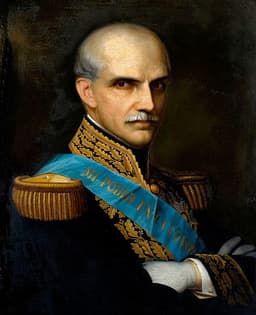
Gabriel Garcia Moreno
Politician · Modern
49.3Total
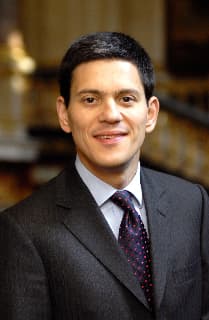
Joe Slovo
Politician · Modern
54.0Total
Basic Information
Born
1821
1926
Died
1875
—
Era
Modern
Modern
Nationality
Ecuador
South Africa
Occupation
Politician
Politician
Civilization
Western
Other
Score Comparison
Military (10%)
21.2
10.0
Political (20%)
62.7
72.0
Influence (20%)
54.9
58.0
Legacy (20%)
47.5
50.0
Leadership (15%)
53.2
66.0
Strategy (15%)
42.3
53.5
TOTAL
49.3
54.0
Gabriel Garcia Moreno — Complete Timeline
1861 AD
Modernization of InfrastructureReform
García Moreno initiated major infrastructure projects, including the construction of roads, bridges, and the Quito-Guayaquil railway. These projects aimed to integrate Ecuador's regions and boost economic development, though they were financed through heavy borrowing.
InfrastructureRailwayDevelopment
Impact: nationalconstructive
Presidency of EcuadorPolitical Action◆ Major
García Moreno was elected President of Ecuador in 1861, serving until 1865 and again from 1869 to 1875. His administrations were characterized by authoritarian rule, centralization of power, and a strong alliance with the Catholic Church.
PresidencyAuthoritarianismCatholicism
Impact: national
1862 AD
Concordat with the VaticanPolitical Action◆ Major
García Moreno signed a concordat with the Vatican in 1862, granting the Catholic Church control over education and religious affairs in Ecuador. This agreement strengthened church-state ties and made Ecuador a confessional state, aligning with his conservative ideology.
Church-State RelationsConcordatCatholicism
Impact: national
1869 AD
Suppression of Liberal OppositionPolitical Action◆ Major
After returning to power in 1869, Garc
RepressionAuthoritarianismConstitution
Impact: nationaldestructive
1875 AD
Assassination of Gabriel García MorenoPolitical Action
García Moreno was assassinated on August 6, 1875, on the steps of the presidential palace in Quito. His death was carried out by liberal opponents, ending his conservative regime and plunging Ecuador into a period of political instability.
AssassinationPolitical ViolenceEnd of Regime
Impact: nationaltragic
Joe Slovo — Complete Timeline
1942 AD
Joined South African Communist PartyPolitical Action◆ Major
Slovo joined the SACP as a young man, becoming a leading theorist and organizer. He later served as the party's general secretary and was a key figure in the alliance between the SACP and the ANC.
SACPCommunismAnti-Apartheid
Impact: nationalconstructive
1961 AD
Co-founded Umkhonto we SizwePolitical Action◆ Major
Slovo was a founding member of MK, the armed wing of the ANC, along with Nelson Mandela and others. He served on its high command and helped plan sabotage campaigns against apartheid infrastructure.
MKArmed StruggleAnti-Apartheid
Impact: national
1963 AD
Exile and ANC LeadershipPolitical Action◆ Major
Slovo went into exile after the Rivonia Trial arrests. He became a key ANC leader abroad, coordinating military and political strategy, and served as the SACP general secretary from 1986.
ExileANCSACP
Impact: national
1990 AD
Returned to South Africa and NegotiationsPolitical Action◆ Major
Slovo returned to South Africa after the unbanning of the ANC. He played a key role in the negotiations to end apartheid, advocating for a negotiated settlement and serving as Minister of Housing in Mandela's government.
NegotiationsTransitionHousing
Impact: nationalconstructive
This comparison has not been analyzed yet.
One-time AI generation (~1 minute). Scores and timeline are already available below.
Rankings
🥇
Joe SlovoLeader
Mil: 10.0Pol: 72.0Inf: 58.0
54.0
🥈
Gabriel Garcia Moreno
Mil: 21.2Pol: 62.7Inf: 54.9
49.3
+4.7 behind
How This Comparison Works
Algorithm
Each figure is scored on 6 dimensions (0—100 scale) based on structured historical data: Military (10%), Political (20%), Influence (20%), Legacy (20%), Leadership (15%), Strategy (15%). The weighted total produces the final ranking.
Data Sources
Scores are computed from structured sub-indicators in the database. Scale factors adjust for era (Ancient ×0.85, Modern ×1.0) and civilization size (Eastern ×1.05, Other ×0.80) to account for differences in population and military scale.
Maximum 3 Figures
Comparisons are limited to 2—3 figures to ensure readability and statistical meaningfulness.
Error Margins
±5 points per dimension — Sub-scores are derived from historical records with inherent uncertainty. Two figures within 5 points on a dimension should be considered roughly equivalent in that area.
Total Score Accuracy
±3 points overall — The weighted combination of 6 dimensions produces a total score with approximately ±3 points of uncertainty. Differences of less than 3 points are not statistically significant— the figures are effectively tied.
Known Limitations
- Historical records are incomplete and uneven across civilizations
- Figures from oral-tradition societies may be underrepresented
- Occupation labels can misclassify multi-role figures
- Scores measure capability and impact, not moral character
- Quantitative scoring is a comparison tool, not absolute truth
Capability Radar
Military (10%) — Battles & Warfare
Battles
20
0
Win Rate
25
0
Expansion
15
0
Political (20%) — Governance & Reform
Reform
70
70
Diplomacy
40
65
Economy
60
50
Influence (20%) — Cultural & Global Reach
Cultural
40
40
Global
30
50
Legacy (20%) — Historical Impact
Historical
50
55
Longevity
35
45
Leadership (15%) — Power & Stability
Tenure
55
60
Stability
45
55
Strategy (15%) — Tactics & Innovation
Strategy
20
10
Tactics
15
5
Reform
30
15
Similar Comparisons
Comments & Discussion
No comments yet. Be the first to share your thoughts!