Loading...
This comparison has not been analyzed yet.
One-time AI generation (~1 minute). Scores and timeline are already available below.
Gamal Salem vs Hyder Ali
Hyder Ali leads by 4.8 pts · 2 figures compared
…

Gamal Salem
General · Modern
64.6Total
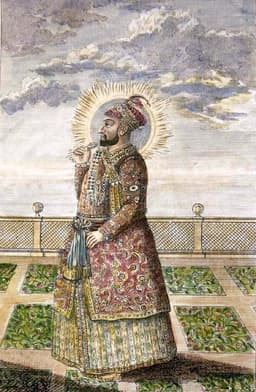
Hyder Ali
General · Modern
69.4Total
Basic Information
Born
1918
1720
Died
1968
1782
Era
Modern
Modern
Nationality
Egypt
India
Occupation
General
General
Civilization
Middle Eastern
Indian
Score Comparison
Military (10%)
71.0
80.0
Political (20%)
66.8
65.7
Influence (20%)
63.6
82.0
Legacy (20%)
57.2
56.0
Leadership (15%)
78.0
68.0
Strategy (15%)
55.9
68.0
TOTAL
64.6
69.4
Gamal Salem — Complete Timeline
1952 AD
Participated in the 1952 Egyptian RevolutionPolitical Action◆ Major
Gamal Salem was a member of the Free Officers movement that overthrew King Farouk. He was the brother of Salah Salem and served on the Revolutionary Command Council.
Egyptian RevolutionFree OfficersRevolutionary Command Council
Impact: national
1954 AD
Served as Minister of FinancePolitical Action
Gamal Salem served as Egypt's Minister of Finance, overseeing economic policies during the early Nasser era. He implemented land reform and nationalization measures.
Minister of FinanceEconomic ReformNasser Era
Impact: national
1956 AD
Resigned from GovernmentPolitical Action
Gamal Salem resigned from his ministerial position due to disagreements with Nasser's policies. He later retired from politics, living in obscurity until his death.
ResignationPolitical DisagreementNasser Era
Impact: national
Hyder Ali — Complete Timeline
1757 AD
Battle of PlasseyWar◆ Major
Hyder Ali, as a commander under the Wodeyar dynasty, participated in the Battle of Plassey indirectly by supporting the French against the British. However, his major role came later. This battle marked the beginning of British dominance in Bengal, which Hyder Ali would later challenge in the Carnatic Wars.
Carnatic WarsBritish East India CompanyMysore
Impact: regional
1761 AD
Capture of the throne of MysorePolitical Action◆ Major
Hyder Ali, a military commander, overthrew the Wodeyar ruler Krishnaraja Wodeyar II and established himself as the de facto ruler of Mysore. He imprisoned the maharaja and assumed full control, transforming Mysore into a powerful state through military reforms and expansion.
CoupMysore KingdomWodeyar Dynasty
Impact: regionaldestructive
1767 AD
First Anglo-Mysore WarWar◆ Major
Hyder Ali led Mysore against the British East India Company in the First Anglo-Mysore War. He formed alliances with the Nizam of Hyderabad and the Marathas. The war ended with the Treaty of Madras in 1769, which restored conquered territories and established a defensive alliance between Mysore and the British.
Anglo-Mysore WarsTreaty of MadrasBritish India
Impact: regional
1780 AD
Second Anglo-Mysore WarWar◆ Major
Hyder Ali launched the Second Anglo-Mysore War, attacking British territories in the Carnatic. He captured Arcot and defeated British forces at Pollilur. The war continued after his death in 1782, with his son Tipu Sultan taking command. The conflict ended with the Treaty of Mangalore in 1784.
Anglo-Mysore WarsBattle of PollilurTipu Sultan
Impact: regional
This comparison has not been analyzed yet.
One-time AI generation (~1 minute). Scores and timeline are already available below.
Rankings
🥇
Hyder AliLeader
Mil: 80.0Pol: 65.7Inf: 82.0
69.4
🥈
Gamal Salem
Mil: 71.0Pol: 66.8Inf: 63.6
64.6
+4.8 behind
How This Comparison Works
Algorithm
Each figure is scored on 6 dimensions (0—100 scale) based on structured historical data: Military (10%), Political (20%), Influence (20%), Legacy (20%), Leadership (15%), Strategy (15%). The weighted total produces the final ranking.
Data Sources
Scores are computed from structured sub-indicators in the database. Scale factors adjust for era (Ancient ×0.85, Modern ×1.0) and civilization size (Eastern ×1.05, Other ×0.80) to account for differences in population and military scale.
Maximum 3 Figures
Comparisons are limited to 2—3 figures to ensure readability and statistical meaningfulness.
Error Margins
±5 points per dimension — Sub-scores are derived from historical records with inherent uncertainty. Two figures within 5 points on a dimension should be considered roughly equivalent in that area.
Total Score Accuracy
±3 points overall — The weighted combination of 6 dimensions produces a total score with approximately ±3 points of uncertainty. Differences of less than 3 points are not statistically significant— the figures are effectively tied.
Known Limitations
- Historical records are incomplete and uneven across civilizations
- Figures from oral-tradition societies may be underrepresented
- Occupation labels can misclassify multi-role figures
- Scores measure capability and impact, not moral character
- Quantitative scoring is a comparison tool, not absolute truth
Capability Radar
Military (10%) — Battles & Warfare
Battles
53
78
Win Rate
54
72
Expansion
61
70
Political (20%) — Governance & Reform
Reform
72
70
Diplomacy
77
68
Economy
74
60
Influence (20%) — Cultural & Global Reach
Cultural
71
50
Global
80
50
Legacy (20%) — Historical Impact
Historical
74
55
Longevity
77
45
Leadership (15%) — Power & Stability
Tenure
65
65
Stability
80
55
Strategy (15%) — Tactics & Innovation
Strategy
61
80
Tactics
66
85
Reform
65
75
Similar Comparisons
Comments & Discussion
No comments yet. Be the first to share your thoughts!