Loading...
This comparison has not been analyzed yet.
One-time AI generation (~1 minute). Scores and timeline are already available below.
Gaston Doumergue vs Miguel Aleman Valdes
Miguel Aleman Valdes leads by 4.5 pts · 2 figures compared
…
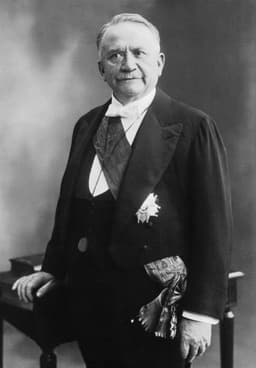
Gaston Doumergue
Politician · Modern
52.4Total

Miguel Aleman Valdes
Politician · Modern
56.9Total
Basic Information
Born
1863
1900
Died
1937
1983
Era
Modern
Modern
Nationality
France
Mexico
Occupation
Politician
Politician
Civilization
Western
Western
Score Comparison
Military (10%)
48.7
48.0
Political (20%)
45.0
72.0
Influence (20%)
54.9
56.4
Legacy (20%)
47.5
48.3
Leadership (15%)
72.0
72.0
Strategy (15%)
44.3
43.5
TOTAL
52.4
56.9
Gaston Doumergue — Complete Timeline
1913 AD
Served as Prime MinisterPolitical Action◆ Major
Doumergue served as Prime Minister from December 1913 to June 1914. His government passed the three-year military service law, extending conscription to prepare for the looming war with Germany.
Prime MinisterMilitary Service
Impact: national
1924 AD
Elected President of FrancePolitical Action◆ Major
Gaston Doumergue was elected President of the French Republic, serving from 1924 to 1931. He was a popular figure who maintained a largely ceremonial role, helping to stabilize the Third Republic.
Presidency
Impact: nationalconstructive
1934 AD
Returned as Prime Minister during CrisisPolitical Action◆ Major
Doumergue was recalled as Prime Minister in February 1934 following the Stavisky affair riots. He formed a national unity government to restore order and confidence, serving until November 1934.
Prime MinisterCrisis Government
Impact: nationalconstructive
Miguel Aleman Valdes — Complete Timeline
1946 AD
Became first civilian president after the Mexican RevolutionPolitical Action◆ Major
Alemán Valdés assumed the presidency in 1946, marking the first time a civilian held the office since the revolution. His election symbolized the institutionalization of the revolutionary state and the dominance of the Institutional Revolutionary Party (PRI).
PresidencyPRIPost-revolutionary Mexico
Impact: national
1947 AD
Launched large-scale industrialization and infrastructure projectsReform◆ Major
Alemán Valdés promoted import-substitution industrialization, building highways, dams, and hydroelectric plants. His policies spurred economic growth but also increased inequality and urban migration, shaping Mexico's modern economy.
IndustrializationInfrastructureEconomic development
Impact: nationalconstructive
1948 AD
Cracked down on labor unions and political dissentPolitical Action◆ Major
Alemán Valdés suppressed independent labor unions and leftist opposition, using the military and police to crush strikes and imprison leaders. This authoritarian turn consolidated PRI control but undermined democratic freedoms.
AuthoritarianismLabor suppressionPRI dominance
Impact: nationaldestructive
This comparison has not been analyzed yet.
One-time AI generation (~1 minute). Scores and timeline are already available below.
Rankings
🥇
Miguel Aleman ValdesLeader
Mil: 48.0Pol: 72.0Inf: 56.4
56.9
🥈
Gaston Doumergue
Mil: 48.7Pol: 45.0Inf: 54.9
52.4
+4.5 behind
How This Comparison Works
Algorithm
Each figure is scored on 6 dimensions (0—100 scale) based on structured historical data: Military (10%), Political (20%), Influence (20%), Legacy (20%), Leadership (15%), Strategy (15%). The weighted total produces the final ranking.
Data Sources
Scores are computed from structured sub-indicators in the database. Scale factors adjust for era (Ancient ×0.85, Modern ×1.0) and civilization size (Eastern ×1.05, Other ×0.80) to account for differences in population and military scale.
Maximum 3 Figures
Comparisons are limited to 2—3 figures to ensure readability and statistical meaningfulness.
Error Margins
±5 points per dimension — Sub-scores are derived from historical records with inherent uncertainty. Two figures within 5 points on a dimension should be considered roughly equivalent in that area.
Total Score Accuracy
±3 points overall — The weighted combination of 6 dimensions produces a total score with approximately ±3 points of uncertainty. Differences of less than 3 points are not statistically significant— the figures are effectively tied.
Known Limitations
- Historical records are incomplete and uneven across civilizations
- Figures from oral-tradition societies may be underrepresented
- Occupation labels can misclassify multi-role figures
- Scores measure capability and impact, not moral character
- Quantitative scoring is a comparison tool, not absolute truth
Capability Radar
Military (10%) — Battles & Warfare
Battles
31
30
Win Rate
34
34
Expansion
33
35
Political (20%) — Governance & Reform
Reform
55
65
Diplomacy
60
55
Economy
50
70
Influence (20%) — Cultural & Global Reach
Cultural
30
40
Global
30
30
Legacy (20%) — Historical Impact
Historical
40
50
Longevity
35
40
Leadership (15%) — Power & Stability
Tenure
65
60
Stability
60
60
Strategy (15%) — Tactics & Innovation
Strategy
40
38
Tactics
41
41
Reform
46
46
Similar Comparisons
Comments & Discussion
No comments yet. Be the first to share your thoughts!