Loading...
This comparison has not been analyzed yet.
One-time AI generation (~1 minute). Scores and timeline are already available below.
Geng Jingzhong vs Takenaka Hanbei
Takenaka Hanbei leads by 2.0 pts · 2 figures compared
…

Geng Jingzhong
General · Modern
41.6Total
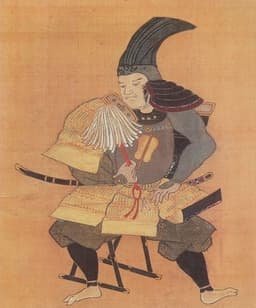
Takenaka Hanbei
General · Modern
43.6Total
Basic Information
Born
1644
1544
Died
1682
1579
Era
Modern
Modern
Nationality
China
Japan
Occupation
General
General
Civilization
Eastern
Eastern
Score Comparison
Military (10%)
25.0
25.0
Political (20%)
32.2
30.8
Influence (20%)
51.0
53.3
Legacy (20%)
43.3
47.5
Leadership (15%)
43.8
36.9
Strategy (15%)
41.7
57.5
TOTAL
41.6
43.6
Geng Jingzhong — Complete Timeline
1671 AD
Inherited the title of Prince of JingnanPolitical Action◆ Major
Geng Jingzhong inherited the title of Prince of Jingnan from his father Geng Jimao. He became one of the Three Feudatories, ruling over Fujian with significant autonomy under the Qing.
FeudatoryQing Dynasty
Impact: regional
1674 AD
Joined the Revolt of the Three FeudatoriesWar◆ Major
Geng Jingzhong joined Wu Sangui's rebellion against the Qing. He raised an army in Fujian and attacked Qing positions, hoping to expand his territory and power.
RebellionThree Feudatories
Impact: nationaldestructive
1676 AD
Besieged by Qing forcesWar◆ Major
Qing armies under Kangxi Emperor's command besieged Geng Jingzhong in Fuzhou. His rebellion faltered as Qing forces regained control of neighboring provinces.
SiegeThree Feudatories
Impact: regionaltragic
Surrendered to the QingPolitical Action◆ Major
Geng Jingzhong surrendered to the Qing after his defeat. He was initially pardoned and allowed to retain his title, but was later executed for his rebellion.
SurrenderThree Feudatories
Impact: nationaltragic
1682 AD
Executed by the QingPolitical Action◆ Major
Geng Jingzhong was executed by the Qing for his role in the rebellion. His death marked the end of the Geng family's power in Fujian and the consolidation of Qing control.
ExecutionThree Feudatories
Impact: nationaltragic
Takenaka Hanbei — Complete Timeline
1567 AD
Capture of Inabayama CastleWar◆ Major
Takenaka Hanbei devised a plan for Toyotomi Hideyoshi to capture Inabayama Castle from the Saito clan. Using a night attack and infiltration, the castle fell, marking a key step in Oda Nobunaga's unification of Japan.
InabayamaSiegeHideyoshi
Impact: regionalconstructive
Service as Strategist to HideyoshiOther
Takenaka Hanbei became a chief strategist for Toyotomi Hideyoshi after the capture of Inabayama Castle. He advised on military campaigns and administrative reforms until his death from illness in 1579.
StrategyHideyoshiAdvisor
Impact: regionalconstructive
This comparison has not been analyzed yet.
One-time AI generation (~1 minute). Scores and timeline are already available below.
Rankings
🥇
Takenaka HanbeiLeader
Mil: 25.0Pol: 30.8Inf: 53.3
43.6
🥈
Geng Jingzhong
Mil: 25.0Pol: 32.2Inf: 51.0
41.6
+2.0 behind
How This Comparison Works
Algorithm
Each figure is scored on 6 dimensions (0—100 scale) based on structured historical data: Military (10%), Political (20%), Influence (20%), Legacy (20%), Leadership (15%), Strategy (15%). The weighted total produces the final ranking.
Data Sources
Scores are computed from structured sub-indicators in the database. Scale factors adjust for era (Ancient ×0.85, Modern ×1.0) and civilization size (Eastern ×1.05, Other ×0.80) to account for differences in population and military scale.
Maximum 3 Figures
Comparisons are limited to 2—3 figures to ensure readability and statistical meaningfulness.
Error Margins
±5 points per dimension — Sub-scores are derived from historical records with inherent uncertainty. Two figures within 5 points on a dimension should be considered roughly equivalent in that area.
Total Score Accuracy
±3 points overall — The weighted combination of 6 dimensions produces a total score with approximately ±3 points of uncertainty. Differences of less than 3 points are not statistically significant— the figures are effectively tied.
Known Limitations
- Historical records are incomplete and uneven across civilizations
- Figures from oral-tradition societies may be underrepresented
- Occupation labels can misclassify multi-role figures
- Scores measure capability and impact, not moral character
- Quantitative scoring is a comparison tool, not absolute truth
Capability Radar
Military (10%) — Battles & Warfare
Battles
45
35
Win Rate
40
40
Expansion
20
30
Political (20%) — Governance & Reform
Reform
10
10
Diplomacy
25
25
Economy
15
10
Influence (20%) — Cultural & Global Reach
Cultural
20
30
Global
15
20
Legacy (20%) — Historical Impact
Historical
30
40
Longevity
20
35
Leadership (15%) — Power & Stability
Tenure
30
15
Stability
10
15
Strategy (15%) — Tactics & Innovation
Strategy
30
60
Tactics
35
65
Reform
10
20
Similar Comparisons
Comments & Discussion
No comments yet. Be the first to share your thoughts!