Loading...
This comparison has not been analyzed yet.
One-time AI generation (~1 minute). Scores and timeline are already available below.
George C. Marshall vs Werner von Blomberg
George C. Marshall leads by 20.1 pts · 2 figures compared
…

George C. Marshall
General · Modern
73.7Total
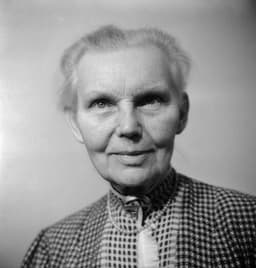
Werner von Blomberg
General · Modern
53.6Total
Basic Information
Born
1880
1878
Died
1959
1946
Era
Modern
Modern
Nationality
United States
Germany
Occupation
General
General
Civilization
Western
Western
Score Comparison
Military (10%)
45.0
30.0
Political (20%)
86.0
68.0
Influence (20%)
68.0
51.8
Legacy (20%)
80.0
45.0
Leadership (15%)
82.0
68.0
Strategy (15%)
70.0
60.0
TOTAL
73.7
53.6
George C. Marshall — Complete Timeline
1939 AD
Appointment as US Army Chief of StaffPolitical Action
Marshall was appointed Chief of Staff of the US Army on September 1, 1939, the day Germany invaded Poland. He oversaw the massive expansion and modernization of the US Army from a small peacetime force to a global fighting force of over 8 million soldiers.
World War IIMilitary ExpansionLeadership
Impact: globalconstructive
1944 AD
Oversight of the D-Day Invasion (Operation Overlord)War
As Chief of Staff, Marshall was instrumental in planning and executing the Allied invasion of Normandy on June 6, 1944. He coordinated the massive logistical effort and troop deployments that enabled the successful landings and the subsequent liberation of Western Europe.
World War IID-DayAllied Victory
Impact: globalconstructive
1947 AD
Announcement of the Marshall PlanReform
As Secretary of State, Marshall proposed the European Recovery Program (Marshall Plan) in a speech at Harvard University. The plan provided over $12 billion in economic aid to rebuild Western European economies after World War II, countering Soviet influence and fostering economic recovery.
Cold WarEconomic AidEuropean Recovery
Impact: globalconstructive
1953 AD
Receipt of the Nobel Peace PrizeCultural◆ Major
Marshall was awarded the Nobel Peace Prize for his role in the Marshall Plan and his efforts to promote post-war reconstruction and international cooperation. He was the first professional soldier to receive the prize.
Nobel PrizePeaceRecognition
Impact: globalconstructive
Werner von Blomberg — Complete Timeline
1933 AD
Appointment as Minister of DefensePolitical Action◆ Major
Blomberg was appointed Reichswehrminister (Minister of Defense) in Hitler's cabinet. He was a key figure in the early Nazi rearmament, overseeing the expansion of the army and the creation of the Wehrmacht. He was promoted to Field Marshal in 1936.
Nazi GovernmentRearmamentWehrmacht
Impact: national
1938 AD
Blomberg-Fritsch AffairPolitical Action
Blomberg was forced to resign after his new wife was revealed to have a criminal record and a past as a prostitute. The scandal was exploited by G
Nazi PurgeScandalMilitary Leadership
Impact: nationaldestructive
1946 AD
Post-War Imprisonment and DeathOther
After World War II, Blomberg was captured by the Allies and held as a witness at the Nuremberg Trials. He died in captivity in 1946 before he could be tried. His legacy is that of a senior military figure who enabled Hitler's rise and rearmament.
Nuremberg TrialsPost-WarDeath
Impact: national
This comparison has not been analyzed yet.
One-time AI generation (~1 minute). Scores and timeline are already available below.
Rankings
🥇
George C. MarshallLeader
Mil: 45.0Pol: 86.0Inf: 68.0
73.7
🥈
Werner von Blomberg
Mil: 30.0Pol: 68.0Inf: 51.8
53.6
+20.1 behind
How This Comparison Works
Algorithm
Each figure is scored on 6 dimensions (0—100 scale) based on structured historical data: Military (10%), Political (20%), Influence (20%), Legacy (20%), Leadership (15%), Strategy (15%). The weighted total produces the final ranking.
Data Sources
Scores are computed from structured sub-indicators in the database. Scale factors adjust for era (Ancient ×0.85, Modern ×1.0) and civilization size (Eastern ×1.05, Other ×0.80) to account for differences in population and military scale.
Maximum 3 Figures
Comparisons are limited to 2—3 figures to ensure readability and statistical meaningfulness.
Error Margins
±5 points per dimension — Sub-scores are derived from historical records with inherent uncertainty. Two figures within 5 points on a dimension should be considered roughly equivalent in that area.
Total Score Accuracy
±3 points overall — The weighted combination of 6 dimensions produces a total score with approximately ±3 points of uncertainty. Differences of less than 3 points are not statistically significant— the figures are effectively tied.
Known Limitations
- Historical records are incomplete and uneven across civilizations
- Figures from oral-tradition societies may be underrepresented
- Occupation labels can misclassify multi-role figures
- Scores measure capability and impact, not moral character
- Quantitative scoring is a comparison tool, not absolute truth
Capability Radar
Military (10%) — Battles & Warfare
Battles
45
30
Win Rate
55
40
Expansion
40
50
Political (20%) — Governance & Reform
Reform
95
50
Diplomacy
95
45
Economy
90
30
Influence (20%) — Cultural & Global Reach
Cultural
65
15
Global
85
25
Legacy (20%) — Historical Impact
Historical
85
40
Longevity
80
20
Leadership (15%) — Power & Stability
Tenure
75
55
Stability
85
20
Strategy (15%) — Tactics & Innovation
Strategy
85
40
Tactics
60
35
Reform
90
65
Similar Comparisons
Comments & Discussion
No comments yet. Be the first to share your thoughts!