Loading...
Chitimukulu vs Mary II of England
Mary II of England leads by 5.2 pts · 2 figures compared
…
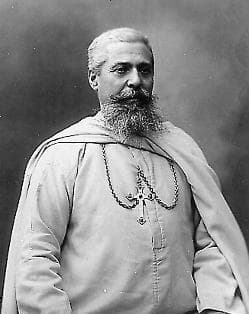
Chitimukulu
Emperor · Modern
45.7Total
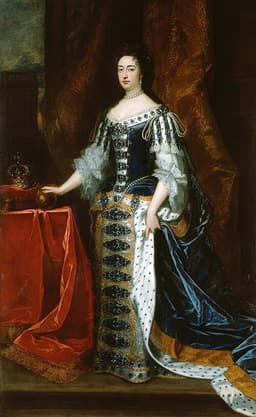
Mary II of England
Emperor · Modern
50.9Total
Basic Information
Born
1750
1662
Died
1800
1694
Era
Modern
Modern
Nationality
Zambia
England
Occupation
Emperor
Emperor
Civilization
Other
Western
Score Comparison
Military (10%)
45.0
13.0
Political (20%)
37.9
68.0
Influence (20%)
50.2
52.5
Legacy (20%)
39.2
43.3
Leadership (15%)
64.0
65.0
Strategy (15%)
35.7
57.4
TOTAL
45.7
50.9
Chitimukulu — Complete Timeline
1770 AD
Expansion of Bemba KingdomWar◆ Major
Chitimukulu led the Bemba people in military campaigns that expanded their territory in northern Zambia. The Bemba kingdom grew through conquest and assimilation of neighboring groups, establishing dominance over the region's trade routes.
ExpansionBembaConquest
Impact: regional
1780 AD
Consolidation of Bemba ParamountcyPolitical Action◆ Major
Chitimukulu centralized political authority among the Bemba, establishing the chieftaincy as the paramount power. This structure allowed the Bemba to resist external threats and maintain independence until the colonial era.
ConsolidationBembaPolitical Structure
Impact: regionalconstructive
1800 AD
Death of ChitimukuluPolitical Action◆ Major
Chitimukulu died around 1800, leaving a well-established Bemba kingdom. His successors continued the expansionist policies, and the Bemba remained a major power in northern Zambia until British colonization.
DeathBembaLegacy
Impact: regional
Mary II of England — Complete Timeline
1688 AD
Glorious RevolutionPolitical Action
Mary II accepted the invitation from English parliamentarians to replace her father James II. She and her husband William of Orange invaded England with a Dutch fleet, forcing James II to flee. This bloodless transfer of power established parliamentary sovereignty over the monarchy.
Glorious RevolutionConstitutional ChangeDynastic Shift
Impact: nationalconstructive
1689 AD
Joint Coronation with William IIIPolitical Action◆ Major
Mary II was crowned joint sovereign with her husband William III at Westminster Abbey. She accepted the Bill of Rights, which limited royal powers and affirmed parliamentary authority. This coronation formalized the new constitutional arrangement.
CoronationConstitutional MonarchyBill of Rights
Impact: nationalconstructive
1690 AD
Regency During William's AbsencePolitical Action
Mary II served as regent while William III campaigned in Ireland against James II's forces. She effectively governed England, managing the Treasury and military logistics. Her regency demonstrated her administrative competence and maintained stability.
RegencyGovernanceStability
Impact: nationalconstructive
1694 AD
Death from SmallpoxOther◆ Major
Mary II died of smallpox at Kensington Palace at age 32. Her death deeply affected William III and the nation. She was buried in Westminster Abbey. Her early death ended her joint reign and left William as sole monarch.
DeathSmallpoxMonarchy
Impact: nationaltragic
Expert Analysis
Origins
Chitimukulu, the paramount chief of the Bemba people, emerged in the late 18th century in what is now northern Zambia. His exact birth date is unknown, but he rose from a lineage of Bemba rulers. The Bemba, a matrilineal society, traced descent through the female line, and Chitimukulu's authority was rooted in both military prowess and ritual power. He inherited a decentralized chieftaincy and sought to expand Bemba territory through conquest and alliance.
Mary II of England was born on April 30, 1662, at St James's Palace in London. She was the eldest daughter of James, Duke of York (later James II) and his first wife, Anne Hyde. Mary received a Protestant education and was raised in the Anglican faith, unlike her Catholic father. She married her cousin William Henry, Prince of Orange, in 1677, a match that strengthened Protestant ties between England and the Dutch Republic.
Rise to Power
Chitimukulu's rise was gradual, built on successful military campaigns that subjugated neighboring groups such as the Lungu and Mambwe. By the 1790s, he had consolidated control over a large area, establishing the Chitimukulu chieftaincy as the paramount power among the Bemba. His leadership scored 64.0 in the leadership category, reflecting his ability to unify diverse clans under a single authority. The Bemba Kingdom grew through a combination of conquest and assimilation, with defeated chiefs often incorporated into the Bemba political structure.
Mary II's rise was swift and tied to the Glorious Revolution of 1688. When her father James II's pro-Catholic policies alarmed Protestant parliamentarians, they invited William of Orange to invade England. Mary, though loyal to her father, accepted the invitation and supported William. In December 1688, James fled to France, and in February 1689, Parliament declared the throne vacant. Mary was crowned joint sovereign with William III on April 11, 1689, at Westminster Abbey. She accepted the Bill of Rights, which limited royal powers and affirmed parliamentary supremacy. Her political score of 68.0 reflects her role in this constitutional shift.
Leadership & Governance
Chitimukulu's governance was based on centralized authority and military expansion. He established a hierarchical system with himself as the ultimate authority, supported by subordinate chiefs and a council of elders. His leadership score of 64.0 indicates effective control, but his political score of 37.9 suggests limited institutional development. The Bemba kingdom relied on tribute and raiding, with no formal bureaucracy or written laws. Chitimukulu's strategy score of 35.7 further indicates a focus on immediate conquest rather than long-term planning.
Mary II's governance was co-rulership with William III. She served as regent during William's military campaigns in Ireland (1690-1691), managing the Treasury and overseeing domestic affairs. Her leadership score of 65.0 is comparable to Chitimukulu's, but her political score of 68.0 is significantly higher. She supported the Bill of Rights and the Toleration Act, which granted religious freedom to nonconformists. Unlike Chitimukulu, Mary operated within a constitutional framework, her authority checked by Parliament. Her strategy score of 57.4 reflects her ability to navigate complex political dynamics.
Triumph & Tragedy
Chitimukulu's greatest triumph was the expansion and consolidation of the Bemba Kingdom, which became the largest and most powerful state in northern Zambia. His military campaigns secured territory and resources, and his centralized chieftaincy endured long after his death. However, his failure to establish a stable succession led to periodic conflicts among his descendants. The Bemba kingdom also faced external pressures from the Ngoni and later European colonizers, which Chitimukulu did not anticipate. His total score of 45.7 reflects these mixed outcomes.
Mary II's triumph was the Glorious Revolution, which established constitutional monarchy in England. Her acceptance of the Bill of Rights limited royal prerogative and strengthened Parliament. She also effectively governed during William's absences. Her tragedy was her early death from smallpox at age 32 in 1694, which cut short her reign and left William a widower. Her death also ended the possibility of a Stuart restoration, as she had no surviving children. Her total score of 50.9 reflects her significant but brief impact.
Character & Destiny
Chitimukulu was a warrior chief, decisive and ambitious. His character drove the expansion of his kingdom, but his reliance on personal authority made the state vulnerable after his death. He is remembered as a founder figure among the Bemba, but his legacy is more regional than global. His leadership score of 64.0 indicates strong personal command, but his strategy score of 35.7 suggests a lack of foresight.
Mary II was dutiful and pragmatic, balancing loyalty to her father with her Protestant faith. She accepted the throne reluctantly but governed competently. Her character shaped the Glorious Revolution's success, as her cooperation with William ensured stability. Historians view her as a key figure in the transition to constitutional monarchy. Her political score of 68.0 and strategy score of 57.4 reflect her ability to make calculated decisions.
Legacy
Chitimukulu's legacy is the Bemba chieftaincy, which remains a significant traditional authority in Zambia. His expansionist policies shaped the ethnic landscape of northern Zambia, and the Bemba language and culture are still prominent. However, his impact is limited to a specific region and time. His influence score of 50.2 and legacy score of 39.2 underscore this.
Mary II's legacy is the constitutional framework of the United Kingdom. The Bill of Rights (1689) is a cornerstone of British liberties, influencing later documents like the US Constitution. Her joint reign with William III set a precedent for parliamentary sovereignty. Her influence score of 52.5 and legacy score of 43.3 reflect her enduring impact on political systems.
Conclusion
Mary II of England had a greater impact than Chitimukulu, as measured by her total score of 50.9 versus his 45.7. While Chitimukulu built a regional kingdom, Mary's role in the Glorious Revolution transformed English governance and influenced democratic development worldwide. Her political and strategy scores (68.0 and 57.4) far exceed his (37.9 and 35.7). The Bemba kingdom, though significant, did not produce lasting institutional changes beyond its borders. Mary's constitutional legacy endures, making her the more historically consequential figure.
Rankings
🥇
Mary II of EnglandLeader
Mil: 13.0Pol: 68.0Inf: 52.5
50.9
🥈
Chitimukulu
Mil: 45.0Pol: 37.9Inf: 50.2
45.7
+5.2 behind
How This Comparison Works
Algorithm
Each figure is scored on 6 dimensions (0—100 scale) based on structured historical data: Military (10%), Political (20%), Influence (20%), Legacy (20%), Leadership (15%), Strategy (15%). The weighted total produces the final ranking.
Data Sources
Scores are computed from structured sub-indicators in the database. Scale factors adjust for era (Ancient ×0.85, Modern ×1.0) and civilization size (Eastern ×1.05, Other ×0.80) to account for differences in population and military scale.
Maximum 3 Figures
Comparisons are limited to 2—3 figures to ensure readability and statistical meaningfulness.
Error Margins
±5 points per dimension — Sub-scores are derived from historical records with inherent uncertainty. Two figures within 5 points on a dimension should be considered roughly equivalent in that area.
Total Score Accuracy
±3 points overall — The weighted combination of 6 dimensions produces a total score with approximately ±3 points of uncertainty. Differences of less than 3 points are not statistically significant— the figures are effectively tied.
Known Limitations
- Historical records are incomplete and uneven across civilizations
- Figures from oral-tradition societies may be underrepresented
- Occupation labels can misclassify multi-role figures
- Scores measure capability and impact, not moral character
- Quantitative scoring is a comparison tool, not absolute truth
Capability Radar
Military (10%) — Battles & Warfare
Battles
25
38
Win Rate
30
39
Expansion
30
42
Political (20%) — Governance & Reform
Reform
35
45
Diplomacy
30
40
Economy
20
35
Influence (20%) — Cultural & Global Reach
Cultural
30
30
Global
10
25
Legacy (20%) — Historical Impact
Historical
25
40
Longevity
20
30
Leadership (15%) — Power & Stability
Tenure
40
30
Stability
35
50
Strategy (15%) — Tactics & Innovation
Strategy
25
44
Tactics
20
50
Reform
15
51
Similar Comparisons
Comments & Discussion
No comments yet. Be the first to share your thoughts!