Loading...
George of Podebrady vs Uthman
Uthman leads by 12.4 pts · 2 figures compared
…
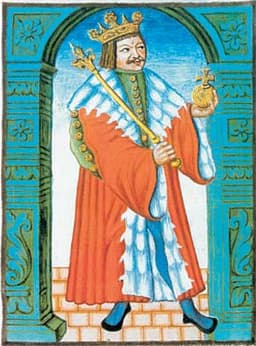
George of Podebrady
Emperor · Medieval
58.6Total
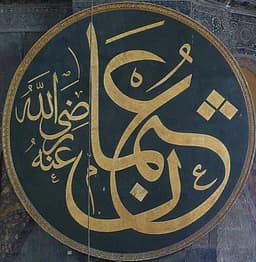
Uthman
Emperor · Medieval
71.0Total
Basic Information
Born
1420
576
Died
1471
656
Era
Medieval
Medieval
Nationality
Bohemia
Rashidun Caliphate
Occupation
Emperor
Emperor
Civilization
Western
Middle Eastern
Score Comparison
Military (10%)
30.0
40.0
Political (20%)
72.0
68.0
Influence (20%)
60.0
88.0
Legacy (20%)
52.0
80.0
Leadership (15%)
74.0
65.0
Strategy (15%)
57.5
50.0
TOTAL
58.6
71.0
George of Podebrady — Complete Timeline
1458 AD
Elected King of BohemiaPolitical Action◆ Major
Following the death of King Ladislaus the Posthumous, the Bohemian Diet elected George of Pod
ElectionHussiteBohemian Politics
Impact: nationalconstructive
1464 AD
Proposed a European Peace LeaguePolitical Action◆ Major
George proposed a treaty for a European league of Christian princes to maintain peace and coordinate defense against the Ottoman Empire. The plan included a common council and army. It was not implemented but is considered an early precursor to the European Union.
DiplomacyPeace PlanEuropean Unity
Impact: globalconstructive
1466 AD
Conflict with the PapacyPolitical Action◆ Major
Pope Paul II excommunicated George for his Hussite beliefs and refusal to enforce Catholic uniformity. The pope declared a crusade against Bohemia and supported the rival claim of Matthias Corvinus of Hungary. This led to a war that weakened George's position.
ExcommunicationReligious ConflictPapal-Hussite War
Impact: regionaldestructive
1468 AD
War with Matthias CorvinusWar◆ Major
Matthias Corvinus of Hungary invaded Bohemia, claiming the throne with papal support. George's forces fought a defensive war, losing territory. The conflict ended inconclusively, but George was forced to recognize Matthias as heir to the Bohemian crown.
WarHungarian InvasionSuccession
Impact: regionaldestructive
1471 AD
Compacted with the Catholic NobilityPolitical Action
On his deathbed, George negotiated a compromise with the Catholic nobility of Bohemia. He agreed to recognize Vladislaus II of Poland as his successor, ensuring a Catholic king but preserving religious tolerance for Hussites. This helped prevent further civil war.
CompromiseSuccessionReligious Tolerance
Impact: nationalconstructive
Uthman — Complete Timeline
644 AD
Caliphate of UthmanPolitical Action◆ Major
Uthman ibn Affan became the third caliph after Umar's assassination. His twelve-year reign saw continued expansion but also growing internal dissent, culminating in his assassination. He is known for standardizing the Quranic text.
CaliphateExpansionRashidun
Impact: global
650 AD
Conquest of Armenia and North AfricaWar◆ Major
Under Uthman, Muslim forces conquered Armenia and expanded into North Africa, capturing Tripoli and establishing control over the region. These campaigns extended the caliphate's reach and brought new territories under Islamic rule.
Islamic ConquestArmeniaNorth Africa
Impact: regional
Standardization of the QuranCultural
Uthman ordered the compilation of a standard written version of the Quran, based on the codex of Abu Bakr. He sent copies to major cities and ordered the destruction of variant texts, ensuring uniformity of the Islamic scripture.
QuranStandardizationRashidun
Impact: globalconstructive
656 AD
Siege and Assassination of UthmanPolitical Action
Rebels from Egypt and other provinces besieged Uthman's house in Medina, demanding reforms. After weeks of siege, they broke in and assassinated him while he was reading the Quran. His death sparked the First Fitna (civil war) among Muslims.
AssassinationCivil WarRashidun
Impact: globaltragic
Expert Analysis
Origins
George of Podebrady was born in 1420 in Bohemia, into a noble family of the Hussite faction. His father, Victor of Kunštát and Poděbrady, was a prominent Hussite leader. George received a military and political education in the turbulent Hussite wars. His early life was marked by the religious and political conflicts that divided Bohemia.
Uthman ibn Affan was born around 576 in Mecca, into the wealthy Umayyad clan of the Quraysh tribe. He was an early convert to Islam, known for his piety and wealth. He married two of the Prophet Muhammad's daughters, earning the title "Dhun-Nurayn" (Possessor of Two Lights). His background as a merchant and early Muslim gave him influence.
Rise to Power
George rose through the ranks of the Hussite nobility, becoming a leader of the moderate Utraquist faction. In 1458, after the death of King Ladislaus the Posthumous, the Bohemian Diet elected George as king. His election was a compromise: he was a moderate Hussite acceptable to many Catholics. He was crowned on May 7, 1458, in Prague.
Uthman became the third caliph after Umar's assassination in 644. He was chosen by a council (shura) appointed by Umar. His election was controversial, as he was seen as less capable than others, but his connections and wealth secured the position. He took office at a time of continued Islamic expansion.
Leadership & Governance
George's leadership was characterized by religious tolerance and diplomatic innovation. He sought to maintain peace between Catholics and Hussites and proposed a European peace league in 1464 to unite Christian princes against the Ottoman threat. His governance score of 74.0 reflects his pragmatic approach. However, his Hussite beliefs led to conflict with the Papacy, which excommunicated him in 1466.
Uthman's governance was marked by administrative centralization and nepotism. He appointed family members to key positions, which caused resentment. He ordered the standardization of the Quran, a major achievement, but his rule saw growing dissent. His leadership score of 65.0 indicates mixed effectiveness.
Triumph & Tragedy
George's greatest success was his peaceful election and his proposal for a European peace league, a visionary plan that foreshadowed modern international organizations. His greatest failure was the war with Matthias Corvinus of Hungary, which drained resources and lost territory. He died in 1471, having secured a compromise with Catholic nobles.
Uthman's greatest triumph was the compilation of the standard Quran, which unified the Muslim world. His conquests expanded the Caliphate into Armenia and North Africa. His greatest tragedy was his assassination in 656 by rebels, which plunged the Caliphate into civil war. His nepotism and inability to quell dissent led to his downfall.
Character & Destiny
George was a pragmatic and tolerant ruler, skilled in diplomacy. His character shaped his destiny: his moderation allowed him to become king but also made him a target for both Catholic extremists and hardline Hussites. His scores: political 72.0, leadership 74.0.
Uthman was pious but weak-willed, easily influenced by his family. His character led to accusations of corruption and favoritism. His inability to address grievances caused rebellion. His scores: political 68.0, leadership 65.0.
Legacy
George's legacy is as a pioneer of European unity. His peace league proposal was not realized, but it inspired later concepts like the European Union. He is remembered as the "Hussite king" who sought religious coexistence.
Uthman's legacy is monumental: the standardized Quran is used by Muslims worldwide. His reign saw the expansion of Islam but also the seeds of the Sunni-Shia split. He is revered by Sunnis as a righteous caliph, but criticized by Shias.
Conclusion
Uthman had greater impact. His total score of 71.0 compared to George's 58.6 reflects his enduring influence on Islam. While George's ideas were ahead of their time, Uthman's actions shaped the religious text of one of the world's largest faiths. The standardization of the Quran affects over a billion people daily. George's political and diplomatic achievements, though significant, are less globally transformative.
Rankings
🥇
UthmanLeader
Mil: 40.0Pol: 68.0Inf: 88.0
71.0
🥈
George of Podebrady
Mil: 30.0Pol: 72.0Inf: 60.0
58.6
+12.4 behind
How This Comparison Works
Algorithm
Each figure is scored on 6 dimensions (0—100 scale) based on structured historical data: Military (10%), Political (20%), Influence (20%), Legacy (20%), Leadership (15%), Strategy (15%). The weighted total produces the final ranking.
Data Sources
Scores are computed from structured sub-indicators in the database. Scale factors adjust for era (Ancient ×0.85, Modern ×1.0) and civilization size (Eastern ×1.05, Other ×0.80) to account for differences in population and military scale.
Maximum 3 Figures
Comparisons are limited to 2—3 figures to ensure readability and statistical meaningfulness.
Error Margins
±5 points per dimension — Sub-scores are derived from historical records with inherent uncertainty. Two figures within 5 points on a dimension should be considered roughly equivalent in that area.
Total Score Accuracy
±3 points overall — The weighted combination of 6 dimensions produces a total score with approximately ±3 points of uncertainty. Differences of less than 3 points are not statistically significant— the figures are effectively tied.
Known Limitations
- Historical records are incomplete and uneven across civilizations
- Figures from oral-tradition societies may be underrepresented
- Occupation labels can misclassify multi-role figures
- Scores measure capability and impact, not moral character
- Quantitative scoring is a comparison tool, not absolute truth
Capability Radar
Military (10%) — Battles & Warfare
Battles
45
30
Win Rate
50
40
Expansion
35
40
Political (20%) — Governance & Reform
Reform
70
70
Diplomacy
75
50
Economy
55
50
Influence (20%) — Cultural & Global Reach
Cultural
50
80
Global
40
85
Legacy (20%) — Historical Impact
Historical
55
85
Longevity
45
90
Leadership (15%) — Power & Stability
Tenure
65
60
Stability
45
40
Strategy (15%) — Tactics & Innovation
Strategy
50
30
Tactics
55
20
Reform
40
20
Similar Comparisons
Comments & Discussion
No comments yet. Be the first to share your thoughts!