Loading...
Monomotapa vs Uthman
Uthman leads by 21.0 pts · 2 figures compared
…

Monomotapa
Emperor · Medieval
50.0Total
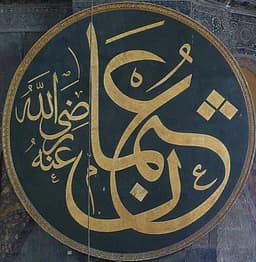
Uthman
Emperor · Medieval
71.0Total
Basic Information
Born
1480
576
Died
1530
656
Era
Medieval
Medieval
Nationality
Mutapa Empire
Rashidun Caliphate
Occupation
Emperor
Emperor
Civilization
Other
Middle Eastern
Score Comparison
Military (10%)
25.0
40.0
Political (20%)
54.7
68.0
Influence (20%)
54.9
88.0
Legacy (20%)
46.7
80.0
Leadership (15%)
65.0
65.0
Strategy (15%)
41.7
50.0
TOTAL
50.0
71.0
Monomotapa — Complete Timeline
1500 AD
Consolidated Mutapa Empire under Monomotapa titlePolitical Action◆ Major
The Monomotapa ruler consolidated the Mutapa Empire, centralizing power and establishing the title as the supreme authority over the Shona kingdoms. This period saw the empire's peak in wealth from gold and ivory trade.
EmpireCentralizationGold Trade
Impact: regionalconstructive
1520 AD
Resisted Portuguese incursionsWar◆ Major
The Monomotapa ruler resisted Portuguese attempts to control the gold trade and establish forts in the interior. This led to military conflicts along the Zambezi River, with the Mutapa state maintaining its independence for decades.
ResistancePortugueseGold Trade
Impact: regional
Uthman — Complete Timeline
644 AD
Caliphate of UthmanPolitical Action◆ Major
Uthman ibn Affan became the third caliph after Umar's assassination. His twelve-year reign saw continued expansion but also growing internal dissent, culminating in his assassination. He is known for standardizing the Quranic text.
CaliphateExpansionRashidun
Impact: global
650 AD
Conquest of Armenia and North AfricaWar◆ Major
Under Uthman, Muslim forces conquered Armenia and expanded into North Africa, capturing Tripoli and establishing control over the region. These campaigns extended the caliphate's reach and brought new territories under Islamic rule.
Islamic ConquestArmeniaNorth Africa
Impact: regional
Standardization of the QuranCultural
Uthman ordered the compilation of a standard written version of the Quran, based on the codex of Abu Bakr. He sent copies to major cities and ordered the destruction of variant texts, ensuring uniformity of the Islamic scripture.
QuranStandardizationRashidun
Impact: globalconstructive
656 AD
Siege and Assassination of UthmanPolitical Action
Rebels from Egypt and other provinces besieged Uthman's house in Medina, demanding reforms. After weeks of siege, they broke in and assassinated him while he was reading the Quran. His death sparked the First Fitna (civil war) among Muslims.
AssassinationCivil WarRashidun
Impact: globaltragic
Expert Analysis
Origins
Monomotapa is the title of the rulers of the Mutapa Empire, a Shona kingdom in Southern Africa. The empire emerged around 1430 under Nyatsimba Mutota, who expanded from Great Zimbabwe. The Monomotapa ruler, often referred to as Mwene Mutapa, claimed divine kingship and controlled gold trade routes. The exact origins of individual rulers are obscure, but the title passed through dynastic succession. Uthman ibn Affan was born in 576 CE in Mecca into the wealthy Umayyad clan of the Quraysh tribe. He was an early convert to Islam, known for his piety and wealth. He married two daughters of the Prophet Muhammad, earning the title "Dhun-Nurain" (Possessor of Two Lights). His background as a merchant and his close ties to the Prophet shaped his later caliphate.
Rise to Power
Monomotapa's rise began with Mutota's conquest of the Dande region, establishing the empire. The title Mwene Mutapa became synonymous with the ruler's authority over vast goldfields and trade networks. The empire reached its peak in the 15th century, controlling territory from the Zambezi to the Indian Ocean. Uthman rose to power after the assassination of Caliph Umar in 644 CE. At age 68, he was elected by a council (shura) appointed by Umar, narrowly defeating Ali. His election was controversial due to his Umayyad lineage, but his experience and wealth secured support. He became the third caliph of the Rashidun Caliphate.
Leadership & Governance
Monomotapa ruled as a divine king, centralizing power through tribute and control of gold. He appointed provincial governors (makurukota) and maintained a standing army. His governance relied on oral traditions and rituals, with little bureaucratic structure. In contrast, Uthman continued the expansionist policies of his predecessors, conquering Armenia, North Africa, and Cyprus. He standardized provincial administration and appointed governors from his Umayyad clan, leading to accusations of nepotism. His governance score of 68.0 reflects effective administration but growing dissent, while Monomotapa's political score of 54.7 indicates less complex statecraft.
Triumph & Tragedy
Monomotapa's greatest triumph was consolidating the Mutapa Empire and amassing legendary wealth from gold and ivory. The empire attracted Portuguese traders in the 16th century. His tragedy was the eventual decline due to Portuguese interference and internal fragmentation, leading to the empire's collapse in the 18th century. Uthman's greatest triumph was the standardization of the Quran, which unified Islamic doctrine and preserved the text for centuries. This act earned him an influence score of 88.0. His tragedy was his assassination in 656 CE after a siege by rebels, sparking the First Fitna (civil war). His legacy was marred by accusations of corruption and favoritism.
Character & Destiny
Monomotapa's character is shrouded in legend, but he was likely a shrewd leader who maintained power through religious authority and control of trade. His destiny was tied to the empire's gold, which made him rich but also attracted European colonization. Uthman was known for his piety, generosity, and caution, but his reliance on his Umayyad relatives alienated other factions. His character score of 65.0 shows moderate leadership, but his political score of 68.0 indicates he was a capable administrator. His fate—assassination—resulted from his failure to address grievances, leading to his isolation and death.
Legacy
Monomotapa's legacy is the Mutapa Empire's role in African history, remembered for its wealth and resistance to Portuguese colonialism. The title "Monomotapa" became synonymous with legendary riches in European lore. However, his legacy score of 46.7 reflects limited global impact. Uthman's legacy is immense: the standardized Quran is the foundation of Islamic scripture, influencing over a billion Muslims. His conquests expanded Islam across North Africa and Armenia. His legacy score of 80.0 underscores his enduring religious and political influence. The Rashidun Caliphate under Uthman set precedents for Islamic governance.
Conclusion
While Monomotapa was a powerful African ruler with significant regional impact, Uthman's influence is far greater on a global scale. Uthman's standardization of the Quran and his role in the early Islamic empire have shaped world history for over a millennium. His total score of 71.0 versus Monomotapa's 50.0 reflects this disparity. Uthman's decisions directly influenced religious texts and political structures that endure today, whereas Monomotapa's empire eventually faded. Therefore, Uthman had greater historical impact.
Rankings
🥇
UthmanLeader
Mil: 40.0Pol: 68.0Inf: 88.0
71.0
🥈
Monomotapa
Mil: 25.0Pol: 54.7Inf: 54.9
50.0
+21.0 behind
How This Comparison Works
Algorithm
Each figure is scored on 6 dimensions (0—100 scale) based on structured historical data: Military (10%), Political (20%), Influence (20%), Legacy (20%), Leadership (15%), Strategy (15%). The weighted total produces the final ranking.
Data Sources
Scores are computed from structured sub-indicators in the database. Scale factors adjust for era (Ancient ×0.85, Modern ×1.0) and civilization size (Eastern ×1.05, Other ×0.80) to account for differences in population and military scale.
Maximum 3 Figures
Comparisons are limited to 2—3 figures to ensure readability and statistical meaningfulness.
Error Margins
±5 points per dimension — Sub-scores are derived from historical records with inherent uncertainty. Two figures within 5 points on a dimension should be considered roughly equivalent in that area.
Total Score Accuracy
±3 points overall — The weighted combination of 6 dimensions produces a total score with approximately ±3 points of uncertainty. Differences of less than 3 points are not statistically significant— the figures are effectively tied.
Known Limitations
- Historical records are incomplete and uneven across civilizations
- Figures from oral-tradition societies may be underrepresented
- Occupation labels can misclassify multi-role figures
- Scores measure capability and impact, not moral character
- Quantitative scoring is a comparison tool, not absolute truth
Capability Radar
Military (10%) — Battles & Warfare
Battles
35
30
Win Rate
40
40
Expansion
40
40
Political (20%) — Governance & Reform
Reform
30
70
Diplomacy
35
50
Economy
45
50
Influence (20%) — Cultural & Global Reach
Cultural
40
80
Global
30
85
Legacy (20%) — Historical Impact
Historical
45
85
Longevity
35
90
Leadership (15%) — Power & Stability
Tenure
50
60
Stability
30
40
Strategy (15%) — Tactics & Innovation
Strategy
35
30
Tactics
30
20
Reform
25
20
Similar Comparisons
Comments & Discussion
No comments yet. Be the first to share your thoughts!