Loading...
Georges Danton vs Jose Marti
Georges Danton leads by 3.8 pts · 2 figures compared
…

Georges Danton
Revolutionary · Modern
47.8Total
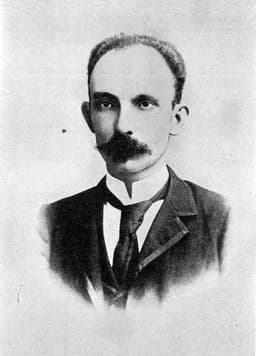
Jose Marti
Revolutionary · Modern
44.0Total
Basic Information
Born
1759
1853
Died
1794
1895
Era
Modern
Modern
Nationality
France
Cuba
Occupation
Revolutionary
Revolutionary
Civilization
Western
Western
Score Comparison
Military (10%)
10.7
20.0
Political (20%)
68.0
33.6
Influence (20%)
53.3
59.0
Legacy (20%)
44.2
50.0
Leadership (15%)
61.1
40.9
Strategy (15%)
29.7
35.7
TOTAL
47.8
44.0
Georges Danton — Complete Timeline
1790 AD
Co-founded the Cordeliers ClubPolitical Action◆ Major
Danton co-founded the Cordeliers Club, a radical political club that advocated for popular democracy and direct action. The club became a powerful force in the French Revolution, rivaling the Jacobins.
French RevolutionCordeliersRadicalism
Impact: nationalprogressive
1792 AD
Led the Insurrection of August 10, 1792Political Action◆ Major
Danton helped organize the insurrection that overthrew the monarchy. The attack on the Tuileries Palace led to the arrest of King Louis XVI and the establishment of the National Convention.
French RevolutionInsurrectionMonarchy
Impact: national
Appointed Minister of JusticePolitical Action◆ Major
Danton was appointed Minister of Justice after the insurrection. He became a key figure in the Revolutionary government, known for his fiery speeches and calls for national defense against foreign invasion.
French RevolutionMinistryNational Defense
Impact: nationalconstructive
1793 AD
Voted for the Execution of Louis XVIPolitical Action◆ Major
As a deputy in the National Convention, Danton voted for the execution of King Louis XVI. This decision aligned him with the radical Jacobins and contributed to the Reign of Terror.
French RevolutionRegicideTerror
Impact: nationaldestructive
1794 AD
Executed by GuillotinePolitical Action◆ Major
Danton was arrested by the Committee of Public Safety on charges of corruption and leniency. He was tried and guillotined on April 5, 1794, alongside Camille Desmoulins, becoming a victim of the Terror he helped create.
French RevolutionReign of TerrorExecution
Impact: nationaltragic
Jose Marti — Complete Timeline
1892 AD
Founding of the Cuban Revolutionary PartyPolitical Action
Marti founded the Cuban Revolutionary Party (PRC) in New York, uniting Cuban exiles. The party aimed to achieve Cuban independence from Spain through armed struggle and democratic governance.
Political OrganizationIndependence MovementExile
Impact: nationalprogressive
1895 AD
Battle of Dos RiosWar
Marti was killed in action at Dos Rios while fighting Spanish forces. His death made him a martyr for Cuban independence and galvanized the revolutionary movement, though it deprived the cause of its civilian leader.
BattleDeathMartyrdom
Impact: nationaltragic
Manifesto of MontecristiPolitical Action◆ Major
Marti and General Maximo Gomez signed the Manifesto of Montecristi, outlining the goals of the Cuban War of Independence. It called for racial equality, civilian control of the military, and a democratic republic.
ManifestoWar GoalsIndependence
Impact: nationalprogressive
Expert Analysis
Origins
Georges Danton was born on October 26, 1759, in Arcis-sur-Aube, France, into a middle-class family. His father was a lawyer, and Danton followed the same path, studying law in Paris. He became a successful lawyer and married into a wealthy family, but his true calling emerged during the French Revolution. Danton's early life was marked by ambition and a fiery oratory style that would later captivate the masses.
Jose Marti was born on January 28, 1853, in Havana, Cuba, to Spanish immigrants. His father was a sergeant in the Spanish army, and his family faced financial struggles. Marti showed early intellectual promise and was influenced by the independence movements spreading across Latin America. He was arrested at age 16 for his political writings and sentenced to hard labor, an experience that hardened his resolve for Cuban independence.
Rise to Power
Danton rose to prominence as a leader of the Cordeliers Club, which he co-founded in 1790. This radical club advocated for popular democracy and direct action, positioning Danton against the more moderate Girondins. His pivotal moment came on August 10, 1792, when he helped organize the insurrection that stormed the Tuileries Palace and overthrew the monarchy. Following this, Danton was appointed Minister of Justice, becoming a key figure in the Revolutionary government. His powerful speeches and ability to rally the crowds made him a central figure in the early Republic.
Marti's rise was more gradual and intellectual. Exiled from Cuba repeatedly, he spent years in Spain, Mexico, and the United States, writing and organizing. In 1892, he founded the Cuban Revolutionary Party (PRC) in New York, uniting Cuban exiles under a common goal of independence. His political influence grew through his writings, particularly his essays on Latin American unity and anti-imperialism. The turning point came in 1895 when he signed the Manifesto of Montecristi with General Maximo Gomez, declaring the start of the Cuban War of Independence.
Leadership & Governance
Danton's leadership was charismatic and pragmatic. As Minister of Justice, he oversaw the creation of the Revolutionary Tribunal and the Committee of Public Safety, though he later opposed its excesses. His governance style was hands-on, relying on his oratory to sway the National Convention. He advocated for a strong central government but was known for his leniency, often seeking compromise with enemies. In contrast, Marti's leadership was ideological and organizational. He was not a military commander but a political architect, crafting the PRC's platform and uniting diverse factions. His governance vision emphasized racial equality and anti-imperialism, as outlined in the Manifesto of Montecristi.
Triumph & Tragedy
Danton's greatest triumph was his role in overthrowing the monarchy and establishing the Republic. His speech on September 2, 1792, rallying the people to defend the nation, is legendary. However, his greatest tragedy was his downfall: arrested by Robespierre's Committee of Public Safety on charges of corruption and leniency, he was executed by guillotine on April 5, 1794. His death marked the beginning of the Reign of Terror's peak.
Marti's triumph was his success in launching the Cuban War of Independence, which eventually led to Cuba's freedom from Spain. His writings and organizational work laid the ideological foundation. His tragedy was his death at the Battle of Dos Rios on May 19, 1895, just weeks into the war. He was killed in action, becoming a martyr but never seeing the independence he fought for.
Character & Destiny
Danton was bold, impulsive, and charismatic. His confidence often bordered on arrogance, leading him to underestimate his enemies. He was a man of action, but his lack of political caution sealed his fate. Historians note his corruption allegations, but also his genuine revolutionary fervor. Marti was intellectual, disciplined, and idealistic. His character was shaped by exile and suffering, giving him a moral authority. His destiny was to be a martyr, as his death galvanized the Cuban cause. His scores reflect this: Danton scored 61.1 in leadership and 68.0 in politics, while Marti scored 40.9 and 33.6 respectively, but Marti's influence (59.0) and legacy (50.0) are close to Danton's (53.3 and 44.2).
Legacy
Danton's legacy is complex: he is remembered as a founding father of the French Republic, but also as a symbol of the revolution's internal conflicts. His name is synonymous with revolutionary oratory and the dangers of political purges. In France, he is honored as one of the key figures of the Revolution, though his reputation is overshadowed by Robespierre and Napoleon. Marti's legacy is more straightforward: he is the national hero of Cuba, revered as the Apostle of Cuban Independence. His writings, including the famous essay "Our America", continue to inspire Latin American thought. Statues and schools bear his name, and his birthday is a national holiday.
Conclusion
While both men were revolutionary leaders, Danton had a greater immediate impact on the course of history. His total score of 47.8 edges out Marti's 44.0, reflecting his higher political and leadership scores. Danton's actions directly shaped the French Revolution and the rise of modern democracy in Europe. Marti's impact, while profound, was more indirect and symbolic. His ideas were crucial, but the actual military victory for Cuba was achieved by others. Therefore, in terms of direct historical impact, Georges Danton surpasses Jose Marti.
Rankings
🥇
Georges DantonLeader
Mil: 10.7Pol: 68.0Inf: 53.3
47.8
🥈
Jose Marti
Mil: 20.0Pol: 33.6Inf: 59.0
44.0
+3.8 behind
How This Comparison Works
Algorithm
Each figure is scored on 6 dimensions (0—100 scale) based on structured historical data: Military (10%), Political (20%), Influence (20%), Legacy (20%), Leadership (15%), Strategy (15%). The weighted total produces the final ranking.
Data Sources
Scores are computed from structured sub-indicators in the database. Scale factors adjust for era (Ancient ×0.85, Modern ×1.0) and civilization size (Eastern ×1.05, Other ×0.80) to account for differences in population and military scale.
Maximum 3 Figures
Comparisons are limited to 2—3 figures to ensure readability and statistical meaningfulness.
Error Margins
±5 points per dimension — Sub-scores are derived from historical records with inherent uncertainty. Two figures within 5 points on a dimension should be considered roughly equivalent in that area.
Total Score Accuracy
±3 points overall — The weighted combination of 6 dimensions produces a total score with approximately ±3 points of uncertainty. Differences of less than 3 points are not statistically significant— the figures are effectively tied.
Known Limitations
- Historical records are incomplete and uneven across civilizations
- Figures from oral-tradition societies may be underrepresented
- Occupation labels can misclassify multi-role figures
- Scores measure capability and impact, not moral character
- Quantitative scoring is a comparison tool, not absolute truth
Capability Radar
Military (10%) — Battles & Warfare
Battles
12
15
Win Rate
16
10
Expansion
16
10
Political (20%) — Governance & Reform
Reform
65
40
Diplomacy
60
45
Economy
50
15
Influence (20%) — Cultural & Global Reach
Cultural
45
70
Global
45
55
Legacy (20%) — Historical Impact
Historical
55
65
Longevity
40
60
Leadership (15%) — Power & Stability
Tenure
55
20
Stability
30
10
Strategy (15%) — Tactics & Innovation
Strategy
21
25
Tactics
21
20
Reform
27
30
Similar Comparisons
Comments & Discussion
No comments yet. Be the first to share your thoughts!