Loading...
Georgi Dimitrov vs Mark Rutte
Georgi Dimitrov leads by 0.0 pts · 2 figures compared
…

Georgi Dimitrov
Politician · Modern
57.6Total
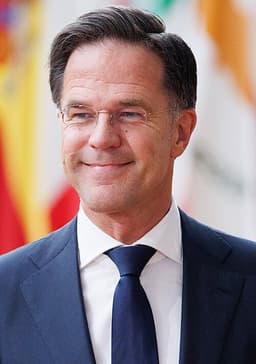
Mark Rutte
Politician · Modern
57.6Total
Basic Information
Born
1882
1967
Died
1949
—
Era
Modern
Modern
Nationality
Bulgaria
Netherlands
Occupation
Politician
Politician
Civilization
Western
Western
Score Comparison
Military (10%)
50.0
41.8
Political (20%)
68.0
65.0
Influence (20%)
62.0
57.2
Legacy (20%)
52.0
48.3
Leadership (15%)
64.0
75.0
Strategy (15%)
43.4
60.0
TOTAL
57.6
57.6
Georgi Dimitrov — Complete Timeline
1933 AD
Reichstag Fire Trial defensePolitical Action
Dimitrov was arrested in Germany for alleged involvement in the Reichstag fire. At his trial, he conducted his own defense, cross-examining witnesses including Hermann Goering, and was acquitted due to lack of evidence.
TrialNazi GermanyCommunist Resistance
Impact: global
1935 AD
Election as General Secretary of the CominternPolitical Action◆ Major
Dimitrov was elected General Secretary of the Communist International (Comintern), a position he held until 1943. He promoted the Popular Front strategy, urging communists to ally with socialists and democrats against fascism.
CominternPopular FrontAnti-Fascism
Impact: globalconstructive
1946 AD
Establishment of the People's Republic of BulgariaPolitical Action
As Prime Minister, Dimitrov oversaw the abolition of the monarchy and the proclamation of the People's Republic of Bulgaria. The new constitution was modeled on the Soviet system, nationalizing industry and collectivizing agriculture.
Communist TakeoverConstitutionNationalization
Impact: national
Mark Rutte — Complete Timeline
2006 AD
Elected Leader of the People's Party for Freedom and DemocracyPolitical Action◆ Major
Mark Rutte became the political leader of the VVD, the Dutch liberal-conservative party. He led the party through several election campaigns, eventually becoming prime minister in 2010.
Dutch PoliticsVVDParty Leadership
Impact: nationalconstructive
2010 AD
Became Prime Minister of the NetherlandsPolitical Action
Rutte became Prime Minister of the Netherlands, leading a minority coalition government with support from the Party for Freedom (PVV). His first term focused on austerity measures and immigration reforms.
Dutch PoliticsPrime MinisterCoalition
Impact: nationalconstructive
2020 AD
Led Netherlands Through COVID-19 PandemicPolitical Action◆ Major
Rutte oversaw the Dutch response to COVID-19, including lockdowns, vaccination campaigns, and economic support measures. His government faced criticism over the slow start of vaccinations and handling of the second wave.
COVID-19Dutch PoliticsPublic Health
Impact: national
2021 AD
Survived No-Confidence Vote Over Childcare Benefits ScandalPolitical Action◆ Major
Rutte's government faced a no-confidence vote after a parliamentary inquiry revealed that tax authorities falsely accused thousands of parents of fraud in childcare benefits. The scandal led to the resignation of his cabinet, though Rutte remained as caretaker prime minister.
Dutch PoliticsScandalChildcare Benefits
Impact: nationaldestructive
2023 AD
Announced Retirement from PoliticsPolitical Action◆ Major
Rutte announced he would leave politics after the 2023 general election, ending his 13-year tenure as prime minister. He cited the need for new leadership and the end of his political career.
Dutch PoliticsRetirementEnd of Era
Impact: national
Expert Analysis
Origins
Georgi Dimitrov was born on June 18, 1882, in Kovachevtsi, Bulgaria, into a poor working-class family. His father was a revolutionary activist, and Dimitrov himself became a printer and trade unionist. He joined the Bulgarian Social Democratic Workers' Party in 1902 and quickly rose through the ranks, becoming a leader of the Bulgarian Communist Party. In contrast, Mark Rutte was born on February 14, 1967, in The Hague, Netherlands, into a middle-class family. His father was a businessman, and Rutte studied history at Utrecht University. He worked for Unilever before entering politics, joining the People's Party for Freedom and Democracy (VVD) in 1992. Dimitrov's early life was shaped by class struggle and revolutionary fervor, while Rutte's was marked by liberal values and corporate management.
Rise to Power
Dimitrov's rise to prominence came through his role in the 1923 September Uprising in Bulgaria, which failed, forcing him into exile. He became a key figure in the Communist International (Comintern). His defining moment was the Reichstag Fire Trial in 1933. Accused of complicity in the fire, Dimitrov conducted his own defense, cross-examining witnesses including Hermann Goering. His acquittal made him an international hero. He was elected General Secretary of the Comintern in 1935, a position he held until 1943. Rutte's rise was more gradual. He became State Secretary for Social Affairs and Employment in 2002, then Minister of Education in 2004. In 2006, he was elected leader of the VVD. After the 2010 election, he became Prime Minister, leading a minority coalition with support from the Party for Freedom. He survived multiple crises, including the childcare benefits scandal in 2021, and served until 2023.
Leadership & Governance
Dimitrov's leadership was rooted in communist ideology. As Prime Minister of Bulgaria (1946-1949), he oversaw the abolition of the monarchy and the establishment of the People's Republic. He implemented Soviet-style nationalization and collectivization, scoring 68.0 in political acumen. Rutte, scoring 75.0 in leadership, governed as a liberal pragmatist. He focused on economic growth, fiscal responsibility, and social liberalism. His style was consensus-building, often described as 'Teflon' due to his ability to survive scandals. Dimitrov used propaganda and repression; Rutte used negotiation and media management. Dimitrov's governance was transformative but authoritarian; Rutte's was stabilizing but incremental.
Triumph & Tragedy
Dimitrov's greatest triumph was his defense at the Reichstag trial, which turned him into a global symbol of anti-fascism. He also successfully consolidated communist rule in Bulgaria. However, his greatest failure was his subservience to Stalin; he acquiesced to the execution of his comrade Traicho Kostov and allowed Bulgaria to become a Soviet satellite. His legacy is tarnished by the repression of the early communist regime. Rutte's triumphs include leading the Netherlands through the 2008 financial crisis and the COVID-19 pandemic, maintaining economic stability. His tragedy was the childcare benefits scandal, where tax authorities falsely accused thousands of parents of fraud, leading to a parliamentary inquiry and a no-confidence vote he narrowly survived. His handling damaged public trust and led to his retirement.
Character & Destiny
Dimitrov was charismatic, combative, and ideologically rigid. His courage at the trial showed his defiance, but his loyalty to Stalin led to tragic compromises. He died in 1949 under mysterious circumstances in the Soviet Union. Rutte is pragmatic, affable, and cautious. His ability to avoid confrontation and forge coalitions kept him in power for 13 years. His destiny was shaped by his flexibility, but also by the limits of consensus politics. Historians assess Dimitrov as a committed revolutionary who sacrificed Bulgaria's independence; Rutte as a steady manager who preserved stability but lacked transformative vision.
Legacy
Dimitrov's legacy is mixed. In Bulgaria, he is remembered as the founder of the communist state, but post-1989, his reputation declined. The Dimitrov Mausoleum in Sofia was removed in 1999. Globally, he is a symbol of anti-fascist resistance. Rutte's legacy is still forming. He is the longest-serving Dutch prime minister, but his legacy is defined by crisis management and political survival. His policies on austerity and immigration remain controversial. While Dimitrov scored 52.0 in legacy, Rutte scored 48.3, reflecting their limited enduring impact.
Conclusion
While both scored 57.6 overall, Rutte had a higher leadership score (75.0 vs 64.0) and governed a stable democracy for 13 years. Dimitrov's impact was more dramatic but ultimately destructive, as he imposed a repressive regime. Rutte's pragmatic leadership, despite flaws, maintained the Netherlands' prosperity and stability. By the measure of effective governance and positive long-term influence, Mark Rutte had the greater impact. Dimitrov's moment of defiance was iconic, but his governance model failed. Rutte's incremental success outperforms Dimitrov's revolutionary failure.
Rankings
🥇
Georgi DimitrovLeader
Mil: 50.0Pol: 68.0Inf: 62.0
57.6
🥈
Mark Rutte
Mil: 41.8Pol: 65.0Inf: 57.2
57.6
How This Comparison Works
Algorithm
Each figure is scored on 6 dimensions (0—100 scale) based on structured historical data: Military (10%), Political (20%), Influence (20%), Legacy (20%), Leadership (15%), Strategy (15%). The weighted total produces the final ranking.
Data Sources
Scores are computed from structured sub-indicators in the database. Scale factors adjust for era (Ancient ×0.85, Modern ×1.0) and civilization size (Eastern ×1.05, Other ×0.80) to account for differences in population and military scale.
Maximum 3 Figures
Comparisons are limited to 2—3 figures to ensure readability and statistical meaningfulness.
Error Margins
±5 points per dimension — Sub-scores are derived from historical records with inherent uncertainty. Two figures within 5 points on a dimension should be considered roughly equivalent in that area.
Total Score Accuracy
±3 points overall — The weighted combination of 6 dimensions produces a total score with approximately ±3 points of uncertainty. Differences of less than 3 points are not statistically significant— the figures are effectively tied.
Known Limitations
- Historical records are incomplete and uneven across civilizations
- Figures from oral-tradition societies may be underrepresented
- Occupation labels can misclassify multi-role figures
- Scores measure capability and impact, not moral character
- Quantitative scoring is a comparison tool, not absolute truth
Capability Radar
Military (10%) — Battles & Warfare
Battles
29
46
Win Rate
30
50
Expansion
36
53
Political (20%) — Governance & Reform
Reform
55
60
Diplomacy
65
75
Economy
30
70
Influence (20%) — Cultural & Global Reach
Cultural
45
30
Global
55
55
Legacy (20%) — Historical Impact
Historical
60
50
Longevity
50
40
Leadership (15%) — Power & Stability
Tenure
40
85
Stability
35
80
Strategy (15%) — Tactics & Innovation
Strategy
40
59
Tactics
43
59
Reform
43
61
Similar Comparisons
Comments & Discussion
No comments yet. Be the first to share your thoughts!