Loading...
Gerbert of Aurillac vs Zhao Pu
Zhao Pu leads by 8.7 pts · 2 figures compared
…

Gerbert of Aurillac
Politician · Medieval
48.5Total
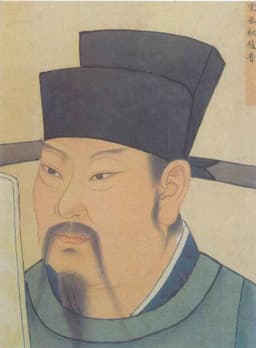
Zhao Pu
Politician · Medieval
57.2Total
Basic Information
Born
946
922
Died
1003
992
Era
Medieval
Medieval
Nationality
Francia
China
Occupation
Politician
Politician
Civilization
Western
Eastern
Score Comparison
Military (10%)
12.9
21.4
Political (20%)
45.0
72.0
Influence (20%)
55.0
58.0
Legacy (20%)
52.0
52.0
Leadership (15%)
64.0
78.0
Strategy (15%)
40.7
51.0
TOTAL
48.5
57.2
Gerbert of Aurillac — Complete Timeline
972 AD
Teaching at the Cathedral School of ReimsCultural
Gerbert became master of the cathedral school at Reims, where he taught logic, mathematics, and astronomy. He used the abacus and armillary sphere, reviving the study of the quadrivium in France.
EducationScholarshipReims
Impact: regionalprogressive
980 AD
Introduction of Arabic Numerals to EuropeCultural◆ Major
Gerbert studied in Catalonia and brought back knowledge of Arabic numerals, the abacus, and astronomical instruments. He wrote works explaining these concepts, contributing to the spread of Hindu-Arabic numeral system in Christian Europe.
MathematicsNumeralsKnowledge Transfer
Impact: globalprogressive
996 AD
Construction of the First Mechanical Clock in EuropeInvention◆ Major
Gerbert constructed a mechanical clock for the city of Magdeburg, using a weight-driven mechanism. This was one of the earliest known mechanical clocks in Europe, demonstrating his engineering skills.
InventionClockEngineering
Impact: regionalprogressive
999 AD
Election as Pope Sylvester IIPolitical Action◆ Major
Gerbert was elected Pope, taking the name Sylvester II. As pope, he continued his scholarly work and corresponded with rulers across Europe, promoting learning and reform within the Church.
PapacyElectionScholarship
Impact: globalconstructive
Zhao Pu — Complete Timeline
960 AD
Advising Emperor Taizu on the unification strategyPolitical Action
Zhao Pu counseled Emperor Taizu of Song to first pacify the south and then attack the north, a strategy that guided the Song conquest of the Ten Kingdoms. This approach prioritized consolidation of core territories before confronting the Liao dynasty.
Song DynastyUnificationStrategy
Impact: nationalconstructive
961 AD
Centralization of military powerReform◆ Major
Zhao Pu advised Emperor Taizu to disband the regional military governors and centralize command under the emperor. This reform reduced the risk of warlordism and strengthened imperial control over the Song military.
Military ReformCentralizationSong Dynasty
Impact: nationalconstructive
965 AD
Implementation of the 'Half the Analects' governanceReform◆ Major
Zhao Pu, as chancellor, promoted a pragmatic governance style based on a simplified reading of Confucian classics, famously stating that half the Analects could govern the empire. This approach emphasized practical administration over scholarly debate.
GovernanceConfucianismSong Dynasty
Impact: nationalconstructive
973 AD
Dismissal from chancellorshipPolitical Action
Zhao Pu was removed from his position as chancellor due to allegations of corruption and abuse of power. This event reflected the political instability of the early Song court and Zhao's fall from favor.
Political FallCorruptionSong Dynasty
Impact: nationaldestructive
Expert Analysis
Origins
Gerbert of Aurillac was born around 945 in Aquitaine, Francia (now France), into a modest family. He entered the monastery of Saint-Géraud d'Aurillac as a child, where he received an education in Latin and basic arithmetic. His intellectual abilities caught the attention of the Count of Barcelona, who took him to Catalonia in 967. There, Gerbert studied at the cathedral school of Vic, gaining access to Arabic learning, including mathematics and astronomy. He later traveled to Rome and Reims, becoming a master at the cathedral school of Reims in 972, where he taught logic, mathematics, and astronomy using the abacus and armillary sphere.
Zhao Pu was born in 922 in Jizhou, China, during the Five Dynasties and Ten Kingdoms period. His family was of modest official background. Zhao Pu studied Confucian classics but was known for his pragmatic approach rather than deep scholarship. He began his career as a minor official under Later Zhou, where he met Zhao Kuangyin (later Emperor Taizu of Song). Zhao Pu became a trusted advisor, and his early experiences in local administration shaped his focus on effective governance.
Rise to Power
Gerbert's rise was through scholarship and church politics. In 972, he became master of the cathedral school at Reims, gaining fame for his teaching. He served as secretary to Emperor Otto II and later became abbot of Bobbio in 983, but the abbey was in disarray. After Otto II's death, Gerbert supported the young Otto III against the rival claimant Henry the Wrangler. His political acumen led to his appointment as Archbishop of Ravenna in 998, and in 999, he was elected Pope, taking the name Sylvester II. He scored 45.0 in political skill, reflecting his ability to navigate European power structures.
Zhao Pu rose as a key strategist for Zhao Kuangyin. In 960, Zhao Kuangyin launched a coup and founded the Song dynasty as Emperor Taizu. Zhao Pu was appointed vice grand councilor and later grand chancellor. He advised Taizu on consolidating power, notably the strategy of 'pacify the south first, then attack the north' for reunifying China. Zhao Pu's political score of 72.0 reflects his effectiveness in court politics and policy formulation.
Leadership & Governance
Gerbert, as Pope, promoted intellectual pursuits and corresponded with rulers, advocating for church reform and the spread of knowledge. He introduced Arabic numerals and the abacus to Europe, improving mathematical calculations. He also constructed a mechanical clock for Magdeburg, one of the earliest in Europe. However, his papacy was short (999–1003) and faced challenges from Roman nobility. His leadership score of 64.0 indicates moderate effectiveness in governance.
Zhao Pu was a pragmatic chancellor who implemented 'half the Analects' governance, emphasizing practical application of Confucian principles. He advised Emperor Taizu to centralize military power by disbanding regional military governors (jiedushi), reducing the risk of rebellion. This reform was crucial for the Song's stability. Zhao Pu also promoted civil administration over military might. His leadership score of 78.0 reflects his strong influence in shaping the early Song state.
Triumph & Tragedy
Gerbert's greatest triumph was the introduction of Arabic numerals, which revolutionized European mathematics and commerce. His election as Pope was a personal achievement. However, his papacy was marred by conflicts with Roman nobles, and he died in 1003 under suspicion of sorcery. His mechanical clock was not widely replicated, and his intellectual legacy took centuries to fully materialize. His legacy score of 52.0 reflects mixed long-term impact.
Zhao Pu's triumphs include advising the successful unification strategy and centralizing military power, which gave the Song dynasty over 300 years of relative stability. His 'half the Analects' approach made governance more efficient. However, he was dismissed in 973 for corruption and abuse of power, though later reinstated. His policies also led to a weakened military, contributing to Song's vulnerability to northern invaders. His legacy score of 52.0 matches Gerbert's, but his political and leadership scores are higher.
Character & Destiny
Gerbert was a scholar-idealist, driven by intellectual curiosity and a belief in the power of knowledge. His destiny was shaped by his ability to rise from humble origins to the papacy, but his lack of political ruthlessness left him vulnerable. He scored 40.7 in strategy, indicating less tactical acumen compared to Zhao Pu.
Zhao Pu was a pragmatic realist, focused on effective outcomes. He was willing to compromise principles for stability. His character led to both success and corruption allegations. His strategy score of 51.0 shows he was more methodical than Gerbert.
Legacy
Gerbert's legacy is as a bridge between Islamic and European learning. Arabic numerals eventually replaced Roman numerals, transforming mathematics. He is remembered as a pioneer of medieval science. However, his direct impact was limited by the slow adoption of his ideas.
Zhao Pu's legacy is the consolidation of Song power and the shift to civil governance. His military centralization prevented warlordism but weakened border defenses. He is remembered as a key architect of the Song dynasty. His total score of 57.2 outpaces Gerbert's 48.5.
Conclusion
Zhao Pu had a greater immediate impact on governance and state-building, scoring higher in political, leadership, and total scores. Gerbert's intellectual contributions were transformative but took centuries to unfold. While Gerbert introduced tools that changed Europe, Zhao Pu's policies shaped the trajectory of China's most prosperous dynasty. Thus, Zhao Pu's overall influence is more substantial.
Rankings
🥇
Zhao PuLeader
Mil: 21.4Pol: 72.0Inf: 58.0
57.2
🥈
Gerbert of Aurillac
Mil: 12.9Pol: 45.0Inf: 55.0
48.5
+8.7 behind
How This Comparison Works
Algorithm
Each figure is scored on 6 dimensions (0—100 scale) based on structured historical data: Military (10%), Political (20%), Influence (20%), Legacy (20%), Leadership (15%), Strategy (15%). The weighted total produces the final ranking.
Data Sources
Scores are computed from structured sub-indicators in the database. Scale factors adjust for era (Ancient ×0.85, Modern ×1.0) and civilization size (Eastern ×1.05, Other ×0.80) to account for differences in population and military scale.
Maximum 3 Figures
Comparisons are limited to 2—3 figures to ensure readability and statistical meaningfulness.
Error Margins
±5 points per dimension — Sub-scores are derived from historical records with inherent uncertainty. Two figures within 5 points on a dimension should be considered roughly equivalent in that area.
Total Score Accuracy
±3 points overall — The weighted combination of 6 dimensions produces a total score with approximately ±3 points of uncertainty. Differences of less than 3 points are not statistically significant— the figures are effectively tied.
Known Limitations
- Historical records are incomplete and uneven across civilizations
- Figures from oral-tradition societies may be underrepresented
- Occupation labels can misclassify multi-role figures
- Scores measure capability and impact, not moral character
- Quantitative scoring is a comparison tool, not absolute truth
Capability Radar
Military (10%) — Battles & Warfare
Battles
35
5
Win Rate
42
5
Expansion
41
10
Political (20%) — Governance & Reform
Reform
60
75
Diplomacy
55
70
Economy
50
65
Influence (20%) — Cultural & Global Reach
Cultural
65
50
Global
55
30
Legacy (20%) — Historical Impact
Historical
70
60
Longevity
60
50
Leadership (15%) — Power & Stability
Tenure
30
70
Stability
45
70
Strategy (15%) — Tactics & Innovation
Strategy
47
10
Tactics
51
5
Reform
50
10
Similar Comparisons
Comments & Discussion
No comments yet. Be the first to share your thoughts!