Loading...
Wei Zheng vs Zhao Pu
Wei Zheng leads by 10.1 pts · 2 figures compared
…

Wei Zheng
Politician · Medieval
67.3Total
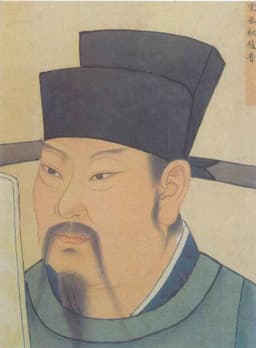
Zhao Pu
Politician · Medieval
57.2Total
Basic Information
Born
580
922
Died
643
992
Era
Medieval
Medieval
Nationality
China
China
Occupation
Politician
Politician
Civilization
Eastern
Eastern
Score Comparison
Military (10%)
50.0
21.4
Political (20%)
70.3
72.0
Influence (20%)
72.0
58.0
Legacy (20%)
72.0
52.0
Leadership (15%)
80.0
78.0
Strategy (15%)
38.0
51.0
TOTAL
67.3
57.2
Wei Zheng — Complete Timeline
627 AD
Appointment as Chief AdvisorPolitical Action◆ Major
Emperor Taizong appointed Wei Zheng as his chief advisor. Wei Zheng became known for his frank remonstrations, often criticizing imperial policies. His advice influenced Taizong's governance, including tax reduction and legal reforms, contributing to the Zhenguan era's prosperity.
Tang dynastyGovernanceAdvisor
Impact: nationalconstructive
630 AD
Remonstration on ConscriptionPolitical Action
Wei Zheng opposed Taizong's plan to conscript men under 18 for military service, arguing it would harm agriculture. Taizong initially rejected the advice but later relented. This incident exemplified Wei Zheng's role as a principled remonstrator.
Tang dynastyGovernanceRemonstration
Impact: nationalconstructive
636 AD
Compilation of the Book of SuiCultural◆ Major
Wei Zheng led the compilation of the Book of Sui, the official history of the Sui dynasty. The work covered Sui political, economic, and military affairs. It became one of the Twenty-Four Histories and a key source for Sui history.
Tang dynastyHistoriographyBook compilation
Impact: nationalconstructive
Zhao Pu — Complete Timeline
960 AD
Advising Emperor Taizu on the unification strategyPolitical Action
Zhao Pu counseled Emperor Taizu of Song to first pacify the south and then attack the north, a strategy that guided the Song conquest of the Ten Kingdoms. This approach prioritized consolidation of core territories before confronting the Liao dynasty.
Song DynastyUnificationStrategy
Impact: nationalconstructive
961 AD
Centralization of military powerReform◆ Major
Zhao Pu advised Emperor Taizu to disband the regional military governors and centralize command under the emperor. This reform reduced the risk of warlordism and strengthened imperial control over the Song military.
Military ReformCentralizationSong Dynasty
Impact: nationalconstructive
965 AD
Implementation of the 'Half the Analects' governanceReform◆ Major
Zhao Pu, as chancellor, promoted a pragmatic governance style based on a simplified reading of Confucian classics, famously stating that half the Analects could govern the empire. This approach emphasized practical administration over scholarly debate.
GovernanceConfucianismSong Dynasty
Impact: nationalconstructive
973 AD
Dismissal from chancellorshipPolitical Action
Zhao Pu was removed from his position as chancellor due to allegations of corruption and abuse of power. This event reflected the political instability of the early Song court and Zhao's fall from favor.
Political FallCorruptionSong Dynasty
Impact: nationaldestructive
Expert Analysis
Origins
Wei Zheng was born in 580 in Julu (modern Hebei) during the Sui dynasty. His father died early, leaving the family in modest circumstances. Wei Zheng devoted himself to study, mastering Confucian classics and history. He initially served under the Sui, then briefly joined the rebel Li Mi, and later became a secretary to the Tang prince Li Jiancheng. After Li Jiancheng's death in the Xuanwu Gate Incident (626), Wei Zheng was captured by Li Shimin (Emperor Taizong). Impressed by Wei Zheng's forthrightness, Taizong appointed him as a chief advisor.
Zhao Pu was born in 922 in Youzhou (modern Beijing) during the chaotic Five Dynasties period. His family had a tradition of minor official service. Zhao Pu studied classical texts but was not a distinguished scholar. He began his career as a clerk for the Later Han and Later Zhou dynasties. In 956, he was assigned to serve Zhao Kuangyin (later Emperor Taizu of Song), then a general. Zhao Pu became his trusted strategist.
Rise to Power
Wei Zheng's rise came through his unwavering honesty. After the Xuanwu Gate Incident, Taizong summoned Wei Zheng and demanded, "Why did you sow discord between my brother and me?" Wei Zheng replied, "If the Crown Prince had listened to me, he would not have met his end." Taizong, valuing candor, appointed him a censor and later chief advisor (c. 630). Wei Zheng's influence grew as he repeatedly criticized Taizong's policies, earning the emperor's respect. He also chaired the compilation of the Book of Sui, completed in 636, which enhanced his scholarly reputation.
Zhao Pu rose by masterminding the Song founding. In 960, when news arrived of a Khitan invasion, Zhao Pu helped Zhao Kuangyin stage a coup at Chenqiao, declaring him emperor. As chancellor, Zhao Pu advised Taizu on consolidating power. His key strategy, proposed around 963, was to conquer the southern kingdoms first ("south first, north later"), which guided Song unification. Zhao Pu also orchestrated the "removal of military governors" (c. 961-963), centralizing military control under the emperor.
Leadership & Governance
Wei Zheng governed through remonstrance. He submitted over 200 memorials to Taizong, criticizing imperial extravagance, military campaigns, and conscription. For example, in 628, Taizong planned to conscript men under 18; Wei Zheng argued it would harm agriculture. Taizong relented. Wei Zheng's approach was confrontational but principled, based on Confucian ideals of benevolent rule. His leadership score is 80.0, reflecting his moral authority.
Zhao Pu governed pragmatically. He advocated "half the Analects"—using Confucian principles selectively for practical administration. He reformed the Song bureaucracy, strengthening civil service exams and reducing military influence. However, he was also accused of corruption: in 973, he was dismissed for allegedly taking bribes. His political score is 72.0, slightly higher than Wei Zheng's 70.3, but his legacy is tarnished by corruption allegations.
Triumph & Tragedy
Wei Zheng's greatest triumph was shaping Taizong's reign into a golden age. His remonstrations improved tax policies, military restraint, and legal justice. His compilation of the Book of Sui provided lessons on dynastic decline. His tragedy: after his death in 643, Taizong discovered that Wei Zheng had recommended corrupt officials. Enraged, Taizong destroyed Wei Zheng's stele and canceled a marriage alliance. This posthumous disgrace marred his legacy.
Zhao Pu's triumph was founding the Song dynasty's centralized system. His "south first" strategy led to the conquest of Later Shu (965), Southern Han (971), and Southern Tang (975). His centralization reforms eliminated warlordism for centuries. His tragedy: his corruption led to dismissal in 973, though he was later reinstated. He died in 992, overshadowed by later Song reforms.
Character & Destiny
Wei Zheng was blunt, principled, and unyielding. He famously said, "I would rather be a loyal minister than a wise one." His character earned Taizong's trust but also created enemies. His posthumous fall stemmed from his overconfidence in recommending officials.
Zhao Pu was shrewd and pragmatic, but also self-serving. His "half the Analects" philosophy reflected his willingness to compromise ideals for results. His corruption suggests a man who prioritized power over integrity. His destiny was to be a founding architect but not a revered sage.
Legacy
Wei Zheng's legacy is as the archetype of the remonstrating official. He influenced later Chinese governance, where emperors were expected to tolerate criticism. The Book of Sui remains a key historical source. He scored 72.0 in Legacy and Influence.
Zhao Pu's legacy is the Song civil bureaucracy. His centralization reforms prevented military coups but also weakened border defenses. His "south first" strategy unified China, but the failure to recover the north haunted the Song. He scored 52.0 in Legacy and 58.0 in Influence.
Conclusion
Wei Zheng had greater impact. His moral example set standards for Chinese governance that lasted millennia, while Zhao Pu's pragmatic reforms were effective but less enduring. Wei Zheng's total score of 67.3 exceeds Zhao Pu's 57.2 by 10.1 points, reflecting his superior influence and legacy. Wei Zheng's remonstrations represent a timeless ideal of accountability; Zhao Pu's achievements, though significant, were more contingent on the moment.
Rankings
🥇
Wei ZhengLeader
Mil: 50.0Pol: 70.3Inf: 72.0
67.3
🥈
Zhao Pu
Mil: 21.4Pol: 72.0Inf: 58.0
57.2
+10.1 behind
How This Comparison Works
Algorithm
Each figure is scored on 6 dimensions (0—100 scale) based on structured historical data: Military (10%), Political (20%), Influence (20%), Legacy (20%), Leadership (15%), Strategy (15%). The weighted total produces the final ranking.
Data Sources
Scores are computed from structured sub-indicators in the database. Scale factors adjust for era (Ancient ×0.85, Modern ×1.0) and civilization size (Eastern ×1.05, Other ×0.80) to account for differences in population and military scale.
Maximum 3 Figures
Comparisons are limited to 2—3 figures to ensure readability and statistical meaningfulness.
Error Margins
±5 points per dimension — Sub-scores are derived from historical records with inherent uncertainty. Two figures within 5 points on a dimension should be considered roughly equivalent in that area.
Total Score Accuracy
±3 points overall — The weighted combination of 6 dimensions produces a total score with approximately ±3 points of uncertainty. Differences of less than 3 points are not statistically significant— the figures are effectively tied.
Known Limitations
- Historical records are incomplete and uneven across civilizations
- Figures from oral-tradition societies may be underrepresented
- Occupation labels can misclassify multi-role figures
- Scores measure capability and impact, not moral character
- Quantitative scoring is a comparison tool, not absolute truth
Capability Radar
Military (10%) — Battles & Warfare
Battles
41
5
Win Rate
42
5
Expansion
44
10
Political (20%) — Governance & Reform
Reform
85
75
Diplomacy
75
70
Economy
80
65
Influence (20%) — Cultural & Global Reach
Cultural
75
50
Global
60
30
Legacy (20%) — Historical Impact
Historical
80
60
Longevity
80
50
Leadership (15%) — Power & Stability
Tenure
70
70
Stability
85
70
Strategy (15%) — Tactics & Innovation
Strategy
48
10
Tactics
52
5
Reform
55
10
Similar Comparisons
Comments & Discussion
No comments yet. Be the first to share your thoughts!