Loading...
Jan Smuts vs John Adams
Jan Smuts leads by 0.8 pts · 2 figures compared
…

Jan Smuts
Politician · Modern
65.5Total
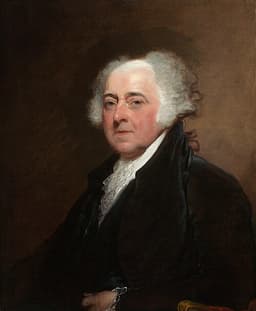
John Adams
Politician · Modern
64.7Total
Basic Information
Born
1870
1735
Died
1950
1826
Era
Modern
Modern
Nationality
South Africa
United States
Occupation
Politician
Politician
Civilization
Other
Western
Score Comparison
Military (10%)
55.0
49.7
Political (20%)
70.0
70.0
Influence (20%)
82.0
82.0
Legacy (20%)
52.0
55.0
Leadership (15%)
72.0
72.0
Strategy (15%)
52.5
42.0
TOTAL
65.5
64.7
Jan Smuts — Complete Timeline
1901 AD
Boer War Guerrilla CommanderWar◆ Major
Smuts led Boer commando forces in the Second Boer War against the British. His guerrilla tactics, including raids into the Cape Colony, prolonged the conflict and made him a prominent Afrikaner military leader.
Second Boer WarGuerrillaMilitary
Impact: regional
1910 AD
Helped Found the Union of South AfricaPolitical Action◆ Major
Smuts played a key role in the National Convention that drafted the constitution for the Union of South Africa. He advocated for a unified state with a centralized government, which was established in 1910.
Union of South AfricaConstitutionFounding
Impact: nationalconstructive
1919 AD
Prime Minister of South Africa (First Term)Political Action◆ Major
Smuts became Prime Minister after Louis Botha's death. His first term saw the suppression of the Rand Revolt (1922) by white miners and the implementation of the Native Urban Areas Act, which tightened segregation.
Prime MinisterRand RevoltSegregation
Impact: national
Helped Found the League of NationsPolitical Action◆ Major
Smuts was a key figure at the Paris Peace Conference and helped draft the covenant of the League of Nations. He advocated for international cooperation and collective security, earning a global reputation as a statesman.
League of NationsInternationalismPeace
Impact: globalconstructive
1939 AD
Prime Minister of South Africa (Second Term)Political Action◆ Major
Smuts became Prime Minister again after a split in the United Party over entering World War II. He led South Africa into the war on the Allied side and served as a close advisor to Winston Churchill.
World War IIPrime MinisterAllied
Impact: globalconstructive
1945 AD
Helped Draft the UN CharterPolitical Action◆ Major
Smuts participated in the San Francisco Conference and helped draft the preamble to the United Nations Charter. His influence helped shape the post-war international order, though his domestic policies on race were increasingly criticized.
United NationsCharterInternationalism
Impact: globalconstructive
1948 AD
Defeated in 1948 ElectionPolitical Action
Smuts and his United Party were defeated by D.F. Malan's National Party in the general election. This marked the end of Smuts' political career and the beginning of formal apartheid rule in South Africa.
ElectionDefeatApartheid
Impact: nationaltragic
John Adams — Complete Timeline
1770 AD
Defense of the British Soldiers in the Boston Massacre TrialPolitical Action◆ Major
Adams defended British soldiers accused of murder in the Boston Massacre. He secured acquittals for most, arguing for fair trial rights. This action demonstrated his commitment to rule of law despite political pressure.
Boston MassacreLegal DefenseAmerican Revolution
1796 AD
Election as Second President of the United StatesPolitical Action◆ Major
Adams was elected as the second US president, defeating Thomas Jefferson. His presidency was marked by tensions with France, the XYZ Affair, and the passage of the Alien and Sedition Acts.
PresidencyUS PoliticsElection
Impact: national
1798 AD
Signing of the Alien and Sedition ActsPolitical Action◆ Major
Adams signed the Alien and Sedition Acts, which restricted immigration and criminalized criticism of the government. These acts were widely condemned as violations of free speech and led to the Kentucky and Virginia Resolutions.
Alien and Sedition ActsCivil LibertiesUS Politics
Impact: nationaldestructive
1801 AD
Appointment of John Marshall as Chief JusticePolitical Action◆ Major
Adams appointed John Marshall as Chief Justice of the Supreme Court in the final months of his presidency. Marshall's tenure established judicial review and shaped American constitutional law for decades.
Supreme CourtJudicial ReviewUS Constitution
Impact: nationalconstructive
Peaceful Transfer of Power to Thomas JeffersonPolitical Action
Adams peacefully transferred power to his political rival Thomas Jefferson after losing the 1800 election. This set a precedent for peaceful transitions of power in the United States.
Peaceful TransferUS PoliticsDemocracy
Impact: nationalconstructive
Expert Analysis
Origins
Jan Smuts was born on May 24, 1870, on a farm near Riebeek West, Cape Colony, to Afrikaner parents. His father was a farmer and member of the Cape Parliament. Smuts studied at Victoria College (Stellenbosch) and later at Cambridge University, where he earned a law degree with distinction. His early exposure to both Boer and British cultures shaped his dual identity.
John Adams was born on October 30, 1735, in Braintree, Massachusetts Bay Colony, to a Puritan farming family. His father was a deacon and farmer. Adams graduated from Harvard College in 1755 and became a lawyer. His upbringing in New England's intellectual and religious environment fostered a strong sense of duty and independence.
Rise to Power
Smuts rose to prominence through legal and political roles. He served as a state attorney in the South African Republic (Transvaal) under President Paul Kruger. During the Second Boer War (1899-1902), he became a guerrilla commander, leading raids into the Cape Colony. After the war, he advocated for reconciliation with the British and played a key role in the National Convention (1908-1909) that created the Union of South Africa in 1910. He became Minister of Defence and later Prime Minister in 1919 after Louis Botha's death.
Adams rose as a leading voice for American independence. He defended British soldiers after the Boston Massacre (1770), earning respect for his commitment to justice. He served in the Continental Congress and was a key advocate for the Declaration of Independence in 1776. He helped negotiate the Treaty of Paris (1783) ending the Revolutionary War. He became the first Vice President under George Washington and was elected the second President in 1796.
Leadership & Governance
Smuts led South Africa during turbulent times. As Prime Minister (1919-1924, 1939-1948), he focused on reconciliation between Boers and Britons, but his policies favored white unity over black rights. He suppressed the Rand Revolt (1922) by white miners and implemented segregationist measures. Internationally, he was a key figure in the League of Nations and helped draft the UN Charter. His leadership style was pragmatic and intellectual, often seeking compromise.
Adams governed with a strong belief in executive power and Federalist principles. His presidency (1797-1801) was dominated by the Quasi-War with France. He signed the Alien and Sedition Acts (1798), which were controversial for restricting civil liberties. However, he avoided full-scale war with France by sending a peace mission. He appointed John Marshall as Chief Justice, strengthening the judiciary. Adams' leadership was principled but often combative, leading to a split in his party.
Triumph & Tragedy
Smuts' greatest triumph was his role in founding the Union of South Africa and his international influence: he was a key architect of the League of Nations and the United Nations. However, his tragedy was his failure to address racial inequality. His government's segregationist policies laid groundwork for apartheid. He lost the 1948 election to D.F. Malan's National Party, which implemented full apartheid. His total score of 65.5 reflects his mixed legacy.
Adams' triumph was securing American independence and his peaceful transfer of power to Thomas Jefferson in 1801, setting a democratic precedent. His tragedy was the Alien and Sedition Acts, which damaged his reputation. He also failed to be reelected. His appointment of John Marshall was a long-term success, establishing judicial review. Adams scored 64.7, slightly lower than Smuts due to weaker strategy (42.0 vs 52.5).
Character & Destiny
Smuts was an intellectual and strategist, often described as aloof. He believed in gradual progress and racial hierarchy, which limited his vision. His character led him to prioritize white unity over black inclusion, ultimately contributing to apartheid's rise. His internationalism contrasted with his domestic conservatism.
Adams was passionate, principled, and sometimes vain. He was deeply committed to republicanism and the rule of law, but his combative nature alienated allies. His decision to defend British soldiers and later to seek peace with France showed his adherence to principle over popularity. His character ensured a legacy of integrity but also political defeat.
Legacy
Smuts' legacy is complex: he is remembered as a founder of the Union of South Africa and a global statesman, but also as a figure who entrenched segregation. His influence on international organizations is lasting, but his domestic policies are condemned. His score of 52.0 in legacy reflects this duality.
Adams' legacy is more positive: he is revered as a founding father who championed independence and set important precedents. The Alien and Sedition Acts are a blemish, but his appointment of Marshall and peaceful transfer of power are enduring contributions. His legacy score is 55.0.
Conclusion
While Smouts scored slightly higher overall (65.5 vs 64.7), John Adams had a more profound and positive impact on democratic governance. Adams' peaceful transfer of power and judicial appointments shaped the United States for centuries. Smuts, despite his international achievements, failed to address racial injustice and his policies contributed to apartheid. Therefore, John Adams is the more consequential figure in terms of lasting positive legacy.
Rankings
🥇
Jan SmutsLeader
Mil: 55.0Pol: 70.0Inf: 82.0
65.5
🥈
John Adams
Mil: 49.7Pol: 70.0Inf: 82.0
64.7
+0.8 behind
How This Comparison Works
Algorithm
Each figure is scored on 6 dimensions (0—100 scale) based on structured historical data: Military (10%), Political (20%), Influence (20%), Legacy (20%), Leadership (15%), Strategy (15%). The weighted total produces the final ranking.
Data Sources
Scores are computed from structured sub-indicators in the database. Scale factors adjust for era (Ancient ×0.85, Modern ×1.0) and civilization size (Eastern ×1.05, Other ×0.80) to account for differences in population and military scale.
Maximum 3 Figures
Comparisons are limited to 2—3 figures to ensure readability and statistical meaningfulness.
Error Margins
±5 points per dimension — Sub-scores are derived from historical records with inherent uncertainty. Two figures within 5 points on a dimension should be considered roughly equivalent in that area.
Total Score Accuracy
±3 points overall — The weighted combination of 6 dimensions produces a total score with approximately ±3 points of uncertainty. Differences of less than 3 points are not statistically significant— the figures are effectively tied.
Known Limitations
- Historical records are incomplete and uneven across civilizations
- Figures from oral-tradition societies may be underrepresented
- Occupation labels can misclassify multi-role figures
- Scores measure capability and impact, not moral character
- Quantitative scoring is a comparison tool, not absolute truth
Capability Radar
Military (10%) — Battles & Warfare
Battles
65
26
Win Rate
60
32
Expansion
50
38
Political (20%) — Governance & Reform
Reform
65
75
Diplomacy
80
85
Economy
60
55
Influence (20%) — Cultural & Global Reach
Cultural
60
65
Global
70
65
Legacy (20%) — Historical Impact
Historical
70
75
Longevity
55
70
Leadership (15%) — Power & Stability
Tenure
70
60
Stability
55
50
Strategy (15%) — Tactics & Innovation
Strategy
75
41
Tactics
70
38
Reform
55
42
Similar Comparisons
Comments & Discussion
No comments yet. Be the first to share your thoughts!