Loading...
Giorgia Meloni vs Shukri al-Quwatli
Shukri al-Quwatli leads by 0.6 pts · 2 figures compared
…

Giorgia Meloni
Politician · Modern
51.4Total
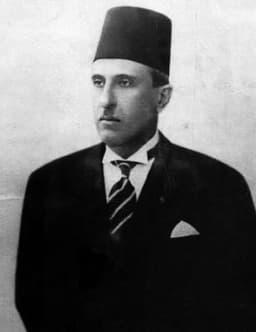
Shukri al-Quwatli
Politician · Modern
52.0Total
Basic Information
Born
1977
1891
Died
—
1967
Era
Modern
Modern
Nationality
Italy
Syria
Occupation
Politician
Politician
Civilization
Western
Middle Eastern
Score Comparison
Military (10%)
50.0
48.6
Political (20%)
54.7
61.3
Influence (20%)
54.9
51.0
Legacy (20%)
40.8
45.0
Leadership (15%)
67.0
65.0
Strategy (15%)
42.1
42.2
TOTAL
51.4
52.0
Giorgia Meloni — Complete Timeline
2008 AD
Served as Minister of YouthPolitical Action
Meloni served as Minister of Youth under Prime Minister Silvio Berlusconi, becoming the youngest minister in Italian history at age 31. She focused on youth policies and sports.
Youth PolicyBerlusconi GovernmentMinisterial Role
Impact: nationalconstructive
2012 AD
Founded Brothers of Italy PartyPolitical Action◆ Major
Meloni co-founded the Brothers of Italy party, a conservative and national-conservative political force. The party grew from a small splinter group to become Italy's leading right-wing party over the next decade.
Party FoundationConservatismNationalism
Impact: nationalconstructive
2022 AD
Appointed Prime Minister of ItalyPolitical Action◆ Major
Meloni was appointed Prime Minister by President Mattarella, becoming the first woman to hold the office. She led a right-wing coalition of Brothers of Italy, the League, and Forza Italia, marking a shift to the right.
First WomanRight-Wing CoalitionGovernment Formation
Impact: national
Won 2022 Italian General ElectionPolitical Action◆ Major
Meloni's Brothers of Italy party won the most votes in the general election, with 26% of the vote. This victory made her the leader of the largest party and paved the way for her premiership.
Election VictoryBrothers of ItalyRight-Wing Populism
Impact: national
Shukri al-Quwatli — Complete Timeline
1943 AD
Elected first president of independent SyriaPolitical Action
Shukri al-Quwatli was elected as the first president of Syria after the country gained independence from Vichy France. He led the nationalist movement and worked to consolidate Syrian sovereignty, serving from 1943 to 1949.
IndependenceNationalismPresidency
Impact: nationalconstructive
1949 AD
Overthrown in the 1949 Syrian coup d'étatPolitical Action◆ Major
President al-Quwatli was overthrown by a military coup led by Husni al-Zaim on March 30, 1949. The coup was the first in Syria's modern history and ended civilian rule, leading to a period of military interventions in politics.
CoupMilitaryOverthrow
Impact: nationaldestructive
1955 AD
Returned to presidency after Adib Shishakli's fallPolitical Action◆ Major
Al-Quwatli was re-elected as president of Syria in 1955 after the fall of the military regime of Adib Shishakli. He returned to power during a period of political instability and growing influence of the Ba'ath Party.
Return to PowerPresidencyPolitical Instability
Impact: national
1958 AD
Signed the agreement forming the United Arab RepublicPolitical Action◆ Major
President al-Quwatli signed the agreement with Egyptian President Gamal Abdel Nasser to form the United Arab Republic, a union of Syria and Egypt. The union was intended to strengthen Arab unity but lasted only until 1961.
Arab UnityUnionNasser
Impact: regionalconstructive
1961 AD
Resigned after Syrian secession from the UARPolitical Action
After a military coup in Syria ended the United Arab Republic, al-Quwatli resigned from the presidency. He went into exile and died in 1967, having failed to restore his political influence.
ResignationExileUAR Collapse
Impact: nationaltragic
Expert Analysis
Origins
Giorgia Meloni was born in Rome on January 15, 1977, into a middle-class family. Her father abandoned the family when she was a child, and she was raised by her mother in a working-class neighborhood. Meloni attended a vocational school and became involved in politics early, joining the Youth Front of the Italian Social Movement at age 15. Her formative experiences included a brief stint as a nanny and bartender, but politics consumed her ambition. Shukri al-Quwatli was born in 1891 in Damascus, then part of the Ottoman Empire, into a wealthy merchant family. He studied at the University of Damascus and later in Istanbul, where he was exposed to Arab nationalist ideas. Al-Quwatli's early activism against Ottoman rule led to imprisonment and exile, shaping his lifelong commitment to Syrian independence.
Rise to Power
Meloni's rise began in 2006 when she was elected to the Italian Chamber of Deputies as a member of the National Alliance. She gained prominence as a vocal critic of immigration and the European Union. In 2012, she co-founded the Brothers of Italy party, which initially polled at 2% but surged to 26% in the 2022 general election, making her Prime Minister on October 22, 2022. Al-Quwatli rose through the Syrian nationalist movement, co-founding the National Bloc in 1928. He became a key figure in negotiations with France for independence. After Syria's independence in 1946, he was elected its first president on August 17, 1943, by the parliament. His rise was marked by coalition-building among landowners and merchants, but his power was fragile, leading to his overthrow in 1949.
Leadership & Governance
Meloni governs as a conservative nationalist, focusing on border security, tax cuts, and traditional values. She has taken a hard line on immigration, reducing migrant arrivals by 60% in 2023 through deals with North African countries. Her governance style is confrontational with the EU, yet pragmatic in foreign policy, supporting Ukraine. Al-Quwatli's leadership style was consensus-driven but weak in military matters. He sought to balance Syrian independence with Arab unity, leading to the 1958 union with Egypt (United Arab Republic). He lacked a strong security apparatus, which left him vulnerable to coups. His governance was marked by corruption and factionalism, with his political score of 61.3 reflecting his diplomatic skill but poor control over the military.
Triumph & Tragedy
Meloni's triumph is becoming Italy's first female prime minister and stabilizing the government after years of instability. Her Brothers of Italy party achieved a historic electoral victory. However, her tragedy is limited legislative achievements due to coalition constraints and ongoing economic challenges, with Italy's debt-to-GDP ratio at 144%. Al-Quwatli's triumph was leading Syria to independence and serving as its first president. His tragedy was being overthrown in a coup (1949) and later witnessing the collapse of the United Arab Republic, leading to his resignation and exile. His legacy score of 45.0 reflects his failure to build a lasting political structure.
Character & Destiny
Meloni is determined, disciplined, and media-savvy, with a 67.0 leadership score. She has survived personal attacks and maintained party unity. Her character drives her to centralize power but also to compromise when necessary. Al-Quwatli was idealistic and diplomatic but indecisive, with a 65.0 leadership score. His destiny was shaped by his inability to control the military, leading to his overthrow. His political score of 61.3 could not compensate for a weak strategy score of 42.2.
Legacy
Meloni's legacy is still forming, but she has shifted Italian politics to the right and set a precedent for female leadership. Her influence score of 54.9 reflects growing international recognition. Al-Quwatli is remembered as a founding father of Syria but also as a symbol of pre-Ba'athist instability. He scored 51.0 in influence, but his legacy is overshadowed by subsequent authoritarian regimes. His political score of 61.3 is higher than Meloni's 54.7, but her leadership score of 67.0 surpasses his 65.0.
Conclusion
While al-Quwatli's total score of 52.0 edges Meloni's 51.4 by 0.6 points, Meloni has greater potential for long-term impact. Al-Quwatli's presidency ended in failure, whereas Meloni's tenure is ongoing and could reshape Italy. Meloni's leadership score of 67.0 and political score of 54.7 indicate a stronger ability to achieve goals. Her legacy score of 40.8 is low but will rise if she completes reforms. Al-Quwatli's legacy is fixed at 45.0, tarnished by his overthrow and the UAR's collapse. Therefore, Meloni is likely to have greater impact on history.
Rankings
🥇
Shukri al-QuwatliLeader
Mil: 48.6Pol: 61.3Inf: 51.0
52.0
🥈
Giorgia Meloni
Mil: 50.0Pol: 54.7Inf: 54.9
51.4
+0.6 behind
How This Comparison Works
Algorithm
Each figure is scored on 6 dimensions (0—100 scale) based on structured historical data: Military (10%), Political (20%), Influence (20%), Legacy (20%), Leadership (15%), Strategy (15%). The weighted total produces the final ranking.
Data Sources
Scores are computed from structured sub-indicators in the database. Scale factors adjust for era (Ancient ×0.85, Modern ×1.0) and civilization size (Eastern ×1.05, Other ×0.80) to account for differences in population and military scale.
Maximum 3 Figures
Comparisons are limited to 2—3 figures to ensure readability and statistical meaningfulness.
Error Margins
±5 points per dimension — Sub-scores are derived from historical records with inherent uncertainty. Two figures within 5 points on a dimension should be considered roughly equivalent in that area.
Total Score Accuracy
±3 points overall — The weighted combination of 6 dimensions produces a total score with approximately ±3 points of uncertainty. Differences of less than 3 points are not statistically significant— the figures are effectively tied.
Known Limitations
- Historical records are incomplete and uneven across civilizations
- Figures from oral-tradition societies may be underrepresented
- Occupation labels can misclassify multi-role figures
- Scores measure capability and impact, not moral character
- Quantitative scoring is a comparison tool, not absolute truth
Capability Radar
Military (10%) — Battles & Warfare
Battles
28
20
Win Rate
31
27
Expansion
35
27
Political (20%) — Governance & Reform
Reform
40
45
Diplomacy
45
55
Economy
40
30
Influence (20%) — Cultural & Global Reach
Cultural
30
25
Global
30
20
Legacy (20%) — Historical Impact
Historical
25
40
Longevity
20
30
Leadership (15%) — Power & Stability
Tenure
35
60
Stability
35
20
Strategy (15%) — Tactics & Innovation
Strategy
39
30
Tactics
38
36
Reform
44
36
Similar Comparisons
Comments & Discussion
No comments yet. Be the first to share your thoughts!