Loading...
Giovanni Messe vs Heinz Guderian
Heinz Guderian leads by 8.1 pts · 2 figures compared
…
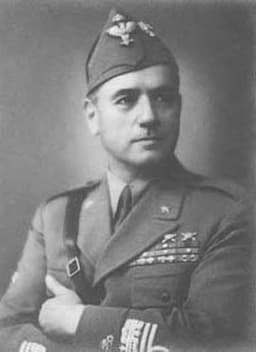
Giovanni Messe
General · Modern
54.7Total

Heinz Guderian
General · Modern
62.8Total
Basic Information
Born
1883
1888
Died
1968
1954
Era
Modern
Modern
Nationality
Italy
Germany
Occupation
General
General
Civilization
Western
Western
Score Comparison
Military (10%)
45.0
67.3
Political (20%)
61.3
40.8
Influence (20%)
59.0
65.0
Legacy (20%)
46.7
68.0
Leadership (15%)
62.0
57.6
Strategy (15%)
52.5
80.3
TOTAL
54.7
62.8
Giovanni Messe — Complete Timeline
1942 AD
Commanded Italian Eighth Army in RussiaWar◆ Major
Messe commanded the Italian Eighth Army on the Eastern Front during Operation Barbarossa. His forces were deployed along the Don River and suffered heavy casualties during the Soviet counteroffensive at Stalingrad.
World War IIEastern FrontItalian Army
Impact: regionaltragic
1943 AD
Commanded Axis Forces in TunisiaWar◆ Major
Messe commanded the 1st Italian Army in Tunisia, later taking command of all Axis forces after Rommel's departure. He conducted a fighting retreat but was ultimately forced to surrender to the Allies in May 1943.
World War IINorth AfricaTunisia
Impact: regionaltragic
Surrendered Axis Forces in North AfricaWar◆ Major
Messe surrendered the remaining Axis forces in North Africa to the Allies on May 13, 1943, ending the North African campaign. Over 250,000 Axis soldiers were taken prisoner.
World War IINorth AfricaSurrender
Impact: regionaltragic
Appointed Chief of Staff of the Italian ArmyPolitical Action◆ Major
After the Italian armistice, Messe was appointed Chief of Staff of the Italian Army under the Badoglio government. He worked to reorganize Italian forces and coordinate with the Allies against German forces in Italy.
World War IIItalian ArmyPost-Armistice
Impact: nationalconstructive
Heinz Guderian — Complete Timeline
1939 AD
Invasion of PolandWar◆ Major
Guderian commanded the XIX Army Corps during the invasion of Poland, leading armored and motorized units in a rapid advance. His tactics demonstrated the effectiveness of blitzkrieg, resulting in the swift defeat of Polish forces.
World War IIBlitzkriegPoland
Impact: globaldestructive
1940 AD
Battle of FranceWar
Guderian led the XIX Panzer Corps through the Ardennes Forest, crossing the Meuse River at Sedan. His rapid advance cut off Allied forces in Belgium, leading to the Dunkirk evacuation and the fall of France.
World War IIBlitzkriegSedan
Impact: global
1941 AD
Operation BarbarossaWar◆ Major
Guderian commanded Panzer Group 2 in the invasion of the Soviet Union. His forces captured Smolensk and advanced to within 200 miles of Moscow, but were halted by Soviet resistance and the onset of winter, failing to take the capital.
World War IIEastern FrontBlitzkrieg
Impact: global
Dismissal and RecallPolitical Action◆ Major
Guderian was dismissed from command after withdrawing his forces without Hitler's permission during the Battle of Moscow. He was recalled in 1943 as Inspector General of Armored Troops, tasked with rebuilding Germany's panzer forces.
World War IICommand DisputeReorganization
Impact: national
Expert Analysis
Origins
Giovanni Messe was born on December 10, 1883, in Mesagne, Italy. He entered the Italian Army in 1901 and served in the Italo-Turkish War and World War I. His early career focused on infantry tactics, and he rose through the ranks during the interwar period. Heinz Guderian was born on June 17, 1888, in Kulm, Germany. He joined the German Army as a cadet in 1907 and served as a signals officer in World War I. After the war, he became deeply interested in armored warfare, studying British and French theories on tank tactics.
Rise to Power
Messe's rise came through his command of the Italian Eighth Army on the Eastern Front during Operation Barbarossa. In 1941, he led his forces along the Don River, but they suffered heavy losses at the Battle of Stalingrad. In February 1943, he took command of the 1st Italian Army in Tunisia, later commanding all Axis forces after Rommel's departure. Guderian's rise was meteoric during the invasion of Poland in 1939, where he commanded the XIX Army Corps. His rapid armored advances in the Battle of France in 1940, crossing the Meuse at Sedan, established him as a master of blitzkrieg. He was promoted to General der Panzertruppe and later commanded Panzer Group 2 in Operation Barbarossa.
Leadership & Governance
Messe's leadership style was cautious and methodical. He focused on preserving his forces and conducting orderly retreats. In Tunisia, he organized a fighting withdrawal that delayed the Allied advance. He scored 62.0 in leadership and 52.5 in strategy. Guderian was aggressive and innovative, often pushing his armored units to the limits. He believed in decentralized command and rapid exploitation of breakthroughs. His strategy score of 80.3 reflects his mastery of mobile warfare. However, his willingness to exceed orders led to conflicts with higher command, especially Hitler.
Triumph & Tragedy
Messe's greatest success was his command in Tunisia, where he managed a difficult retreat and delayed the Allied advance. His surrender on May 13, 1943, ended the North African campaign, but he negotiated terms that protected his troops. His tragedy was the destruction of the Italian Eighth Army on the Eastern Front, where over 200,000 Italian soldiers were lost. Guderian's triumph was the Battle of France, where his panzer divisions encircled Allied forces, leading to a decisive German victory. His tragedy came during Operation Barbarossa when his advance was halted outside Moscow. He was dismissed after withdrawing his forces without Hitler's permission in December 1941.
Character & Destiny
Messe was professional and diplomatic, navigating the political complexities of Mussolini's regime. After the Italian armistice, he served as Chief of Staff of the Italian Army, working to rebuild Italian forces. He scored 61.3 in political influence. Guderian was outspoken and often insubordinate. His character led to clashes with Hitler, resulting in his dismissal. However, he was recalled in 1943 as Inspector General of Armored Troops, where he rebuilt Germany's panzer forces. His total score of 62.8 reflects his mixed legacy.
Legacy
Messe's legacy is as a capable field marshal who served his country under difficult circumstances. He is remembered for his leadership in Tunisia and his role in post-war Italian military reorganization. His influence score is 59.0. Guderian's legacy is far more significant. He is considered the father of blitzkrieg warfare, and his theories on armored tactics influenced military doctrine worldwide. His influence score is 65.0, and his legacy score is 68.0. His writings, especially "Achtung – Panzer!" and his memoirs, continue to be studied.
Conclusion
Heinz Guderian had greater impact than Giovanni Messe. Guderian's strategic innovations changed the nature of warfare, while Messe operated within conventional frameworks. Guderian's higher military score (67.3 vs 45.0) and strategy score (80.3 vs 52.5) demonstrate his superiority in combat effectiveness. Although Messe showed resilience in retreat, Guderian's offensive mastery and lasting influence on armored doctrine make him the more significant figure. The total score gap of 8.1 points supports this conclusion.
Rankings
🥇
Heinz GuderianLeader
Mil: 67.3Pol: 40.8Inf: 65.0
62.8
🥈
Giovanni Messe
Mil: 45.0Pol: 61.3Inf: 59.0
54.7
+8.1 behind
How This Comparison Works
Algorithm
Each figure is scored on 6 dimensions (0—100 scale) based on structured historical data: Military (10%), Political (20%), Influence (20%), Legacy (20%), Leadership (15%), Strategy (15%). The weighted total produces the final ranking.
Data Sources
Scores are computed from structured sub-indicators in the database. Scale factors adjust for era (Ancient ×0.85, Modern ×1.0) and civilization size (Eastern ×1.05, Other ×0.80) to account for differences in population and military scale.
Maximum 3 Figures
Comparisons are limited to 2—3 figures to ensure readability and statistical meaningfulness.
Error Margins
±5 points per dimension — Sub-scores are derived from historical records with inherent uncertainty. Two figures within 5 points on a dimension should be considered roughly equivalent in that area.
Total Score Accuracy
±3 points overall — The weighted combination of 6 dimensions produces a total score with approximately ±3 points of uncertainty. Differences of less than 3 points are not statistically significant— the figures are effectively tied.
Known Limitations
- Historical records are incomplete and uneven across civilizations
- Figures from oral-tradition societies may be underrepresented
- Occupation labels can misclassify multi-role figures
- Scores measure capability and impact, not moral character
- Quantitative scoring is a comparison tool, not absolute truth
Capability Radar
Military (10%) — Battles & Warfare
Battles
65
75
Win Rate
45
70
Expansion
30
60
Political (20%) — Governance & Reform
Reform
35
30
Diplomacy
50
30
Economy
30
20
Influence (20%) — Cultural & Global Reach
Cultural
30
65
Global
35
75
Legacy (20%) — Historical Impact
Historical
40
80
Longevity
30
70
Leadership (15%) — Power & Stability
Tenure
40
40
Stability
45
20
Strategy (15%) — Tactics & Innovation
Strategy
55
85
Tactics
60
95
Reform
40
95
Similar Comparisons
Comments & Discussion
No comments yet. Be the first to share your thoughts!