Loading...
Giovanni Messe vs Julius Caesar
Julius Caesar leads by 28.1 pts · 2 figures compared
…
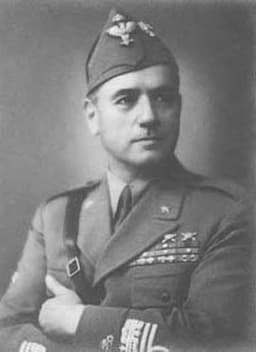
Giovanni Messe
General · Modern
54.7Total

Julius Caesar
General · Ancient
82.8Total
Basic Information
Born
1883
-100
Died
1968
-44
Era
Modern
Ancient
Nationality
Italy
Roman Republic
Occupation
General
General
Civilization
Western
Western
Score Comparison
Military (10%)
45.0
88.0
Political (20%)
61.3
78.0
Influence (20%)
59.0
85.0
Legacy (20%)
46.7
82.0
Leadership (15%)
62.0
80.0
Strategy (15%)
52.5
85.0
TOTAL
54.7
82.8
Giovanni Messe — Complete Timeline
1942 AD
Commanded Italian Eighth Army in RussiaWar◆ Major
Messe commanded the Italian Eighth Army on the Eastern Front during Operation Barbarossa. His forces were deployed along the Don River and suffered heavy casualties during the Soviet counteroffensive at Stalingrad.
World War IIEastern FrontItalian Army
Impact: regionaltragic
1943 AD
Commanded Axis Forces in TunisiaWar◆ Major
Messe commanded the 1st Italian Army in Tunisia, later taking command of all Axis forces after Rommel's departure. He conducted a fighting retreat but was ultimately forced to surrender to the Allies in May 1943.
World War IINorth AfricaTunisia
Impact: regionaltragic
Surrendered Axis Forces in North AfricaWar◆ Major
Messe surrendered the remaining Axis forces in North Africa to the Allies on May 13, 1943, ending the North African campaign. Over 250,000 Axis soldiers were taken prisoner.
World War IINorth AfricaSurrender
Impact: regionaltragic
Appointed Chief of Staff of the Italian ArmyPolitical Action◆ Major
After the Italian armistice, Messe was appointed Chief of Staff of the Italian Army under the Badoglio government. He worked to reorganize Italian forces and coordinate with the Allies against German forces in Italy.
World War IIItalian ArmyPost-Armistice
Impact: nationalconstructive
Julius Caesar — Complete Timeline
58 BC
Gallic WarsWar◆ Major
Caesar, as proconsul of Gaul, launched a series of campaigns that conquered all of Gaul (modern France, Belgium, and parts of Switzerland). He fought numerous battles, including against the Helvetii, the Belgae, and the Gallic chieftain Vercingetorix. The wars brought immense wealth and a loyal army to Caesar.
Gallic WarsConquestRoman Expansion
Impact: regional
49 BC
Crossing the RubiconPolitical Action◆ Major
Caesar led Legio XIII across the Rubicon River into Italy, defying the Roman Senate's order to disband his army. This act triggered a civil war against Pompey and the Optimates, ultimately leading to Caesar's dictatorship and the end of the Roman Republic.
Roman Civil WarEnd of RepublicPower Struggle
Impact: global
48 BC
Battle of PharsalusWar◆ Major
Caesar's outnumbered army defeated the larger forces of Pompey the Great at Pharsalus in Greece. Caesar's tactical use of a reserve line to counter Pompey's cavalry charge proved decisive. Pompey fled to Egypt, where he was assassinated, leaving Caesar as the undisputed master of the Roman world.
Roman Civil WarBattleDecisive Victory
Impact: regional
44 BC
Appointment as Dictator for LifePolitical Action◆ Major
The Roman Senate appointed Caesar dictator perpetuo (dictator for life), granting him unprecedented personal power. This move concentrated military, legislative, and judicial authority in one person, effectively ending the Roman Republic's traditional system of checks and balances and alarming many senators.
DictatorshipEnd of RepublicPower Consolidation
Impact: regionaldestructive
Assassination on the Ides of MarchPolitical Action◆ Major
A group of Roman senators, led by Marcus Junius Brutus and Gaius Cassius Longinus, stabbed Caesar to death at a meeting of the Senate in the Theatre of Pompey. The assassination was intended to restore the Republic, but instead triggered another civil war that led to the rise of the Roman Empire.
AssassinationRoman PoliticsEnd of Republic
Impact: globaldestructive
Expert Analysis
giovanni-messe-vs-julius-caesar
# The General's Fate: Caesar and Messe at the Crossroads of History
On a January morning in 49 BCE, Julius Caesar stood at the banks of the Rubicon River, knowing that crossing it would mean civil war and the end of the Roman Republic. Two thousand years later, on a May afternoon in 1943, Giovanni Messe signed the surrender of Axis forces in Tunisia, ending the North African campaign. One man crossed a river to seize power; the other signed papers to give it away. Both were generals. Both faced impossible choices. Their vastly different outcomes reveal how character, circumstance, and the currents of history shaped two men who stood at the hinge points of their eras.
Origins
Caesar was born into the patrician Julian clan in 100 BCE, a time when the Roman Republic was tearing itself apart. His family claimed descent from the goddess Venus, but they were politically marginalized. Young Caesar learned early that survival meant audacity. He fled Rome during Sulla's purges, served as a military tribune in Asia, and was captured by pirates—whom he later crucified, as promised. This was a man forged in the crucible of a dying republic, where personal ambition and public duty had become indistinguishable.
Giovanni Messe was born in 1883 in Mesagne, southern Italy, into a modest family. He entered the Italian army as a young officer, serving in Libya and World War I. Italy in Messe's youth was a nation still struggling to define itself—unified only decades earlier, industrializing late, and dreaming of empire. Messe rose through the ranks not through aristocratic birth or dramatic gestures, but through steady competence. He was a technician of war, not a revolutionary of politics.
Rise to Power
Caesar’s path to power was a masterclass in strategic patience. He formed the First Triumvirate with Pompey and Crassus in 60 BCE, used his consulship to push through land reforms, then secured a five-year command in Gaul. The Gallic Wars (58–50 BCE) were his proving ground. He conquered a vast territory, trained a loyal army, and wrote his own propaganda—the *Commentaries*—which remain a masterpiece of self-promotion. When the Senate ordered him to disband his army, he crossed the Rubicon instead.
Messe’s rise was slower, more institutional. He commanded the Italian Eighth Army on the Eastern Front in 1942 during Operation Barbarossa, a campaign that bled Italian troops in the Russian snow. His forces were deployed along the Don River, poorly equipped and under-supplied. When the Soviet offensive crushed them, Messe was evacuated. His reward was command of the 1st Italian Army in Tunisia in 1943. He did not seek glory; he accepted duty. Where Caesar created opportunities, Messe endured them.
Leadership & Governance
Caesar governed as he conquered: with breathtaking speed and ruthlessness. As dictator, he reformed the calendar, granted citizenship to provincials, launched public works, and centralized power. His military genius lay in speed and surprise—he once marched his army 800 miles in 27 days. But his political wisdom was flawed. He pardoned enemies who would later kill him, and he accepted a crown he publicly refused, alienating both the Senate and the people.
Messe’s leadership was defined by survival. In Tunisia, he commanded a multinational Axis force after Rommel’s departure. He fought a defensive campaign against overwhelming Allied superiority, knowing defeat was inevitable. His political acumen emerged after the war: appointed Chief of Staff of the Italian Army under the Badoglio government in 1943, he worked to rebuild Italy’s military while navigating the chaos of armistice and civil war. He was no reformer like Caesar, but a caretaker in a collapsing state.
Triumph & Tragedy
Caesar’s greatest moment came in 46 BCE, when he returned to Rome after defeating Pompey’s forces, celebrating four triumphs in a single month. His greatest failure was the Ides of March, 44 BCE, when senators stabbed him 23 times. He had conquered the world but could not conquer the republic he had destroyed.
Messe’s triumph was bitter: he surrendered 250,000 Axis troops on May 13, 1943, ending the North African campaign. It was not victory but honorable defeat. He saved lives, but his name became synonymous with Italy’s military humiliation. His tragedy was not assassination but irrelevance—a competent general in a lost cause, serving a regime that had already failed.
Character & Destiny
Caesar’s personality was a paradox: charming yet cold, generous yet calculating. He believed in his own star, and history proved him right—until it didn’t. His assassination was the direct result of his refusal to share power. He died because he could not imagine a world where he was not at its center.
Messe was cautious, dutiful, and unglamorous. He wrote after the war that “a soldier’s first duty is to his country, not his ambition.” He survived war, regime change, and political purges because he understood limits—both his own and Italy’s. Where Caesar reached for the heavens, Messe held the ground.
Legacy
Caesar’s legacy is the Roman Empire. His name became a title—Kaiser, Tsar—and his reforms shaped Western governance for millennia. He is remembered as a genius and a tyrant, a martyr and a warning.
Messe’s legacy is quieter. He is remembered, if at all, as the man who surrendered in Tunisia, a footnote in a war of giants. Yet his post-war service helped rebuild Italy’s military and integrate it into NATO. He died in 1968, a field marshal who outlived his king and his dictator.
Conclusion
Standing at the Rubicon, Caesar gambled everything on his own greatness. Standing in Tunisia, Messe gambled everything on the hope that surrender might lead to a better future. One man’s ambition built an empire; the other’s humility saved what could be saved. The difference between them is not merely skill or fortune, but the era they inhabited. Caesar lived when a man could bend history to his will; Messe lived when history bent men to its own. Both did what they could with the cards they were dealt—and both remind us that the line between triumph and tragedy is often just a river, or a signature, away.
Rankings
🥇
Julius CaesarLeader
Mil: 88.0Pol: 78.0Inf: 85.0
82.8
🥈
Giovanni Messe
Mil: 45.0Pol: 61.3Inf: 59.0
54.7
+28.1 behind
How This Comparison Works
Algorithm
Each figure is scored on 6 dimensions (0—100 scale) based on structured historical data: Military (10%), Political (20%), Influence (20%), Legacy (20%), Leadership (15%), Strategy (15%). The weighted total produces the final ranking.
Data Sources
Scores are computed from structured sub-indicators in the database. Scale factors adjust for era (Ancient ×0.85, Modern ×1.0) and civilization size (Eastern ×1.05, Other ×0.80) to account for differences in population and military scale.
Maximum 3 Figures
Comparisons are limited to 2—3 figures to ensure readability and statistical meaningfulness.
Error Margins
±5 points per dimension — Sub-scores are derived from historical records with inherent uncertainty. Two figures within 5 points on a dimension should be considered roughly equivalent in that area.
Total Score Accuracy
±3 points overall — The weighted combination of 6 dimensions produces a total score with approximately ±3 points of uncertainty. Differences of less than 3 points are not statistically significant— the figures are effectively tied.
Known Limitations
- Historical records are incomplete and uneven across civilizations
- Figures from oral-tradition societies may be underrepresented
- Occupation labels can misclassify multi-role figures
- Scores measure capability and impact, not moral character
- Quantitative scoring is a comparison tool, not absolute truth
Capability Radar
Military (10%) — Battles & Warfare
Battles
65
95
Win Rate
45
92
Expansion
30
97
Political (20%) — Governance & Reform
Reform
35
90
Diplomacy
50
85
Economy
30
82
Influence (20%) — Cultural & Global Reach
Cultural
30
88
Global
35
94
Legacy (20%) — Historical Impact
Historical
40
95
Longevity
30
96
Leadership (15%) — Power & Stability
Tenure
40
75
Stability
45
60
Strategy (15%) — Tactics & Innovation
Strategy
55
94
Tactics
60
96
Reform
40
88
Similar Comparisons
Comments & Discussion
RUBICON_READY6/17/2026
Comparing Messe to Caesar is like comparing a chess pawn to a grandmaster. Caesar didn't just cross a river—he engineered a political earthquake that reshaped Western civilization. Messe surrendered in Tunisia while his German allies were still fighting. The real contrast? Caesar understood that generalship meant mastering politics, logistics, and propaganda simultaneously. Messe was a competent field commander who got handed a losing hand. But competence doesn't rewrite history. That's the diff
史学考据匠6/17/2026
凯撒渡过卢比孔河时带着第十三军团,约五千人,而梅西投降时指挥约二十五万轴心国部队。兵力五十倍差距,一个敢于赌上共和国命运,一个选择终结北非战役。凯撒的赌注大到违反法律,梅西的签字只是承认现实。但真正的历史评价在于:凯撒的"赌博"建立在二十年精心布局之上,梅西的"投降"是三个月血战后的选择。你们讨论勇气,我看到的完全是战略视野鸿沟。
MUD_BLOOD_GENERAL6/17/2026
You armchair historians always romanticize Caesar's "audacity." Let's talk casualties: Caesar's Gallic Wars killed a million people, enslaved another million. Messe's Tunisian campaign, while a defeat, evacuated thousands of wounded Italians under Allied fire. Caesar crossed the Rubicon for personal glory disguised as duty. Messe surrendered to save lives when the cause was lost. I'll take the general who signs peace papers over the one who drowns a river in blood for his own ambition. That's no
后现代解构者6/17/2026
这个比较本身就是一个意识形态陷阱。凯撒是罗马帝国叙事的核心符号,梅西是法西斯意大利失败的替罪羊。表面上在比较两位将军,实际上在比较两个截然不同的历史编纂传统:胜利者书写历史赞美"跨越",失败者的"投降"却被视为耻辱。但你们思考过吗?如果凯撒输给庞培,今天的教科书会怎么描述他?"鲁莽的叛国者"。梅西至少能说:我打了一场无法取胜的战争。是非功过,全看谁写历史。
QUAESTOR_TO_QUARTERMASTER6/17/2026
Let's look at logistics, not legends. Caesar crossed the Rubicon without supply lines secured—he had to seize Ariminum's grain stores within 24 hours. Messe in Tunisia faced daily fuel rationing of 50 liters per vehicle. Caesar's risk paid off because his enemy Pompey panicked; Messe's caution reflected an army with no air cover and 10% of Rommel's promised supplies. Both were rational actors given their constraints. The difference? Caesar operated in a world where he could win alone. Messe foug