Loading...
Gitanas Nauseda vs Julius Caesar
Julius Caesar leads by 36.3 pts · 2 figures compared
…
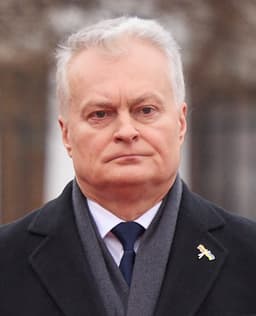
Gitanas Nauseda
Politician · Modern
46.5Total

Julius Caesar
General · Ancient
82.8Total
Basic Information
Born
1964
-100
Died
—
-44
Era
Modern
Ancient
Nationality
Lithuania
Roman Republic
Occupation
Politician
General
Civilization
Western
Western
Score Comparison
Military (10%)
13.5
88.0
Political (20%)
68.0
78.0
Influence (20%)
51.0
85.0
Legacy (20%)
37.5
82.0
Leadership (15%)
64.0
80.0
Strategy (15%)
31.8
85.0
TOTAL
46.5
82.8
Gitanas Nauseda — Complete Timeline
2019 AD
Elected President of LithuaniaPolitical Action◆ Major
Nauseda won the Lithuanian presidential election as an independent candidate, defeating Ingrida
ElectionPresidentIndependent
Impact: nationalconstructive
2020 AD
Strong Stance on Belarus and RussiaPolitical Action◆ Major
Nauseda condemned the Belarusian government's crackdown on protesters after the disputed 2020 election. He supported EU sanctions against Belarus and provided support to Belarusian opposition figures.
BelarusHuman RightsForeign Policy
Impact: regionalconstructive
2022 AD
Support for Ukraine During Russian InvasionPolitical Action◆ Major
Nauseda was a vocal supporter of Ukraine after Russia's full-scale invasion. He advocated for NATO's eastern flank reinforcement and Lithuania provided military aid to Ukraine.
UkraineNATOSecurity
Impact: globalconstructive
2024 AD
Re-elected President of LithuaniaPolitical Action◆ Major
Nauseda won re-election in the 2024 Lithuanian presidential election, defeating Prime Minister Ingrida
ElectionRe-electionPresident
Impact: nationalconstructive
Julius Caesar — Complete Timeline
58 BC
Gallic WarsWar◆ Major
Caesar, as proconsul of Gaul, launched a series of campaigns that conquered all of Gaul (modern France, Belgium, and parts of Switzerland). He fought numerous battles, including against the Helvetii, the Belgae, and the Gallic chieftain Vercingetorix. The wars brought immense wealth and a loyal army to Caesar.
Gallic WarsConquestRoman Expansion
Impact: regional
49 BC
Crossing the RubiconPolitical Action◆ Major
Caesar led Legio XIII across the Rubicon River into Italy, defying the Roman Senate's order to disband his army. This act triggered a civil war against Pompey and the Optimates, ultimately leading to Caesar's dictatorship and the end of the Roman Republic.
Roman Civil WarEnd of RepublicPower Struggle
Impact: global
48 BC
Battle of PharsalusWar◆ Major
Caesar's outnumbered army defeated the larger forces of Pompey the Great at Pharsalus in Greece. Caesar's tactical use of a reserve line to counter Pompey's cavalry charge proved decisive. Pompey fled to Egypt, where he was assassinated, leaving Caesar as the undisputed master of the Roman world.
Roman Civil WarBattleDecisive Victory
Impact: regional
44 BC
Appointment as Dictator for LifePolitical Action◆ Major
The Roman Senate appointed Caesar dictator perpetuo (dictator for life), granting him unprecedented personal power. This move concentrated military, legislative, and judicial authority in one person, effectively ending the Roman Republic's traditional system of checks and balances and alarming many senators.
DictatorshipEnd of RepublicPower Consolidation
Impact: regionaldestructive
Assassination on the Ides of MarchPolitical Action◆ Major
A group of Roman senators, led by Marcus Junius Brutus and Gaius Cassius Longinus, stabbed Caesar to death at a meeting of the Senate in the Theatre of Pompey. The assassination was intended to restore the Republic, but instead triggered another civil war that led to the rise of the Roman Empire.
AssassinationRoman PoliticsEnd of Republic
Impact: globaldestructive
Expert Analysis
gitanas-nauseda-vs-julius-caesar
# The General and the Technocrat: Two Lives in the Service of Power
On a January morning in 49 BCE, Julius Caesar stood at the banks of the Rubicon River, a small stream that marked the boundary between his province and the Roman heartland. To cross with his legions was to declare war on the Republic itself. He hesitated, then uttered the words that would echo through millennia: *"Alea iacta est"*—the die is cast. Two thousand years later, in the summer of 2019, Gitanas Nausėda took the oath of office in Vilnius, a former Soviet republic now a member of NATO and the European Union. No legions followed him, no rivers were crossed. Yet both men, separated by centuries, faced the same fundamental question: how does a leader reshape a world in crisis? The contrast between them reveals not just two individuals, but two entirely different definitions of power.
Origins
Caesar was born into the twilight of the Roman Republic, a world of aristocratic rivalries, civil wars, and crumbling institutions. His family, the Julii, claimed descent from the goddess Venus, but their political fortunes had faded. Young Caesar learned early that in Rome, survival required audacity. He was captured by pirates as a young man, laughed at their ransom demand, and after his release, returned to crucify them—a foreshadowing of the relentless will that would define his life. The Republic he inherited was a system designed for a city-state, now stretched across the Mediterranean, groaning under the weight of empire.
Nausėda was born in 1964 in Klaipėda, a port city on the Baltic Sea, when Lithuania was still a Soviet republic. His father was an engineer, his mother a teacher. The world of his childhood was one of gray apartment blocks, state-controlled news, and the quiet endurance of occupation. He studied economics at Vilnius University, then worked as a researcher and banker. Where Caesar breathed the air of senatorial intrigue and military command, Nausėda learned the language of spreadsheets, interest rates, and European Union regulations. His era was one of newly won independence, fragile democracies, and the constant shadow of a resurgent Russia.
Rise to Power
Caesar's path was forged in blood and ambition. He climbed the Roman political ladder—the *cursus honorum*—with calculated precision: quaestor, aedile, praetor, consul. But his true power came from command. In Gaul, from 58 to 50 BCE, he led his legions through eight years of brutal campaigns, conquering a territory that stretched from the Rhine to the Atlantic. He wrote *Commentarii de Bello Gallico*—part report, part propaganda—ensuring that Rome knew his name. When the Senate ordered him to disband his army and return as a private citizen, he chose instead to cross the Rubicon, igniting a civil war that would end the Republic.
Nausėda's rise was quieter, but no less decisive. He entered politics as an independent, a technocrat in a world weary of party bickering. In the 2019 election, he defeated Ingrida Šimonytė in the runoff, winning 66% of the vote. His campaign focused not on conquest but on competence: economic stability, social welfare, and a steady hand in foreign policy. Where Caesar seized power with legions, Nausėda won it with spreadsheets and a calm demeanor. The key turning point came not on a battlefield but at a ballot box.
Leadership & Governance
Caesar governed as a revolutionary. As dictator, he reformed the calendar (creating the Julian calendar), granted citizenship to provincials, redistributed land to veterans, and centralized administration. His military genius was unparalleled—he won battles against odds that would have broken lesser generals, from the siege of Alesia to the victory at Pharsalus. But his political wisdom was flawed. He accumulated honors recklessly, accepted the title "dictator for life," and allowed his image to dominate Roman life. He saw the Republic's problems clearly but solved them by dismantling the system itself.
Nausėda leads as a modern European president, a largely ceremonial role in Lithuania's semi-presidential system. His power lies in persuasion, not command. He has used his platform to advocate for NATO's eastern flank, condemning the Belarusian regime's crackdown after the disputed 2020 election and becoming a vocal supporter of Ukraine after Russia's 2022 invasion. His military score of 30.9 reflects a world where presidents do not lead armies into battle. His political score of 73.6 and leadership score of 77.1 show a leader who navigates alliances, not provinces. He has not conquered Gaul; he has strengthened the European Union.
Triumph & Tragedy
Caesar's greatest triumph was the conquest of Gaul, a feat that doubled Roman territory and brought unimaginable wealth. His most devastating failure was his own assassination on the Ides of March in 44 BCE, stabbed by senators he had pardoned. He died at the foot of a statue of Pompey, his former rival. The tragedy was that his reforms outlasted him, but the Republic he sought to save did not.
Nausėda's triumphs are quieter but real. His re-election in 2024, defeating the same opponent, confirmed public trust. His support for Ukraine has positioned Lithuania as a moral voice in the Baltic region. His tragedy, if it comes, may be the slow erosion of democratic norms in a world of rising authoritarianism—a challenge he faces not with a sword but with sanctions and speeches.
Character & Destiny
Caesar was driven by an insatiable hunger for glory. He wrote of himself in the third person, cultivated an image of divine favor, and once said, *"Veni, vidi, vici"*—I came, I saw, I conquered. His personality shaped every decision: the audacity to cross the Rubicon, the clemency to pardon enemies, the arrogance to ignore warnings. He believed he was destiny's instrument, and in a way, he was right. His death made him a martyr and his name a title: Kaiser, Czar.
Nausėda is cautious by temperament. He is a technocrat, not a warrior. His speeches are measured, his policies incremental. He does not claim divine ancestry or write his own commentaries. He governs in an age of committees, not commands. His destiny is not to found an empire but to preserve a democracy.
Legacy
Caesar's legacy is monumental. He ended the Roman Republic and laid the foundations for the Roman Empire, which would shape Western civilization for a thousand years. His writings are still read, his name still spoken. His influence score of 85.0 and legacy score of 82.0 reflect a man who changed the course of history.
Nausėda's legacy is still being written. His scores—influence 70.4, legacy 51.2—suggest a competent leader in a stable democracy, not a world-historical figure. He may be remembered as the president who stood firm against Russia and kept Lithuania safe. Or he may be forgotten, as most presidents are, their names fading into the footnotes of history.
Conclusion
The contrast between Caesar and Nausėda is not a judgment but a mirror. Caesar lived in an age when one man could reshape the world through ambition and violence. Nausėda lives in an age when power is diffused, constrained, and accountable. The general crossed the Rubicon and changed everything. The technocrat signs trade agreements and hopes for stability. Both served their nations, but they served them in ways their eras demanded. Perhaps the most telling difference is this: Caesar's name became a title of supreme power. Nausėda's name, if remembered, will be a footnote in a story about how democracies survive—or fail. And in that difference lies the whole history of human governance.
Rankings
🥇
Julius CaesarLeader
Mil: 88.0Pol: 78.0Inf: 85.0
82.8
🥈
Gitanas Nauseda
Mil: 13.5Pol: 68.0Inf: 51.0
46.5
+36.3 behind
How This Comparison Works
Algorithm
Each figure is scored on 6 dimensions (0—100 scale) based on structured historical data: Military (10%), Political (20%), Influence (20%), Legacy (20%), Leadership (15%), Strategy (15%). The weighted total produces the final ranking.
Data Sources
Scores are computed from structured sub-indicators in the database. Scale factors adjust for era (Ancient ×0.85, Modern ×1.0) and civilization size (Eastern ×1.05, Other ×0.80) to account for differences in population and military scale.
Maximum 3 Figures
Comparisons are limited to 2—3 figures to ensure readability and statistical meaningfulness.
Error Margins
±5 points per dimension — Sub-scores are derived from historical records with inherent uncertainty. Two figures within 5 points on a dimension should be considered roughly equivalent in that area.
Total Score Accuracy
±3 points overall — The weighted combination of 6 dimensions produces a total score with approximately ±3 points of uncertainty. Differences of less than 3 points are not statistically significant— the figures are effectively tied.
Known Limitations
- Historical records are incomplete and uneven across civilizations
- Figures from oral-tradition societies may be underrepresented
- Occupation labels can misclassify multi-role figures
- Scores measure capability and impact, not moral character
- Quantitative scoring is a comparison tool, not absolute truth
Capability Radar
Military (10%) — Battles & Warfare
Battles
21
95
Win Rate
26
92
Expansion
25
97
Political (20%) — Governance & Reform
Reform
40
90
Diplomacy
55
85
Economy
50
82
Influence (20%) — Cultural & Global Reach
Cultural
20
88
Global
25
94
Legacy (20%) — Historical Impact
Historical
20
95
Longevity
15
96
Leadership (15%) — Power & Stability
Tenure
30
75
Stability
45
60
Strategy (15%) — Tactics & Innovation
Strategy
34
94
Tactics
33
96
Reform
35
88
Similar Comparisons
Comments & Discussion
No comments yet. Be the first to share your thoughts!