Loading...
Giuseppe Mazzini vs Jose Maria Morelos
Jose Maria Morelos leads by 6.7 pts · 2 figures compared
…
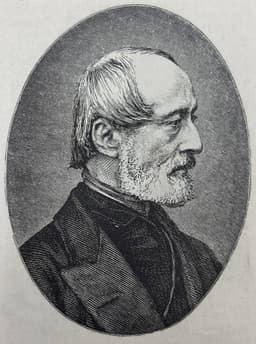
Giuseppe Mazzini
Revolutionary · Modern
50.7Total

Jose Maria Morelos
Revolutionary · Modern
57.4Total
Basic Information
Born
1805
1765
Died
1872
1815
Era
Modern
Modern
Nationality
Italy
Mexico
Occupation
Revolutionary
Revolutionary
Civilization
Western
Western
Score Comparison
Military (10%)
39.9
50.0
Political (20%)
40.8
68.0
Influence (20%)
60.0
54.9
Legacy (20%)
56.0
50.0
Leadership (15%)
40.9
62.2
Strategy (15%)
54.3
66.3
TOTAL
50.7
57.4
Giuseppe Mazzini — Complete Timeline
1831 AD
Founding of Young ItalyPolitical Action◆ Major
Mazzini founded the secret society Young Italy (Giovine Italia) in Marseille. The organization aimed to achieve Italian unification through popular insurrection and republican government. It recruited thousands of members and inspired uprisings in the 1830s and 1840s.
UnificationRepublicanismSecret Society
Impact: regionalconstructive
1834 AD
Mazzini's Insurrection in SavoyPolitical Action
Mazzini organized an armed invasion of Savoy from Switzerland, intending to spark a republican revolution. The attempt failed due to poor coordination and betrayal, forcing Mazzini into exile. He was sentenced to death in absentia by Piedmontese authorities.
InsurrectionFailureExile
destructive
1849 AD
Roman Republic of 1849Political Action◆ Major
Mazzini became one of the triumvirs governing the short-lived Roman Republic after the pope fled. He implemented progressive reforms including universal male suffrage and freedom of the press. The republic was crushed by French troops in July 1849, and Mazzini returned to exile.
RepublicRevolutionPapal States
Impact: regionalconstructive
1857 AD
Expedition of the SapriPolitical Action
Mazzini organized an ill-fated expedition led by Carlo Pisacane to spark a revolt in the Kingdom of the Two Sicilies. The rebels were quickly defeated and killed by local peasants and Bourbon troops. The failure discredited Mazzini's insurrectionary strategy.
InsurrectionFailureSouthern Italy
tragic
Jose Maria Morelos — Complete Timeline
1811 AD
Took command of the independence movementPolitical Action
After Hidalgo's execution, Morelos, a priest and military leader, assumed leadership of the Mexican independence movement. He organized the insurgent forces in southern Mexico, capturing Acapulco and establishing a base of operations. His leadership revitalized the rebellion.
LeadershipInsurgencyIndependence
Impact: nationalconstructive
1813 AD
Defeated at the Siege of ValladolidWar◆ Major
Morelos attempted to capture Valladolid (now Morelia) but was defeated by royalist forces under Agust
DefeatRoyalist VictoryTurning Point
Impact: regionaltragic
Convened the Congress of ChilpancingoPolitical Action◆ Major
Morelos convened the Congress of Chilpancingo on September 13, 1813, which declared Mexican independence from Spain and drafted the first constitution. The congress also abolished slavery, caste distinctions, and torture. Morelos was named 'Servant of the Nation' and executive power was vested in him.
CongressConstitutionDeclaration of Independence
Impact: nationalconstructive
1815 AD
Captured and executed by Spanish forcesPolitical Action◆ Major
Morelos was captured by Spanish forces on November 5, 1815, while escorting the Congress. He was tried by the Inquisition, defrocked, and executed by firing squad on December 22, 1815, in San Crist
ExecutionMartyrdomEnd of Phase
Impact: nationaltragic
Expert Analysis
Origins
Giuseppe Mazzini was born on June 22, 1805, in Genoa, Italy, into a middle-class family. His father was a university professor, and his mother was a devout Jansenist who instilled in him a strong sense of moral duty. Mazzini studied law at the University of Genoa, but his passion for literature and politics soon overshadowed his legal career. He was influenced by the ideals of the French Revolution and the Romantic movement, which shaped his vision of a unified Italian republic.
José María Morelos was born on September 30, 1765, in Valladolid (now Morelia), Mexico, to a poor mestizo family. His father was a carpenter, and his mother was of mixed heritage. Morelos worked as a muleteer before entering the priesthood, studying at the Colegio de San Nicolás in Valladolid. He was ordained in 1797 and served as a parish priest in various towns, gaining firsthand experience of the social injustices faced by indigenous and mixed-race communities.
Rise to Power
Mazzini's rise began with his involvement in the Carbonari, a secret revolutionary society. After being arrested and exiled in 1831, he founded Young Italy (Giovine Italia) in Marseille, a secret society dedicated to Italian unification through popular insurrection. His writings and propaganda attracted thousands of followers across the Italian peninsula. In 1849, he became one of the triumvirs of the short-lived Roman Republic, which implemented progressive reforms such as universal male suffrage and freedom of the press.
Morelos's rise came after the execution of Miguel Hidalgo in 1811. As a priest and former student of Hidalgo, Morelos took command of the scattered insurgent forces in southern Mexico. He organized them into a disciplined army and quickly won a series of victories against Spanish royalist forces. By 1813, he controlled much of the territory south of Mexico City and convened the Congress of Chilpancingo, which declared Mexican independence and drafted a constitution.
Leadership & Governance
Mazzini's leadership was ideological and inspirational. He believed in moral force and popular uprising, often underestimating the need for military strength and political pragmatism. As a triumvir of the Roman Republic, he implemented progressive policies but failed to secure international support or build a sustainable defense against French intervention. His governance was marked by idealism but lacked administrative and military expertise.
Morelos was a pragmatic military leader and effective administrator. He organized his army into divisions, established a system of taxation and supply, and convened a congress to legitimize the independence movement. His leadership style was inclusive, incorporating indigenous and mestizo leaders. However, his insistence on maintaining a constitutional congress even during military setbacks sometimes hindered strategic flexibility.
Triumph & Tragedy
Mazzini's greatest success was inspiring the Italian unification movement and shaping its republican ideals. His writings and activism laid the groundwork for later unification under Cavour and Garibaldi. However, his greatest failure was his inability to achieve unification through popular insurrection. His attempted invasions of Savoy (1834) and the Expedition of the Sapri (1857) were military disasters, leading to the deaths of many followers. He died in 1872 in exile, seeing Italy unified as a monarchy rather than the republic he envisioned.
Morelos's greatest triumph was leading the second phase of the Mexican War of Independence, consolidating the insurgency after Hidalgo's death. He convened the Congress of Chilpancingo and drafted the first constitution for an independent Mexico. His tragedy was his defeat at the Siege of Valladolid in 1813, which turned the tide against the insurgents. Captured in 1815, he was defrocked, tried by the Inquisition, and executed. His movement fragmented after his death, and independence was achieved later under different leadership.
Character & Destiny
Mazzini was a visionary and uncompromising idealist. His unwavering commitment to republicanism and moral purity often alienated potential allies, including monarchists and moderates. His character shaped his destiny as a perpetual exile and martyr for the cause, but also limited his effectiveness as a practical leader. Historians note his score of 40.9 in leadership and 39.9 in military, reflecting his weaknesses in those areas.
Morelos was a determined and adaptable leader who evolved from a parish priest into a skilled military commander and statesman. He combined religious authority with revolutionary fervor, earning loyalty from diverse social groups. However, his decision to prioritize the congress over military consolidation proved fatal. His military score of 50.0 and strategy score of 66.3 indicate a competent commander, but his political score of 68.0 reflects his ability to build institutions.
Legacy
Mazzini's legacy is as the "soul of Italy" and a symbol of European republicanism. His ideas influenced later nationalist movements in Europe and beyond. Young Italy inspired similar organizations in other countries. However, his immediate impact on Italian unification was limited; the actual unification was achieved by the monarchy of Piedmont-Sardinia. His influence score of 60.0 and legacy score of 56.0 reflect his enduring ideological impact but limited practical achievements.
Morelos is remembered as a national hero in Mexico, honored as the "Siervo de la Nación" (Servant of the Nation). The city of Morelia is named after him, and his image appears on currency. His constitution and ideals influenced later Mexican political development. However, his movement did not achieve independence, which was won by Agustín de Iturbide in 1821. Morelos scores 54.9 in influence and 50.0 in legacy, showing a more localized but tangible impact.
Conclusion
While both figures were pivotal in their respective independence movements, José María Morelos had a greater immediate impact on the course of Mexican history. His military and political scores (50.0 and 68.0) combined with his strategy score (66.3) demonstrate a more balanced skill set than Mazzini's (39.9 military, 40.8 political, 54.3 strategy). Morelos led a sustained insurgency, established a constitutional government, and directly advanced the cause of independence. Mazzini's total score of 50.7 versus Morelos's 57.4 reflects this disparity. However, Mazzini's influence on nationalist ideology across Europe was profound. In terms of direct impact on their nation's independence, Morelos stands higher; in terms of ideological legacy, Mazzini's reach was broader. The data supports the conclusion that Morelos was the more effective revolutionary leader of the two.
Rankings
🥇
Jose Maria MorelosLeader
Mil: 50.0Pol: 68.0Inf: 54.9
57.4
🥈
Giuseppe Mazzini
Mil: 39.9Pol: 40.8Inf: 60.0
50.7
+6.7 behind
How This Comparison Works
Algorithm
Each figure is scored on 6 dimensions (0—100 scale) based on structured historical data: Military (10%), Political (20%), Influence (20%), Legacy (20%), Leadership (15%), Strategy (15%). The weighted total produces the final ranking.
Data Sources
Scores are computed from structured sub-indicators in the database. Scale factors adjust for era (Ancient ×0.85, Modern ×1.0) and civilization size (Eastern ×1.05, Other ×0.80) to account for differences in population and military scale.
Maximum 3 Figures
Comparisons are limited to 2—3 figures to ensure readability and statistical meaningfulness.
Error Margins
±5 points per dimension — Sub-scores are derived from historical records with inherent uncertainty. Two figures within 5 points on a dimension should be considered roughly equivalent in that area.
Total Score Accuracy
±3 points overall — The weighted combination of 6 dimensions produces a total score with approximately ±3 points of uncertainty. Differences of less than 3 points are not statistically significant— the figures are effectively tied.
Known Limitations
- Historical records are incomplete and uneven across civilizations
- Figures from oral-tradition societies may be underrepresented
- Occupation labels can misclassify multi-role figures
- Scores measure capability and impact, not moral character
- Quantitative scoring is a comparison tool, not absolute truth
Capability Radar
Military (10%) — Battles & Warfare
Battles
5
65
Win Rate
5
60
Expansion
5
55
Political (20%) — Governance & Reform
Reform
60
70
Diplomacy
55
55
Economy
10
45
Influence (20%) — Cultural & Global Reach
Cultural
65
55
Global
55
45
Legacy (20%) — Historical Impact
Historical
70
65
Longevity
60
60
Leadership (15%) — Power & Stability
Tenure
20
50
Stability
10
30
Strategy (15%) — Tactics & Innovation
Strategy
10
75
Tactics
5
70
Reform
15
60
Similar Comparisons
Comments & Discussion
No comments yet. Be the first to share your thoughts!