Loading...
This comparison has not been analyzed yet.
One-time AI generation (~1 minute). Scores and timeline are already available below.
Giuseppe Mazzini vs Kunwar Singh
Giuseppe Mazzini leads by 9.7 pts · 2 figures compared
…
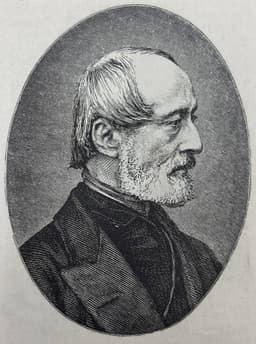
Giuseppe Mazzini
Revolutionary · Modern
50.7Total

Kunwar Singh
Revolutionary · Modern
41.0Total
Basic Information
Born
1805
1777
Died
1872
1858
Era
Modern
Modern
Nationality
Italy
India
Occupation
Revolutionary
Revolutionary
Civilization
Western
Indian
Score Comparison
Military (10%)
39.9
47.5
Political (20%)
40.8
30.7
Influence (20%)
60.0
47.9
Legacy (20%)
56.0
40.0
Leadership (15%)
40.9
35.4
Strategy (15%)
54.3
43.7
TOTAL
50.7
41.0
Giuseppe Mazzini — Complete Timeline
1831 AD
Founding of Young ItalyPolitical Action◆ Major
Mazzini founded the secret society Young Italy (Giovine Italia) in Marseille. The organization aimed to achieve Italian unification through popular insurrection and republican government. It recruited thousands of members and inspired uprisings in the 1830s and 1840s.
UnificationRepublicanismSecret Society
Impact: regionalconstructive
1834 AD
Mazzini's Insurrection in SavoyPolitical Action
Mazzini organized an armed invasion of Savoy from Switzerland, intending to spark a republican revolution. The attempt failed due to poor coordination and betrayal, forcing Mazzini into exile. He was sentenced to death in absentia by Piedmontese authorities.
InsurrectionFailureExile
destructive
1849 AD
Roman Republic of 1849Political Action◆ Major
Mazzini became one of the triumvirs governing the short-lived Roman Republic after the pope fled. He implemented progressive reforms including universal male suffrage and freedom of the press. The republic was crushed by French troops in July 1849, and Mazzini returned to exile.
RepublicRevolutionPapal States
Impact: regionalconstructive
1857 AD
Expedition of the SapriPolitical Action
Mazzini organized an ill-fated expedition led by Carlo Pisacane to spark a revolt in the Kingdom of the Two Sicilies. The rebels were quickly defeated and killed by local peasants and Bourbon troops. The failure discredited Mazzini's insurrectionary strategy.
InsurrectionFailureSouthern Italy
tragic
Kunwar Singh — Complete Timeline
1857 AD
Battle of ArrahWar◆ Major
Kunwar Singh led a rebel force in besieging the British garrison at Arrah in Bihar. The siege lasted eight days before British relief forces arrived, forcing Kunwar Singh to retreat.
Indian Rebellion of 1857Siege
Impact: regional
1858 AD
Battle of JagdishpurWar
Kunwar Singh defeated a British force at Jagdishpur, his ancestral home. He recaptured the town and held it briefly before British reinforcements arrived, forcing him to retreat into the hills.
Indian Rebellion of 1857Battle
Impact: regional
Death from woundsOther◆ Major
Kunwar Singh died from wounds sustained in battle near Jagdishpur. He had led the rebellion in Bihar for over a year, and his death marked the end of organized resistance in the region.
Indian Rebellion of 1857Death
Impact: regionaltragic
This comparison has not been analyzed yet.
One-time AI generation (~1 minute). Scores and timeline are already available below.
Rankings
🥇
Giuseppe MazziniLeader
Mil: 39.9Pol: 40.8Inf: 60.0
50.7
🥈
Kunwar Singh
Mil: 47.5Pol: 30.7Inf: 47.9
41.0
+9.7 behind
How This Comparison Works
Algorithm
Each figure is scored on 6 dimensions (0—100 scale) based on structured historical data: Military (10%), Political (20%), Influence (20%), Legacy (20%), Leadership (15%), Strategy (15%). The weighted total produces the final ranking.
Data Sources
Scores are computed from structured sub-indicators in the database. Scale factors adjust for era (Ancient ×0.85, Modern ×1.0) and civilization size (Eastern ×1.05, Other ×0.80) to account for differences in population and military scale.
Maximum 3 Figures
Comparisons are limited to 2—3 figures to ensure readability and statistical meaningfulness.
Error Margins
±5 points per dimension — Sub-scores are derived from historical records with inherent uncertainty. Two figures within 5 points on a dimension should be considered roughly equivalent in that area.
Total Score Accuracy
±3 points overall — The weighted combination of 6 dimensions produces a total score with approximately ±3 points of uncertainty. Differences of less than 3 points are not statistically significant— the figures are effectively tied.
Known Limitations
- Historical records are incomplete and uneven across civilizations
- Figures from oral-tradition societies may be underrepresented
- Occupation labels can misclassify multi-role figures
- Scores measure capability and impact, not moral character
- Quantitative scoring is a comparison tool, not absolute truth
Capability Radar
Military (10%) — Battles & Warfare
Battles
5
35
Win Rate
5
40
Expansion
5
15
Political (20%) — Governance & Reform
Reform
60
10
Diplomacy
55
25
Economy
10
15
Influence (20%) — Cultural & Global Reach
Cultural
65
35
Global
55
20
Legacy (20%) — Historical Impact
Historical
70
40
Longevity
60
30
Leadership (15%) — Power & Stability
Tenure
20
20
Stability
10
15
Strategy (15%) — Tactics & Innovation
Strategy
10
30
Tactics
5
45
Reform
15
10
Similar Comparisons
Comments & Discussion
No comments yet. Be the first to share your thoughts!