Loading...
Giuseppe Mazzini vs Qin Shi Huang
Qin Shi Huang leads by 34.5 pts · 2 figures compared
…
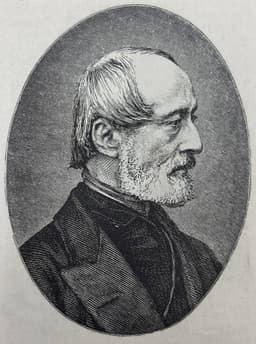
Giuseppe Mazzini
Revolutionary · Modern
50.7Total
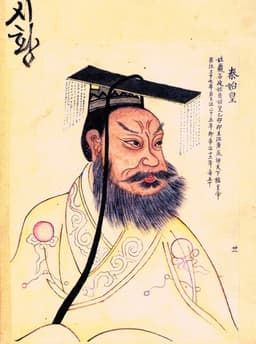
Qin Shi Huang
Emperor · Ancient
85.2Total
Basic Information
Born
1805
-259
Died
1872
-210
Era
Modern
Ancient
Nationality
Italy
China
Occupation
Revolutionary
Emperor
Civilization
Western
Eastern
Score Comparison
Military (10%)
39.9
80.0
Political (20%)
40.8
90.0
Influence (20%)
60.0
85.0
Legacy (20%)
56.0
90.0
Leadership (15%)
40.9
78.0
Strategy (15%)
54.3
82.0
TOTAL
50.7
85.2
Giuseppe Mazzini — Complete Timeline
1831 AD
Founding of Young ItalyPolitical Action◆ Major
Mazzini founded the secret society Young Italy (Giovine Italia) in Marseille. The organization aimed to achieve Italian unification through popular insurrection and republican government. It recruited thousands of members and inspired uprisings in the 1830s and 1840s.
UnificationRepublicanismSecret Society
Impact: regionalconstructive
1834 AD
Mazzini's Insurrection in SavoyPolitical Action
Mazzini organized an armed invasion of Savoy from Switzerland, intending to spark a republican revolution. The attempt failed due to poor coordination and betrayal, forcing Mazzini into exile. He was sentenced to death in absentia by Piedmontese authorities.
InsurrectionFailureExile
destructive
1849 AD
Roman Republic of 1849Political Action◆ Major
Mazzini became one of the triumvirs governing the short-lived Roman Republic after the pope fled. He implemented progressive reforms including universal male suffrage and freedom of the press. The republic was crushed by French troops in July 1849, and Mazzini returned to exile.
RepublicRevolutionPapal States
Impact: regionalconstructive
1857 AD
Expedition of the SapriPolitical Action
Mazzini organized an ill-fated expedition led by Carlo Pisacane to spark a revolt in the Kingdom of the Two Sicilies. The rebels were quickly defeated and killed by local peasants and Bourbon troops. The failure discredited Mazzini's insurrectionary strategy.
InsurrectionFailureSouthern Italy
tragic
Qin Shi Huang — Complete Timeline
246 BC
Construction of the Mausoleum and Terracotta ArmyOther◆ Major
Qin Shi Huang commissioned a vast mausoleum complex near Xi'an, guarded by thousands of life-sized terracotta soldiers, horses, and chariots. The project employed hundreds of thousands of workers and reflected his obsession with immortality and imperial power.
Impact: global
230 BC
Conquest of the Six Warring StatesWar
From 230 to 221 BCE, Ying Zheng led the Qin state in a series of campaigns that conquered the Han, Zhao, Wei, Chu, Yan, and Qi states. This unified China under a single ruler for the first time, ending the Warring States period.
Impact: global
221 BC
Standardization of Writing, Currency, and MeasurementsReform◆ Major
Qin Shi Huang ordered the standardization of Chinese script, currency, and weights and measures across the unified empire. This facilitated administration, trade, and cultural integration, laying a foundation for future dynasties.
Impact: globalconstructive
Proclamation of the Qin DynastyPolitical Action
After conquering the last independent state, Ying Zheng declared himself Shi Huangdi (First Emperor), founding the Qin Dynasty. He adopted a new title to signify his supreme authority and initiated centralized imperial rule.
Impact: global
214 BC
Initiation of the Great Wall ConstructionOther◆ Major
Qin Shi Huang ordered the connection and extension of existing northern fortifications to create a unified defensive wall against nomadic Xiongnu raids. This project involved massive conscripted labor and became the precursor to the later Great Wall.
Impact: regional
213 BC
Burning of Books and Burying of ScholarsPolitical Action◆ Major
On the advice of Li Si, Qin Shi Huang ordered the burning of historical records and philosophical texts not aligned with Legalist doctrine. He also had 460 Confucian scholars buried alive to suppress dissent and consolidate ideological control.
Impact: nationaldestructive
Expert Analysis
giuseppe-mazzini-vs-qin-shi-huang
# The Emperor and the Revolutionary: Two Visions of Unity
On a spring morning in 221 BC, a twenty-eight-year-old king stood before his assembled court in Xianyang and declared himself Shi Huangdi—the First Emperor. Two thousand years later, in a cramped Marseille apartment in 1831, a twenty-six-year-old exile founded a secret society he called Young Italy. Both men dreamed of unity. Both would reshape history. But one forged an empire through conquest and terror, while the other inspired a nation through faith and sacrifice. What drove such different paths to the same goal?
Origins
Ying Zheng was born in 259 BC, the son of a king and a concubine, into a world of ceaseless war. The Warring States period had torn China apart for centuries, and the Qin state, perched on the western frontier, was the most ruthless of them all. He ascended the throne at thirteen, a boy surrounded by eunuchs, assassins, and ambitious ministers. His world was one of iron and blood—where survival meant absolute control.
Giuseppe Mazzini, born in Genoa in 1805, came of age in a very different crucible. Italy was not a country but a "geographical expression"—a patchwork of kingdoms, duchies, and papal states ruled by foreign powers. His father was a physician, his mother a devout Catholic. As a boy, Mazzini watched French revolutionary armies sweep through Italy, planting trees of liberty and then cutting them down. He learned to read Dante and to dream of a republic. Where Qin Shi Huang inherited a sword, Mazzini inherited an idea.
Rise to Power
Qin Shi Huang's path was direct and brutal. From 230 to 221 BC, he unleashed a series of lightning campaigns against the six remaining kingdoms. His generals used iron weapons, disciplined cavalry, and a legalist philosophy that rewarded merit and punished failure. When the last king surrendered, Ying Zheng simply erased the old states and redrew the map. His power came from the point of a spear.
Mazzini's rise was the opposite. He had no army, no treasury, no territory. He had only words and a burning conviction. In 1831, from exile in Marseille, he founded Young Italy—a secret society that required members to swear an oath on a dagger and a skull. The organization spread like wildfire among students, merchants, and artisans. Mazzini wrote pamphlets, smuggled them across borders, and waited for the spark. In 1834, he organized an invasion of Savoy from Switzerland. It failed miserably. The rebels were captured or scattered before they fired a shot.
Leadership & Governance
As emperor, Qin Shi Huang ruled with an iron consistency that bordered on obsession. He standardized writing, currency, and measurements across his vast domain—a stroke of genius that would hold China together for two millennia. He ordered the connection of northern fortifications into what would become the Great Wall, a monument to his vision of a closed, ordered world. But his governance had a terrifying cost. In 213 BC, on the advice of his minister Li Si, he ordered the burning of all historical records and philosophical texts that did not glorify his regime. Scholars who protested were buried alive. He believed that unity required purity, and purity required silence.
Mazzini governed for only a few months, but those months were luminous. In 1849, after the pope fled Rome, Mazzini became one of three triumvirs ruling the Roman Republic. He abolished the Inquisition, established freedom of the press, and granted universal suffrage—all while French armies massed at the gates. His governance was not about control but about inspiration. He wrote to the people: "The nation is not a territory to be conquered, but a soul to be awakened." The republic fell to French cannons after five months, but its example burned itself into Italian memory.
Triumph & Tragedy
Qin Shi Huang's greatest triumph was the unification itself. In just over a decade, he accomplished what no Chinese ruler had ever done. He built roads, dug canals, and created a bureaucracy that could administer millions. His mausoleum, guarded by the terracotta army, was a testament to his ambition—a world within a world, frozen in clay and bronze.
But his tragedy was equally vast. The First Emperor became obsessed with immortality, sending expeditions for the elixir of life and consuming mercury pills that likely poisoned him. He died in 210 BC at age forty-nine, and within three years, the Qin Dynasty collapsed into rebellion and chaos. His iron unity had no roots in human loyalty.
Mazzini's greatest triumph was his influence. Though he never liberated Italy himself, his ideas shaped the men who did—Garibaldi, Cavour, and even the young Mussolini would later claim his mantle. The Roman Republic of 1849, though crushed, became the moral foundation of Italian unification.
His tragedy was his life of failure. He died in 1872 in Pisa, a lonely exile in his own country, watching others complete his dream. His final words were reportedly: "I have nothing left but my faith."
Character & Destiny
Qin Shi Huang was a man of absolute will. He trusted no one, forgave nothing, and believed that the world could be reshaped by decree. His paranoia drove him to build a tomb with hidden crossbows and rivers of mercury. His arrogance led him to declare that his dynasty would last ten thousand generations. It lasted fifteen years.
Mazzini was a man of absolute faith. He believed in God, in the people, in the sacred destiny of nations. His trust in human goodness was both his strength and his weakness. He could not compromise, could not accept monarchy, could not negotiate with the pope. He was a revolutionary who never learned to build a state.
Legacy
Qin Shi Huang left a model—the unified, centralized empire. Every subsequent Chinese dynasty, from Han to Qing, built on his foundations. The standardized script he imposed is still used today. The Great Wall still snakes across the north. He is remembered as both a unifier and a tyrant, a builder and a destroyer.
Mazzini left a dream. The Italian tricolor he championed flies over a unified nation. His vision of national self-determination inspired movements across Europe and beyond—from Poland to India to Ireland. He is remembered as the "soul of Italy," the man who taught a people to believe they were a nation.
Conclusion
Standing at the edge of history, these two men could not have been more different. One ruled from a throne of bronze, the other from a prison cell. One commanded armies, the other commanded only hope. Yet both understood something profound: that unity is not natural, that it must be willed into existence. The First Emperor tried to forge a nation by crushing difference. Mazzini tried to forge a nation by awakening love. One built a machine, the other lit a flame. Perhaps every nation needs both—the iron hand and the burning heart—to become what it is meant to be.
Rankings
🥇
Qin Shi HuangLeader
Mil: 80.0Pol: 90.0Inf: 85.0
85.2
🥈
Giuseppe Mazzini
Mil: 39.9Pol: 40.8Inf: 60.0
50.7
+34.5 behind
How This Comparison Works
Algorithm
Each figure is scored on 6 dimensions (0—100 scale) based on structured historical data: Military (10%), Political (20%), Influence (20%), Legacy (20%), Leadership (15%), Strategy (15%). The weighted total produces the final ranking.
Data Sources
Scores are computed from structured sub-indicators in the database. Scale factors adjust for era (Ancient ×0.85, Modern ×1.0) and civilization size (Eastern ×1.05, Other ×0.80) to account for differences in population and military scale.
Maximum 3 Figures
Comparisons are limited to 2—3 figures to ensure readability and statistical meaningfulness.
Error Margins
±5 points per dimension — Sub-scores are derived from historical records with inherent uncertainty. Two figures within 5 points on a dimension should be considered roughly equivalent in that area.
Total Score Accuracy
±3 points overall — The weighted combination of 6 dimensions produces a total score with approximately ±3 points of uncertainty. Differences of less than 3 points are not statistically significant— the figures are effectively tied.
Known Limitations
- Historical records are incomplete and uneven across civilizations
- Figures from oral-tradition societies may be underrepresented
- Occupation labels can misclassify multi-role figures
- Scores measure capability and impact, not moral character
- Quantitative scoring is a comparison tool, not absolute truth
Capability Radar
Military (10%) — Battles & Warfare
Battles
5
85
Win Rate
5
90
Expansion
5
90
Political (20%) — Governance & Reform
Reform
60
95
Diplomacy
55
75
Economy
10
90
Influence (20%) — Cultural & Global Reach
Cultural
65
95
Global
55
85
Legacy (20%) — Historical Impact
Historical
70
95
Longevity
60
95
Leadership (15%) — Power & Stability
Tenure
20
70
Stability
10
65
Strategy (15%) — Tactics & Innovation
Strategy
10
85
Tactics
5
80
Reform
15
95
Similar Comparisons
Comments & Discussion
Legionary346/17/2026
Comparing Mazzini to Qin Shi Huang is like comparing a spark to a steamroller. The First Emperor crushed six kingdoms, imposed standardized script and axle widths, and buried scholars alive to control history. Mazzini wrote pamphlets and ate stale bread in exile, catalyzing the Risorgimento through ideas alone. One built by fear, the other by fervor. Qin’s terracotta army endures, but Mazzini’s Young Italy inspired Garibaldi. Qin wins the empire; Mazzini wins the soul.
拆台老陈6/17/2026
硬把马志尼跟秦始皇放一起比,怕不是只会看“统一”两个字就往上凑。秦始皇车同轨书同文,那是真把分裂的战国捏成了大一统帝国,靠的是郡县制和几万条人命。马志尼呢?烧炭党闹革命,搞了半辈子也就是个意大利王国雏形,还得靠加里波第和皮埃蒙特军队收尾。一个造出了实际帝国,一个连政府都没建过,有什么资格对标?
AnthroPunk6/17/2026
From an anthropological lens, these are two radically different templates of unification. Qin Shi Huang homogenized through force: standardized writing, currency, even cart axles—erasing regional differences for empire stability. Mazzini instead tapped into emotional nationalism, using language and myth to write Italy into existence. One built a machine from the top down; the other bred a movement from the bottom up. Who unified more durably? Today, China still bears Qin’s legalist bones; Italy
数据扫地僧6/17/2026
吹马志尼可以,但别用理想主义偷换客观实力。秦始皇统一六国时,战国七雄总人口约2000万,他压平不服从、修长城、开灵渠,总动员兵力几近百万。马志尼一生几乎都在流亡,手下核心组织“青年意大利”会员撑死几千人,所谓1848年革命也没成气候。按动员规模和执行结果比,马志尼和秦始皇之间至少差了一个凯撒。统一不只靠口号,还靠铁腕调度。
ClassicsUnbound6/17/2026
Both were self-conscious founders, yet their visions of unity were fundamentally different. Qin Shi Huang saw himself as a cosmic sovereign, merging earthly and celestial mandate—hence his title "Shi Huangdi," first of a lineage meant to rule for ten thousand generations. Mazzini saw unity as a spiritual covenant, where each citizen internalized the nation's soul. Qin built for eternity in stone and bone; Mazzini built for posterity in print and conscience. One terrified the present; the other t