Loading...
Gnaeus Domitius Corbulo vs Scipio Aemilianus
Scipio Aemilianus leads by 15.2 pts · 2 figures compared
…

Gnaeus Domitius Corbulo
General · Ancient
49.5Total
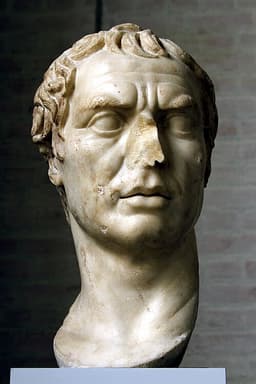
Scipio Aemilianus
General · Ancient
64.7Total
Basic Information
Born
7
-185
Died
67
-129
Era
Ancient
Ancient
Nationality
Roman Empire
Roman Republic
Occupation
General
General
Civilization
Western
Western
Score Comparison
Military (10%)
78.5
90.0
Political (20%)
25.0
68.0
Influence (20%)
54.1
55.0
Legacy (20%)
49.2
55.0
Leadership (15%)
30.0
72.0
Strategy (15%)
75.3
72.0
TOTAL
49.5
64.7
Gnaeus Domitius Corbulo — Complete Timeline
57 AD
Reforms of the Eastern LegionsReform◆ Major
Corbulo implemented rigorous training and discipline reforms for the legions in Syria. He weeded out corrupt officers, improved supply lines, and drilled the troops, transforming them into an effective fighting force.
Military ReformDisciplineSyria
Impact: regionalconstructive
58 AD
Campaigns in Armenia and ParthiaWar◆ Major
Corbulo commanded Roman forces in the East against the Parthian Empire. He captured the Armenian capital Artaxata and installed a Roman client king, Tigranes VI, securing Roman influence in the region.
Roman-Parthian WarsMilitary CampaignArmenia
Impact: regionalconstructive
67 AD
Forced Suicide by NeroPolitical Action◆ Major
Emperor Nero, jealous of Corbulo's popularity and success, ordered him to commit suicide. Corbulo obeyed, taking his own life. His death removed a potential rival but also a capable general from the Roman military.
DeathNeroPolitical Purge
Impact: nationaltragic
Scipio Aemilianus — Complete Timeline
146 BC
Destroyed Carthage in the Third Punic WarWar
Scipio Aemilianus, as Roman consul, led the final assault on Carthage. After a three-year siege, his forces breached the walls, captured the city, and systematically destroyed it. The surviving population was enslaved, and the territory became the Roman province of Africa.
Third Punic WarCarthageDestruction
Impact: globaldestructive
134 BC
Elected Consul for the Second TimePolitical Action
Scipio Aemilianus was elected consul for a second time, despite legal restrictions, to command the war in Spain. His election reflected his popularity and the Senate's trust in his military abilities to end the Numantine War.
ConsulshipRoman PoliticsMilitary Command
Impact: nationalconstructive
133 BC
Captured Numantia, Ending the Numantine WarWar◆ Major
Scipio Aemilianus besieged the Celtiberian city of Numantia in Spain. After a prolonged blockade, the starving city surrendered. Scipio razed Numantia, ending the Numantine War and consolidating Roman control over Hispania.
Numantine WarSpainSiege
Impact: regionaldestructive
129 BC
Died Under Suspicious CircumstancesOther◆ Major
Scipio Aemilianus was found dead in his bed, possibly murdered by political opponents. His death occurred amid political turmoil over land reforms proposed by Tiberius Gracchus, whom Scipio had opposed. The cause of death remains disputed.
DeathRoman PoliticsGracchi
Impact: nationaltragic
Expert Analysis
Origins
Gnaeus Domitius Corbulo was born around 7 AD into a senatorial family. His father was a praetor, and his half-sister married Emperor Caligula, giving him early connections to the imperial court. Corbulo's early career included service as a quaestor and praetor, but his military experience was limited until his appointment to command in Germania Inferior in 47 AD. He lacked formal military education but learned quickly through practical experience.
Scipio Aemilianus, born in 185 BC, was the biological son of Lucius Aemilius Paullus Macedonicus, the conqueror of Macedon. He was adopted by Publius Cornelius Scipio, son of Scipio Africanus, thus inheriting a legendary name. His upbringing immersed him in Greek culture and military traditions. He served under his father at the Battle of Pydna (168 BC), witnessing the decisive Roman victory that ended the Macedonian monarchy.
Rise to Power
Corbulo's rise began under Emperor Claudius, who sent him to command in Germania Inferior in 47 AD. He restored discipline among the legions and conducted a successful campaign against the Chauci tribe. However, Claudius recalled him, fearing his success would provoke rebellion. Corbulo's real ascent came under Nero, who appointed him governor of Cappadocia and Galatia in 54 AD to confront the Parthian threat. In 58 AD, he launched a campaign into Armenia, capturing Artaxata and Tigranocerta by 60 AD. His victories forced the Parthians to accept a Roman client king, Tigranes VI, earning him the title of imperator.
Scipio Aemilianus rose through military merit. He served as a military tribune in Spain in 151 BC, where he distinguished himself in battle. His first major command came in 149 BC as a legate during the Third Punic War. He was elected consul in 147 BC, despite being underage and not having held the praetorship, due to popular demand. The Senate granted him command of the war against Carthage, bypassing legal restrictions.
Leadership & Governance
Corbulo's leadership style was strict and reformist. In Syria, he dismissed corrupt officers, enforced rigorous training, and improved supply lines. He drilled his legions relentlessly, transforming them into a disciplined fighting force. His governance focused on efficiency and loyalty to the emperor, but his success bred jealousy. He lacked political acumen, failing to secure allies at court to shield him from Nero's suspicions.
Scipio Aemilianus combined military prowess with political skill. He was elected consul twice, the second time in 134 BC to command the Numantine War, despite legal obstacles. His leadership emphasized discipline and morale; he expelled camp followers and restored traditional Roman military values. He also patronized the Scipionic Circle, a group of intellectuals that included Polybius and Terence, fostering Greek learning in Rome. Politically, he opposed the Gracchan reforms, advocating for the traditional senatorial order.
Triumph & Tragedy
Corbulo's greatest triumph was his Armenian campaign (58-63 AD). He defeated the Parthians under Vologases I, captured Artaxata and Tigranocerta, and installed a Roman client king. He also reformed the eastern legions, improving their combat effectiveness. His tragedy came in 67 AD when Nero, fearing his popularity, ordered him to commit suicide. Corbulo obeyed, uttering "Axios" ("worthy"), and died without resistance. His death removed a capable commander and weakened Roman defenses in the East.
Scipio Aemilianus's greatest triumph was the destruction of Carthage in 146 BC. After a three-year siege, his forces breached the walls and systematically destroyed the city, enslaving its population. He also captured Numantia in 133 BC, ending the Numantine War. His tragedies include his mysterious death in 129 BC, possibly murdered by political rivals, and his failure to prevent the rise of populist reforms that led to civil strife.
Character & Destiny
Corbulo was methodical, disciplined, and loyal to a fault. He followed orders even when they led to his death, reflecting a Stoic acceptance of fate. His character—focused on military excellence but naive in politics—sealed his destiny. He scored 30.0 in leadership and 25.0 in political, indicating his inability to navigate imperial intrigue.
Scipio Aemilianus was pragmatic, culturally sophisticated, and politically astute. He balanced military command with senatorial influence, earning respect from both soldiers and aristocrats. His leadership score of 72.0 reflects his ability to inspire troops and manage subordinates. His destiny was cut short by assassination, but he achieved his goals before death.
Legacy
Corbulo's legacy is mixed. His military reforms influenced later Roman commanders, but his death symbolized the dangers of imperial paranoia. He scored 49.2 in legacy and 54.1 in influence. His campaigns temporarily stabilized the eastern frontier but did not lead to lasting conquest. He is remembered as a tragic figure, a capable general undone by a tyrant.
Scipio Aemilianus's legacy is more enduring. The destruction of Carthage ended the Punic Wars and cemented Roman dominance in the Mediterranean. His capture of Numantia pacified Spain. His patronage of Greek culture accelerated Hellenization in Rome. He scored 55.0 in both legacy and influence. His life exemplified the ideal of the Roman general-cum-statesman, though his opposition to reform left him on the losing side of history's judgment.
Conclusion
Scipio Aemilianus had greater impact on history. His military score of 90.0 versus Corbulo's 78.5 reflects his decisive victories that reshaped the Mediterranean. Corbulo's campaigns were important but temporary, while Scipio's destruction of Carthage ended a century-long conflict and removed Rome's primary rival. Scipio's political score of 68.0 also far exceeds Corbulo's 25.0, as he successfully navigated Republican politics. Corbulo's legacy is cautionary; Scipio's is foundational. The total score gap of 15.2 points underscores Scipio's superior overall contribution. While Corbulo was a competent general, Scipio Aemilianus was a transformative figure who permanently altered the course of Roman expansion.
Rankings
🥇
Scipio AemilianusLeader
Mil: 90.0Pol: 68.0Inf: 55.0
64.7
🥈
Gnaeus Domitius Corbulo
Mil: 78.5Pol: 25.0Inf: 54.1
49.5
+15.2 behind
How This Comparison Works
Algorithm
Each figure is scored on 6 dimensions (0—100 scale) based on structured historical data: Military (10%), Political (20%), Influence (20%), Legacy (20%), Leadership (15%), Strategy (15%). The weighted total produces the final ranking.
Data Sources
Scores are computed from structured sub-indicators in the database. Scale factors adjust for era (Ancient ×0.85, Modern ×1.0) and civilization size (Eastern ×1.05, Other ×0.80) to account for differences in population and military scale.
Maximum 3 Figures
Comparisons are limited to 2—3 figures to ensure readability and statistical meaningfulness.
Error Margins
±5 points per dimension — Sub-scores are derived from historical records with inherent uncertainty. Two figures within 5 points on a dimension should be considered roughly equivalent in that area.
Total Score Accuracy
±3 points overall — The weighted combination of 6 dimensions produces a total score with approximately ±3 points of uncertainty. Differences of less than 3 points are not statistically significant— the figures are effectively tied.
Known Limitations
- Historical records are incomplete and uneven across civilizations
- Figures from oral-tradition societies may be underrepresented
- Occupation labels can misclassify multi-role figures
- Scores measure capability and impact, not moral character
- Quantitative scoring is a comparison tool, not absolute truth
Capability Radar
Military (10%) — Battles & Warfare
Battles
75
85
Win Rate
85
90
Expansion
72
75
Political (20%) — Governance & Reform
Reform
30
65
Diplomacy
45
75
Economy
25
60
Influence (20%) — Cultural & Global Reach
Cultural
40
65
Global
35
75
Legacy (20%) — Historical Impact
Historical
55
80
Longevity
50
70
Leadership (15%) — Power & Stability
Tenure
40
70
Stability
20
70
Strategy (15%) — Tactics & Innovation
Strategy
78
85
Tactics
80
80
Reform
70
60
Similar Comparisons
Comments & Discussion
No comments yet. Be the first to share your thoughts!