Loading...
Gnaeus Julius Agricola vs Quintus Sertorius
Quintus Sertorius leads by 9.7 pts · 2 figures compared
…
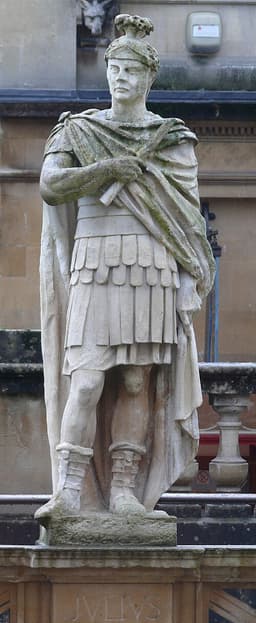
Gnaeus Julius Agricola
General · Ancient
52.5Total

Quintus Sertorius
General · Ancient
62.2Total
Basic Information
Born
40
-123
Died
93
-72
Era
Ancient
Ancient
Nationality
Roman Empire
Roman Republic
Occupation
General
General
Civilization
Western
Western
Score Comparison
Military (10%)
72.0
65.0
Political (20%)
35.1
68.0
Influence (20%)
54.1
60.0
Legacy (20%)
47.5
50.0
Leadership (15%)
61.1
68.0
Strategy (15%)
55.0
77.6
TOTAL
52.5
62.2
Gnaeus Julius Agricola — Complete Timeline
74 AD
Governorship of AquitaniaPolitical Action
Agricola was appointed governor of Aquitania, a Roman province in Gaul. He administered the province for three years, focusing on legal and financial reforms. This post prepared him for higher command and demonstrated his administrative skills.
Provincial AdministrationGaulCareer
Impact: regionalconstructive
78 AD
Conquest of the OrdovicesWar◆ Major
As governor of Britain, Agricola launched a campaign against the Ordovices tribe in northern Wales. He defeated them and then conquered the island of Anglesey, a stronghold of Druids and resistance, completing the Roman subjugation of Wales.
Roman BritainWalesMilitary Campaign
Impact: regional
83 AD
Battle of Mons GraupiusWar◆ Major
Agricola's army defeated a large Caledonian force led by Calgacus at Mons Graupius in northern Scotland. The Roman victory was decisive, but Agricola did not pursue the defeated tribes into the Highlands, leaving the conquest of Scotland incomplete.
BattleScotlandCaledonia
Impact: regional
Circumnavigation of BritainOther
Agricola ordered a Roman fleet to circumnavigate Britain, proving it was an island. The fleet sailed around the northern coast, encountering the Orkney Islands. This exploration provided valuable geographical knowledge and demonstrated Roman naval power.
ExplorationNavyGeography
Impact: regionalconstructive
Quintus Sertorius — Complete Timeline
83 BC
Appointed Governor of Hispania CiteriorPolitical Action◆ Major
Quintus Sertorius was appointed governor of Hispania Citerior by the Marian faction during the civil war against Sulla. After Sulla's victory, Sertorius fled to Africa and then returned to Spain to lead a rebellion.
Roman Civil WarSpainGovernorship
Impact: regional
80 BC
Established a Rebel Government in HispaniaPolitical Action◆ Major
Sertorius established a rival Roman government in Hispania, with a senate, army, and alliance with local Iberian tribes. He created a school for Iberian nobles and governed effectively, winning widespread support among both Romans and natives.
RebellionSpainGovernment
Impact: regionalconstructive
75 BC
Defeated Metellus Pius at the Battle of the SucroWar◆ Major
Sertorius defeated the Roman general Quintus Caecilius Metellus Pius at the Battle of the Sucro River. The victory solidified his control over much of Hispania and demonstrated his military skill against Sullan forces.
Roman Civil WarBattleSpain
Impact: regional
72 BC
Assassinated by Perperna at a BanquetOther◆ Major
Sertorius was assassinated by his own lieutenant, Marcus Perperna, during a banquet. Perperna, jealous of Sertorius's authority, led a conspiracy that ended the rebellion. Perperna was later defeated by Pompey, ending the Sertorian War.
AssassinationSertorian WarSpain
Impact: regionaltragic
Expert Analysis
Origins
Gnaeus Julius Agricola was born in 40 AD in the Roman colony of Forum Julii (modern Fréjus, France) to a senatorial family. His father, Julius Graecinus, was executed by Caligula, but Agricola's mother ensured his education in rhetoric and philosophy. He began his military career as a tribune in Britain under Suetonius Paulinus.
Quintus Sertorius was born around 123 BC in Nursia, Italy, to a modest family. He trained as a lawyer and orator before entering military service. He gained experience in the Cimbrian War and later served under Gaius Marius, developing a reputation for competence and loyalty to the Marian faction.
Rise to Power
Agricola rose through the cursus honorum: quaestor in Asia (64 AD), tribune of the plebs (66 AD), praetor (68 AD). His big break came when Vespasian appointed him governor of Aquitania (74-77 AD) and then consul. In 77 AD, he became governor of Britain, where he completed the conquest of Wales and advanced into Scotland.
Sertorius's rise was tied to the Marian-Sullan civil war. He served as praetor in 83 BC and was appointed governor of Hispania Citerior in 82 BC. After Sulla's victory, Sertorius fled to North Africa, then returned to Hispania in 80 BC. He united Roman exiles and Iberian tribes, establishing a rebel state that controlled much of the peninsula for a decade.
Leadership & Governance
Agricola governed Britain with a mix of military force and Romanization. He encouraged the building of towns, temples, and schools, and integrated local elites into Roman administration. His leadership style was methodical and disciplined, focusing on infrastructure and legal reforms. In military terms, he scored 72.0, reflecting his effective but not brilliant campaigns.
Sertorius scored 68.0 in leadership and 77.6 in strategy. He created a rival Roman government with a senate and army, and allied with Iberian tribes by respecting their customs. He established a school for Iberian nobles at Osca, teaching Roman military tactics. His ability to inspire loyalty among diverse groups was exceptional, though his political score of 68.0 reflects the fragility of his coalition.
Triumph & Tragedy
Agricola's greatest triumph was the Battle of Mons Graupius (83 AD), where his 20,000 men defeated a Caledonian force of 30,000. He also circumnavigated Britain, proving it was an island. However, his failure to fully subdue Scotland and his recall by Domitian in 85 AD left the northern frontier unstable. He died in 93 AD, possibly poisoned by Domitian.
Sertorius's triumph was his decade-long resistance against Rome. He defeated Metellus Pius at the Battle of the Sucro (75 BC) and held off Pompey. His tragedy was internal betrayal: his lieutenant Perperna assassinated him in 72 BC, ending the rebellion. His cause collapsed, and his legacy was tainted by his status as a rebel.
Character & Destiny
Agricola was cautious, loyal, and efficient, embodying the ideal Roman governor. His destiny was shaped by his competence under a suspicious emperor; Domitian recalled him partly out of jealousy. His character ensured he died wealthy and honored, but with unfinished work.
Sertorius was charismatic, adaptable, and ruthless when needed. His destiny was tied to his role as a Marian holdout. His fatal flaw was trusting Perperna, who exploited his authority. Ancient historians like Plutarch praised his abilities but noted his inability to secure lasting loyalty.
Legacy
Agricola's legacy is largely historical: his son-in-law Tacitus wrote a biography, preserving his reputation. His conquests solidified Roman control in southern Britain, but his northern gains were soon lost. His scores: Influence 54.1, Legacy 47.5.
Sertorius's legacy is more ambiguous. He delayed Pompey's rise and demonstrated that a rebel could challenge Rome effectively. His tactics influenced later guerrilla leaders. His scores: Influence 60.0, Legacy 50.0.
Conclusion
Sertorius had a greater impact on Roman history despite losing. His rebellion forced Rome to commit significant resources and shaped the careers of Pompey and Metellus. Agricola was a capable governor but his achievements were limited to Britain and were partially reversed. Sertorius's strategic score (77.6 vs 55.0) and overall total (62.2 vs 52.5) support this. Sertorius wins the comparison.
Rankings
🥇
Quintus SertoriusLeader
Mil: 65.0Pol: 68.0Inf: 60.0
62.2
🥈
Gnaeus Julius Agricola
Mil: 72.0Pol: 35.1Inf: 54.1
52.5
+9.7 behind
How This Comparison Works
Algorithm
Each figure is scored on 6 dimensions (0—100 scale) based on structured historical data: Military (10%), Political (20%), Influence (20%), Legacy (20%), Leadership (15%), Strategy (15%). The weighted total produces the final ranking.
Data Sources
Scores are computed from structured sub-indicators in the database. Scale factors adjust for era (Ancient ×0.85, Modern ×1.0) and civilization size (Eastern ×1.05, Other ×0.80) to account for differences in population and military scale.
Maximum 3 Figures
Comparisons are limited to 2—3 figures to ensure readability and statistical meaningfulness.
Error Margins
±5 points per dimension — Sub-scores are derived from historical records with inherent uncertainty. Two figures within 5 points on a dimension should be considered roughly equivalent in that area.
Total Score Accuracy
±3 points overall — The weighted combination of 6 dimensions produces a total score with approximately ±3 points of uncertainty. Differences of less than 3 points are not statistically significant— the figures are effectively tied.
Known Limitations
- Historical records are incomplete and uneven across civilizations
- Figures from oral-tradition societies may be underrepresented
- Occupation labels can misclassify multi-role figures
- Scores measure capability and impact, not moral character
- Quantitative scoring is a comparison tool, not absolute truth
Capability Radar
Military (10%) — Battles & Warfare
Battles
65
75
Win Rate
70
80
Expansion
75
65
Political (20%) — Governance & Reform
Reform
45
72
Diplomacy
50
78
Economy
40
65
Influence (20%) — Cultural & Global Reach
Cultural
35
55
Global
30
45
Legacy (20%) — Historical Impact
Historical
55
60
Longevity
40
50
Leadership (15%) — Power & Stability
Tenure
55
60
Stability
50
55
Strategy (15%) — Tactics & Innovation
Strategy
72
82
Tactics
68
85
Reform
30
70
Similar Comparisons
Comments & Discussion
No comments yet. Be the first to share your thoughts!