Loading...
Goh Chok Tong vs Julia Gillard
Goh Chok Tong leads by 2.5 pts · 2 figures compared
…

Goh Chok Tong
Politician · Modern
59.6Total
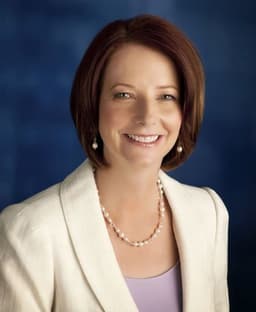
Julia Gillard
Politician · Modern
57.1Total
Basic Information
Born
1941
1961
Died
—
—
Era
Modern
Modern
Nationality
Singapore
Australia
Occupation
Politician
Politician
Civilization
Eastern
Western
Score Comparison
Military (10%)
49.6
50.0
Political (20%)
70.0
62.7
Influence (20%)
55.0
62.0
Legacy (20%)
54.0
47.5
Leadership (15%)
80.0
74.0
Strategy (15%)
49.2
42.3
TOTAL
59.6
57.1
Goh Chok Tong — Complete Timeline
1990 AD
Became Prime Minister of SingaporePolitical Action◆ Major
Goh Chok Tong succeeded Lee Kuan Yew as Prime Minister of Singapore, becoming the second prime minister. His leadership marked a transition from the founding generation to a new era, with a focus on consultative governance and social policies.
LeadershipSingaporeTransition
Impact: nationalconstructive
1997 AD
Introduced the 'Singapore 21' VisionPolitical Action◆ Major
Goh launched the 'Singapore 21' vision, a national consultation exercise to shape the country's future. The initiative aimed to foster a more inclusive and participatory society, addressing issues like aging, immigration, and national identity.
PolicySingaporeVision
Impact: nationalconstructive
Asian Financial Crisis ResponsePolitical Action◆ Major
Goh's government implemented swift economic measures to mitigate the impact of the Asian Financial Crisis. Singapore's strong fundamentals and prudent policies helped the country weather the crisis better than many neighbors, though it still faced a recession.
Economic CrisisSingaporePolicy
Impact: regionalconstructive
2004 AD
Stepped Down as Prime MinisterPolitical Action◆ Major
Goh Chok Tong stepped down as Prime Minister, handing over power to Lee Hsien Loong. His 14-year tenure was marked by economic growth, social stability, and a gradual opening of the political system, though critics noted limited democratic progress.
LeadershipSingaporeTransition
Impact: national
Julia Gillard — Complete Timeline
2010 AD
Became First Female Prime Minister of AustraliaPolitical Action
Gillard became prime minister after successfully challenging Kevin Rudd for the Labor leadership. She was the first woman to hold the office in Australian history, marking a significant milestone for gender equality in the nation's politics.
Gender EqualityLeadershipLabor Party
Impact: nationalprogressive
2011 AD
Introduced the Carbon PriceReform◆ Major
Gillard's government introduced a carbon pricing mechanism, requiring large emitters to pay for their greenhouse gas emissions. The policy aimed to reduce Australia's carbon footprint and transition to a low-carbon economy, but was highly controversial.
Climate ChangeCarbon TaxEnvironment
Impact: nationalconstructive
2012 AD
Delivered the Misogyny SpeechCultural◆ Major
Gillard delivered a powerful speech in parliament accusing opposition leader Tony Abbott of sexism and misogyny. The speech went viral globally and became a defining moment in discussions about gender and politics in Australia.
GenderSpeechMisogyny
Impact: globalprogressive
2013 AD
Lost Labor Leadership to Kevin RuddPolitical Action◆ Major
Gillard lost a leadership spill to Kevin Rudd, ending her tenure as prime minister. The defeat came after months of poor polling and internal party divisions, and marked the end of her brief but historic time in office.
Leadership SpillRuddLabor Party
Impact: nationaltragic
Expert Analysis
Origins
Goh Chok Tong was born on May 20, 1941, in Singapore, then a British colony. His father was a taxi driver, and his mother a housewife. He excelled in school, studying at the University of Singapore (now National University of Singapore) and later earning a Master's in Economics from Williams College in the US. He worked as a civil servant before entering politics in 1976 as a Member of Parliament for Marine Parade.
Julia Gillard was born on September 29, 1961, in Barry, Wales, but migrated to Australia with her family in 1966. Her father was a psychiatric nurse and her mother a social worker. She studied law at the University of Melbourne, becoming a lawyer specializing in industrial law. She entered politics in 1998 as a Member of the House of Representatives for Lalor, Victoria.
Rise to Power
Goh Chok Tong rose through the ranks of the People's Action Party (PAP), becoming Minister for Trade and Industry in 1981 and First Deputy Prime Minister in 1985. He was handpicked by Lee Kuan Yew as his successor and became Prime Minister on November 28, 1990. His rise was smooth, backed by the party machinery.
Julia Gillard's rise was more dramatic. She served as Deputy Prime Minister under Kevin Rudd from 2007. On June 24, 2010, she successfully challenged Rudd for the Labor Party leadership, becoming Prime Minister. Her rise was marked by internal party tension and a perception of disloyalty, which later haunted her.
Leadership & Governance
Goh Chok Tong's leadership style was consultative and pragmatic. He introduced 'Singapore 21' in 1999, a vision to build a more inclusive society through public consultation. He also implemented the 'Quality of Life' initiatives, including upgrading public housing and promoting arts. His governance emphasized economic stability, with Singapore growing at an average of 7.8% annually during his tenure. He maintained a low-key but effective approach, contrasting with Lee's authoritarian style.
Julia Gillard's leadership was marked by ambitious reform but plagued by political instability. She introduced a carbon price in 2012, requiring large emitters to pay for emissions, a significant environmental policy. However, the policy was controversial and contributed to her unpopularity. She also implemented the National Disability Insurance Scheme (NDIS) and increased school funding. Her governance was characterized by minority government, relying on independents and Greens, which constrained her agenda.
Triumph & Tragedy
Goh Chok Tong's triumphs include steering Singapore through the Asian Financial Crisis in 1997-98 with minimal impact, thanks to prudent fiscal policies and strong reserves. He also fostered a more consultative government, earning respect for his humility. His tragedy was the inability to fully escape Lee Kuan Yew's shadow; many viewed him as a caretaker. He scored 80.0 in leadership, reflecting his steady hand.
Julia Gillard's triumphs include becoming Australia's first female prime minister and delivering the 'Misogyny Speech' in 2012, which resonated globally and highlighted sexism in politics. Her tragedy was the loss to Kevin Rudd in a leadership spill in 2013, ending her tenure after just over three years. Her legacy score of 47.5 reflects the short-lived nature of her achievements.
Character & Destiny
Goh Chok Tong was known for his calm, consensus-building character. He often said, 'I am a listener, not a shouter.' This personality allowed him to maintain stability but also limited his distinctiveness. His destiny was to be a transitional figure, bridging Lee Kuan Yew's era and Lee Hsien Loong's.
Julia Gillard was determined and resilient, but her character was seen as calculating due to the way she became prime minister. Her destiny was shaped by the volatile nature of Australian politics, where leadership challenges are common. She scored 62.0 in influence, reflecting her symbolic importance as a female leader.
Legacy
Goh Chok Tong's legacy includes a more open and inclusive Singapore, with a strong economy and social stability. The 'Singapore 21' vision set the stage for subsequent national dialogues. His overall score of 59.6 reflects a solid but not transformative impact.
Julia Gillard's legacy is mixed. The carbon price was repealed in 2014, but the NDIS remains a lasting achievement. She is remembered as a trailblazer for women in politics. Her total score of 57.1 is slightly lower, due to her shorter term and political instability.
Conclusion
Goh Chok Tong had a greater impact than Julia Gillard, as evidenced by his higher total score (59.6 vs 57.1) and longer tenure (14 years vs 3 years). His steady leadership guided Singapore through crises and laid foundations for future growth. While Gillard's symbolic role as first female PM is significant, her policy achievements were often reversed or short-lived. Goh's pragmatic governance and legacy of stability outweigh Gillard's more turbulent term. Therefore, Goh Chok Tong is the more effective leader.
Rankings
🥇
Goh Chok TongLeader
Mil: 49.6Pol: 70.0Inf: 55.0
59.6
🥈
Julia Gillard
Mil: 50.0Pol: 62.7Inf: 62.0
57.1
+2.5 behind
How This Comparison Works
Algorithm
Each figure is scored on 6 dimensions (0—100 scale) based on structured historical data: Military (10%), Political (20%), Influence (20%), Legacy (20%), Leadership (15%), Strategy (15%). The weighted total produces the final ranking.
Data Sources
Scores are computed from structured sub-indicators in the database. Scale factors adjust for era (Ancient ×0.85, Modern ×1.0) and civilization size (Eastern ×1.05, Other ×0.80) to account for differences in population and military scale.
Maximum 3 Figures
Comparisons are limited to 2—3 figures to ensure readability and statistical meaningfulness.
Error Margins
±5 points per dimension — Sub-scores are derived from historical records with inherent uncertainty. Two figures within 5 points on a dimension should be considered roughly equivalent in that area.
Total Score Accuracy
±3 points overall — The weighted combination of 6 dimensions produces a total score with approximately ±3 points of uncertainty. Differences of less than 3 points are not statistically significant— the figures are effectively tied.
Known Limitations
- Historical records are incomplete and uneven across civilizations
- Figures from oral-tradition societies may be underrepresented
- Occupation labels can misclassify multi-role figures
- Scores measure capability and impact, not moral character
- Quantitative scoring is a comparison tool, not absolute truth
Capability Radar
Military (10%) — Battles & Warfare
Battles
33
27
Win Rate
33
32
Expansion
40
36
Political (20%) — Governance & Reform
Reform
70
65
Diplomacy
72
55
Economy
78
50
Influence (20%) — Cultural & Global Reach
Cultural
55
60
Global
60
50
Legacy (20%) — Historical Impact
Historical
60
55
Longevity
55
30
Leadership (15%) — Power & Stability
Tenure
75
40
Stability
80
45
Strategy (15%) — Tactics & Innovation
Strategy
42
39
Tactics
46
41
Reform
49
42
Similar Comparisons
Comments & Discussion
No comments yet. Be the first to share your thoughts!