Loading...
Golbery do Couto e Silva vs Julius Caesar
Julius Caesar leads by 34.0 pts · 2 figures compared
…
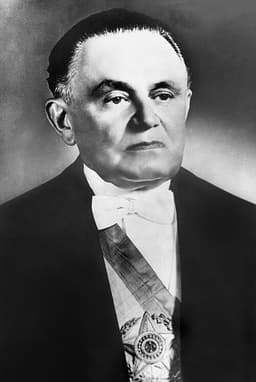
Golbery do Couto e Silva
General · Modern
48.8Total

Julius Caesar
General · Ancient
82.8Total
Basic Information
Born
1911
-100
Died
1987
-44
Era
Modern
Ancient
Nationality
Brazil
Roman Republic
Occupation
General
General
Civilization
Western
Western
Score Comparison
Military (10%)
10.2
88.0
Political (20%)
68.0
78.0
Influence (20%)
51.8
85.0
Legacy (20%)
46.7
82.0
Leadership (15%)
57.6
80.0
Strategy (15%)
43.3
85.0
TOTAL
48.8
82.8
Golbery do Couto e Silva — Complete Timeline
1950 AD
Developed the 'Geopolitics of Brazil' DoctrineCultural◆ Major
Golbery published 'Geopolitics of Brazil', a book that outlined his strategic vision for Brazil's national security and development. This work influenced the military's thinking on national security and justified the regime's policies.
GeopoliticsNational SecurityMilitary Doctrine
Impact: national
1964 AD
Founded the National Intelligence Service (SNI)Political Action◆ Major
Golbery do Couto e Silva was the main architect and first head of the National Intelligence Service (SNI) after the 1964 military coup. The SNI became the central intelligence and coordination agency of the military regime, monitoring political opponents.
IntelligenceMilitary RegimeRepression
Impact: nationaldestructive
1974 AD
Chief of Staff of the Presidency under GeiselPolitical Action◆ Major
Golbery served as Chief of Staff of the Presidency under President Ernesto Geisel. He was a key strategist of the 'distens
Political StrategyLiberalizationGeisel
Impact: national
1979 AD
Resigned as Chief of StaffPolitical Action◆ Major
Golbery resigned as Chief of Staff under President Jo
ResignationPolitical ConflictAbertura
Impact: national
Julius Caesar — Complete Timeline
58 BC
Gallic WarsWar◆ Major
Caesar, as proconsul of Gaul, launched a series of campaigns that conquered all of Gaul (modern France, Belgium, and parts of Switzerland). He fought numerous battles, including against the Helvetii, the Belgae, and the Gallic chieftain Vercingetorix. The wars brought immense wealth and a loyal army to Caesar.
Gallic WarsConquestRoman Expansion
Impact: regional
49 BC
Crossing the RubiconPolitical Action◆ Major
Caesar led Legio XIII across the Rubicon River into Italy, defying the Roman Senate's order to disband his army. This act triggered a civil war against Pompey and the Optimates, ultimately leading to Caesar's dictatorship and the end of the Roman Republic.
Roman Civil WarEnd of RepublicPower Struggle
Impact: global
48 BC
Battle of PharsalusWar◆ Major
Caesar's outnumbered army defeated the larger forces of Pompey the Great at Pharsalus in Greece. Caesar's tactical use of a reserve line to counter Pompey's cavalry charge proved decisive. Pompey fled to Egypt, where he was assassinated, leaving Caesar as the undisputed master of the Roman world.
Roman Civil WarBattleDecisive Victory
Impact: regional
44 BC
Appointment as Dictator for LifePolitical Action◆ Major
The Roman Senate appointed Caesar dictator perpetuo (dictator for life), granting him unprecedented personal power. This move concentrated military, legislative, and judicial authority in one person, effectively ending the Roman Republic's traditional system of checks and balances and alarming many senators.
DictatorshipEnd of RepublicPower Consolidation
Impact: regionaldestructive
Assassination on the Ides of MarchPolitical Action◆ Major
A group of Roman senators, led by Marcus Junius Brutus and Gaius Cassius Longinus, stabbed Caesar to death at a meeting of the Senate in the Theatre of Pompey. The assassination was intended to restore the Republic, but instead triggered another civil war that led to the rise of the Roman Empire.
AssassinationRoman PoliticsEnd of Republic
Impact: globaldestructive
Expert Analysis
golbery-do-couto-e-silva-vs-julius-caesar
### The General and the Strategist
On a spring morning in 44 BCE, the Roman Senate became a slaughterhouse. Sixty conspirators, men Caesar had pardoned, promoted, and trusted, pressed their daggers into his body. He fell at the base of a statue of his rival, Pompey, covering his face with his toga as the blood pooled. Nearly two thousand years later, in the dry heat of Brasília, another general sat in an air-conditioned office, drafting memos. Golbery do Couto e Silva never commanded a legion, never crossed a river with a sword in his hand. Yet he, too, changed the course of a nation. One built an empire with his own ambition; the other built a state with paper and ink. What drove these two men, both generals, to such different ends?
### Origins
Julius Caesar was born into a patrician family that had fallen on hard times. The Roman Republic was in its death throes—corrupt senators, landless veterans, and slave revolts tearing at its fabric. Caesar’s aunt married Gaius Marius, a populist general who had reformed the army and broken tradition by holding multiple consulships. From his youth, Caesar breathed the air of crisis and opportunity. He learned that the old rules were crumbling, and that a man of ambition could rewrite them.
Golbery do Couto e Silva was born in 1911 in Rio Branco, a small town in the Brazilian state of Acre, a region so remote it had only recently been annexed from Bolivia. Brazil was a sprawling, underpopulated nation struggling to modernize. Golbery grew up in a world of coffee barons, regional revolts, and a military that saw itself as the guardian of national unity. While Caesar studied rhetoric and Greek philosophy, Golbery studied maps. He entered the army young and became a specialist in geopolitics, the science of how geography shapes power. His era was defined not by civil wars of legions, but by the Cold War, a conflict fought with ideologies and intelligence networks.
### Rise to Power
Caesar’s path was one of audacious risk. He borrowed enormous sums to fund his political campaigns, won the priesthood of Jupiter, then lost it in the civil wars of Sulla. He fled Rome, served as a military tribune in Asia, and was captured by pirates. He joked that he would crucify them; they laughed. When they ransomed him, he raised a fleet, captured them, and did exactly as he promised. This was the pattern of his life: charm, debt, and ruthless follow-through. His true breakthrough came when he formed the First Triumvirate with Pompey and Crassus, buying their support with promises of land and commands. In 58 BCE, he secured the governorship of Gaul, a province that became his launching pad.
Golbery rose not through battlefield heroics but through ideas. In 1950, he published *Geopolitics of Brazil*, a book that argued Brazil’s vast interior was both a vulnerability and a destiny. He believed the nation needed to occupy its empty heartland, build roads, and secure its borders against communist infiltration. This doctrine caught the attention of military officers who staged the 1964 coup that overthrew the leftist president João Goulart. Golbery was the intellectual architect of the new regime. He founded the National Intelligence Service (SNI) that same year, creating a web of surveillance that would monitor politicians, journalists, and activists. His power was quiet, bureaucratic, and absolute.
### Leadership & Governance
Caesar governed through personal magnetism and military genius. In Gaul, he fought eight campaigns, besieged fortified cities, crossed the Rhine into Germany, and landed in Britain—all while writing his own commentaries to shape public opinion back home. He was merciless when necessary: he slaughtered the Usipetes and Tencteri tribes in cold blood, and sold 53,000 captives from Avaricum into slavery. Yet he also pardoned his enemies, promoted soldiers based on merit, and granted citizenship to Gauls. When he crossed the Rubicon River in 49 BCE, plunging the Republic into civil war, he did so not as a barbarian but as a Roman general defending his honor. His dictatorship brought reforms: the Julian calendar, land redistribution, and the restructuring of debt. He centralized power but kept the Senate’s forms, a careful balancing act that fooled no one.
Golbery’s governance was the opposite: invisible, systemic, and long-term. Under President Ernesto Geisel (1974–1979), Golbery served as Chief of Staff of the Presidency. He was the brains behind the *distensão*—a slow, controlled political opening that would eventually restore democracy. He believed the military should rule not forever, but long enough to purge the left and reshape institutions. He created laws, intelligence files, and economic policies that outlasted any single leader. While Caesar’s power was personal, Golbery’s was structural. He did not need to be loved; he needed the state to function. His strategy was one of patience—a stark contrast to Caesar’s impatience for glory.
### Triumph & Tragedy
Caesar’s greatest triumph was the conquest of Gaul, which added a vast, wealthy province to Rome and gave him an army loyal to him alone. His victory at the Battle of Alesia (52 BCE) against the Gallic chieftain Vercingetorix is still studied in military academies. But his tragedy was the Ides of March. He had become dictator for life, had begun to dress like a king, and had placed his image on coins. The Republic’s traditions were too strong; the conspirators struck, and Caesar fell, bleeding out at the feet of his enemies. His final act was not a battle but a betrayal.
Golbery’s triumph was the peaceful transition from military rule to democracy. He helped engineer the election of the opposition candidate Tancredo Neves in 1985, a moment that seemed to vindicate his strategy of controlled opening. But his tragedy was the cost of that stability. The SNI he founded became a monster, torturing and disappearing leftists during the “years of lead.” Golbery himself resigned in 1979 as Chief of Staff under President João Figueiredo, citing disagreements with hardliners who wanted to close the regime further. He left power not by assassination, but by exhaustion—a quiet exit that mirrored his quiet influence.
### Character & Destiny
Caesar was driven by an insatiable desire for recognition. He wept at the statue of Alexander the Great because he had achieved so little by the same age. He was charming, generous, and utterly ruthless. His personality demanded that he be first, and that conviction shaped his destiny: he could not stop reaching for more, and that reach killed him.
Golbery was the opposite. He was a thinker, a planner, a man who saw history as a series of systems. He once said, “Power is not taken; it is constructed.” Where Caesar burned, Golbery built. Where Caesar bled, Golbery calculated. One was a comet; the other was a foundation.
### Legacy
Caesar’s legacy is the Roman Empire. His adopted heir, Octavian, became Augustus, the first emperor. The title “Caesar” became synonymous with supreme ruler, surviving in the German *Kaiser* and the Russian *Tsar*. His writings are still read, his tactics still taught, his death still mourned. He transformed the Western world.
Golbery’s legacy is more ambiguous. He helped create the Brazilian intelligence state that lasted until the 1980s, and his geopolitical ideas influenced the building of Brasília and the Trans-Amazonian Highway. But his name is not widely known outside Brazil. He is remembered by scholars as a master of bureaucratic power, a man who shaped a nation from behind a desk. His legacy is not a crown, but a constitution.
### Conclusion
One general conquered Gaul; the other conquered a bureaucracy. One died on marble steps; the other died in bed, at 76, in 1987. Caesar’s story is a tragedy of ambition; Golbery’s is a drama of control. Both were products of their times: Caesar of a dying republic, Golbery of a rising nation. Perhaps the deepest difference is this: Caesar believed he was history’s instrument, while Golbery believed he could design it. In the end, history used them both, leaving one a legend and the other a footnote—which, for a strategist, might have been exactly the plan.
Rankings
🥇
Julius CaesarLeader
Mil: 88.0Pol: 78.0Inf: 85.0
82.8
🥈
Golbery do Couto e Silva
Mil: 10.2Pol: 68.0Inf: 51.8
48.8
+34.0 behind
How This Comparison Works
Algorithm
Each figure is scored on 6 dimensions (0—100 scale) based on structured historical data: Military (10%), Political (20%), Influence (20%), Legacy (20%), Leadership (15%), Strategy (15%). The weighted total produces the final ranking.
Data Sources
Scores are computed from structured sub-indicators in the database. Scale factors adjust for era (Ancient ×0.85, Modern ×1.0) and civilization size (Eastern ×1.05, Other ×0.80) to account for differences in population and military scale.
Maximum 3 Figures
Comparisons are limited to 2—3 figures to ensure readability and statistical meaningfulness.
Error Margins
±5 points per dimension — Sub-scores are derived from historical records with inherent uncertainty. Two figures within 5 points on a dimension should be considered roughly equivalent in that area.
Total Score Accuracy
±3 points overall — The weighted combination of 6 dimensions produces a total score with approximately ±3 points of uncertainty. Differences of less than 3 points are not statistically significant— the figures are effectively tied.
Known Limitations
- Historical records are incomplete and uneven across civilizations
- Figures from oral-tradition societies may be underrepresented
- Occupation labels can misclassify multi-role figures
- Scores measure capability and impact, not moral character
- Quantitative scoring is a comparison tool, not absolute truth
Capability Radar
Military (10%) — Battles & Warfare
Battles
5
95
Win Rate
5
92
Expansion
5
97
Political (20%) — Governance & Reform
Reform
60
90
Diplomacy
55
85
Economy
30
82
Influence (20%) — Cultural & Global Reach
Cultural
20
88
Global
20
94
Legacy (20%) — Historical Impact
Historical
40
95
Longevity
30
96
Leadership (15%) — Power & Stability
Tenure
40
75
Stability
20
60
Strategy (15%) — Tactics & Innovation
Strategy
40
94
Tactics
10
96
Reform
30
88
Similar Comparisons
Comments & Discussion
No comments yet. Be the first to share your thoughts!