Loading...
This comparison has not been analyzed yet.
One-time AI generation (~1 minute). Scores and timeline are already available below.
Gongmin of Goryeo vs Jayavarman II
Jayavarman II leads by 2.5 pts · 2 figures compared
…
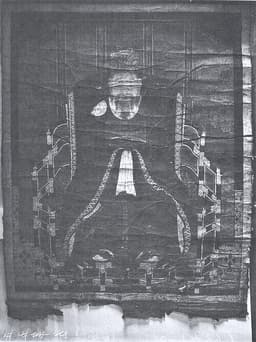
Gongmin of Goryeo
Emperor · Medieval
56.7Total
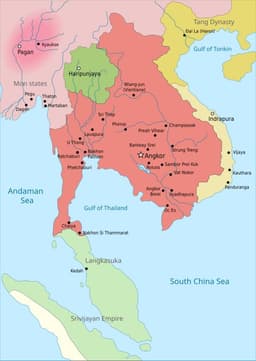
Jayavarman II
Emperor · Medieval
59.2Total
Basic Information
Born
1330
770
Died
1374
835
Era
Medieval
Medieval
Nationality
Korea
Cambodia
Occupation
Emperor
Emperor
Civilization
Eastern
Eastern
Score Comparison
Military (10%)
50.0
60.0
Political (20%)
72.0
72.0
Influence (20%)
55.7
68.0
Legacy (20%)
49.2
40.0
Leadership (15%)
72.0
66.0
Strategy (15%)
38.3
55.0
TOTAL
56.7
59.2
Gongmin of Goryeo — Complete Timeline
1356 AD
Expulsion of Yuan InfluencePolitical Action◆ Major
Gongmin purged pro-Yuan officials and abolished Mongol-style institutions, reasserting Goryeo's independence. He also reclaimed territories in the northwest, ending decades of Mongol domination.
IndependenceAnti-YuanPolitical Reform
Impact: nationalconstructive
1365 AD
Assassination of Queen NogukPolitical Action
Gongmin's Mongol wife, Queen Noguk, died during childbirth, though rumors of poisoning circulated. Her death deeply affected Gongmin, leading to his withdrawal from governance and increased reliance on Buddhist monks.
Personal TragedyRoyal FamilyPolitical Decline
Impact: nationaltragic
1366 AD
Reform of Land SystemReform◆ Major
Gongmin implemented land reforms to reduce the power of Mongol-aligned nobles and redistribute land to peasants and loyal officials. This weakened Yuan influence and strengthened the central government.
Land ReformCentralizationAnti-Yuan
Impact: nationalprogressive
1374 AD
Assassination by Hong RyunPolitical Action◆ Major
Gongmin was assassinated by his close attendant Hong Ryun and other conspirators, possibly due to his erratic behavior and neglect of state affairs. His death plunged Goryeo into political chaos.
AssassinationPolitical InstabilityEnd of Reign
Impact: nationaltragic
Jayavarman II — Complete Timeline
802 AD
Proclaimed Devaraja CultCultural
Jayavarman II performed a ritual on Mount Mahendraparvata proclaiming himself a 'devaraja' (god-king), establishing the cult of the divine ruler. This act unified the Khmer principalities and founded the Khmer Empire, legitimizing his rule through Hindu cosmology.
Khmer EmpireDevarajaFounding
Impact: regionalconstructive
Founded the Khmer EmpirePolitical Action
Jayavarman II unified the warring Khmer states under his rule, establishing the Khmer Empire with its capital at Mahendraparvata. This marked the beginning of a powerful empire that would dominate Southeast Asia for centuries.
Khmer EmpireUnificationFounding
Impact: regionalconstructive
Established Capital at MahendraparvataPolitical Action◆ Major
Jayavarman II established his capital at Mahendraparvata, a mountain temple complex in the Kulen Hills. This site became the ceremonial and political center of the early Khmer Empire.
Khmer EmpireCapitalMahendraparvata
Impact: regionalconstructive
This comparison has not been analyzed yet.
One-time AI generation (~1 minute). Scores and timeline are already available below.
Rankings
🥇
Jayavarman IILeader
Mil: 60.0Pol: 72.0Inf: 68.0
59.2
🥈
Gongmin of Goryeo
Mil: 50.0Pol: 72.0Inf: 55.7
56.7
+2.5 behind
How This Comparison Works
Algorithm
Each figure is scored on 6 dimensions (0—100 scale) based on structured historical data: Military (10%), Political (20%), Influence (20%), Legacy (20%), Leadership (15%), Strategy (15%). The weighted total produces the final ranking.
Data Sources
Scores are computed from structured sub-indicators in the database. Scale factors adjust for era (Ancient ×0.85, Modern ×1.0) and civilization size (Eastern ×1.05, Other ×0.80) to account for differences in population and military scale.
Maximum 3 Figures
Comparisons are limited to 2—3 figures to ensure readability and statistical meaningfulness.
Error Margins
±5 points per dimension — Sub-scores are derived from historical records with inherent uncertainty. Two figures within 5 points on a dimension should be considered roughly equivalent in that area.
Total Score Accuracy
±3 points overall — The weighted combination of 6 dimensions produces a total score with approximately ±3 points of uncertainty. Differences of less than 3 points are not statistically significant— the figures are effectively tied.
Known Limitations
- Historical records are incomplete and uneven across civilizations
- Figures from oral-tradition societies may be underrepresented
- Occupation labels can misclassify multi-role figures
- Scores measure capability and impact, not moral character
- Quantitative scoring is a comparison tool, not absolute truth
Capability Radar
Military (10%) — Battles & Warfare
Battles
20
45
Win Rate
25
60
Expansion
10
65
Political (20%) — Governance & Reform
Reform
70
80
Diplomacy
65
65
Economy
50
60
Influence (20%) — Cultural & Global Reach
Cultural
45
75
Global
30
60
Legacy (20%) — Historical Impact
Historical
55
80
Longevity
40
75
Leadership (15%) — Power & Stability
Tenure
60
70
Stability
40
65
Strategy (15%) — Tactics & Innovation
Strategy
15
60
Tactics
20
55
Reform
30
70
Similar Comparisons
Comments & Discussion
No comments yet. Be the first to share your thoughts!