Loading...
This comparison has not been analyzed yet.
One-time AI generation (~1 minute). Scores and timeline are already available below.
Gongsun Du vs Huhanye Chanyu
Huhanye Chanyu leads by 11.1 pts · 2 figures compared
…
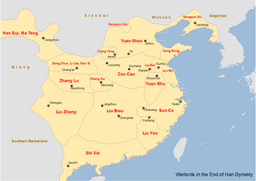
Gongsun Du
Emperor · Ancient
41.9Total

Huhanye Chanyu
Emperor · Ancient
53.0Total
Basic Information
Born
150
-100
Died
204
-31
Era
Ancient
Ancient
Nationality
China
Xiongnu
Occupation
Emperor
Emperor
Civilization
Eastern
Eastern
Score Comparison
Military (10%)
25.0
50.0
Political (20%)
33.6
68.0
Influence (20%)
46.3
54.1
Legacy (20%)
39.2
50.0
Leadership (15%)
58.8
53.2
Strategy (15%)
41.7
38.3
TOTAL
41.9
53.0
Gongsun Du — Complete Timeline
190 AD
Appointed Administrator of LiaodongPolitical Action◆ Major
Gongsun Du was appointed Administrator of Liaodong commandery by the Han court. He used his position to establish an independent regime, ruling the region with autonomy and expanding his territory.
AppointmentLiaodongHan Dynasty
Impact: regionalconstructive
Established an independent regime in LiaodongPolitical Action◆ Major
Gongsun Du ruled Liaodong as a de facto independent state, ignoring central Han authority. He maintained stability, promoted agriculture, and attracted refugees from the chaos of central China, creating a prosperous enclave.
IndependenceLiaodongGovernance
Impact: regionalconstructive
200 AD
Conquered parts of KoreaWar◆ Major
Gongsun Du launched military campaigns into the Korean peninsula, conquering territories including the Lelang and Xuantu commanderies. This expansion extended Chinese influence into Korea and established Liaodong as a regional power.
ConquestKoreaExpansion
Impact: regional
204 AD
Died and was succeeded by his son Gongsun KangPolitical Action◆ Major
Gongsun Du died in 204, and his son Gongsun Kang inherited his position. The Gongsun family continued to rule Liaodong independently for decades, maintaining autonomy from the Three Kingdoms.
SuccessionLiaodongGongsun Clan
Impact: regional
Huhanye Chanyu — Complete Timeline
53 BC
Submission to Han ChinaPolitical Action
Huhanye Chanyu traveled to the Han court and formally submitted to Emperor Xuan, becoming a vassal of the Han Empire. This act ended decades of conflict between the Xiongnu and Han, establishing a tributary relationship that brought peace to the northern frontier.
XiongnuHan DynastyDiplomacyVassalage
Impact: regionalconstructive
51 BC
Visit to Chang'anPolitical Action
Huhanye made a formal visit to the Han capital Chang'an, where he paid homage to Emperor Xuan. This visit was a public demonstration of his submission and was met with lavish gifts and honors by the Han court, reinforcing the new vassal relationship.
XiongnuHan DynastyDiplomacyTribute
Impact: regionalconstructive
36 BC
Defeat of Zhizhi ChanyuWar◆ Major
Huhanye's rival, Zhizhi Chanyu, was defeated and killed by Han forces in the Battle of Zhizhi. This victory eliminated Huhanye's main competitor for Xiongnu leadership, solidifying his position as the sole chanyu under Han suzerainty.
XiongnuHan DynastyCivil WarBattle
Impact: regional
33 BC
Marriage alliance with HanPolitical Action◆ Major
Huhanye married Wang Zhaojun, a Han court lady sent by Emperor Yuan as a diplomatic bride. This marriage cemented the peace between the Xiongnu and Han, symbolizing the tributary relationship and ensuring stability on the frontier for decades.
XiongnuHan DynastyDiplomacyMarriage Alliance
Impact: regionalconstructive
This comparison has not been analyzed yet.
One-time AI generation (~1 minute). Scores and timeline are already available below.
Rankings
🥇
Huhanye ChanyuLeader
Mil: 50.0Pol: 68.0Inf: 54.1
53.0
🥈
Gongsun Du
Mil: 25.0Pol: 33.6Inf: 46.3
41.9
+11.1 behind
How This Comparison Works
Algorithm
Each figure is scored on 6 dimensions (0—100 scale) based on structured historical data: Military (10%), Political (20%), Influence (20%), Legacy (20%), Leadership (15%), Strategy (15%). The weighted total produces the final ranking.
Data Sources
Scores are computed from structured sub-indicators in the database. Scale factors adjust for era (Ancient ×0.85, Modern ×1.0) and civilization size (Eastern ×1.05, Other ×0.80) to account for differences in population and military scale.
Maximum 3 Figures
Comparisons are limited to 2—3 figures to ensure readability and statistical meaningfulness.
Error Margins
±5 points per dimension — Sub-scores are derived from historical records with inherent uncertainty. Two figures within 5 points on a dimension should be considered roughly equivalent in that area.
Total Score Accuracy
±3 points overall — The weighted combination of 6 dimensions produces a total score with approximately ±3 points of uncertainty. Differences of less than 3 points are not statistically significant— the figures are effectively tied.
Known Limitations
- Historical records are incomplete and uneven across civilizations
- Figures from oral-tradition societies may be underrepresented
- Occupation labels can misclassify multi-role figures
- Scores measure capability and impact, not moral character
- Quantitative scoring is a comparison tool, not absolute truth
Capability Radar
Military (10%) — Battles & Warfare
Battles
30
20
Win Rate
35
15
Expansion
40
10
Political (20%) — Governance & Reform
Reform
25
40
Diplomacy
30
85
Economy
30
35
Influence (20%) — Cultural & Global Reach
Cultural
20
40
Global
15
45
Legacy (20%) — Historical Impact
Historical
25
60
Longevity
20
50
Leadership (15%) — Power & Stability
Tenure
40
50
Stability
35
70
Strategy (15%) — Tactics & Innovation
Strategy
30
30
Tactics
25
25
Reform
20
10
Similar Comparisons
Comments & Discussion
No comments yet. Be the first to share your thoughts!