Loading...
Gongsun Du vs Napoleon Bonaparte
Napoleon Bonaparte leads by 29.0 pts · 2 figures compared
…
Gongsun Du
Emperor · Ancient
41.9Total

Napoleon Bonaparte
General · Modern
70.9Total
Basic Information
Born
150
1769
Died
204
1821
Era
Ancient
Modern
Nationality
China
France
Occupation
Emperor
General
Civilization
Eastern
Western
Score Comparison
Military (10%)
25.0
94.0
Political (20%)
33.6
72.0
Influence (20%)
46.3
40.0
Legacy (20%)
39.2
80.0
Leadership (15%)
58.8
78.0
Strategy (15%)
41.7
90.0
TOTAL
41.9
70.9
Gongsun Du — Complete Timeline
190 AD
Appointed Administrator of LiaodongPolitical Action◆ Major
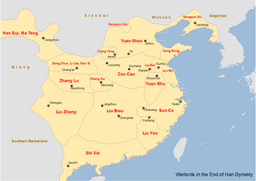
Gongsun Du was appointed Administrator of Liaodong commandery by the Han court. He used his position to establish an independent regime, ruling the region with autonomy and expanding his territory.
AppointmentLiaodongHan Dynasty
Impact: regionalconstructive
Established an independent regime in LiaodongPolitical Action◆ Major
Gongsun Du ruled Liaodong as a de facto independent state, ignoring central Han authority. He maintained stability, promoted agriculture, and attracted refugees from the chaos of central China, creating a prosperous enclave.
IndependenceLiaodongGovernance
Impact: regionalconstructive
200 AD
Conquered parts of KoreaWar◆ Major
Gongsun Du launched military campaigns into the Korean peninsula, conquering territories including the Lelang and Xuantu commanderies. This expansion extended Chinese influence into Korea and established Liaodong as a regional power.
ConquestKoreaExpansion
Impact: regional
204 AD
Died and was succeeded by his son Gongsun KangPolitical Action◆ Major
Gongsun Du died in 204, and his son Gongsun Kang inherited his position. The Gongsun family continued to rule Liaodong independently for decades, maintaining autonomy from the Three Kingdoms.
SuccessionLiaodongGongsun Clan
Impact: regional
Napoleon Bonaparte — Complete Timeline
1799 AD
Coup of 18 BrumaireOther◆ Major
Napoleon Bonaparte, with support from his brother Lucien and key political figures, overthrew the Directory in a bloodless coup. He established the Consulate with himself as First Consul, effectively becoming the ruler of France. This event ended the French Revolution's most unstable period.
French RevolutionCoupRise to Power
Impact: regional
1804 AD
Promulgation of the Napoleonic CodeOther◆ Major
Napoleon enacted the Civil Code of the French, known as the Napoleonic Code, a comprehensive set of laws that replaced the fragmented feudal legal systems. The code established legal equality, protected property rights, and secularized law. It became the basis for legal systems in many European and world countries.
Legal ReformNapoleonic CodeCivil Law
Impact: globalconstructive
1805 AD
Battle of AusterlitzWar◆ Major
Napoleon's Grande Arm
Napoleonic WarsBattleDecisive Victory
Impact: global
1812 AD
Invasion of RussiaWar◆ Major
Napoleon led the Grande Arm
Napoleonic WarsInvasionDisaster
Impact: globaldestructive
1815 AD
Battle of WaterlooWar◆ Major
Napoleon's French army was defeated by the combined forces of the Duke of Wellington's Anglo-Allied army and Gebhard Leberecht von Bl
Napoleonic WarsBattleFinal Defeat
Impact: globaldestructive
Expert Analysis
gongsun-du-vs-napoleon-bonaparte
# The Emperor and the Warlord: Two Visions of Power at the Edge of History
In the winter of 1812, Napoleon Bonaparte watched his Grand Army dissolve into the snows of Russia, a catastrophe that would ultimately seal his fate. Eighteen centuries earlier and half a world away, another ruler—Gongsun Du—sat in his fortress in Liaodong, content that his small kingdom would survive his death. One man tried to conquer the world and lost everything; the other carved out a quiet corner of it and passed it to his son. Why such different outcomes? The answer lies not in the size of their ambitions, but in the worlds that shaped them.
Origins
Napoleon was born in 1769 on the island of Corsica, a place that had only recently become French. His family was minor nobility, poor enough to feel the sting of hunger but proud enough to resent their betters. The French Revolution shattered the old order just as he came of age, creating a world where a brilliant artillery officer could rise faster than any nobleman. Napoleon was a creature of that revolution—restless, meritocratic, and hungry for glory.
Gongsun Du, born in 150, entered a very different world. The Eastern Han dynasty was crumbling, but it still commanded a thousand years of tradition. His family were minor officials in the northern frontier, men who understood that power came not from revolution but from patience. Where Napoleon saw an old world to be destroyed, Gongsun Du saw a decaying system to be quietly exploited.
Rise to Power
Napoleon’s ascent was a series of lightning strikes. At age 24, he drove the British out of Toulon and became a brigadier general. By 30, he had conquered Italy and Egypt. His political genius matched his military brilliance: in 1799, he seized power in a coup and crowned himself emperor five years later. Every step was audacious, theatrical, and irreversible.
Gongsun Du’s rise was the opposite. In 190, the Han court appointed him Administrator of Liaodong—a remote commandery on the edge of the known world. He accepted the post quietly, then simply stopped obeying orders. He did not declare independence; he simply acted as if he were already independent. While central China tore itself apart in civil war, Gongsun Du built roads, collected taxes, and maintained order. He conquered parts of Korea in 200, not to satisfy ambition but to secure his borders. His power grew not through dramatic victories but through the slow accumulation of control.
Leadership & Governance
Napoleon governed like he fought: with overwhelming force and relentless energy. He reformed French law through the Napoleonic Code, centralized the bureaucracy, and built schools and roads. But he also demanded total loyalty and crushed any opposition. His political wisdom—scored at 75.0—was real but limited by his own ambition. He could not stop conquering because he could not imagine stopping.
Gongsun Du, with a political score of 54.5, was less visionary but more practical. He knew his limitations. Liaodong was a small, poor region; he could not challenge the great warlords of central China. So he did not try. Instead, he focused on stability and prosperity, winning the loyalty of local elites and the gratitude of common people. His military score of 31.1 reflects modest achievements, but his strategy score of 69.4 shows a man who understood that survival mattered more than glory.
Triumph & Tragedy
Napoleon’s triumph was the Battle of Austerlitz in 1805, where he destroyed the combined armies of Russia and Austria. His tragedy was the invasion of Russia in 1812, which destroyed his army and his legend. He died in 1821, exiled on a remote island, still dreaming of a comeback that would never come.
Gongsun Du’s triumph was quieter: he died peacefully in 204, having ruled for 14 years, and his son Gongsun Kang succeeded him without bloodshed. His tragedy was that his dynasty would last only three generations before being crushed by the rising Wei kingdom. But he never knew that. He died knowing his family was safe and his work unfinished.
Character & Destiny
Napoleon’s character was fire—brilliant, consuming, and ultimately self-destructive. His military genius (scored 93.0) and leadership (80.0) were real, but his inability to stop was his fatal flaw. He once said, “Power is my mistress,” and like many lovers, it destroyed him.
Gongsun Du’s character was water—patient, adaptive, and enduring. He understood that the greatest victory is the one that never needs to be fought. His leadership score of 73.9 reflects a man who ruled by consent, not terror. He did not need to conquer the world because he had already found his place in it.
Legacy
Napoleon’s legacy is everywhere: the Napoleonic Code, modern warfare, the very idea of the self-made emperor. His influence score of 82.0 and legacy of 78.0 reflect a man who changed the world, for better and worse. He is remembered as a titan.
Gongsun Du’s legacy is almost invisible. His influence score of 66.7 and legacy of 56.0 place him among history’s footnotes. He is remembered only by specialists, a minor warlord in a distant corner of a collapsing dynasty. But his story survives because it tells us something Napoleon’s cannot: that there is wisdom in knowing when not to reach for the stars.
Conclusion
Napoleon Bonaparte and Gongsun Du represent two poles of human ambition. One tried to remake the world in his image and burned out in a blaze of glory. The other accepted the world as it was and built something small but lasting. Both were products of their time—Napoleon of a revolutionary age that rewarded audacity, Gongsun Du of a declining empire that rewarded patience. In the end, we remember Napoleon because he dared everything and lost everything. But perhaps we should also remember Gongsun Du, who dared nothing and kept everything that mattered.
Rankings
🥇
Napoleon BonaparteLeader
Mil: 94.0Pol: 72.0Inf: 40.0
70.9
🥈
Gongsun Du
Mil: 25.0Pol: 33.6Inf: 46.3
41.9
+29.0 behind
How This Comparison Works
Algorithm
Each figure is scored on 6 dimensions (0—100 scale) based on structured historical data: Military (10%), Political (20%), Influence (20%), Legacy (20%), Leadership (15%), Strategy (15%). The weighted total produces the final ranking.
Data Sources
Scores are computed from structured sub-indicators in the database. Scale factors adjust for era (Ancient ×0.85, Modern ×1.0) and civilization size (Eastern ×1.05, Other ×0.80) to account for differences in population and military scale.
Maximum 3 Figures
Comparisons are limited to 2—3 figures to ensure readability and statistical meaningfulness.
Error Margins
±5 points per dimension — Sub-scores are derived from historical records with inherent uncertainty. Two figures within 5 points on a dimension should be considered roughly equivalent in that area.
Total Score Accuracy
±3 points overall — The weighted combination of 6 dimensions produces a total score with approximately ±3 points of uncertainty. Differences of less than 3 points are not statistically significant— the figures are effectively tied.
Known Limitations
- Historical records are incomplete and uneven across civilizations
- Figures from oral-tradition societies may be underrepresented
- Occupation labels can misclassify multi-role figures
- Scores measure capability and impact, not moral character
- Quantitative scoring is a comparison tool, not absolute truth
Capability Radar
Military (10%) — Battles & Warfare
Battles
30
95
Win Rate
35
90
Expansion
40
95
Political (20%) — Governance & Reform
Reform
25
95
Diplomacy
30
80
Economy
30
85
Influence (20%) — Cultural & Global Reach
Cultural
20
85
Global
15
90
Legacy (20%) — Historical Impact
Historical
25
95
Longevity
20
90
Leadership (15%) — Power & Stability
Tenure
40
85
Stability
35
70
Strategy (15%) — Tactics & Innovation
Strategy
30
95
Tactics
25
98
Reform
20
92
Similar Comparisons
Comments & Discussion
GallicGhost6/17/2026
The real difference here is Napoleon played on hard mode while Gongsun Du optimized for easy mode. Bonaparte had to take on the combined might of Europe's great powers—Austria, Prussia, Russia, Britain—all at once. Gongsun Du just had to wait for the Han dynasty to fall apart, seize a remote peninsula, and reject every invitation to fight. Napoleon's Waterloo was Gongsun Du's Tuesday. It's not that the Corsican was less capable; he just never learned that sometimes the smartest conquest is the o
辽东隐士6/17/2026
拿破仑这个科西嘉疯子根本不懂东亚政治的生存智慧。公孙度在辽东经营二十年,懂得向曹操示弱、与高句丽周旋、对辽东豪族施恩——这叫“存人失地,人地皆存”。拿破仑偏要“存地失人”,1812年带着六十万人冲进俄国,回来只剩两万。你以为这是军事失误?这是文化基因的差异:欧洲人总要证明自己,中国人只要活着就好。比战绩不如比谁活得久,公孙度寿终正寝,拿破仑呢?圣赫勒拿岛等着他呢。
断代史官6/17/2026
你们都在谈什么格局、成败,却忽略了一个根本问题:二人所乘的时代浪潮完全不同。拿破仑面对的法国大革命是千年未有之变局,旧神已死,新神未立,他才有机会从炮兵尉官爬到皇帝。公孙度呢?汉末豪强林立,门阀权力根深蒂固,一个辽东太守的儿子想更进一步?做梦。不是公孙度不想称帝,是他很清楚——袁绍、曹操、刘备哪个不是世家大族?寒门?在东汉末年就是送死。时势造英雄,不是英雄造时势。
Historian8426/17/2026
I'm not buying the "two visions of power" framing. This analysis cherry-picks a cozy endgame for Gongsun Du while ignoring that Napoleon's legacy reshaped Europe for a century. Forty-three million people died in the Napoleonic Wars—that's undeniably awful—but Gongsun Du's "quiet corner" lasted what, thirty years before the Cao family absorbed it? If "success" means maintaining a minor fiefdom in a collapsing empire versus transforming Western law, governance, and warfare, then we're redefining s