Loading...
Goodwill Zwelithini vs Louis XVIII
Goodwill Zwelithini leads by 0.0 pts · 2 figures compared
…

Goodwill Zwelithini
Emperor · Modern
49.5Total
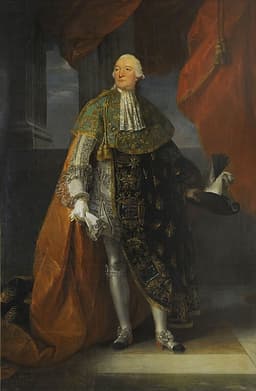
Louis XVIII
Emperor · Modern
49.5Total
Basic Information
Born
1948
1755
Died
—
1824
Era
Modern
Modern
Nationality
Zulu Kingdom
France
Occupation
Emperor
Emperor
Civilization
Other
Western
Score Comparison
Military (10%)
23.6
17.2
Political (20%)
43.7
68.0
Influence (20%)
58.0
51.0
Legacy (20%)
50.0
43.3
Leadership (15%)
72.0
55.3
Strategy (15%)
28.0
56.8
TOTAL
49.5
49.5
Goodwill Zwelithini — Complete Timeline
1971 AD
Coronation as Zulu KingPolitical Action◆ Major
Goodwill Zwelithini was crowned as the eighth Zulu monarch, succeeding his father Cyprian Bhekuzulu. His coronation was recognized by the South African government, making him the ceremonial leader of the Zulu nation.
Zulu KingdomCoronationSouth Africa
Impact: regionalconstructive
1994 AD
Establishment of Ingonyama TrustPolitical Action◆ Major
Goodwill Zwelithini signed the Ingonyama Trust Act, placing 2.8 million hectares of Zulu land under a trust administered by the king. This preserved communal land ownership for the Zulu people in post-apartheid South Africa.
Land RightsPost-ApartheidZulu Kingdom
Impact: regionalconstructive
2000 AD
Support for HIV/AIDS AwarenessCultural
Goodwill Zwelithini initially opposed condom use and made controversial statements about HIV/AIDS. Later, he reversed his position and supported awareness campaigns, though his early stance was criticized as harmful.
HIV/AIDSPublic HealthZulu Kingdom
Impact: regional
2015 AD
Controversial Statements on XenophobiaCultural
Goodwill Zwelithini made public statements blaming foreign nationals for crime and economic problems in South Africa, which were widely criticized as inciting xenophobic violence. The remarks sparked debate about the king's political role.
XenophobiaControversySouth Africa
Impact: nationaldestructive
Louis XVIII — Complete Timeline
1814 AD
Charter of 1814Reform◆ Major
Louis XVIII granted the Charter of 1814, a constitution that preserved many Napoleonic legal and administrative reforms while restoring the monarchy. It established a hereditary monarchy, a bicameral legislature, and guaranteed civil liberties such as freedom of religion and press.
ConstitutionReformBourbon Restoration
Impact: nationalconstructive
Restoration of the Bourbon MonarchyPolitical Action
After Napoleon's abdication, Louis XVIII was installed as King of France by the Allied powers. He issued the Charter of 1814, establishing a constitutional monarchy with a bicameral parliament. This restored the Bourbon dynasty but under limited sovereignty.
RestorationConstitutional MonarchyBourbon
Impact: nationalconstructive
1815 AD
Hundred Days and Second RestorationPolitical Action◆ Major
Napoleon escaped from Elba and returned to power, forcing Louis XVIII to flee to Ghent. After Napoleon's defeat at Waterloo, Louis returned to the throne in July 1815. The second restoration was marked by the White Terror, a wave of reprisals against Bonapartists and republicans.
Napoleonic WarsRestorationWhite Terror
Impact: nationaldestructive
Congress of ViennaPolitical Action◆ Major
Louis XVIII's representatives participated in the Congress of Vienna, which redrew European borders after Napoleon's defeat. France was reduced to its 1792 borders and required to pay an indemnity. The congress aimed to restore the balance of power and legitimize the Bourbon monarchy.
DiplomacyPost-NapoleonicBalance of Power
Impact: global
1824 AD
Death of Louis XVIIIOther
Louis XVIII died on September 16, 1824, after a reign of nearly ten years. He was succeeded by his brother, Charles X, whose ultra-royalist policies would lead to the July Revolution of 1830. Louis XVIII's reign was marked by relative stability and constitutional governance.
SuccessionMonarchyEnd of Reign
Impact: national
Expert Analysis
Origins
Goodwill Zwelithini was born on July 14, 1948, in Nongoma, South Africa, to King Cyprian Bhekuzulu and Queen Thomozile Jezangani Ndwandwe. He was educated at the Roman Catholic school in Nongoma and later attended the University of Zululand. His upbringing was steeped in Zulu tradition, and he was groomed for kingship from a young age. Louis XVIII was born on November 17, 1755, at the Palace of Versailles, France, to the Dauphin Louis and Marie Josèphe of Saxony. As the grandson of King Louis XV, he was educated in the classical tradition and held the title Count of Provence. His early life was marked by the opulence of the French court, but also by the growing revolutionary sentiments that would later challenge the monarchy.
Rise to Power
Goodwill Zwelithini was crowned on December 3, 1971, following the death of his father in 1968. His coronation was recognized by the South African government under apartheid, which sought to use traditional leaders as intermediaries. He initially faced challenges from rival factions within the Zulu royal family and had to navigate the complex political landscape of apartheid-era South Africa. Louis XVIII's rise was far more tumultuous. After the French Revolution, he fled France in 1791 and spent years in exile. He was declared king by royalists after the death of his nephew, Louis XVII, in 1795. However, he only assumed the throne in 1814 after Napoleon's first abdication, following the Allied occupation of Paris. His restoration was a direct result of the Congress of Vienna and the defeat of Napoleon.
Leadership & Governance
Goodwill Zwelithini's leadership was defined by his role as a constitutional monarch within South Africa's democracy. His signature achievement was the Ingonyama Trust Act of 1994, which placed 2.8 million hectares of Zulu land under a trust administered by the king. This preserved communal land ownership and provided economic benefits to the Zulu people. However, his governance style was often criticized as autocratic, and he made controversial statements, such as blaming foreign nationals for crime in 2015, which sparked xenophobic violence. Louis XVIII governed as a constitutional monarch after issuing the Charter of 1814, which guaranteed civil liberties, preserved the Napoleonic Code, and established a bicameral parliament. He aimed to reconcile royalists with revolutionaries, but his reign was marked by tension between ultra-royalists and liberals. His political score of 68.0 reflects his ability to navigate post-Napoleonic France, while Zwelithini's political score of 43.7 indicates his limited influence in a democratic context.
Triumph & Tragedy
Goodwill Zwelithini's greatest success was the Ingonyama Trust, which secured Zulu land rights and generated revenue for traditional communities. His longevity as king for 50 years also provided stability. However, his initial opposition to condom use during the HIV/AIDS crisis contributed to stigma, and his xenophobic remarks tarnished his legacy. Louis XVIII's triumph was the peaceful restoration of the Bourbon monarchy and the Charter of 1814, which established a constitutional framework. His tragedy was the Hundred Days in 1815, when Napoleon escaped Elba and forced him to flee to Ghent. Though he returned after Waterloo, his reign was overshadowed by the fear of revolution. Louis XVIII died in 1824, leaving a fragile monarchy that collapsed under his successor.
Character & Destiny
Goodwill Zwelithini was a traditionalist who valued Zulu culture and autonomy. His decisions were shaped by his desire to preserve his people's heritage, but his stubbornness and occasional insensitivity led to controversies. His leadership score of 72.0 indicates a strong presence, but his strategy score of 28.0 reflects a lack of long-term political planning. Louis XVIII was a pragmatic and cautious ruler, aware of the need for compromise. His political score of 68.0 and strategy score of 56.8 show a more calculated approach. However, his inability to fully unite royalists and liberals doomed his dynasty. Both men were shaped by their times: Zwelithini by the transition from apartheid to democracy, and Louis XVIII by the aftermath of revolution.
Legacy
Goodwill Zwelithini's legacy is tied to the Ingonyama Trust, which remains a powerful institution for Zulu land rights. He is remembered as a cultural icon who maintained Zulu traditions in a modern state. His influence score of 58.0 reflects his impact on South African politics, but his legacy score of 50.0 is mixed due to controversies. Louis XVIII's legacy is the Charter of 1814, which influenced later French constitutions. He is seen as a transitional figure who restored monarchy but failed to secure its future. His legacy score of 43.3 is lower, as his reign is often overshadowed by Napoleon's. In terms of total score, both have 49.5, but their impacts are in different spheres: Zwelithini on local land rights and culture, Louis XVIII on French constitutional development.
Conclusion
While both men scored equally in the overall metric, Louis XVIII had a greater impact on European history by restoring constitutional monarchy in France after the Napoleonic Wars. His Charter of 1814 set a precedent for balancing royal authority with democratic reforms. Goodwill Zwelithini, though significant for the Zulu nation, operated within a limited scope and his influence is largely regional. Thus, Louis XVIII's political and strategic contributions outweigh Zwelithini's cultural and land-rights achievements. The clear position is that Louis XVIII had a more profound and lasting effect on the course of history.
Rankings
🥇
Goodwill ZwelithiniLeader
Mil: 23.6Pol: 43.7Inf: 58.0
49.5
🥈
Louis XVIII
Mil: 17.2Pol: 68.0Inf: 51.0
49.5
How This Comparison Works
Algorithm
Each figure is scored on 6 dimensions (0—100 scale) based on structured historical data: Military (10%), Political (20%), Influence (20%), Legacy (20%), Leadership (15%), Strategy (15%). The weighted total produces the final ranking.
Data Sources
Scores are computed from structured sub-indicators in the database. Scale factors adjust for era (Ancient ×0.85, Modern ×1.0) and civilization size (Eastern ×1.05, Other ×0.80) to account for differences in population and military scale.
Maximum 3 Figures
Comparisons are limited to 2—3 figures to ensure readability and statistical meaningfulness.
Error Margins
±5 points per dimension — Sub-scores are derived from historical records with inherent uncertainty. Two figures within 5 points on a dimension should be considered roughly equivalent in that area.
Total Score Accuracy
±3 points overall — The weighted combination of 6 dimensions produces a total score with approximately ±3 points of uncertainty. Differences of less than 3 points are not statistically significant— the figures are effectively tied.
Known Limitations
- Historical records are incomplete and uneven across civilizations
- Figures from oral-tradition societies may be underrepresented
- Occupation labels can misclassify multi-role figures
- Scores measure capability and impact, not moral character
- Quantitative scoring is a comparison tool, not absolute truth
Capability Radar
Military (10%) — Battles & Warfare
Battles
8
34
Win Rate
11
42
Expansion
13
42
Political (20%) — Governance & Reform
Reform
30
30
Diplomacy
40
55
Economy
20
40
Influence (20%) — Cultural & Global Reach
Cultural
60
20
Global
30
25
Legacy (20%) — Historical Impact
Historical
50
40
Longevity
60
30
Leadership (15%) — Power & Stability
Tenure
70
15
Stability
50
35
Strategy (15%) — Tactics & Innovation
Strategy
15
48
Tactics
17
49
Reform
21
50
Similar Comparisons
Comments & Discussion
No comments yet. Be the first to share your thoughts!