Loading...
Louis XVIII vs Napoleon Bonaparte
Napoleon Bonaparte leads by 21.4 pts · 2 figures compared
…
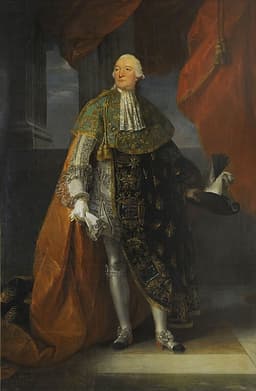
Louis XVIII
Emperor · Modern
49.5Total

Napoleon Bonaparte
General · Modern
70.9Total
Basic Information
Born
1755
1769
Died
1824
1821
Era
Modern
Modern
Nationality
France
France
Occupation
Emperor
General
Civilization
Western
Western
Score Comparison
Military (10%)
17.2
94.0
Political (20%)
68.0
72.0
Influence (20%)
51.0
40.0
Legacy (20%)
43.3
80.0
Leadership (15%)
55.3
78.0
Strategy (15%)
56.8
90.0
TOTAL
49.5
70.9
Louis XVIII — Complete Timeline
1814 AD
Charter of 1814Reform◆ Major
Louis XVIII granted the Charter of 1814, a constitution that preserved many Napoleonic legal and administrative reforms while restoring the monarchy. It established a hereditary monarchy, a bicameral legislature, and guaranteed civil liberties such as freedom of religion and press.
ConstitutionReformBourbon Restoration
Impact: nationalconstructive
Restoration of the Bourbon MonarchyPolitical Action
After Napoleon's abdication, Louis XVIII was installed as King of France by the Allied powers. He issued the Charter of 1814, establishing a constitutional monarchy with a bicameral parliament. This restored the Bourbon dynasty but under limited sovereignty.
RestorationConstitutional MonarchyBourbon
Impact: nationalconstructive
1815 AD
Hundred Days and Second RestorationPolitical Action◆ Major
Napoleon escaped from Elba and returned to power, forcing Louis XVIII to flee to Ghent. After Napoleon's defeat at Waterloo, Louis returned to the throne in July 1815. The second restoration was marked by the White Terror, a wave of reprisals against Bonapartists and republicans.
Napoleonic WarsRestorationWhite Terror
Impact: nationaldestructive
Congress of ViennaPolitical Action◆ Major
Louis XVIII's representatives participated in the Congress of Vienna, which redrew European borders after Napoleon's defeat. France was reduced to its 1792 borders and required to pay an indemnity. The congress aimed to restore the balance of power and legitimize the Bourbon monarchy.
DiplomacyPost-NapoleonicBalance of Power
Impact: global
1824 AD
Death of Louis XVIIIOther
Louis XVIII died on September 16, 1824, after a reign of nearly ten years. He was succeeded by his brother, Charles X, whose ultra-royalist policies would lead to the July Revolution of 1830. Louis XVIII's reign was marked by relative stability and constitutional governance.
SuccessionMonarchyEnd of Reign
Impact: national
Napoleon Bonaparte — Complete Timeline
1799 AD
Coup of 18 BrumaireOther◆ Major
Napoleon Bonaparte, with support from his brother Lucien and key political figures, overthrew the Directory in a bloodless coup. He established the Consulate with himself as First Consul, effectively becoming the ruler of France. This event ended the French Revolution's most unstable period.
French RevolutionCoupRise to Power
Impact: regional
1804 AD
Promulgation of the Napoleonic CodeOther◆ Major
Napoleon enacted the Civil Code of the French, known as the Napoleonic Code, a comprehensive set of laws that replaced the fragmented feudal legal systems. The code established legal equality, protected property rights, and secularized law. It became the basis for legal systems in many European and world countries.
Legal ReformNapoleonic CodeCivil Law
Impact: globalconstructive
1805 AD
Battle of AusterlitzWar◆ Major
Napoleon's Grande Arm
Napoleonic WarsBattleDecisive Victory
Impact: global
1812 AD
Invasion of RussiaWar◆ Major
Napoleon led the Grande Arm
Napoleonic WarsInvasionDisaster
Impact: globaldestructive
1815 AD
Battle of WaterlooWar◆ Major
Napoleon's French army was defeated by the combined forces of the Duke of Wellington's Anglo-Allied army and Gebhard Leberecht von Bl
Napoleonic WarsBattleFinal Defeat
Impact: globaldestructive
Expert Analysis
louis-xviii-vs-napoleon-bonaparte
# The Emperor and the King: Napoleon Bonaparte and Louis XVIII
In the spring of 1814, a strange reversal unfolded on the roads of France. One man, Napoleon Bonaparte, the master of Europe for a decade, rode toward exile on the island of Elba, his Grande Armée shattered and his empire crumbling. Another man, Louis XVIII, a stout, gout-ridden Bourbon prince who had spent twenty-three years in exile, trundled back toward Paris in a carriage, his legs too weak to walk, his throne restored not by his own sword but by the bayonets of foreign armies. The contrast between these two figures—the Corsican artilleryman who had crowned himself emperor and the aging brother of a guillotined king—embodies the central drama of early nineteenth-century France: the struggle between revolutionary ambition and royalist tradition.
Origins
Napoleon Bonaparte was born in 1769 on the island of Corsica, a year after France purchased the island from Genoa. His family was minor nobility, but their status was precarious, and young Napoleon spoke Italian before he learned French. He entered a military academy at Brienne, where classmates mocked his accent and his poverty. The French Revolution of 1789 shattered the old order, and Napoleon—brilliant, ruthless, and hungry—seized every opportunity. He was a child of the Revolution, shaped by its chaos and its promise that talent, not birth, could command destiny.
Louis XVIII, born sixteen years earlier in 1755 at the Palace of Versailles, was the grandson of King Louis XV. His world was one of absolute monarchy, powdered wigs, and divine right. When the Revolution erupted, he fled France in 1791, joining the tide of émigrés who plotted the monarchy's return. For more than two decades, he wandered Europe—from Turin to Verona, from Russia to England—a king without a kingdom, sustained by the allowances of foreign courts and the brittle hope that the Revolution would eventually exhaust itself. Where Napoleon was forged in fire, Louis was worn smooth by waiting.
Rise to Power
Napoleon's ascent was meteoric. At twenty-four, he captured Toulon from British forces, earning promotion to brigadier general. At twenty-six, he married Joséphine de Beauharnais and took command of the Army of Italy. In 1796 and 1797, he defeated Austrian armies in a series of lightning campaigns, forcing peace on his own terms. By 1799, he had returned from a disastrous Egyptian expedition, overthrown the Directory in a coup d'état, and installed himself as First Consul. In 1804, he crowned himself Emperor of the French in Notre-Dame Cathedral, taking the crown from Pope Pius VII's hands and placing it on his own head. The message was unmistakable: he owed his throne to no one but himself.
Louis XVIII's path was slower and more passive. His nephew, the young Louis XVII, died in a Revolutionary prison in 1795, leaving Louis as the Bourbon claimant. But the throne remained empty for nearly two decades. He watched from afar as Napoleon conquered Europe, biding his time, writing letters, and waiting. When Napoleon's invasion of Russia in 1812 ended in catastrophe, and when the Sixth Coalition closed in on Paris in 1814, Louis's moment finally arrived. The Allied powers—Britain, Austria, Russia, Prussia—decided that a restored Bourbon monarchy offered the best hope for stability in France. On April 6, 1814, Napoleon abdicated. On May 3, Louis entered Paris, a king restored by foreign consent.
Leadership and Governance
Napoleon governed with energy and ambition. He reformed French law with the Napoleonic Code, which enshrined equality before the law, protected property rights, and secularized the state. He centralized administration, created the Bank of France, and established a system of lycées—state-run secondary schools—to train a new elite. His military genius was unmatched: he won sixty battles, from Austerlitz in 1805 to Wagram in 1809, by combining speed, deception, and devastating artillery. But his political wisdom was flawed. He appointed his brothers and marshals as kings of conquered territories, treating Europe as a personal fiefdom. He invaded Spain in 1808 and Russia in 1812, two catastrophic blunders that bled his empire dry.
Louis XVIII governed with caution and compromise. He understood that France could not simply return to 1788. In 1814, he issued the Charter of 1814, a constitution that preserved many Napoleonic reforms: the legal code, the administrative system, religious toleration, and the sale of church lands. He accepted a bicameral parliament, with a Chamber of Peers appointed by the king and a Chamber of Deputies elected by a narrow franchise. He was, in essence, a constitutional monarch—not by choice, perhaps, but by necessity. His leadership was not flashy, but it was steady. He navigated the return of ultra-royalists who wanted revenge against Revolutionaries and Bonapartists, and he resisted Allied demands for harsh reparations.
Triumph and Tragedy
Napoleon's greatest triumph was Austerlitz, where he crushed a combined Russian and Austrian army in December 1805, a victory so complete that it dissolved the Third Coalition and left him master of Central Europe. His greatest tragedy was the invasion of Russia in 1812. He marched with over 600,000 men; fewer than 100,000 returned. The disaster shattered his aura of invincibility and emboldened his enemies. After his exile to Elba, he escaped in March 1815, rallied the army, and ruled for the Hundred Days. But at Waterloo on June 18, 1815, he met his final defeat. The Duke of Wellington and Gebhard von Blücher crushed him, and he was exiled to Saint Helena, a remote island in the South Atlantic, where he died in 1821.
Louis XVIII's triumph was the Restoration itself—the peaceful return of a monarchy that many had thought impossible. His tragedy was the Hundred Days. In March 1815, Napoleon landed in southern France, and within weeks, the army that Louis had trusted deserted to the emperor. Louis fled to Ghent, a bitter humiliation. But Napoleon's defeat at Waterloo brought Louis back for a second restoration. He returned more cautious, more willing to compromise. He died in 1824, still king, but the tensions between royalists and revolutionaries remained unresolved, and his brother Charles X would be overthrown in 1830.
Character and Destiny
Napoleon was driven by an insatiable will. "Impossible," he once said, "is a word found only in the dictionary of fools." He worked eighteen-hour days, dictated multiple letters simultaneously, and demanded total loyalty. His arrogance was his undoing—he could not stop, could not compromise, could not share power. He once told Goethe, "Politics is destiny," but in truth, his own character was his destiny. His refusal to accept limits drove him from Corsica to Moscow, and from Moscow to Saint Helena.
Louis XVIII was the opposite: patient, pragmatic, and aware of his limitations. He knew he was not a warrior. He knew his throne depended on foreign support and domestic compromise. He once said, "I have learned to wait." Where Napoleon burned, Louis endured. His character was suited to reconstruction, not conquest. He gave France stability after twenty-five years of war, but he could not give it glory. That was Napoleon's domain.
Legacy
Napoleon's legacy is immense. The Napoleonic Code influenced legal systems across Europe and the Americas. He redrew the map of Europe, dismantled the Holy Roman Empire, and spread the ideals of nationalism and meritocracy. His military campaigns are still studied in war colleges. He is remembered as both a liberator and a tyrant—a man who brought reform at the point of a sword.
Louis XVIII's legacy is quieter but real. He proved that constitutional monarchy could work in post-revolutionary France, at least for a time. His Charter of 1814 set a precedent for limited government. He preserved the Napoleonic reforms that had modernized France, ensuring that the Revolution's gains were not entirely lost. He is remembered, if at all, as the king who returned—a transitional figure between empire and revolution.
Conclusion
Napoleon and Louis XVIII represent two faces of France: the revolutionary who remade the world and the royalist who restored order. Napoleon conquered Europe by force; Louis rebuilt France by compromise. Napoleon died alone on a rock in the Atlantic; Louis died in his bed at the Tuileries Palace. The one is remembered with awe, the other with indifference. But perhaps the deeper truth is that France needed both: Napoleon to shatter the old world, and Louis to piece together the fragments. In their opposition, they made each other possible.
Rankings
🥇
Napoleon BonaparteLeader
Mil: 94.0Pol: 72.0Inf: 40.0
70.9
🥈
Louis XVIII
Mil: 17.2Pol: 68.0Inf: 51.0
49.5
+21.4 behind
How This Comparison Works
Algorithm
Each figure is scored on 6 dimensions (0—100 scale) based on structured historical data: Military (10%), Political (20%), Influence (20%), Legacy (20%), Leadership (15%), Strategy (15%). The weighted total produces the final ranking.
Data Sources
Scores are computed from structured sub-indicators in the database. Scale factors adjust for era (Ancient ×0.85, Modern ×1.0) and civilization size (Eastern ×1.05, Other ×0.80) to account for differences in population and military scale.
Maximum 3 Figures
Comparisons are limited to 2—3 figures to ensure readability and statistical meaningfulness.
Error Margins
±5 points per dimension — Sub-scores are derived from historical records with inherent uncertainty. Two figures within 5 points on a dimension should be considered roughly equivalent in that area.
Total Score Accuracy
±3 points overall — The weighted combination of 6 dimensions produces a total score with approximately ±3 points of uncertainty. Differences of less than 3 points are not statistically significant— the figures are effectively tied.
Known Limitations
- Historical records are incomplete and uneven across civilizations
- Figures from oral-tradition societies may be underrepresented
- Occupation labels can misclassify multi-role figures
- Scores measure capability and impact, not moral character
- Quantitative scoring is a comparison tool, not absolute truth
Capability Radar
Military (10%) — Battles & Warfare
Battles
34
95
Win Rate
42
90
Expansion
42
95
Political (20%) — Governance & Reform
Reform
30
95
Diplomacy
55
80
Economy
40
85
Influence (20%) — Cultural & Global Reach
Cultural
20
85
Global
25
90
Legacy (20%) — Historical Impact
Historical
40
95
Longevity
30
90
Leadership (15%) — Power & Stability
Tenure
15
85
Stability
35
70
Strategy (15%) — Tactics & Innovation
Strategy
48
95
Tactics
49
98
Reform
50
92
Similar Comparisons
Comments & Discussion
ELBA'S GHOST6/17/2026
Comparing Napoleon to Louis XVIII is like comparing a thunderstorm to a puddle. Louis didn't restore France—he was wheeled in by foreign armies after 23 years of exile, his gouty legs symbolic of a monarchy that couldn't stand on its own. Napoleon built a meritocratic empire from Corsican obscurity, reformed law with the Code, and made France matter. Louis XVIII's real achievement? Dying in bed.
帝国孤狼6/17/2026
拿拿破仑跟路易十八比,简直侮辱了前者。路易十八就是个外国刺刀抬回来的吉祥物,连走路都费劲,而拿破仑出自贫寒却一手建立了帝国。数据摆在那:拿破仑在位时法国领土扩张到历史极盛,路易十八上台后直接退回1792年的疆界。一个让欧洲颤抖,一个靠列强施舍,这对比本身就是笑话。