Loading...
Goran Persson vs Julius Caesar
Julius Caesar leads by 31.1 pts · 2 figures compared
…
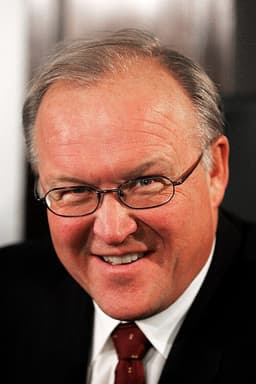
Goran Persson
Politician · Modern
51.7Total

Julius Caesar
General · Ancient
82.8Total
Basic Information
Born
1949
-100
Died
—
-44
Era
Modern
Ancient
Nationality
Sweden
Roman Republic
Occupation
Politician
General
Civilization
Western
Western
Score Comparison
Military (10%)
47.5
88.0
Political (20%)
62.7
78.0
Influence (20%)
50.2
85.0
Legacy (20%)
40.0
82.0
Leadership (15%)
72.0
80.0
Strategy (15%)
42.0
85.0
TOTAL
51.7
82.8
Goran Persson — Complete Timeline
1996 AD
Appointment as Prime Minister of SwedenPolitical Action◆ Major
Goran Persson succeeded Ingvar Carlsson as Prime Minister of Sweden, leading a Social Democratic government. He served for a decade, overseeing a period of economic recovery and welfare state reforms.
Swedish PoliticsSocial Democratic Party
Impact: nationalconstructive
2001 AD
Swedish EU PresidencyPolitical Action◆ Major
Sweden held the rotating presidency of the Council of the European Union under Persson's leadership. The presidency focused on EU enlargement, environmental policy, and the Lisbon Strategy for economic reform.
European UnionSwedish Presidency
Impact: regionalconstructive
2006 AD
Defeat in the 2006 Swedish General ElectionPolitical Action◆ Major
Persson's Social Democratic Party lost the general election to the centre-right Alliance for Sweden coalition led by Fredrik Reinfeldt. This ended 12 years of Social Democratic rule and Persson's tenure as Prime Minister.
Swedish PoliticsElection Defeat
Impact: national
Julius Caesar — Complete Timeline
58 BC
Gallic WarsWar◆ Major
Caesar, as proconsul of Gaul, launched a series of campaigns that conquered all of Gaul (modern France, Belgium, and parts of Switzerland). He fought numerous battles, including against the Helvetii, the Belgae, and the Gallic chieftain Vercingetorix. The wars brought immense wealth and a loyal army to Caesar.
Gallic WarsConquestRoman Expansion
Impact: regional
49 BC
Crossing the RubiconPolitical Action◆ Major
Caesar led Legio XIII across the Rubicon River into Italy, defying the Roman Senate's order to disband his army. This act triggered a civil war against Pompey and the Optimates, ultimately leading to Caesar's dictatorship and the end of the Roman Republic.
Roman Civil WarEnd of RepublicPower Struggle
Impact: global
48 BC
Battle of PharsalusWar◆ Major
Caesar's outnumbered army defeated the larger forces of Pompey the Great at Pharsalus in Greece. Caesar's tactical use of a reserve line to counter Pompey's cavalry charge proved decisive. Pompey fled to Egypt, where he was assassinated, leaving Caesar as the undisputed master of the Roman world.
Roman Civil WarBattleDecisive Victory
Impact: regional
44 BC
Appointment as Dictator for LifePolitical Action◆ Major
The Roman Senate appointed Caesar dictator perpetuo (dictator for life), granting him unprecedented personal power. This move concentrated military, legislative, and judicial authority in one person, effectively ending the Roman Republic's traditional system of checks and balances and alarming many senators.
DictatorshipEnd of RepublicPower Consolidation
Impact: regionaldestructive
Assassination on the Ides of MarchPolitical Action◆ Major
A group of Roman senators, led by Marcus Junius Brutus and Gaius Cassius Longinus, stabbed Caesar to death at a meeting of the Senate in the Theatre of Pompey. The assassination was intended to restore the Republic, but instead triggered another civil war that led to the rise of the Roman Empire.
AssassinationRoman PoliticsEnd of Republic
Impact: globaldestructive
Expert Analysis
goran-persson-vs-julius-caesar
### The Eternal and the Ephemeral: Caesar and Persson on the Stage of History
History has a peculiar way of measuring men. It can crown a general who crossed a tiny river in Italy with an eternal legacy, while a prime minister who steered a modern welfare state through a decade of change fades into a footnote. The chasm between Julius Caesar and Göran Persson is not merely one of two thousand years; it is a gap between the thunder of legions and the quiet hum of bureaucracy. One man reshaped the Western world with a sword; the other managed a consensus-driven society with a calculator. To understand why their fates diverge so sharply is to understand the very engine of historical greatness.
### Origins: The Forge of Ambition and the Comfort of Order
Julius Caesar was born into a patrician family in 100 BCE, at a time when the Roman Republic was tearing itself apart. His youth was marked by civil war, proscriptions, and the murder of his uncle by marriage, Gaius Marius. The world he inherited was violent, unstable, and ripe for a man of ruthless ambition. He learned early that in Rome, prestige came from military glory, and that the old senatorial aristocracy was too corrupt and weak to hold the Republic together. His era demanded a strongman, and Caesar was forged in that crucible.
Göran Persson, born in 1949 in a small Swedish town, entered a world of post-war stability. Sweden was a model of social democracy, a nation that had not seen war in generations. His father was a factory worker, his mother a cleaner. The political system was orderly, with clear rules and a strong welfare state. Persson did not need to conquer; he needed to manage. The very concept of a "crossing of the Rubicon" would have been absurd in a country where political change came through ballots, not bayonets. His era shaped him into a consensus-builder, not a revolutionary.
### Rise to Power: The Path of the Sword and the Path of the Party
Caesar’s ascent was a masterclass in audacity. He borrowed fortunes to buy popularity, served as a military tribune, and then as governor of Further Spain. His true springboard was the governorship of Gaul, where from 58 to 50 BCE he led a series of campaigns that conquered a vast territory and built a loyal army. This army was his power base. When the Senate ordered him to disband it, he chose instead to cross the Rubicon River in 49 BCE, igniting a civil war. It was a gamble that rested on personal loyalty, military force, and the willingness to break the law.
Persson’s rise was the opposite. He climbed the ranks of the Social Democratic Party, serving as a local councillor, then as Minister for Schools, and later as Minister for Finance. His key event was not a military coup but an appointment: when Ingvar Carlsson resigned in 1996, Persson succeeded him as Prime Minister. He had no army, no private fortune, and no ability to defy the constitution. His power was delegated, temporary, and always subject to the next election. Where Caesar seized power by force, Persson received it through procedure.
### Leadership & Governance: The Dictator and the Manager
As dictator, Caesar centralized Rome’s administration, reformed the calendar, granted citizenship to provincials, and initiated massive public works. His military genius was undeniable—he defeated Pompey’s superior forces at Pharsalus in 48 BCE through tactical brilliance—but his political wisdom was flawed. He alienated the senatorial elite by accumulating too much power, accepting the title "dictator for life," and treating the Republic as his personal property. His reforms were visionary, but his style was autocratic.
Persson governed a stable democracy. He oversaw Sweden’s adoption of the euro as a non-member currency, managed economic reforms that reduced public debt, and led the country’s presidency of the European Union in 2001. His military score of 37.5 is a reflection of a nation that had no use for a warrior-prime minister. His leadership score of 85.0, however, suggests a man who could navigate parliamentary coalitions and maintain party unity. He was a manager of a complex system, not a conqueror. His strategy score of 35.3 reveals that his success was built on incrementalism, not grand gambles.
### Triumph & Tragedy: The Ides of March and the 2006 Election
Caesar’s greatest triumph was his conquest of Gaul, which brought immense wealth and territory to Rome. His most devastating failure was his assassination on the Ides of March, 44 BCE, at the hands of senators he had pardoned. It was a personal and political tragedy that plunged Rome into another civil war. His death proved that even absolute power could not guarantee survival in a system he had broken.
Persson’s triumph was his ten-year tenure as Prime Minister, a period of relative stability and economic recovery. His tragedy was the 2006 Swedish general election, where his Social Democrats lost to the centre-right Alliance for Sweden. He was not killed; he simply lost a vote. The contrast is stark: Caesar’s fall was violent and dramatic, Persson’s was peaceful and procedural. The difference reflects the nature of their worlds—one where power was life and death, the other where it was a temporary office.
### Character & Destiny: The Gambler and the Steward
Caesar was a gambler. He risked everything on the Rubicon, on the battlefield, and on the loyalty of his troops. His personality—arrogant, charismatic, and ruthless—shaped his decisions. He believed in his own destiny, and that belief drove him to destroy the Republic and build an empire. His character was his fate.
Persson was a steward. He managed decline, maintained stability, and avoided risk. His personality—pragmatic, cautious, and consensus-seeking—shaped a different kind of destiny. He did not seek to reshape the world; he sought to keep it running. His character led him to a quiet retirement, not a bloody end.
### Legacy: The Colossus and the Footnote
Caesar’s legacy is immense. His name became synonymous with imperial power: "Caesar" became "Kaiser" and "Tsar." His reforms laid the foundation for the Roman Empire, which lasted for centuries. His influence score of 85.0 and legacy score of 82.0 reflect a man who changed the course of Western civilization.
Persson’s legacy is modest. He is remembered, if at all, as a competent Social Democratic leader in a small, peaceful country. His legacy score of 54.7 suggests that even in Sweden, his impact is debated. He did not conquer, nor did he create a new order. He simply governed.
### Conclusion: The Measure of Greatness
Why does Caesar dwarf Persson? Because the stage determines the drama. Caesar lived in an era of collapse and opportunity, where a single man could reshape the world through violence and will. Persson lived in an era of stability and rules, where power was diffuse and change was incremental. The difference is not one of personal ability—Persson’s leadership score of 85.0 rivals Caesar’s 82.0—but of context. Caesar’s world demanded a titan; Persson’s world required a technician. In the end, history remembers the men who break the rules, not the ones who keep them. And that, perhaps, is the most sobering truth of all.
Rankings
🥇
Julius CaesarLeader
Mil: 88.0Pol: 78.0Inf: 85.0
82.8
🥈
Goran Persson
Mil: 47.5Pol: 62.7Inf: 50.2
51.7
+31.1 behind
How This Comparison Works
Algorithm
Each figure is scored on 6 dimensions (0—100 scale) based on structured historical data: Military (10%), Political (20%), Influence (20%), Legacy (20%), Leadership (15%), Strategy (15%). The weighted total produces the final ranking.
Data Sources
Scores are computed from structured sub-indicators in the database. Scale factors adjust for era (Ancient ×0.85, Modern ×1.0) and civilization size (Eastern ×1.05, Other ×0.80) to account for differences in population and military scale.
Maximum 3 Figures
Comparisons are limited to 2—3 figures to ensure readability and statistical meaningfulness.
Error Margins
±5 points per dimension — Sub-scores are derived from historical records with inherent uncertainty. Two figures within 5 points on a dimension should be considered roughly equivalent in that area.
Total Score Accuracy
±3 points overall — The weighted combination of 6 dimensions produces a total score with approximately ±3 points of uncertainty. Differences of less than 3 points are not statistically significant— the figures are effectively tied.
Known Limitations
- Historical records are incomplete and uneven across civilizations
- Figures from oral-tradition societies may be underrepresented
- Occupation labels can misclassify multi-role figures
- Scores measure capability and impact, not moral character
- Quantitative scoring is a comparison tool, not absolute truth
Capability Radar
Military (10%) — Battles & Warfare
Battles
29
95
Win Rate
34
92
Expansion
38
97
Political (20%) — Governance & Reform
Reform
55
90
Diplomacy
60
85
Economy
55
82
Influence (20%) — Cultural & Global Reach
Cultural
20
88
Global
20
94
Legacy (20%) — Historical Impact
Historical
25
95
Longevity
15
96
Leadership (15%) — Power & Stability
Tenure
65
75
Stability
60
60
Strategy (15%) — Tactics & Innovation
Strategy
37
94
Tactics
40
96
Reform
45
88
Similar Comparisons
Comments & Discussion
No comments yet. Be the first to share your thoughts!