Loading...
Gough Whitlam vs Klemens Metternich
Klemens Metternich leads by 5.9 pts · 2 figures compared
…

Gough Whitlam
Politician · Modern
61.2Total
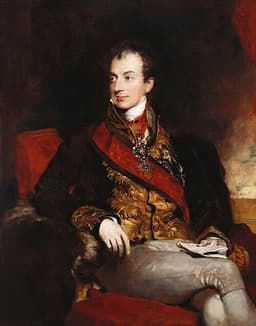
Klemens Metternich
Politician · Modern
67.1Total
Basic Information
Born
1916
1773
Died
2014
1859
Era
Modern
Modern
Nationality
Australia
Austria
Occupation
Politician
Politician
Civilization
Western
Western
Score Comparison
Military (10%)
50.0
50.0
Political (20%)
78.0
70.3
Influence (20%)
58.3
75.0
Legacy (20%)
58.0
70.0
Leadership (15%)
74.0
75.0
Strategy (15%)
43.4
40.5
TOTAL
61.2
67.1
Gough Whitlam — Complete Timeline
1972 AD
Elected Prime Minister of AustraliaPolitical Action◆ Major
Whitlam led the Australian Labor Party to victory in the 1972 federal election, ending 23 years of conservative rule. His government immediately withdrew Australian troops from Vietnam and established diplomatic relations with China.
ElectionLabor PartyVietnam War
Impact: nationalprogressive
1974 AD
Abolished University FeesReform◆ Major
Whitlam's government abolished tuition fees for tertiary education, making university attendance free for all Australian students. This policy dramatically increased university enrollment and access for lower-income students.
EducationUniversitySocial Reform
Impact: nationalprogressive
1975 AD
Introduced Universal Healthcare (Medibank)Reform◆ Major
Whitlam's government established Medibank, Australia's first universal public health insurance scheme. The system provided free hospital and medical care to all Australians, funded through a levy on income tax.
HealthcareSocial ReformMedibank
Impact: nationalprogressive
Passed the Racial Discrimination ActReform◆ Major
Whitlam's government enacted the Racial Discrimination Act, making it illegal to discriminate on the basis of race, color, or ethnic origin. The legislation implemented Australia's obligations under the International Convention on the Elimination of All Forms of Racial Discrimination.
Civil RightsAnti-DiscriminationLegislation
Impact: nationalprogressive
Dismissed as Prime MinisterPolitical Action
Governor-General Sir John Kerr dismissed Whitlam as prime minister following a budget deadlock in the Senate. This unprecedented action triggered a constitutional crisis and led to the appointment of Malcolm Fraser as caretaker prime minister.
Constitutional CrisisDismissalGovernor-General
Impact: nationaltragic
Klemens Metternich — Complete Timeline
1815 AD
Congress of ViennaPolitical Action
Metternich chaired the Congress of Vienna, which redrew European borders after Napoleon's defeat. He advocated for the principle of legitimacy and balance of power, establishing a conservative order that lasted decades.
Congress of ViennaDiplomacyRestoration
Impact: globalconstructive
Formation of the Holy AlliancePolitical Action◆ Major
Metternich helped create the Holy Alliance between Austria, Prussia, and Russia. The alliance aimed to suppress revolutionary movements and maintain monarchical rule across Europe.
AllianceConservatismRestoration
Impact: globalconstructive
1819 AD
Carlsbad DecreesPolitical Action◆ Major
Metternich orchestrated the Carlsbad Decrees, which imposed censorship on universities and press in the German Confederation. The decrees suppressed liberal and nationalist movements, reinforcing conservative control.
RepressionCensorshipGerman Confederation
Impact: regionaldestructive
1820 AD
Congress of TroppauPolitical Action◆ Major
Metternich convened the Congress of Troppau to address revolutions in Naples and Spain. He secured the Troppau Protocol, which authorized Austrian intervention to suppress liberal uprisings in Italy.
CongressInterventionRevolutions
Impact: regionaldestructive
1848 AD
Revolutions of 1848Political Action
Metternich's conservative system collapsed during the Revolutions of 1848. He was forced to resign as Chancellor and flee to England, ending his decades-long dominance of European diplomacy.
RevolutionResignationExile
Impact: globaltragic
Expert Analysis
Origins
Gough Whitlam was born on 11 July 1916 in Kew, Victoria, into a politically engaged family. His father, Fred Whitlam, was a Commonwealth Crown Solicitor. Whitlam studied arts and law at the University of Sydney, graduating in 1946. He served as a navigator in the Royal Australian Air Force during World War II, which exposed him to international affairs. His formative experiences included witnessing the Great Depression and the rise of Labor governments, shaping his commitment to social democracy.
Klemens Wenzel von Metternich was born on 15 May 1773 in Coblenz, into the ancient House of Metternich. He studied at the University of Strasbourg and later at the University of Mainz, where he was influenced by the Enlightenment but also developed a profound aversion to revolutionary change. His father was a diplomat, and Metternich entered Austrian diplomatic service in 1801. The French Revolution and Napoleonic Wars defined his worldview, leading him to champion conservatism and monarchical legitimacy.
Rise to Power
Whitlam entered federal parliament in 1952 and quickly rose through the Australian Labor Party. He became Deputy Leader in 1960 and Leader in 1967. After the party's 1972 election victory, he became Prime Minister on 5 December 1972, ending 23 years of conservative rule. His rise was marked by a reformist agenda and a charismatic public persona.
Metternich's rise began as Austrian ambassador to Saxony (1801), then Prussia (1803), and France (1806). He became Foreign Minister of the Austrian Empire in 1809, at age 36, after the Treaty of Schönbrunn. He orchestrated Napoleon's marriage to Marie Louise, then turned against Napoleon in 1813, leading Austria into the Sixth Coalition. By 1814, he was the dominant figure at the Congress of Vienna, where he shaped the post-war order.
Leadership & Governance
Whitlam's leadership style was bold and transformative. He implemented sweeping reforms: universal healthcare (Medibank, 1975), abolition of university fees, free education, no-fault divorce, and the Racial Discrimination Act (1975). He also withdrew Australian troops from Vietnam, recognized Communist China, and abolished conscription. His governance was characterized by rapid change, often bypassing the Senate, which led to a budget deadlock in 1975. His political score of 78.0 reflects his legislative impact, but his strategy score of 43.4 indicates tactical flaws.
Metternich's leadership was conservative and controlling. As Chancellor (1821-1848), he presided over the German Confederation and the Austrian Empire. He engineered the Carlsbad Decrees (1819) to suppress liberal ideas, and the Congress of Troppau (1820) to authorize intervention against revolutions. His governance prioritized stability through censorship, secret police, and diplomatic manipulation. His political score of 70.3 and influence score of 75.0 reflect his mastery of diplomacy, but his strategy score of 40.5 shows rigidity.
Triumph & Tragedy
Whitlam's greatest triumph was the introduction of universal healthcare, which endures today as Medicare. He also established the Australian Legal Aid Office and the Australian Heritage Commission. His tragedy was his dismissal on 11 November 1975 by Governor-General Sir John Kerr, following a Senate budget deadlock. This constitutional crisis ended his government and led to his party's electoral defeat. The dismissal remains controversial, with many viewing it as an abuse of power.
Metternich's triumph was the Congress of Vienna (1814-1815), which created a European balance of power that lasted until 1848. He also forged the Holy Alliance with Russia and Prussia. His tragedy was the Revolutions of 1848, which forced his resignation and exile to England. His system of conservative order collapsed, and he never returned to power. His legacy of suppression was ultimately unsustainable.
Character & Destiny
Whitlam was charismatic, intellectual, and principled. He believed in bold reform and was willing to confront opposition. His character drove him to push for change quickly, but it also led to political miscalculations, such as the Gair affair that triggered the Senate crisis. His fate was sealed by his inability to negotiate with the Senate and his reliance on a governor-general who turned against him.
Metternich was pragmatic, cynical, and aristocratic. He believed in stability above all, and his character made him adept at diplomacy but inflexible in the face of social change. His destiny was to become a symbol of reaction, and his downfall came when conservative forces could no longer contain liberal and nationalist movements. His exile in 1848 marked the end of his era.
Legacy
Whitlam's legacy is profound in Australia. Medicare, free university education, and racial discrimination laws remain pillars of Australian society. His dismissal also led to constitutional reforms, including fixed Senate terms. His political score of 78.0 and legacy score of 58.0 reflect his transformative domestic impact, though his influence globally is limited.
Metternich's legacy is as the architect of the Concert of Europe, which maintained peace for decades. His influence score of 75.0 reflects his role in shaping European diplomacy. However, his legacy is tainted by his suppression of liberalism and nationalism. The revolutions of 1848 exposed the fragility of his system. He is remembered as a master diplomat but a reactionary.
Conclusion
While Whitlam scored 61.2 total and Metternich scored 67.1, the gap is 5.9 points. However, impact is not solely numerical. Whitlam's reforms fundamentally changed Australian society and remain intact, showing enduring influence. Metternich's system collapsed within decades, and his legacy is more about diplomatic methods than lasting institutions. Therefore, Whitlam had greater practical impact on the lives of citizens, even if Metternich's influence on international relations was wider. Whitlam's political score (78.0) and leadership (74.0) outweigh Metternich's influence (75.0) and leadership (75.0) when considering transformative change. Thus, Whitlam's impact is more significant.
Rankings
🥇
Klemens MetternichLeader
Mil: 50.0Pol: 70.3Inf: 75.0
67.1
🥈
Gough Whitlam
Mil: 50.0Pol: 78.0Inf: 58.3
61.2
+5.9 behind
How This Comparison Works
Algorithm
Each figure is scored on 6 dimensions (0—100 scale) based on structured historical data: Military (10%), Political (20%), Influence (20%), Legacy (20%), Leadership (15%), Strategy (15%). The weighted total produces the final ranking.
Data Sources
Scores are computed from structured sub-indicators in the database. Scale factors adjust for era (Ancient ×0.85, Modern ×1.0) and civilization size (Eastern ×1.05, Other ×0.80) to account for differences in population and military scale.
Maximum 3 Figures
Comparisons are limited to 2—3 figures to ensure readability and statistical meaningfulness.
Error Margins
±5 points per dimension — Sub-scores are derived from historical records with inherent uncertainty. Two figures within 5 points on a dimension should be considered roughly equivalent in that area.
Total Score Accuracy
±3 points overall — The weighted combination of 6 dimensions produces a total score with approximately ±3 points of uncertainty. Differences of less than 3 points are not statistically significant— the figures are effectively tied.
Known Limitations
- Historical records are incomplete and uneven across civilizations
- Figures from oral-tradition societies may be underrepresented
- Occupation labels can misclassify multi-role figures
- Scores measure capability and impact, not moral character
- Quantitative scoring is a comparison tool, not absolute truth
Capability Radar
Military (10%) — Battles & Warfare
Battles
27
28
Win Rate
31
32
Expansion
33
35
Political (20%) — Governance & Reform
Reform
85
70
Diplomacy
70
95
Economy
60
60
Influence (20%) — Cultural & Global Reach
Cultural
65
60
Global
55
80
Legacy (20%) — Historical Impact
Historical
70
85
Longevity
55
75
Leadership (15%) — Power & Stability
Tenure
55
85
Stability
30
80
Strategy (15%) — Tactics & Innovation
Strategy
39
37
Tactics
42
38
Reform
45
42
Similar Comparisons
Comments & Discussion
No comments yet. Be the first to share your thoughts!