Loading...
Gough Whitlam vs Zviad Gamsakhurdia
Gough Whitlam leads by 15.4 pts · 2 figures compared
…

Gough Whitlam
Politician · Modern
61.2Total
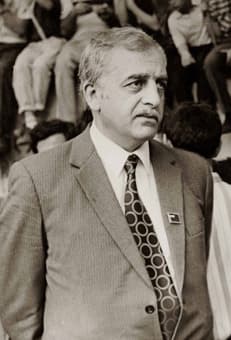
Zviad Gamsakhurdia
Politician · Modern
45.8Total
Basic Information
Born
1916
1939
Died
2014
—
Era
Modern
Modern
Nationality
Australia
Georgia
Occupation
Politician
Politician
Civilization
Western
Western
Score Comparison
Military (10%)
50.0
48.6
Political (20%)
78.0
37.9
Influence (20%)
58.3
53.3
Legacy (20%)
58.0
41.7
Leadership (15%)
74.0
48.4
Strategy (15%)
43.4
42.1
TOTAL
61.2
45.8
Gough Whitlam — Complete Timeline
1972 AD
Elected Prime Minister of AustraliaPolitical Action◆ Major
Whitlam led the Australian Labor Party to victory in the 1972 federal election, ending 23 years of conservative rule. His government immediately withdrew Australian troops from Vietnam and established diplomatic relations with China.
ElectionLabor PartyVietnam War
Impact: nationalprogressive
1974 AD
Abolished University FeesReform◆ Major
Whitlam's government abolished tuition fees for tertiary education, making university attendance free for all Australian students. This policy dramatically increased university enrollment and access for lower-income students.
EducationUniversitySocial Reform
Impact: nationalprogressive
1975 AD
Introduced Universal Healthcare (Medibank)Reform◆ Major
Whitlam's government established Medibank, Australia's first universal public health insurance scheme. The system provided free hospital and medical care to all Australians, funded through a levy on income tax.
HealthcareSocial ReformMedibank
Impact: nationalprogressive
Passed the Racial Discrimination ActReform◆ Major
Whitlam's government enacted the Racial Discrimination Act, making it illegal to discriminate on the basis of race, color, or ethnic origin. The legislation implemented Australia's obligations under the International Convention on the Elimination of All Forms of Racial Discrimination.
Civil RightsAnti-DiscriminationLegislation
Impact: nationalprogressive
Dismissed as Prime MinisterPolitical Action
Governor-General Sir John Kerr dismissed Whitlam as prime minister following a budget deadlock in the Senate. This unprecedented action triggered a constitutional crisis and led to the appointment of Malcolm Fraser as caretaker prime minister.
Constitutional CrisisDismissalGovernor-General
Impact: nationaltragic
Zviad Gamsakhurdia — Complete Timeline
1990 AD
Elected Chairman of the Supreme Council of GeorgiaPolitical Action◆ Major
Gamsakhurdia was elected Chairman of the Supreme Council of Georgia, effectively becoming the head of state. He led Georgia's declaration of independence from the Soviet Union in 1991, ending 70 years of Soviet rule.
Georgian IndependenceSoviet DissolutionNationalism
Impact: nationalconstructive
1991 AD
Elected First President of GeorgiaPolitical Action◆ Major
Gamsakhurdia won the first direct presidential election in Georgia with 86% of the vote. He became the first democratically elected president of the country. His presidency focused on consolidating independence and asserting Georgian sovereignty.
Georgian IndependenceDemocracyPresidency
Impact: nationalconstructive
1992 AD
Overthrow in a Coup d'ÉtatPolitical Action◆ Major
Gamsakhurdia was overthrown by a military coup backed by paramilitary groups and former allies. He fled to Chechnya. The coup led to a civil war and the rise of Eduard Shevardnadze. Gamsakhurdia's authoritarian style and nationalist policies had alienated many.
Georgian Civil WarCoupPolitical Crisis
Impact: nationaldestructive
1993 AD
Death in a Rebellion AttemptWar◆ Major
Gamsakhurdia returned to Georgia to lead an armed rebellion against Shevardnadze's government. He died in unclear circumstances in a village in western Georgia, reportedly by suicide or assassination. His death ended the rebellion.
Georgian Civil WarRebellionDeath
Impact: nationaltragic
Expert Analysis
Origins
Gough Whitlam was born on July 11, 1916, in Kew, Victoria, Australia, into a legal and political family. His father was a Commonwealth Crown Solicitor. Whitlam studied arts and law at the University of Sydney, serving in the Royal Australian Air Force during World War II. He entered politics in 1952, winning a by-election for the House of Representatives. His early career was marked by his intellect and oratory, but he faced a long period in opposition as the Australian Labor Party (ALP) struggled after the 1940s split.
Zviad Gamsakhurdia was born on March 31, 1939, in Tbilisi, Georgia, into a literary family; his father, Konstantine Gamsakhurdia, was a prominent novelist. He studied philology at Tbilisi State University and later worked as a researcher. A human rights activist and dissident under Soviet rule, he was imprisoned multiple times for his nationalist activities. His background as a literary scholar and dissident shaped his ideological commitment to Georgian independence.
Rise to Power
Whitlam rose to power within the ALP, becoming deputy leader in 1960 and leader in 1967. He modernized the party's platform, advocating for social reforms, Aboriginal rights, and an end to conscription. The 1972 federal election saw Whitlam lead Labor to victory after 23 years of conservative rule, winning 67 seats to the Liberal-Country coalition's 58. His election slogan, "It's Time," captured the public mood for change.
Gamsakhurdia rose to prominence during the perestroika era, co-founding the Helsinki Union of Georgia and the Society of St. Ilia the Righteous. In 1990, he was elected Chairman of the Supreme Council of Georgia, leading the declaration of independence from the Soviet Union on April 9, 1991. He won the first direct presidential election on May 26, 1991, with 86% of the vote, becoming the first democratically elected leader of Georgia.
Leadership & Governance
Whitlam's governance was transformative and rapid. He established the universal healthcare system Medibank in 1975, abolished university fees, introduced free tertiary education, and passed the Racial Discrimination Act 1975. He also ended conscription, withdrew troops from Vietnam, recognized the People's Republic of China, and pursued policies of Aboriginal land rights. His government faced a hostile Senate, which blocked supply in 1975, leading to a constitutional crisis. Whitlam's leadership score is 74.0, reflecting his bold reforms but also his strategic miscalculations (strategy 43.4) in managing political opposition.
Gamsakhurdia's leadership was marked by nationalist fervor but authoritarian tendencies. He centralized power, suppressed opposition media, and alienated ethnic minorities. His government faced secessionist conflicts in Abkhazia and South Ossetia, which he mishandled by relying on paramilitary forces. His political score of 37.9 and military score of 48.6 reflect his inability to consolidate democratic governance or manage conflict. His leadership score of 48.4 indicates a failure to build broad-based support.
Triumph & Tragedy
Whitlam's triumphs include the establishment of Medibank (now Medicare), which covers all Australians, and the abolition of university fees, which dramatically increased tertiary enrollment. The Racial Discrimination Act was a landmark in human rights. His greatest tragedy was his dismissal on November 11, 1975, by Governor-General Sir John Kerr, following a budget deadlock. This unprecedented act ended his government and caused deep political divisions. Whitlam's legacy score of 58.0 reflects his mixed record: transformative reforms but a truncated term.
Gamsakhurdia's triumph was leading Georgia to independence from the Soviet Union, a historic achievement. He also pursued cultural revival and national identity. His tragedy was his overthrow in a military coup on January 6, 1992, after only eight months in office. The coup led to a civil war, economic collapse, and the rise of Eduard Shevardnadze. Gamsakhurdia died in 1993 while attempting to regain power, under suspicious circumstances. His legacy score of 41.7 reflects a failed presidency despite his role in independence.
Character & Destiny
Whitlam was charismatic, intellectual, and confident, often seen as arrogant by opponents. He pushed reforms aggressively, believing in the mandate of his election. His dismissal was partly due to his refusal to compromise with the Senate, a strategic error. Historians view him as a visionary who overreached. His character shaped his destiny: bold reforms but a premature end.
Gamsakhurdia was a passionate nationalist but increasingly paranoid and authoritarian. He isolated allies and failed to build democratic institutions. His character led to his downfall: he overestimated his support and underestimated opposition. His fate was sealed by his inability to manage diversity and conflict.
Legacy
Whitlam's legacy endures through Medicare, free university education (though fees were later reintroduced), and the Racial Discrimination Act. He reshaped Australian society and the Labor Party's identity. His dismissal remains a constitutional crisis reference. He scored 58.3 influence and 58.0 legacy, indicating lasting but contested impact.
Gamsakhurdia's legacy is mixed: he is revered as a founding father of independent Georgia but criticized for his governance. His failure contributed to Georgia's instability in the 1990s. His influence score of 53.3 is slightly lower than Whitlam's, reflecting his role as a symbol rather than a builder.
Conclusion
Gough Whitlam had greater impact than Zviad Gamsakhurdia. Whitlam's total score of 61.2 surpasses Gamsakhurdia's 45.8 by 15.4 points. Whitlam's political score (78.0) and leadership (74.0) contrast sharply with Gamsakhurdia's 37.9 and 48.4. While Gamsakhurdia achieved independence, his failure to govern led to civil war and a coup. Whitlam's reforms—universal healthcare, free education, racial discrimination laws—transformed Australia and endure today. Gamsakhurdia's legacy is more symbolic than substantive. Therefore, Whitlam's influence on his nation's institutions and social fabric is demonstrably greater.
Rankings
🥇
Gough WhitlamLeader
Mil: 50.0Pol: 78.0Inf: 58.3
61.2
🥈
Zviad Gamsakhurdia
Mil: 48.6Pol: 37.9Inf: 53.3
45.8
+15.4 behind
How This Comparison Works
Algorithm
Each figure is scored on 6 dimensions (0—100 scale) based on structured historical data: Military (10%), Political (20%), Influence (20%), Legacy (20%), Leadership (15%), Strategy (15%). The weighted total produces the final ranking.
Data Sources
Scores are computed from structured sub-indicators in the database. Scale factors adjust for era (Ancient ×0.85, Modern ×1.0) and civilization size (Eastern ×1.05, Other ×0.80) to account for differences in population and military scale.
Maximum 3 Figures
Comparisons are limited to 2—3 figures to ensure readability and statistical meaningfulness.
Error Margins
±5 points per dimension — Sub-scores are derived from historical records with inherent uncertainty. Two figures within 5 points on a dimension should be considered roughly equivalent in that area.
Total Score Accuracy
±3 points overall — The weighted combination of 6 dimensions produces a total score with approximately ±3 points of uncertainty. Differences of less than 3 points are not statistically significant— the figures are effectively tied.
Known Limitations
- Historical records are incomplete and uneven across civilizations
- Figures from oral-tradition societies may be underrepresented
- Occupation labels can misclassify multi-role figures
- Scores measure capability and impact, not moral character
- Quantitative scoring is a comparison tool, not absolute truth
Capability Radar
Military (10%) — Battles & Warfare
Battles
27
31
Win Rate
31
31
Expansion
33
36
Political (20%) — Governance & Reform
Reform
85
40
Diplomacy
70
25
Economy
60
20
Influence (20%) — Cultural & Global Reach
Cultural
65
35
Global
55
25
Legacy (20%) — Historical Impact
Historical
70
30
Longevity
55
20
Leadership (15%) — Power & Stability
Tenure
55
30
Stability
30
10
Strategy (15%) — Tactics & Innovation
Strategy
39
37
Tactics
42
39
Reform
45
45
Similar Comparisons
Comments & Discussion
No comments yet. Be the first to share your thoughts!