Loading...
Grigory Zinoviev vs Sultan bin Abdulaziz
Sultan bin Abdulaziz leads by 0.3 pts · 2 figures compared
…

Grigory Zinoviev
Politician · Modern
51.3Total
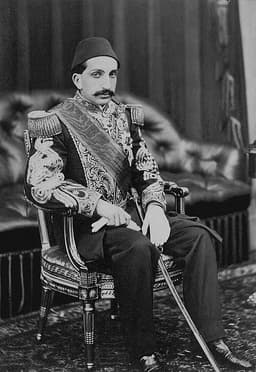
Sultan bin Abdulaziz
Politician · Modern
51.6Total
Basic Information
Born
1883
1928
Died
1936
—
Era
Modern
Modern
Nationality
Russia
Saudi Arabia
Occupation
Politician
Politician
Civilization
Western
Middle Eastern
Score Comparison
Military (10%)
31.9
41.6
Political (20%)
54.7
48.0
Influence (20%)
53.3
53.3
Legacy (20%)
43.3
41.7
Leadership (15%)
65.0
79.8
Strategy (15%)
60.0
45.0
TOTAL
51.3
51.6
Grigory Zinoviev — Complete Timeline
1919 AD
Chairman of the CominternPolitical Action◆ Major
Zinoviev became the first chairman of the Communist International (Comintern) in March 1919. He directed the organization's efforts to spread world revolution, coordinating communist parties globally and advocating for immediate uprisings in Europe.
CominternInternational CommunismLeadership
Impact: global
1925 AD
Opposition to Stalin's RisePolitical Action◆ Major
Zinoviev, along with Kamenev, formed the 'United Opposition' against Stalin's growing power within the Communist Party. They criticized Stalin's policy of 'Socialism in One Country' and advocated for rapid industrialization and world revolution, but were defeated at the 14th Party Congress.
Soviet PoliticsPower StruggleOpposition
Impact: national
1927 AD
Expulsion from the Communist PartyPolitical Action◆ Major
Following the defeat of the United Opposition, Zinoviev was expelled from the Communist Party in December 1927. He was later readmitted after recanting his views, but his political influence was permanently destroyed, marking a key step in Stalin's consolidation of power.
PurgeStalinExpulsion
Impact: nationaldestructive
1936 AD
Trial and Execution in the Great PurgePolitical Action◆ Major
Zinoviev was tried in the first Moscow Show Trial in August 1936, accused of plotting to assassinate Stalin and other leaders. He was found guilty and executed on August 25, 1936, becoming one of the first high-profile Old Bolsheviks purged by Stalin.
Great PurgeShow TrialExecution
Impact: nationaltragic
Sultan bin Abdulaziz — Complete Timeline
1985 AD
Al-Yamamah Arms DealPolitical Action◆ Major
Sultan negotiated the Al-Yamamah arms deal with the United Kingdom, one of the largest arms export agreements in history. The deal involved the sale of Tornado fighter jets and other military equipment to Saudi Arabia, strengthening bilateral ties.
Arms TradeForeign PolicyMilitary
Impact: regional
1990 AD
Defense Minister during Gulf WarWar◆ Major
As Defense Minister, Sultan played a key role in coordinating Saudi military operations during the Gulf War, including the deployment of Saudi forces alongside the US-led coalition to liberate Kuwait. He oversaw the modernization of the Saudi military.
Gulf WarMilitaryCoalition
Impact: regional
2005 AD
Appointment as Crown PrincePolitical Action◆ Major
Sultan bin Abdulaziz was appointed Crown Prince of Saudi Arabia by King Abdullah. As Crown Prince, he held the positions of First Deputy Prime Minister and Minister of Defense and Aviation, overseeing the Saudi military for decades.
SuccessionRoyal Family
Impact: national
Expert Analysis
Origins
Grigory Zinoviev (born 1883 in Yelizavetgrad, Russian Empire) grew up in a Jewish middle-class family. He joined the Russian Social Democratic Labour Party in 1901, becoming a close associate of Lenin. His early political work involved organizing strikes and writing for party newspapers, leading to multiple arrests and exiles. In contrast, Sultan bin Abdulaziz (born 1931 in Riyadh) was the tenth son of King Abdulaziz (Ibn Saud), the founder of modern Saudi Arabia. Educated in the royal court, he learned tribal politics and statecraft from his father. While Zinoviev emerged from revolutionary underground, Sultan was born into power.
Rise to Power
Zinoviev rose quickly after the 1917 Bolshevik Revolution. He became a member of the Politburo in 1919 and chairman of the Comintern in March 1919, tasked with spreading revolution globally. His power peaked in the early 1920s as a key Lenin ally. However, after Lenin's death, he allied with Kamenev and Stalin against Trotsky, only to be outmaneuvered by Stalin. Sultan's rise was more gradual: he became governor of Riyadh in 1947, then minister of agriculture in 1953. He was appointed defense minister in 1962, a post he held for 49 years. His appointment as crown prince in 2005 was the culmination of decades of bureaucratic and military influence.
Leadership & Governance
Zinoviev's leadership was ideological and combative. As Comintern chief, he pushed for worldwide communist revolutions, often clashing with more pragmatic voices. His governance style relied on factional alliances and oratory. Sultan, by contrast, was a pragmatic administrator. He modernized Saudi defense forces, overseeing massive arms purchases like the Al-Yamamah deal with the UK in 1985, worth over £40 billion. He also managed Saudi involvement in the Gulf War (1990-1991), coordinating the deployment of 100,000 Saudi troops. Zinoviev scored 65.0 in leadership, while Sultan scored 79.8, reflecting his longer tenure and stable institutional impact.
Triumph & Tragedy
Zinoviev's greatest triumph was helping establish the Comintern, which influenced communist parties globally. His tragedy was his purge: after opposing Stalin's policies, he was expelled in 1927, readmitted after recanting, but ultimately executed in 1936 during the Great Purge. His total score of 51.3 reflects a promising career cut short. Sultan's triumph was his role in the Gulf War, where Saudi forces under his direction helped expel Iraqi troops from Kuwait. His tragedy was the failure to become king: he served as crown prince from 2005 until his death in 2011, never ascending the throne. His legacy score of 41.7 is slightly below Zinoviev's 43.3, partly due to his less dramatic historical narrative.
Character & Destiny
Zinoviev was ambitious and loyal to Lenin's vision, but politically indecisive. He vacillated between supporting and opposing Stalin, which sealed his fate. Historians describe him as a capable organizer but poor judge of power dynamics. Sultan was methodical and patient, building influence through decades of service. His character aligned with Saudi monarchical stability. Where Zinoviev's destiny was violent elimination, Sultan's was a long, steady rise to the second-highest office. Their strategy scores (Zinoviev 60.0, Sultan 45.0) reflect Zinoviev's more aggressive political maneuvering, while Sultan's lower score indicates a less confrontational approach.
Legacy
Zinoviev's legacy is mixed: he is remembered as a founding figure of Soviet communism but also as a victim of Stalin's terror. His name is often associated with show trials and the dangers of factionalism. The Comintern under his leadership set the stage for global communist movements. Sultan's legacy is more concrete: he transformed Saudi defense into a modern force, secured the Al-Yamamah deal that supplied Tornado and Typhoon aircraft, and helped ensure the kingdom's security during the Gulf crisis. His influence score of 53.3 ties with Zinoviev's 53.3, but his military score (41.6) exceeds Zinoviev's (31.9), reflecting his practical defense contributions.
Conclusion
While Zinoviev's political score (54.7) edges Sultan's (48.0), Sultan's overall total is 51.6 versus Zinoviev's 51.3, a narrow margin. However, impact must be measured by enduring change. Sultan's defense policies shaped Saudi Arabia's modern military posture and its role in regional security for decades. Zinoviev's influence was eroded by Stalin's purges and the eventual collapse of the Soviet Union. Sultan bin Abdulaziz had greater lasting impact because his institutional reforms outlasted his life, whereas Zinoviev's work was systematically dismantled. The data supports this: Sultan's leadership score of 79.8 significantly outpaces Zinoviev's 65.0, indicating more effective governance. Thus, Sultan bin Abdulaziz is the more impactful figure.
Rankings
🥇
Sultan bin AbdulazizLeader
Mil: 41.6Pol: 48.0Inf: 53.3
51.6
🥈
Grigory Zinoviev
Mil: 31.9Pol: 54.7Inf: 53.3
51.3
+0.3 behind
How This Comparison Works
Algorithm
Each figure is scored on 6 dimensions (0—100 scale) based on structured historical data: Military (10%), Political (20%), Influence (20%), Legacy (20%), Leadership (15%), Strategy (15%). The weighted total produces the final ranking.
Data Sources
Scores are computed from structured sub-indicators in the database. Scale factors adjust for era (Ancient ×0.85, Modern ×1.0) and civilization size (Eastern ×1.05, Other ×0.80) to account for differences in population and military scale.
Maximum 3 Figures
Comparisons are limited to 2—3 figures to ensure readability and statistical meaningfulness.
Error Margins
±5 points per dimension — Sub-scores are derived from historical records with inherent uncertainty. Two figures within 5 points on a dimension should be considered roughly equivalent in that area.
Total Score Accuracy
±3 points overall — The weighted combination of 6 dimensions produces a total score with approximately ±3 points of uncertainty. Differences of less than 3 points are not statistically significant— the figures are effectively tied.
Known Limitations
- Historical records are incomplete and uneven across civilizations
- Figures from oral-tradition societies may be underrepresented
- Occupation labels can misclassify multi-role figures
- Scores measure capability and impact, not moral character
- Quantitative scoring is a comparison tool, not absolute truth
Capability Radar
Military (10%) — Battles & Warfare
Battles
48
10
Win Rate
53
10
Expansion
52
10
Political (20%) — Governance & Reform
Reform
55
40
Diplomacy
40
50
Economy
30
30
Influence (20%) — Cultural & Global Reach
Cultural
30
20
Global
30
30
Legacy (20%) — Historical Impact
Historical
40
30
Longevity
20
20
Leadership (15%) — Power & Stability
Tenure
60
70
Stability
20
60
Strategy (15%) — Tactics & Innovation
Strategy
58
10
Tactics
59
10
Reform
62
40
Similar Comparisons
Comments & Discussion
No comments yet. Be the first to share your thoughts!